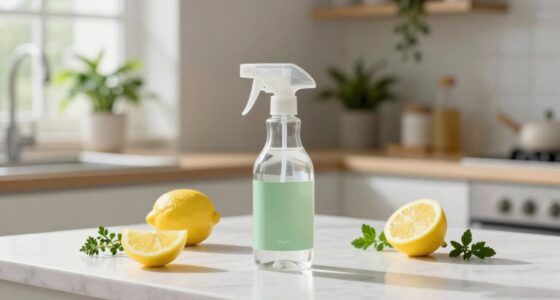

To reduce single-use cleaning waste in your bathroom, switch to reusable tools like cloths, microfiber towels, and bamboo brushes that can be washed and reused. Make your own cleaning solutions with simple ingredients like vinegar, baking soda, and lemon juice, and use refillable spray bottles to cut down on plastic waste. Opt for eco-friendly products and sustainable packaging, and adopt waste reduction habits like bulk buying and regular tool maintenance. Keep exploring ways to make your routine even greener.

Get cleaning gear delivered free — and shop member deals
- Fast, free delivery on millions of items
- Access to Prime Big Deal Days deals on October 6–7
- Prime Video, Amazon Music and more included
Key Takeaways
- Switch to reusable cloths, microfiber towels, and bamboo brushes for cleaning bathroom surfaces.
- Make homemade cleaning solutions using vinegar, baking soda, and lemon to eliminate plastic bottle waste.
- Use refillable spray bottles and purchase cleaning ingredients in bulk to minimize packaging waste.
- Replace disposable mop pads and scrub brushes with washable, eco-friendly alternatives.
- Adopt sustainable cleaning routines by regularly cleaning and reusing tools to extend their lifespan.
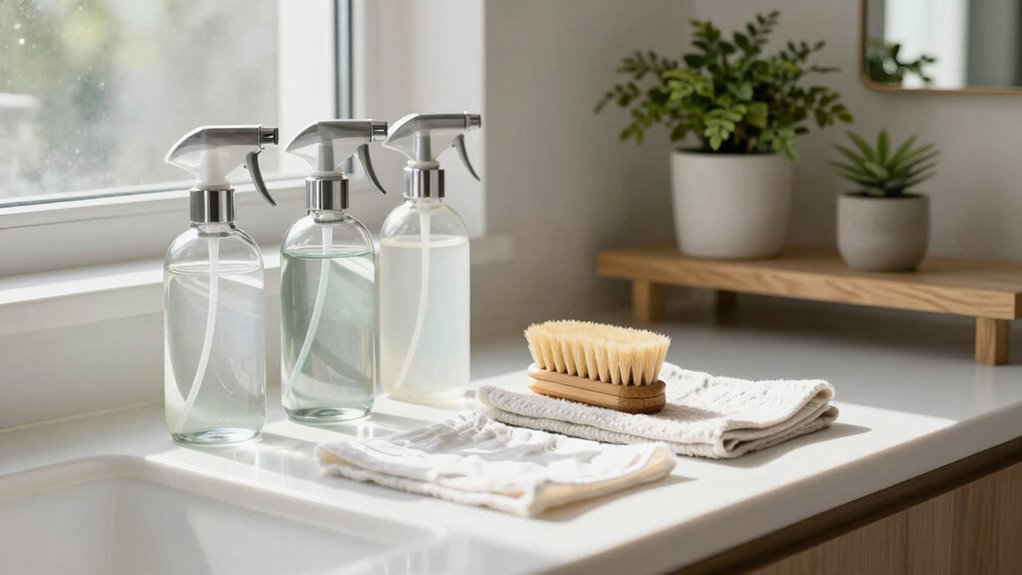
Reducing single-use cleaning waste in the bathroom is an effective way to lower your environmental impact and save money. One of the best ways to do this is by switching to eco-friendly cleaning tools. Instead of disposable wipes, paper towels, or plastic brushes, opt for reusable cloths, microfiber towels, or bamboo brushes. These tools can be washed and reused countless times, considerably cutting down on waste. Not only do they reduce landfill contributions, but they also tend to be more durable and effective for cleaning various surfaces in your bathroom.
Another impactful step is to embrace DIY cleaning solutions. Commercial cleaners often come in plastic bottles that are discarded after just a few uses. By making your own cleaning solutions at home, you avoid unnecessary packaging waste. Simple ingredients like vinegar, baking soda, lemon juice, and essential oils create effective, eco-friendly cleaners that tackle soap scum, hard water stains, and mold. For example, mixing equal parts vinegar and water in a spray bottle provides a natural bathroom cleaner that’s safe for most surfaces. Baking soda works great as a scrub for sinks and tubs, while lemon juice helps with stubborn stains and adds a fresh scent.
You can also invest in refillable spray bottles and containers for your DIY solutions. This way, you only need to purchase the ingredients once, and you can refill your bottles endlessly. This reduces the need for single-use plastic bottles, which often end up in landfills or pollute the environment. When choosing cleaning tools, look for ones made from sustainable or biodegradable materials, such as wood, bamboo, or recycled plastics. These options lessen your carbon footprint, and choosing products made from biodegradable materials supports environmentally responsible manufacturing. Incorporating sustainable cleaning practices can significantly amplify your efforts to reduce waste and protect the environment.
In addition, consider reducing your reliance on disposable cleaning products altogether. For instance, rather than using disposable mop pads, opt for washable microfiber pads. Instead of tossing out used scrub brushes, clean and reuse them regularly. Keeping a set of durable, eco-friendly tools on hand encourages a more sustainable cleaning routine. To further minimize waste, always opt for bulk purchases of cleaning ingredients and materials, which often come with less packaging. Making conscious choices about waste reduction can help you create a more environmentally-friendly bathroom cleaning routine that benefits both your home and the planet.
reusable microfiber bathroom cleaning cloths
As an affiliate, we earn on qualifying purchases.
As an affiliate, we earn on qualifying purchases.
Frequently Asked Questions
Are There Eco-Friendly Alternatives to Traditional Bathroom Cleaning Products?
Yes, you can switch to eco-friendly alternatives like cleaning products in biodegradable packaging or those stored in refillable containers. These options reduce plastic waste and lessen your environmental impact. Look for brands that prioritize sustainability, and consider making your own cleaning solutions using natural ingredients like vinegar and baking soda. By choosing these alternatives, you actively contribute to reducing single-use waste and promote greener bathroom habits.
How Can I Dispose of Used Cleaning Wipes Responsibly?
Properly dispose of used cleaning wipes by choosing biodegradable packaging and composting when possible. You can look for wipes labeled as compostable or biodegradable, making sure they break down naturally. After use, consider composting the wipes if they’re suitable, or discard them responsibly in designated waste bins. This mindful method minimizes waste, maximizes eco-efficiency, and maintains a cleaner, greener bathroom environment for everyone.
What Are the Best Reusable Cleaning Tools for the Bathroom?
You should choose reusable cleaning tools made from eco-friendly materials like microfiber cloths, bamboo scrub brushes, or stainless steel scrubbers. These are durable and environmentally friendly. To keep them effective, practice regular cleaning and proper maintenance, such as washing microfiber cloths after each use and drying brushes thoroughly. By switching to these tools, you reduce waste and support sustainable cleaning habits, making your bathroom both cleaner and greener.
Do Natural Cleaning Solutions Work as Effectively as Commercial Products?
Did you know that natural cleaning solutions can be as effective as commercial products in many cases? You’ll find they often have similar chemical efficacy, especially for everyday cleaning tasks. Plus, they considerably reduce environmental impact since they contain fewer synthetic chemicals. With proper recipes and application, natural cleaners can tackle soap scum, grime, and mold just as well, helping you clean effectively while being gentler on the planet.
How Often Should I Replace Reusable Cleaning Cloths?
You should replace your reusable cleaning cloths every 1 to 2 weeks, depending on usage and cleanliness. Regular cloth maintenance is vital; wash them thoroughly after each use in hot water to prevent bacteria buildup. If you notice persistent stains, odors, or fraying, it’s time for replacement. This guarantees effective cleaning and minimizes the risk of spreading germs, helping you maintain a hygienic bathroom while reducing waste.
Conclusion
By making small changes, like switching to reusable cloths and choosing eco-friendly products, you can considerably cut down on bathroom waste. These simple steps not only help the environment but also promote a more sustainable lifestyle. Are you ready to take responsibility for your waste and make a positive impact? Remember, every effort counts—your choices today shape a cleaner, greener tomorrow. So, why not start now and be part of the solution?
Fall Picks
fall essentials
As an affiliate, we earn on qualifying purchases.