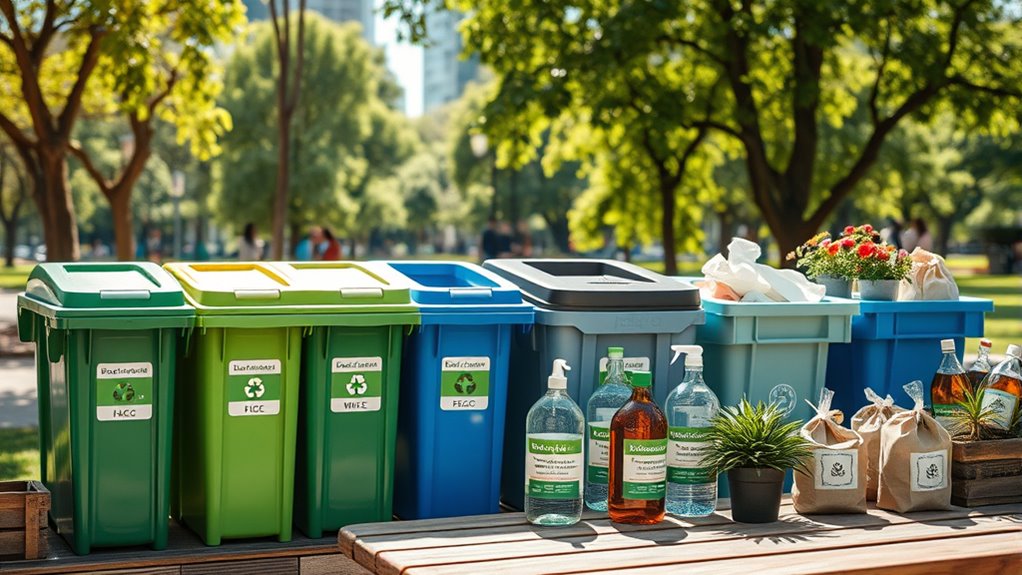

To practice sustainable waste management for cleaning supplies, you should focus on recycling containers, choosing eco-friendly products with minimal packaging, and using refill stations to cut down on single-use plastics. It’s essential to follow local regulations for hazardous waste disposal to prevent environmental contamination. By taking these steps and staying informed, you can reduce your ecological footprint and help protect the environment. Keep exploring to discover more effective ways to manage cleaning waste responsibly.
Key Takeaways
- Opt for cleaning products with minimal packaging and recyclable materials to reduce waste.
- Use refill stations and concentrate formulas to minimize single-use containers.
- Properly segregate and dispose of hazardous chemicals according to local regulations.
- Participate in recycling programs that process cleaning containers and plastics responsibly.
- Educate users on sustainable practices and encourage responsible waste handling to support environmental conservation.
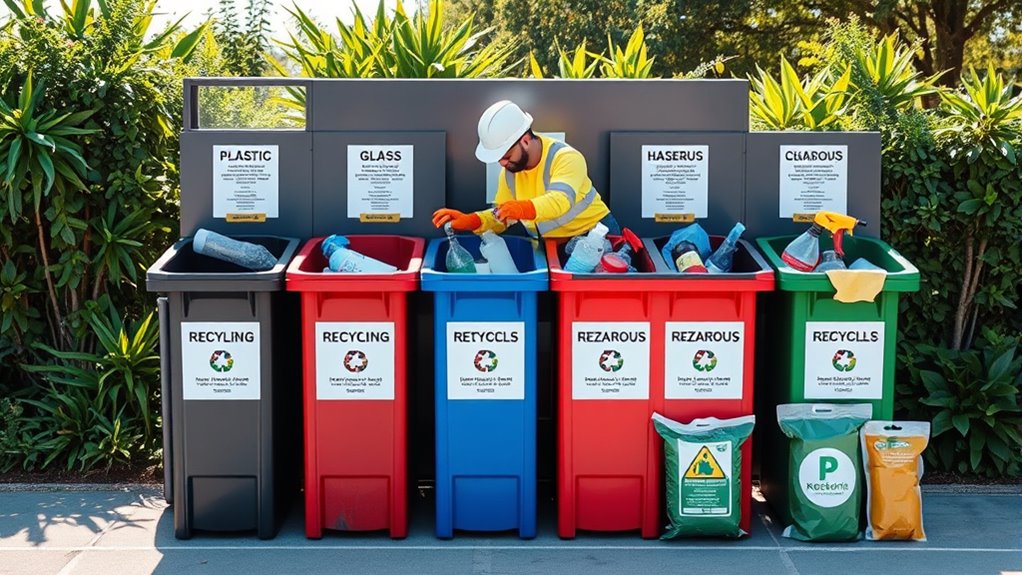
Have you ever considered how waste from cleaning supplies impacts the environment? Many of us overlook the journey of the bottles, containers, and chemicals we use daily. Proper waste management isn’t just about tossing items in the trash; it’s about understanding how to handle cleaning waste responsibly. One effective way you can make a difference is by participating in recycling programs tailored for cleaning product containers. These programs help divert plastics and other materials from landfills, guaranteeing they are processed correctly and reused whenever possible. It’s vital to check whether your local recycling facilities accept specific types of cleaning containers, as some plastics require special handling. By actively engaging in recycling programs, you reduce the overall environmental footprint of cleaning waste, conserving resources and minimizing pollution.
Alongside recycling, understanding disposal regulations is vital. Different regions have specific rules governing how cleaning chemicals and hazardous waste should be discarded. Ignoring these regulations can lead to environmental contamination and legal issues. You should familiarize yourself with local disposal regulations to guarantee you’re compliant. For instance, some chemicals need to be taken to designated hazardous waste collection sites rather than thrown away with regular trash. Proper disposal prevents toxic substances from leaching into soil and water sources, which can harm wildlife and human health. If you’re unsure about how to dispose of particular cleaning supplies, contact your local waste management authorities or consult their guidelines. Following disposal regulations isn’t just about avoiding fines; it’s about being a responsible steward of the environment. Incorporating hazardous waste handling into your waste management practices ensures you are contributing to a safer and cleaner planet.
Implementing sustainable waste management practices involves more than just recycling and proper disposal. It also means choosing products with minimal packaging or those made from recyclable materials. Opting for concentrated cleaning supplies reduces packaging waste, as you use less product for the same cleaning power. Additionally, some companies now offer refill stations, allowing you to reuse containers and cut down on single-use plastics. Educating yourself about these options can greatly lessen your environmental impact. Remember, every small effort counts. Properly managing waste from cleaning supplies reduces pollution, conserves natural resources, and supports a healthier planet. By staying informed about recycling programs and disposal regulations, you become an active participant in sustainable waste management, making a positive difference in your community and beyond.
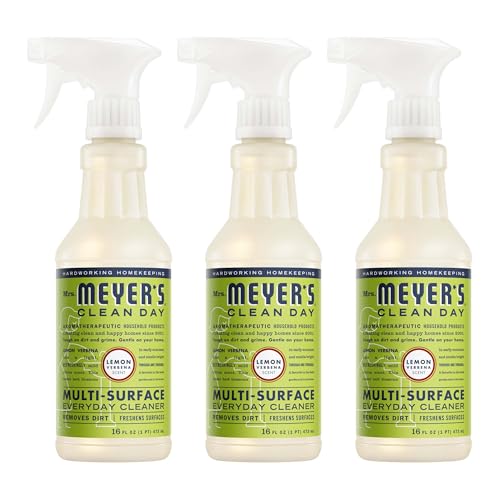
MRS. MEYER'S CLEAN DAY All-Purpose Cleaner Spray, Cruelty Free Formula, Lemon Verbena, 16 fl. oz – Pack of 3
- Effective Multi-Surface Cleaner: Removes dirt and freshens surfaces
- Cruelty-Free & Certified: Made with essential oils, Leaping Bunny Certified
- Lemon Verbena Scent: Bright citrus aroma with bergamot, lemon, geranium, cedarwood
As an affiliate, we earn on qualifying purchases.
As an affiliate, we earn on qualifying purchases.
Frequently Asked Questions
How Can I Identify Eco-Friendly Cleaning Supply Brands?
To identify eco-friendly cleaning supply brands, look for products with eco label certifications like EPA Safer Choice or Green Seal, which guarantee environmental standards. Check ingredient transparency on labels or websites to see if they disclose ingredients and avoid harmful chemicals. You can also research brands’ sustainability commitments and reviews to verify they prioritize eco-friendly practices, helping you choose products that are both effective and environmentally responsible.
What Are the Costs Associated With Sustainable Waste Management?
Think of sustainable waste management as planting seeds for a greener future; it requires an investment today. You’ll face costs like a detailed cost analysis for eco-friendly disposal methods and waste reduction strategies that save money long-term. While initial expenses might seem steep, they’re balanced by lower waste management fees, reduced landfill contributions, and your positive environmental impact. Ultimately, it’s a smart investment in your business’s sustainability and reputation.
How Do Regulations Vary Across Different Regions?
You’ll find regional policies and compliance standards vary widely across different regions. Some areas enforce strict regulations on waste disposal and recycling, requiring you to follow specific protocols, while others have more lenient rules. It’s essential to stay updated on local laws to guarantee adherence. By understanding these regional differences, you can better manage your waste sustainably, avoid penalties, and contribute positively to environmental conservation efforts.
Can Biodegradable Packaging Be Reused or Recycled?
Think of biodegradable packaging as the phoenix of waste—renewable and eco-friendly. You can often reuse or recycle it, depending on the material, enhancing its reuse potential. Some biodegradable materials are designed for multiple uses before composting, while others break down naturally after disposal. Always check local recycling guidelines, as some biodegradable packaging can be repurposed or composted, reducing waste and supporting sustainable practices.
What Training Is Needed for Staff on Waste Segregation?
You need to provide staff education on proper disposal methods and waste segregation procedures. Training should cover how to separate recyclables, compostables, and general waste correctly, emphasizing the importance of reducing contamination. Regular workshops or refresher courses will reinforce good practices. By equipping your team with this knowledge, you guarantee effective waste segregation, support sustainability goals, and minimize environmental impact. Proper training is essential for maintaining a responsible waste management system.
Conclusion
By adopting sustainable waste management practices for cleaning supplies, you can make a real difference without sacrificing effectiveness. It’s easy to think it’s complicated or costly, but many eco-friendly options are budget-friendly and simple to implement. Embracing these solutions not only benefits the environment but also creates a healthier space for you and your community. So, don’t let doubts hold you back—start small today, and enjoy the positive impact you’ll make tomorrow.