TL;DR

Get cleaning gear delivered free with Prime
- Fast, free delivery on millions of items
- Prime Video, Amazon Music and more included
- Member-only deals all year
A Livingetc report outlines five Japanese kitchen storage principles, drawing on comments from London-based designer Yoko Kloeden and Nakagawa executive vice president Tasuku Ogino. The advice focuses on decluttering before buying organizers, choosing containers for their function, and giving cookware and counter space more than one purpose.
Livingetc’s report sets out five Japanese kitchen storage lessons for readers seeking to organize their spaces, including clearing clutter before buying organizers and keeping only frequently used, purposeful items on counters. The advice comes from interior designer Yoko Kloeden, with an additional perspective from Tasuku Ogino of Nakagawa; it is practical design guidance, not a set of measured claims about all Japanese homes.
Kloeden, whose London studio combines Japanese aesthetics with natural materials, advises starting with a shelf rather than shopping for more storage. She says each object should have a clear purpose before it earns space in a cabinet. The report presents this as a way to avoid spending money on organizers that may simply accommodate items a household does not need.
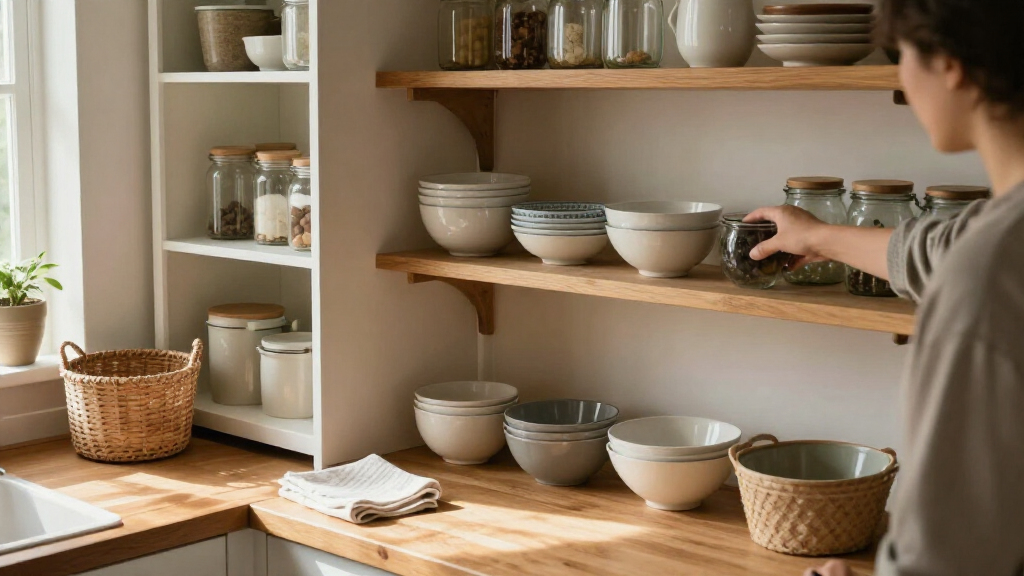
The material and format of a container should suit what goes inside it, Kloeden says. She describes using paulownia wood boxes for dried goods and tea, and transparent containers when visibility is useful. She also recommends moving frequently handled ingredients into easy-to-open vessels: salt and sugar, for example, can be kept in jars rather than their original bags.
The remaining lessons center on reducing steps and visual clutter. Kloeden suggests choosing cookware that can move from cooking to serving, which can mean fewer transfers and dishes. For counters, she cites two tests: whether an object is used daily and whether it has visual presence. Ogino describes the resulting contrast between selected objects and clear space as “merihari,” or deliberate contrast.
Less Storage, More Useful Space
The report’s main practical point is that organization does not necessarily begin with more shelves, bins or matching jars. Decluttering first can reveal which storage problems are caused by excess belongings and which require a better arrangement. That distinction may help readers avoid buying products that take up space without improving how the kitchen works.
Its other suggestions connect storage choices to everyday routines. Keeping regularly used seasonings easy to reach, choosing vessels that suit their contents and selecting cookware that can also serve food may reduce handling and cleanup. These are recommendations rather than independently tested results; what works will depend on a household’s cooking habits, available space and equipment.
Japanese style kitchen storage containers
As an affiliate, we earn on qualifying purchases.
As an affiliate, we earn on qualifying purchases.
Five Principles in the Report
Livingetc frames the advice around five rules: declutter before adding storage; assign containers a specific job; give frequently used cooking items convenient vessels; consider cookware that can also serve at the table; and leave counters clear except for items that are both regularly used and visually suited to the space.
Kloeden’s comments provide the report’s principal design perspective. Ogino, identified as Nakagawa’s executive vice president, contributes the explanation of “merihari.” The source also refers to ichibutsu tayō, described as one object serving many uses, and to “dashite totonou,” a phrase associated in the report with bringing items out while keeping order. The advice is presented as lessons to borrow, not as a claim that every Japanese kitchen follows the same practices.
““Before you add storage, take one shelf and ask what each thing on it is for.””
— Yoko Kloeden, interior designer
Advice, Not a Universal Standard
The source does not provide survey data, comparative measurements or evidence that these methods improve every kitchen. It also does not establish that the practices are universal across Japanese households; the report presents them as design principles drawn from its interviewees. The publication date is not included in the supplied material, and readers’ results will vary with their storage, cooking routines and household needs.
Some material-specific claims, including Kloeden’s description of paulownia wood’s humidity-buffering and insect-repelling properties, are attributed to her in the report rather than independently verified there. The article does not specify how to select or care for every container type or cookware material.
Start With One Shelf
The report offers no announced follow-up or scheduled next development. For readers applying its advice, the suggested first step is to review one shelf, identify what is actually used, and only then decide whether a different container or organizer is needed. Counters can be reviewed using the report’s daily-use and visual-presence tests.
Any changes should fit the food being stored and the manufacturer’s care instructions for containers and cookware. The source provides general design advice rather than detailed food-safety guidance, so readers should follow appropriate storage directions for particular ingredients.
Key Questions
What is the first step in the storage advice?
Review and declutter one shelf before buying organizers, asking what each item is for and whether it is needed.
How should I choose kitchen containers?
Choose a container for its intended use and the needs of what it holds. The report gives visibility and ease of opening as examples of useful features.
What can stay on the kitchen counter?
Kloeden’s suggested tests are whether an item is used daily and whether it has visual presence. The report advises keeping other items stored away.
What does one object, many uses mean for cookware?
The idea is to choose vessels that can serve more than one role, such as cookware that can also be brought to the table. The report says this may reduce transfers and washing.
Source: rss
Halloween Picks
halloween
As an affiliate, we earn on qualifying purchases.