To create a better closing shift cleaning routine, start by establishing clear, step-by-step tasks assigned to each team member, ensuring everyone knows their responsibilities. Maintain equipment by cleaning and inspecting tools after use, and schedule preventative maintenance. Conduct quick inspections at shift end to verify tasks are complete and address any issues immediately. By promoting accountability and continuously updating your procedures, you’ll keep the workspace safe and inviting. Keep going to discover more ways to optimize your routine.
Key Takeaways
- Develop detailed, step-by-step cleaning procedures tailored to your workspace and assign specific tasks to team members.
- Conduct quick end-of-shift inspections to verify task completion and address issues immediately.
- Maintain and properly store equipment daily, scheduling preventive maintenance to ensure longevity and safety.
- Foster team accountability by clearly defining responsibilities and encouraging feedback for routine improvements.
- Incorporate eco-friendly practices and regular updates to keep the routine efficient, sustainable, and adaptable.
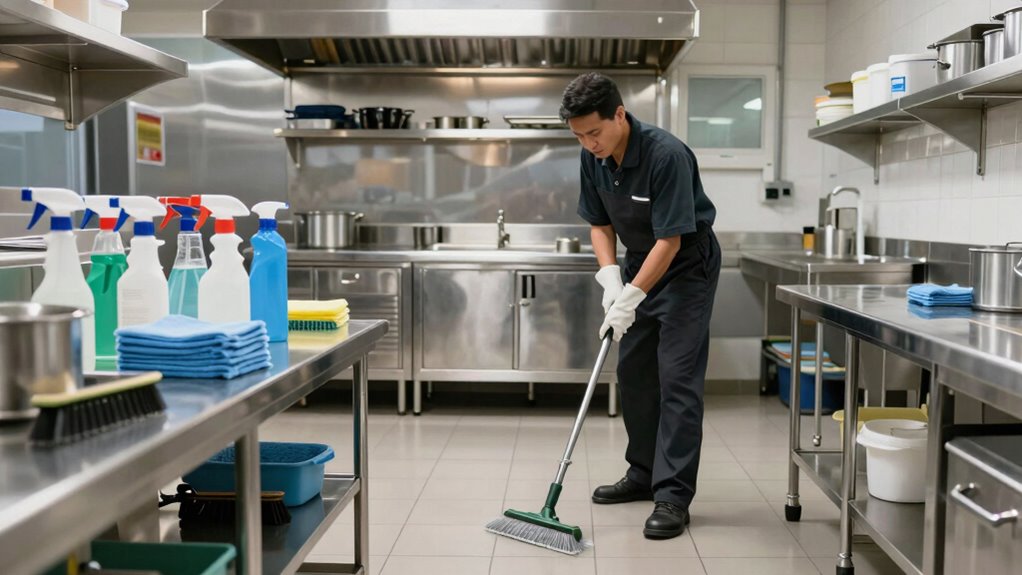
Ending your shift with an effective cleaning routine can make a significant difference in maintaining a tidy, safe environment and starting the next day smoothly. When you prioritize a well-organized closing, it not only ensures the space remains inviting but also boosts employee motivation. When staff see a clean workspace, they’re more likely to feel proud of their environment, which encourages them to maintain high standards consistently. A clean environment also minimizes safety hazards, helping everyone avoid slips or accidents that could happen if clutter or dirt are left behind.
Ending your shift with a thorough clean boosts safety, pride, and readiness for the next day.
To create a better closing shift cleaning routine, start by establishing clear, step-by-step procedures. Assign specific tasks to each team member, ensuring everyone knows their responsibilities. This clarity reduces confusion and speeds up the process, making cleaning less of a chore and more of a team effort. When employees understand their role in maintaining the workspace, their motivation naturally increases. They’ll take ownership of their tasks, knowing their efforts directly contribute to a safer, more welcoming environment. Regularly reviewing and updating these procedures keeps the routine efficient and relevant, especially as your needs evolve.
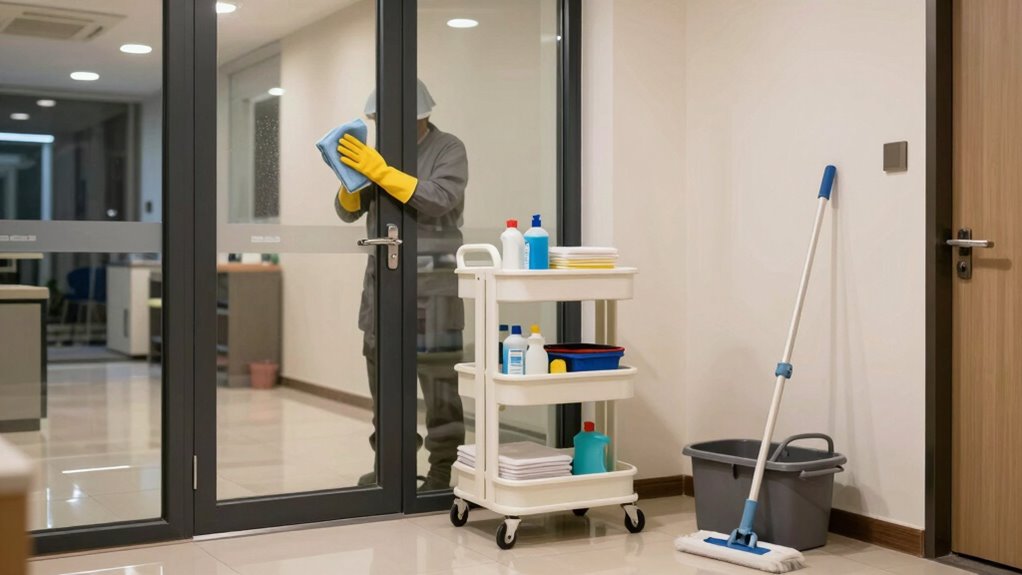
Equipment maintenance is a critical aspect of a successful cleaning routine. It’s tempting to overlook the upkeep of cleaning tools and machines, but neglecting this can lead to inefficiencies and increased costs over time. Ensure all equipment, from vacuums to disinfectant sprayers, is cleaned, inspected, and stored properly after each shift. Well-maintained tools work better, last longer, and provide a more thorough clean, which benefits everyone. When your team knows that the equipment they use is reliable and in good condition, they’re more motivated to use it correctly, leading to a higher standard of cleanliness. Proper equipment maintenance is essential for ensuring the efficiency and longevity of your cleaning tools. Additionally, incorporating biodiversity-conscious practices into your routine can reduce the use of harsh chemicals, supporting sustainability. Maintaining equipment properly also helps prevent contamination risks, ensuring a healthier environment for staff and customers alike. Regular checks can also help identify wear and tear, preventing unexpected breakdowns that could disrupt your routine. Regularly scheduling preventative maintenance can further extend the lifespan of your equipment and keep everyone safe.
Incorporate a quick inspection at the end of each shift to verify that all tasks are completed. This not only guarantees nothing is overlooked but also reinforces accountability. If issues arise—like a broken mop or empty sanitizer bottles—address them immediately. Prompt repairs or restocking prevent delays and ensure the routine remains smooth. Additionally, encourage feedback from your team about the cleaning process. They might suggest improvements or point out equipment that needs replacing, which helps keep the routine effective and efficient.
professional cleaning checklist for closing shift
As an affiliate, we earn on qualifying purchases.
As an affiliate, we earn on qualifying purchases.
Frequently Asked Questions
What Tools Are Essential for a Closing Shift Cleaning Routine?
You need essential cleaning supplies like disinfectants, microfiber cloths, mops, and vacuums to efficiently finish your closing shift. Safety equipment such as gloves, masks, and goggles protect you from harsh chemicals and potential hazards. Keep these tools organized and accessible to streamline your routine. Using the right supplies and safety gear guarantees thorough cleaning while maintaining safety standards, helping you finish your shift confidently and effectively.
How Long Should a Typical Closing Cleaning Take?
A typical closing cleaning shouldn’t turn into an epic saga—aim for about 30 to 45 minutes. With a solid cleaning checklist and tight time management, you can conquer surfaces, floors, and restrooms before the clock strikes closing time. Remember, rushing isn’t cleaning, but efficient planning keeps your routine swift and effective. So, set a timer, stay focused, and leave the mess behind in record time!
How Do I Manage Cleaning Staff Schedules Effectively?
You manage cleaning staff schedules effectively by prioritizing staff training and maintaining scheduling flexibility. Train your team thoroughly to guarantee efficiency and consistency. Keep schedules adaptable to accommodate unexpected absences or peak times, and communicate clearly to prevent confusion. Use scheduling tools or software to streamline planning, and gather feedback regularly to adjust shifts as needed. This approach helps keep your cleaning routine smooth and your team motivated.
What Safety Precautions Are Necessary During Nighttime Cleaning?
Nighttime cleaning is like steering a moonlit path—you need clear visibility and protection. Guarantee proper lighting safety to illuminate every corner, preventing accidents in the shadows. Always wear personal protective equipment, like armor against hazards, safeguarding your team from chemicals and slips. Regularly inspect lighting fixtures and PPE to keep the pathway safe and bright, so your crew can work confidently through the night’s quiet darkness.
How Can I Motivate Staff to Maintain Cleaning Standards?
You can motivate staff to maintain cleaning standards by offering employee incentives that recognize their hard work and dedication. Regular performance feedback helps them understand expectations and feel valued. Celebrate small wins and improvements to boost morale. Setting clear goals and rewarding consistent effort encourages staff to uphold high standards. When employees see their efforts are appreciated, they’re more likely to stay committed to maintaining quality during every closing shift.
Conclusion
So, next time you think skimming the surface is enough, remember—your nightly routine isn’t just about leaving things tidy; it’s about setting the stage for a fresh start. Ironically, the more thorough you are, the less you’ll have to redo tomorrow. A better closing shift isn’t just a chore; it’s your secret weapon for a smoother morning. So, embrace the process—you’re not just cleaning, you’re creating a better day for everyone, including yourself.