
To keep your HVAC and water systems running smoothly, it’s important to change filters monthly. Check filters regularly for dirt and clogging, especially if you have pets or allergies. Turn off the system before replacing the filters, and install them in the correct direction. Regular filter changes improve air quality, system performance, and save energy. Keep up with this routine, and you’ll guarantee your systems stay efficient—more tips to help you stay on track are below.
Key Takeaways
- Check filters monthly for dirt, dust, or clogging to determine if replacement is needed.
- Replace HVAC filters every 1-3 months, adjusting based on household factors like pets or allergies.
- Turn off the system before replacing filters and install them correctly, following directional arrows.
- Inspect water filters regularly and change according to manufacturer guidelines or when visibly dirty.
- Use reminders or calendars to maintain a consistent schedule for changing both HVAC and water filters.

Have you ever overlooked routine upkeep that can prevent costly repairs? Keeping up with the regular changing of your HVAC and water filters might seem minor, but it plays a vital role in maintaining your home’s efficiency and preventing larger issues down the line. One of the most important aspects is understanding the air filter lifespan. Most filters need replacement every one to three months, depending on their type and your household’s specifics. Neglecting this simple task can lead to reduced airflow, decreased heating and cooling efficiency, and even damage to your HVAC system. To stay ahead, it’s wise to develop filter replacement tips that fit your schedule and household needs. Mark your calendar or set reminders so you don’t forget. If you have pets, allergies, or someone in your home with respiratory issues, you might need to replace filters more frequently.
When it comes to choosing filters, look for high-quality options that match your system’s specifications. Cheaper filters might save you money initially but often need more frequent replacements and don’t trap airborne particles as effectively. It’s also helpful to check the filter’s MERV rating, which indicates its ability to filter out contaminants. The higher the rating, the better it captures dust, pollen, and other pollutants, but ensure your HVAC can handle the increased resistance. Regularly inspecting your filters will give you a good idea of when they’re ready for a swap. A simple rule of thumb is if the filter looks dirty or clogged, it’s time to replace it. Remember, a clean filter improves airflow and reduces strain on your system, which saves energy and prolongs its lifespan. Additionally, incorporating smart technology can help monitor filter condition and remind you when replacements are due.
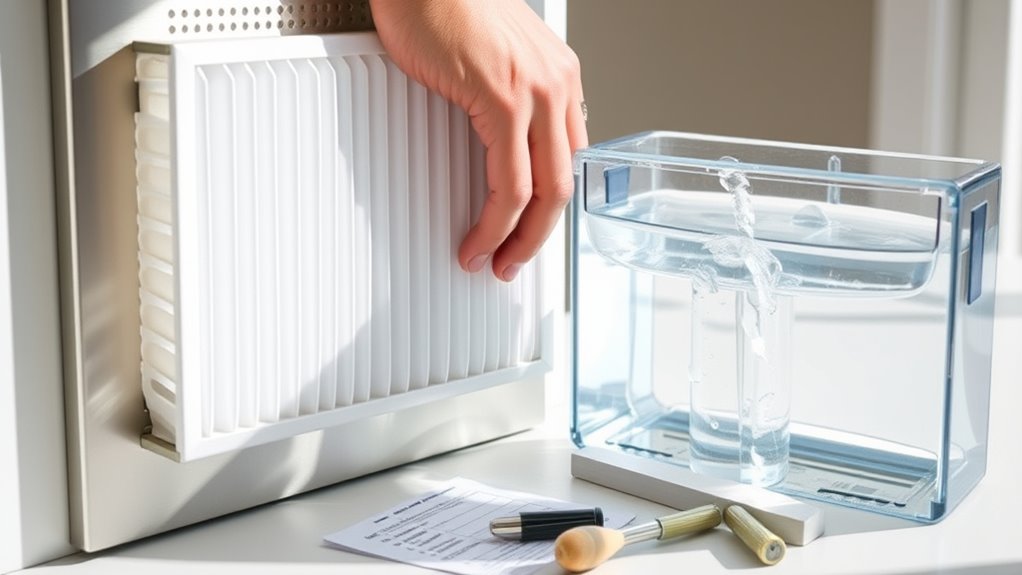
You should also embrace the habit of routine filter checks, especially during peak allergy seasons or if you live in an area with high pollution. Changing your filters monthly or every couple of months isn’t just about air quality; it’s also about maintaining the health of your HVAC system. When replacing filters, turn off your system first, then remove the old filter carefully—avoiding spreading dust. Make sure the new filter is installed in the correct direction, usually indicated by arrows on the frame. Proper installation prevents air leaks and ensures ideal filtration. By sticking to these simple filter replacement tips, you’ll improve indoor air quality, enhance system performance, and potentially save money on repairs. Taking just a few minutes each month for this task can greatly impact your home’s comfort and your wallet’s health.
Top picks for "monthly maintenance chang"
Open Amazon search results for this keyword.
As an affiliate, we earn on qualifying purchases.
Frequently Asked Questions
How Do I Identify When Filters Need Replacing?
You’ll know it’s time to replace your filters when you notice airflow obstruction or a significant color change in the filter. Reduced airflow from your HVAC or water system indicates the filter is clogged. Additionally, if the filter looks dark or dirty compared to a new one, it’s a sign you should replace it soon. Regular checks help maintain efficiency and prevent system strain.
Can I Clean Reusable Filters Instead of Replacing Them?
Imagine your reusable filter as a sponge soaking up dust and debris. Yes, you can clean it instead of replacing it, but keep in mind the filter’s lifespan and cleaning frequency. Regularly rinse and gently scrub to maintain airflow, but over time, dirt clogs the fibers, reducing effectiveness. Once you notice it’s no longer cleanable or efficient, it’s best to replace it to guarantee ideal air quality and system performance.
What Type of Filters Are Best for Allergy Sufferers?
You should opt for HEPA filters, as they’re best for allergy sufferers. These filters trap tiny allergens like pollen, pet dander, and dust mites effectively. To maximize allergen reduction, guarantee your air purifier is compatible with HEPA filters and follow allergen reduction tips, like regular cleaning and filter replacement. This way, you’ll breathe cleaner air and reduce allergy symptoms at home.
How Often Should I Schedule Professional HVAC Inspections?
Have you considered how much your air quality and energy efficiency depend on regular inspections? You should schedule a professional HVAC inspection at least once a year. This keeps your system running smoothly, improves indoor air quality, and guarantees energy efficiency. Don’t wait for problems to arise—regular checkups help catch issues early, saving you money and maintaining a healthier home environment. Are you ready to prioritize your comfort and well-being?
Are There Seasonal Considerations for Filter Changes?
Yes, there are seasonal considerations for filter changes. During periods of increased seasonal airflow, like spring and fall, you should check and replace filters more frequently to prevent dust buildup and maintain airflow efficiency. Temperature impacts also matter; in winter, filters may clog faster due to indoor heating dust, while summer humidity can cause mold buildup. Regularly monitor your filters to guarantee the best HVAC performance year-round.
Conclusion
Staying on top of your monthly HVAC and water filter changes is like tending a garden—you keep things flourishing with regular care. By making these simple tasks part of your routine, you ensure your home stays comfortable and efficient. Don’t let grime and debris build up; catch problems early, just like trimming dead branches before they spread. Consistency turns maintenance into a breeze, keeping your home running smoothly like a well-oiled machine.