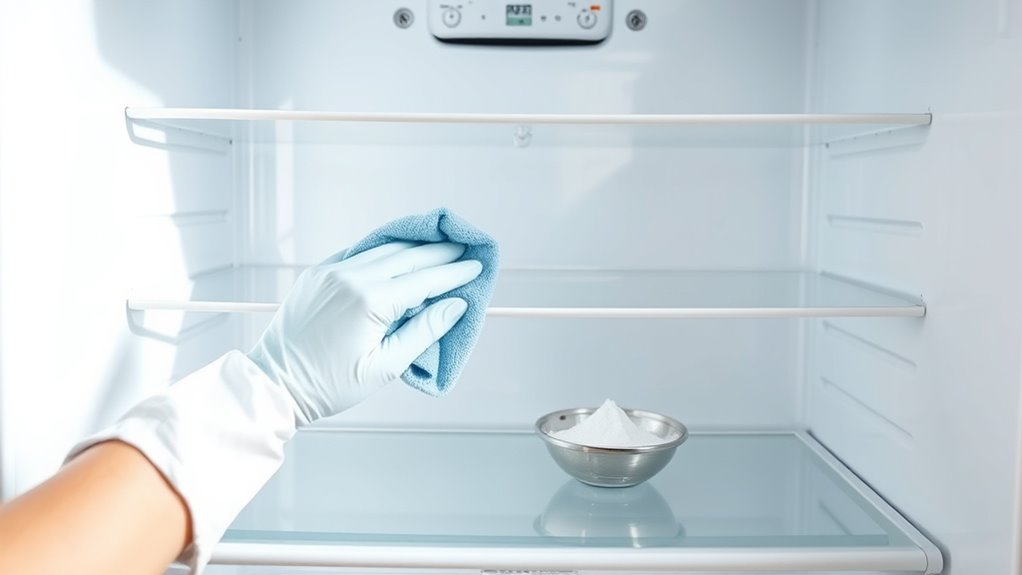

To prevent odors, you should deep clean your refrigerator once a month by removing all items, discarding expired food, and wiping shelves with a mild solution like vinegar or soap water. Clean the door seals, check for leaks, and vacuum condenser coils for efficiency. Also, make certain good airflow by not overstuffing the fridge. Regular maintenance like this keeps your fridge fresh and odor-free — keep going to discover more helpful tips.
Key Takeaways
- Remove all items and shelves for thorough cleaning with mild soap or vinegar solution.
- Wipe interior walls and door seals regularly to prevent mold and odors.
- Check and fix leaks or spills immediately to avoid bacterial growth and odor buildup.
- Vacuum condenser coils monthly to improve efficiency and reduce odor sources.
- Perform deep cleaning by discarding expired items and cleaning all corners monthly.

Keeping your refrigerator clean is essential for maintaining a healthy kitchen environment and preventing unpleasant odors. One of the first steps in deep cleaning is focusing on shelf organization. As you clear out your fridge, take the time to assess how your shelves are arranged. Arrange items logically, grouping similar foods together, and discard anything expired or spoiled. This not only makes it easier to find what you need but also reduces clutter that can trap moisture and cause smells. When you wipe down the shelves, use a mixture of mild soap and warm water or a vinegar solution. Be sure to remove the shelves entirely if possible, so you can clean every corner thoroughly. Proper shelf organization minimizes the risk of spills and leaks, which can seep into hard-to-reach areas and produce lingering odors. Additionally, air circulation within the fridge can help disperse odors and keep the environment fresh, so ensure that items are not packed too tightly. Next, pay attention to your door seals. Over time, these seals can accumulate crumbs, spills, and mold, all of which contribute to bad smells. To maintain the door seal, wipe it down regularly with a damp cloth and gentle soap, making sure to get into the grooves of the gasket. If you notice cracks or tears in the seal, replace it promptly, as a damaged gasket compromises the fridge’s ability to stay airtight, leading to temperature fluctuations and increased odors. When cleaning, use a toothbrush or small brush to scrub stubborn debris from the gasket’s folds, ensuring a tight seal that keeps out unwanted odors and bacteria. Proper door seal maintenance helps keep your refrigerator’s interior fresh and prevents the ingress of outside odors, which can intensify existing smells or create new ones. In addition to shelf organization and door seal maintenance, you should also remove all items, vacuum or dust the condenser coils, and wipe down the interior walls with a non-abrasive cleaner. These steps help improve efficiency and reduce the chances of mold or bacterial growth, which can produce foul smells. Regularly cleaning out expired food and wiping down spills prevents the build-up of bacteria that thrive in damp, unclean environments. Combining these practices with a monthly deep clean guarantees your refrigerator stays odor-free, fresh, and hygienic. By staying proactive with shelf organization and maintaining your door seals, you’ll find it easier to keep your fridge smelling clean and functioning properly. This ongoing effort saves you time, energy, and money by avoiding extensive cleanings and potential replacements down the line.
refrigerator deodorizer
As an affiliate, we earn on qualifying purchases.
As an affiliate, we earn on qualifying purchases.
Frequently Asked Questions
Can I Use Bleach to Clean My Refrigerator?
Yes, you can use bleach cleaning to sanitize your refrigerator, but you must do so carefully. Always dilute bleach properly and avoid using it on certain surfaces that could be damaged. For refrigerator safety, guarantee you rinse thoroughly and let it dry before restocking. Never use undiluted bleach directly on surfaces, as it can cause damage and leave harmful residues. Proper bleach cleaning keeps your fridge hygienic without risking damage.
How Do I Remove Stubborn Stains From Refrigerator Shelves?
Did you know that 60% of people struggle with stubborn stains? To remove sticky residue from refrigerator shelves, start by cleaning with baking soda mixed with water to create a gentle abrasive. Let it sit for a few minutes, then scrub with a soft brush or sponge. This method effectively loosens stubborn stains while being safe for your fridge, leaving shelves spotless and fresh.
Is It Safe to Clean Refrigerator Coils With a Vacuum?
Yes, it’s safe to clean refrigerator coils with a vacuum if you use proper vacuum maintenance and coil cleaning tips. Turn off your fridge first, then gently vacuum the coils using a brush attachment to remove dust and debris. Be careful not to damage the coils or bend the fins. Regular coil cleaning boosts efficiency, prevents odors, and extends your refrigerator’s lifespan.
How Often Should I Replace Refrigerator Door Gaskets?
Ever wondered when your refrigerator door gasket needs replacing? Generally, you should check it annually and replace it every 5 to 10 years, depending on gasket material and wear. Over time, gaskets can crack or lose elasticity, compromising the seal. Regular inspection ensures your fridge stays energy-efficient and prevents odors. If you notice cracks, tears, or difficulty closing the door, it’s time for a gasket replacement to maintain superior performance.
What Natural Remedies Prevent Refrigerator Odors?
You can prevent refrigerator odors naturally by placing baking soda or activated charcoal inside. Baking soda absorbs smells effectively, so keep an open box on a shelf or in the door. Activated charcoal works even better at neutralizing strong odors—simply place it in a breathable bag or container. Replace both every few months to maintain freshness, and regularly clean the fridge for best results.
refrigerator shelf cleaning supplies
As an affiliate, we earn on qualifying purchases.
As an affiliate, we earn on qualifying purchases.
Conclusion
Regularly deep cleaning your fridge keeps it smelling fresh and prevents odors from building up. For example, imagine noticing a strange smell one day—after a thorough clean, you find and discard spoiled leftovers, and the fridge smells clean again. Making this a monthly habit ensures your food stays fresh longer and your kitchen stays inviting. Plus, you’ll avoid surprise odors, saving you time and hassle. Keep your fridge spotless, and enjoy the peace of mind it brings.
refrigerator door seal replacement
As an affiliate, we earn on qualifying purchases.
As an affiliate, we earn on qualifying purchases.
vacuum condenser coils tool
As an affiliate, we earn on qualifying purchases.
As an affiliate, we earn on qualifying purchases.