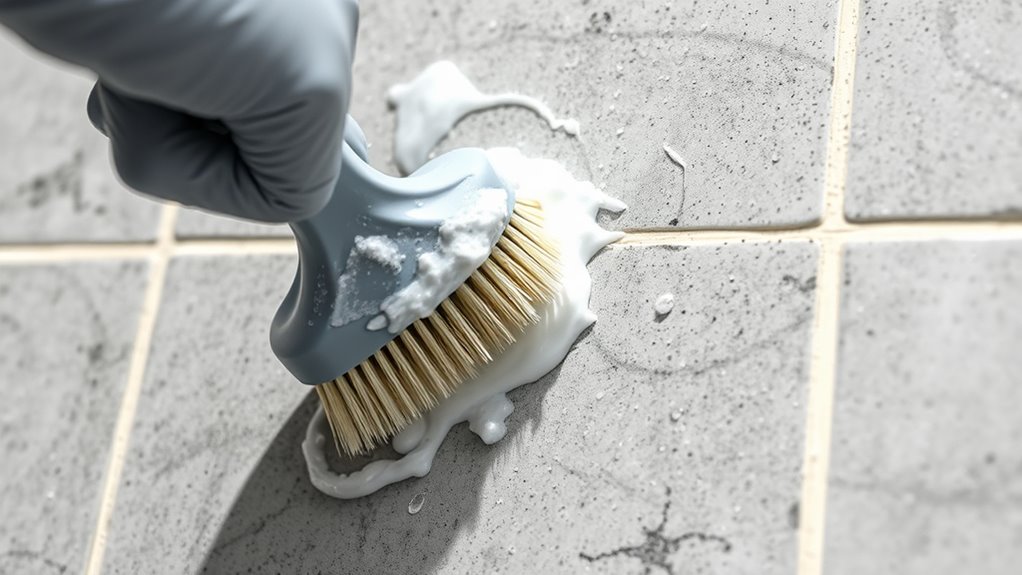

To effectively scrub bathroom grout and prevent mold, use a stiff brush or old toothbrush with a cleaning solution of baking soda and vinegar or a commercial grout cleaner. After scrubbing, wipe surfaces with microfiber cloths and dry thoroughly to prevent moisture buildup. Control humidity by using exhaust fans and sealing grout lines annually with a mildew-resistant sealant. Continuing with these tips helps keep your bathroom clean and mold-free for the long term.

Get cleaning gear delivered free — and shop member deals
- Fast, free delivery on millions of items
- Access to Prime Big Deal Days deals on October 6–7
- Prime Video, Amazon Music and more included
Key Takeaways
- Use a stiff-bristled brush and appropriate cleaning solutions to thoroughly scrub grout lines and remove dirt and mold spores.
- Dry surfaces and grout lines after each shower to prevent moisture buildup that promotes mold growth.
- Apply a mildew-resistant sealant annually and use daily mold-inhibiting sprays to create a water-repelling barrier.
- Reduce bathroom humidity with exhaust fans or open windows during and after showers to inhibit mold development.
- Address mildew promptly with hydrogen peroxide or commercial removers, and re-seal grout to maintain mold resistance.
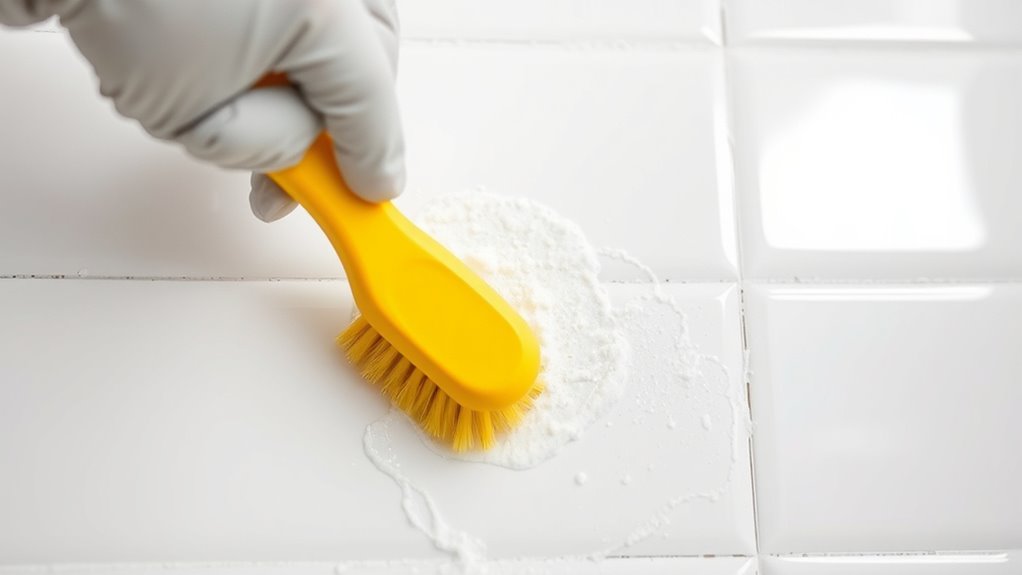
Keeping your bathroom clean can be challenging, especially when it comes to grout and mold. These areas tend to trap moisture, making them prime spots for mildew growth if not properly maintained. To stay ahead of this, you need the right cleaning tools and a good mildew prevention routine. Your goal is to keep grout looking fresh and mold at bay, which requires regular attention and the proper products.
Start by gathering effective cleaning tools. A stiff-bristled brush or an old toothbrush works well for scrubbing grout lines thoroughly. Microfiber cloths or sponges are useful for wiping down surfaces and removing loosened dirt and mold spores. A spray bottle filled with a cleaning solution — like a mixture of baking soda and vinegar or a commercial grout cleaner — can help loosen grime before scrubbing. Remember, using the right tools saves you time and ensures you don’t miss spots. When cleaning, focus on applying gentle but firm pressure to dislodge dirt and prevent damaging the grout. Regular scrubbing prevents buildup, making your routine less tedious over time. Incorporating a proper cleaning technique can further enhance your results and ensure thorough coverage.
Use a stiff brush and microfiber cloths for thorough grout cleaning and mold removal.
Mildew prevention is key to keeping your bathroom looking spotless. After each shower, it’s essential to dry off surfaces, including the grout lines, with a squeegee or towel. This simple step reduces moisture that mold thrives on. Installing exhaust fans or opening windows during and after showers can markedly decrease humidity levels. Consider applying a mildew-resistant sealant to your grout lines every year or so; this creates a barrier that repels water and slows mold growth. Additionally, using a daily mist of a mold-inhibiting spray can keep spores from settling in. These preventative habits are just as crucial as cleaning since they break the cycle of moisture and mold development.
If you notice mildew starting to form, don’t wait to act. Use a targeted solution — such as hydrogen peroxide or a commercial mildew remover — and scrub the affected areas thoroughly. Make sure to wear gloves and ventilate the bathroom well to avoid inhaling fumes. After cleaning, apply a fresh coat of sealant to protect the grout for several months. Consistency is your best defense; by establishing a routine of regular cleaning sessions and moisture control, you’ll keep your bathroom healthier and more inviting.
As an affiliate, we earn on qualifying purchases.
Frequently Asked Questions
How Often Should I Reseal Bathroom Grout?
You should reseal your bathroom grout every 1 to 2 years, depending on your sealing schedule and grout maintenance habits. Regular resealing helps protect against moisture and stains, keeping your bathroom looking fresh. Keep an eye out for signs like discoloration or grout that feels porous, indicating it’s time to reseal. Consistent grout maintenance guarantees your bathroom stays mold-free and the grout stays durable for years.
Are There Eco-Friendly Grout Cleaning Options?
Yes, eco-friendly grout cleaning options are available, and they’re like a breath of fresh air for your home. You can use biodegradable cleaners and natural disinfectants that effectively clean without harsh chemicals. These options are gentle on the environment and safe for your family. Look for products labeled as biodegradable or made from natural ingredients—your grout will shine, and you’ll help protect the planet at the same time.
Can Homemade Solutions Effectively Prevent Mold Buildup?
Yes, homemade solutions can effectively prevent mold buildup. Using DIY remedies like a mixture of vinegar and baking soda creates natural deterrents that inhibit mold growth. Regularly applying these natural deterrents keeps your grout dry and mold-free. You should also guarantee good ventilation in your bathroom, wipe down surfaces after use, and maintain a consistent cleaning routine to prevent mold from developing.
What Tools Are Best for Deep Grout Cleaning?
You should use a grout brush or an old toothbrush for deep cleaning, as they reach into grout lines effectively. After scrubbing, consider applying a mold-resistant grout sealer to protect against future mold buildup. Using mold-resistant grout during installation also helps maintain cleanliness longer. These tools and treatments work together to keep your grout clean and mold-free, ensuring a fresh, durable bathroom surface.
How Does Humidity Affect Grout Mold Growth?
Higher humidity increases moisture levels in your bathroom, creating an ideal environment for mold growth on grout. When air circulation is poor, moisture lingers longer, amplifying the risk. To prevent mold, you should reduce humidity by using exhaust fans or dehumidifiers, and improve air circulation with vents or open windows. Keeping moisture levels low and ensuring good airflow helps keep your grout mold-free and maintains a healthier bathroom environment.
Conclusion
Keeping your bathroom grout clean and mold-free is easier than you think. Regular scrubbing can reduce mold growth by up to 80%, making your space healthier and more inviting. Using simple solutions like vinegar or baking soda can make a big difference. Remember, consistent maintenance prevents mold from taking hold. With just a few minutes each week, you can enjoy a spotless, mold-free bathroom that stays fresh and hygienic longer.
Halloween Picks
halloween
As an affiliate, we earn on qualifying purchases.