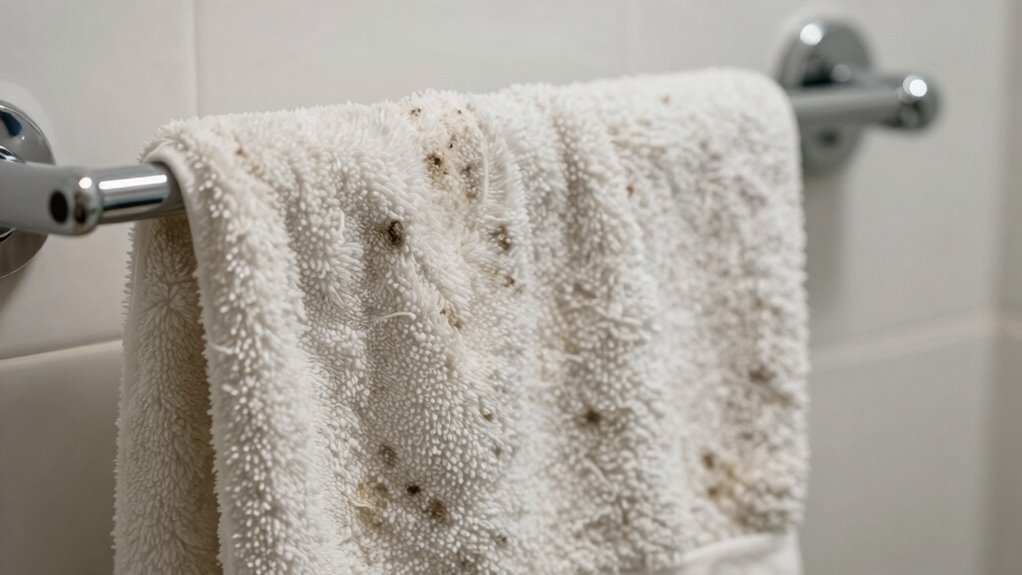
Damp towels, especially if made from plush materials or not dried properly, can trap moisture, leading to mold and bacteria growth that you can’t see. This buildup causes unpleasant odors and can make your bathroom smell dirtier than it looks. Poor ventilation and stacking damp towels worsen the issue by preventing proper drying. To keep your bathroom fresh, it’s important to understand how towel materials and habits influence hygiene; keep going to discover more effective tips.
Listen free for 30 days with Audible
Thousands of audiobooks and originals — cancel anytime.
As an affiliate, we earn on qualifying purchases.
Key Takeaways
- Damp towels retain moisture, creating an ideal environment for mold and bacterial growth that causes odors.
- Poor ventilation allows moisture to linger, increasing towel-related musty smells and overall bathroom odor.
- Over time, towel fibers break down, trapping bacteria and odors that are not visible but contribute to bad smells.
- Infrequent or improper drying of towels leads to bacterial buildup, which can spread odors throughout the bathroom.
- Using worn or old towels can harbor bacteria and mold, making the bathroom smell dirtier despite clean appearances.
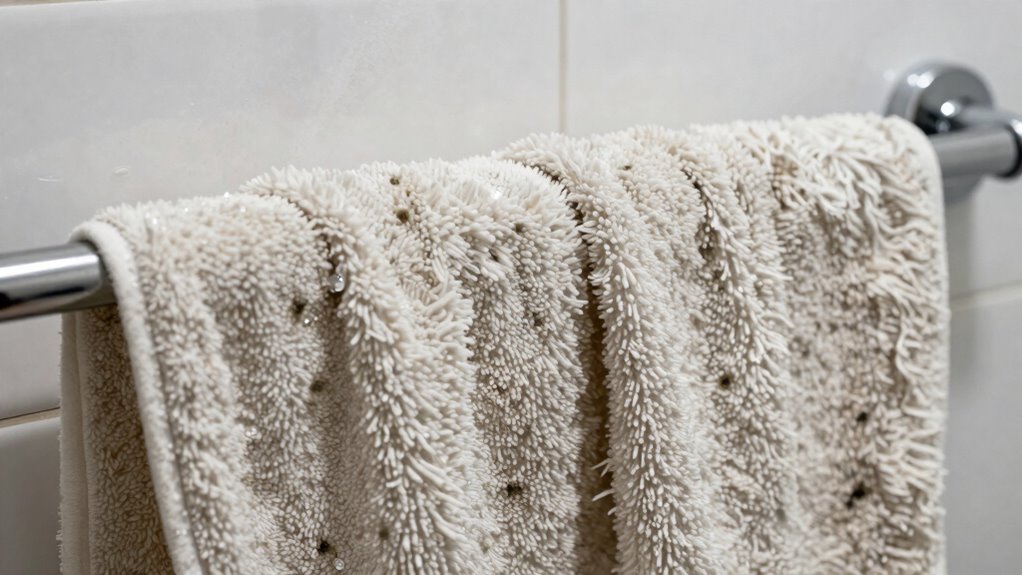
If you notice a persistent musty odor in your bathroom, your towels might be the culprit. Towels are often overlooked when it comes to bathroom hygiene, but they can harbor bacteria, mold, and mildew that cause that unpleasant smell. The type of towel material you choose plays a vital role in how quickly your towels absorb moisture and how easily they dry out. For instance, plush terry cloth towels are soft and absorbent but tend to hold onto water longer, giving mold spores a perfect environment to grow if not dried properly. On the other hand, thinner or microfiber towels tend to dry faster, reducing the chance for bacteria to thrive. Proper bathroom ventilation is key in preventing towels from becoming breeding grounds for germs. Without adequate airflow, moisture lingers in the air and on your towels, creating a humid environment that encourages mold growth. If your bathroom lacks proper ventilation, even the cleanest towels can develop a musty smell over time. Using an exhaust fan or opening a window after showering helps to circulate air, dry out damp surfaces, and keep humidity levels in check. This simple step can greatly reduce the risk of towel-related odors. Additionally, understanding how moisture retention affects towel hygiene is essential in maintaining a fresh-smelling bathroom. You might also be washing your towels regularly but not drying them thoroughly, which contributes to that stale smell. Proper air circulation around towels by spreading them out or hanging them on a towel rack is crucial for quick drying and preventing bacteria buildup. Avoid cramming multiple damp towels into a small space or stacking them while they’re still wet. Instead, spread them out or hang them on a towel rack where air can reach every surface. This practice helps towels dry faster and prevents the buildup of bacteria. Another aspect worth noting is how often you replace your towels. Over time, even with proper washing and drying, towels can develop a persistent odor because the fibers break down and trap dirt or odor-causing bacteria. Regularly inspecting your towels for signs of wear and fiber breakdown is important to maintain hygiene. Ensuring your laundry routine includes hot water and disinfectants can help eliminate bacteria that standard detergent might not fully remove. Additionally, choosing high-quality towels made from durable fibers can help maintain their integrity and hygiene over time.
microfiber bath towels quick drying
As an affiliate, we earn on qualifying purchases.
As an affiliate, we earn on qualifying purchases.
Frequently Asked Questions
How Often Should I Replace My Bathroom Towels?
You should replace your bathroom towels every three to four uses or weekly, whichever comes first. Pay attention to towel texture—if it feels rough or faded, it’s time for a new one. Color significance also matters; lighter towels show dirt more easily and should be swapped out sooner. Regularly washing and replacing towels helps prevent bacteria buildup and keeps your bathroom fresh and hygienic.
Can Towel Materials Affect Bathroom Odors?
Towel fabric definitely impacts bathroom odors. For instance, a study found that cotton towels, with their absorbent and breathable material properties, tend to trap moisture and bacteria, leading to smells over time. Conversely, microfiber towels dry faster and resist odor buildup due to their less absorbent, synthetic fabric. Choosing towels with appropriate material properties helps reduce odors, keeping your bathroom fresher and cleaner longer.
Do Towel Storage Methods Influence Bathroom Smell?
Yes, your towel storage methods influence bathroom smell. If you hang towels in a humid area or stack them tightly, moisture gets trapped, fostering bacteria and mold growth. Lighter-colored towels may show stains or mildew more easily, but darker ones hide them better. To keep your bathroom smelling fresh, store towels in a well-ventilated space, especially if humidity levels are high, and rotate or wash towels regularly.
Are There Specific Cleaning Agents Best for Towels?
You should choose detergents designed for towels to effectively remove stains and odors. Look for those with strong stain removal and antimicrobial properties, like enzyme-based or hypoallergenic options. These detergent types penetrate fibers deeply, breaking down bacteria and grime. By selecting the right detergent, you’ll keep your towels fresh, clean, and smelling nice, ensuring they don’t become a breeding ground for bacteria and unpleasant odors.
Can Using Fabric Softeners Worsen Bathroom Odors?
Yes, using fabric softeners can worsen bathroom odors. They often leave buildup on towels, creating odor trapping residues that trap moisture and bacteria. This buildup not only dulls your towels but also promotes a musty smell over time. To avoid this, skip fabric softeners or use alternatives like vinegar, which help reduce buildup and keep your towels fresh and odor-free, maintaining a cleaner bathroom environment.
Conclusion
So, next time your bathroom smells a bit off, don’t blame the air or the tiles—check your towels. It’s ironic how something so simple can turn into a hidden culprit, making your space seem dirtier than it truly is. Sometimes, the cleanest-looking towels harbor the nastiest surprises. Remember, what you don’t see can definitely make your bathroom smell worse. It’s a small reminder that cleanliness isn’t just about looks—it’s about what’s hidden beneath the surface.
Flea & tick season Picks
flea and tick prevention
As an affiliate, we earn on qualifying purchases.