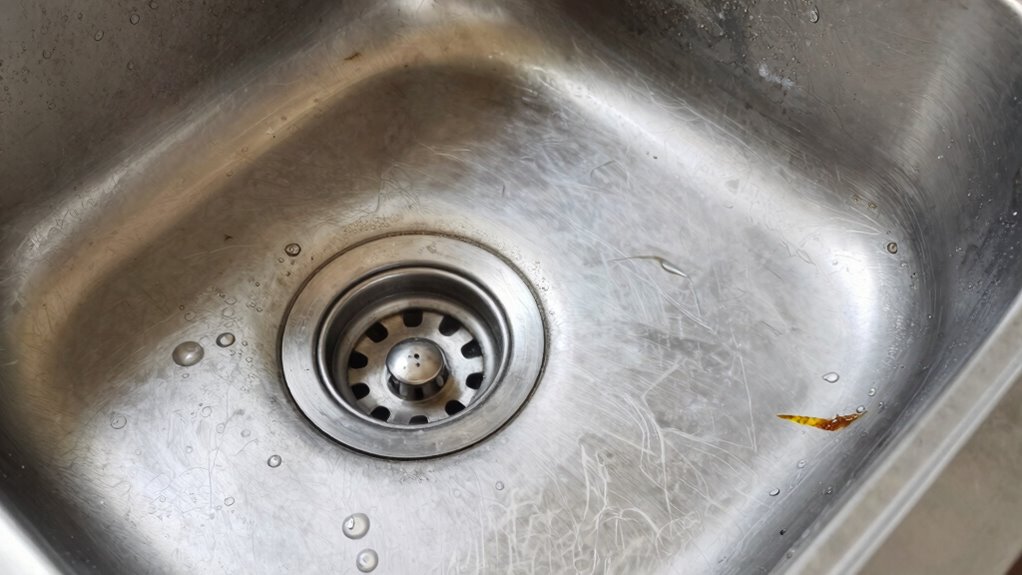

If you don’t clean your sink and faucet regularly, mineral deposits from hard water quickly calcify and harden. Infrequent cleaning allows buildup to set in deeply, making it harder to remove. Hard water speeds up the process of mineral accumulation, especially if you don’t wipe down fixtures after use. Using harsh chemicals can damage surfaces and worsen the issue. Keep your fixtures maintained, and you’ll find how to slow this cycle down with simple tips that follow.
Key Takeaways
- Infrequent cleaning allows mineral deposits and soap scum to harden, speeding up buildup recurrence.
- Hard water contains minerals that quickly re-deposit on fixtures, causing rapid buildup.
- Without water softening or treatment, mineral deposits return faster after cleaning.
- Using harsh chemicals can damage fixtures, making them more prone to quick buildup.
- Fluctuating water hardness levels require consistent maintenance to prevent rapid deposit return.
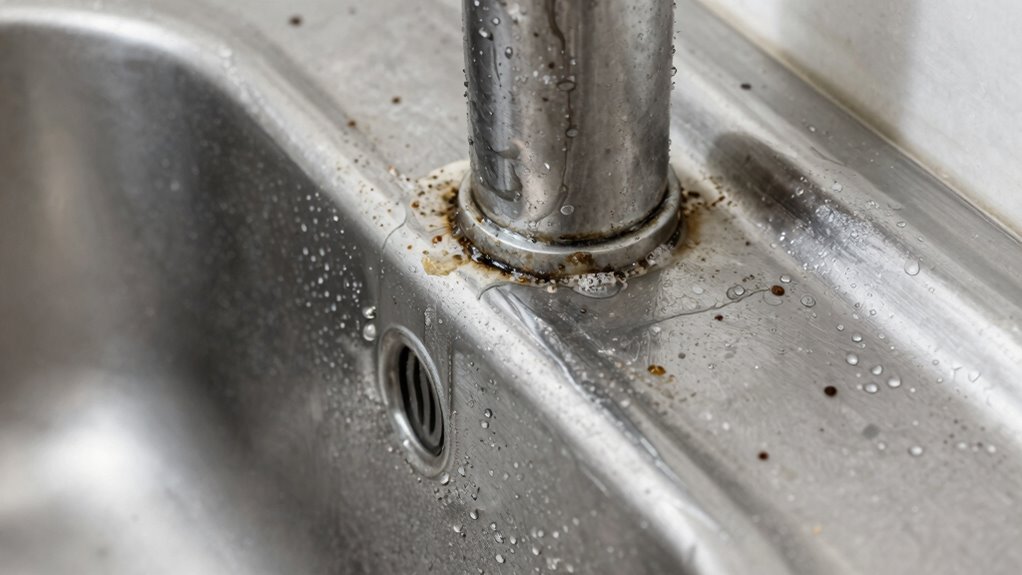
Your cleaning frequency plays an essential role here. If you only clean your sink and faucet sporadically, mineral deposits and soap scum have more time to set in, making buildup more noticeable and harder to remove over time. Regular cleaning helps prevent these deposits from becoming ingrained, but it’s important to understand that if your water is particularly hard, cleaning alone might not be enough. You need to address the root cause—water hardness—to really curb the rapid return of buildup. Water hardness levels can influence how quickly deposits form, emphasizing the importance of understanding your water quality. Additionally, knowing your water mineral content can help you choose the most effective prevention methods. Understanding the effects of mineral deposits on fixtures can further motivate proper maintenance strategies. Moreover, implementing water treatment options like filtration or softening can significantly reduce mineral buildup.
Another factor that contributes to the quick comeback of buildup is the type of cleaning products you use. Harsh chemicals might temporarily remove visible grime, but they can also damage your fixtures’ surfaces, making them more susceptible to mineral adhesion. Instead, using gentle, non-abrasive cleaners combined with daily wipe-downs can slow down the formation of deposits. Additionally, wiping your fixtures dry after each use helps minimize water spots and mineral residue, especially in areas with hard water.
Installing water softeners can substantially reduce the mineral content in your water, which in turn greatly slows down buildup. If a softener isn’t an option or if your water supply has fluctuating hardness levels, you’ll need to be more vigilant with your cleaning routine. Regularly removing limescale with vinegar or commercial descaling agents can also keep mineral deposits at bay, but only if you stay consistent and don’t let buildup get a foothold. Understanding your water’s hardness levels can help you determine the best approach for maintenance and prevention. Moreover, testing your water periodically can give you insights into how your treatment methods are working and whether adjustments are needed.
In essence, the rapid return of sink and faucet buildup comes down to a combination of water hardness and how often you clean. Hard water leaves deposits quickly, and infrequent cleaning gives those deposits time to harden and grow. To keep your fixtures looking pristine longer, you must both address the mineral content of your water and establish a routine of frequent, gentle cleaning. This dual approach will help slow down the cycle of buildup and preserve the appearance and function of your sink and faucet.
As an affiliate, we earn on qualifying purchases.
Frequently Asked Questions
How Can I Prevent Buildup From Forming Initially?
To prevent buildup from forming initially, you should practice preventive maintenance regularly. Wipe down your sink and faucet surfaces after use to remove soap scum and minerals. Consider applying surface treatments like a protective sealant or anti-fingerprint coating to reduce adhesion of grime and hard water deposits. Regular cleaning with non-abrasive cleaners also helps keep buildup at bay, ensuring your fixtures stay cleaner longer and require less frequent deep cleaning.
Are Certain Materials More Resistant to Buildup?
You’re better off with materials that are more resistant to buildup. Look for options with high material durability and smooth surfaces, like stainless steel or ceramic. These materials are less likely to trap grime and soap scum, making cleaning easier and the buildup less persistent. Remember, a smooth surface is your best friend—less roughness means fewer chances for debris to latch on, helping you keep your sink and faucet cleaner longer.
How Often Should I Clean My Sink and Faucet?
You should clean your sink and faucet at least once a week to prevent buildup. Incorporate regular cleaning schedules into your routine, using gentle scrubbers and mild cleaners to maintain their shine. Follow maintenance tips like wiping down after each use and avoiding harsh chemicals, which can cause quicker buildup. Consistent cleaning keeps your fixtures looking fresh, reduces residue, and minimizes the need for more intensive scrubbing later.
Can Water Quality Affect Buildup Speed?
Yes, water quality can substantially affect buildup speed. Water contaminants and mineral deposits, like calcium and magnesium, in hard water lead to quicker buildup on your sink and faucet surfaces. When you have hard water, these minerals settle and form deposits faster, making cleaning more frequent. Using water softeners or filters can help reduce mineral deposits, slowing down buildup and keeping your fixtures cleaner longer.
What Tools Are Best for Deep Cleaning Buildup?
Ever wondered what tools make deep cleaning buildup easier? You’ll want a grout brush or an old toothbrush for scrubbing tight spots, and a putty knife to scrape off stubborn deposits. Cleaning hacks like using vinegar or baking soda work wonders, but for tough grime, maintenance tips include using a handheld steam cleaner or a pumice stone carefully. These tools help you restore your sink’s shine and keep buildup at bay longer.
Conclusion
So, when buildup keeps returning, it’s like a stubborn weed in your garden—no matter how often you pull it, it keeps sprouting back. Regular cleaning and preventative measures are your garden tools, helping you keep that pesky grime at bay. Think of it as tending to your sink’s tiny ecosystem, nurturing cleanliness while keeping the buildup from taking over. With patience and care, your sink can stay shining, free from the relentless march of stubborn grime.