
TL;DR

Get cleaning gear delivered free with Prime
- Fast, free delivery on millions of items
- Prime Video, Amazon Music and more included
- Member-only deals all year
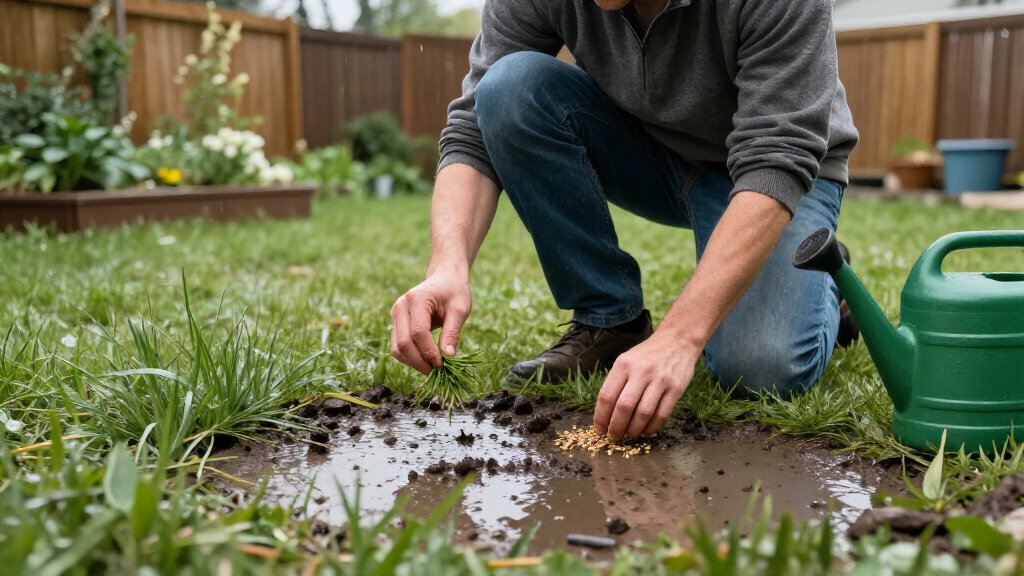
Grass seed may still germinate after heavy rain if the soil stays moist but does not remain waterlogged. Garden experts quoted by Ideal Home recommend redistributing displaced seed, lightly aerating affected areas and covering seed with a thin layer of topsoil or compost. How well the seed recovers depends on drainage and the extent of washing or pooling.
Grass seed can still germinate after heavy rain if water drains away and the soil remains moist rather than waterlogged, according to lawn experts quoted by Ideal Home. For lawns where rain has pooled or moved seed, the report recommends redistributing seed once the ground is workable, lightly aerating flooded areas and applying a thin protective covering.
The main risk is not rain alone but standing water and poor drainage. Guy Jenkins, consumer manager at Johnson’s Lawn Seed, told Ideal Home that moisture is needed for germination, but saturated or waterlogged ground can interfere with it. Jonathan Davis, a lawn care expert at Lawnsmith, said seed should germinate normally if water has drained or soaked into the soil.
Water that remains pooled can leave seed sitting without enough oxygen, increasing the risk that it will rot. Heavy rain can also wash seed into clumps or away from bare patches. Davis said this may still produce growth, but can leave a lawn uneven, with dense tufts beside areas of bare soil.
For seed that has shifted, Jenkins advises waiting until the ground is workable before using a rake to spread it across bare areas. He said germination typically begins within seven to 21 days; if the lawn remains patchy after that period, overseeding affected spots may help. That timing is a general guide, not a guarantee for every lawn or weather condition.
How Rain Can Leave Lawns Patchy
The difference between damp soil and waterlogged soil can determine whether newly sown seed establishes evenly. Pooling water can damage germination, while runoff can rearrange seed and create bare spots. Checking the lawn after a storm helps gardeners decide whether to wait, repair displaced seed or address drainage before sowing again.
Timing matters because disturbing saturated ground can make the surface harder to work and may displace seed further. The advice is to wait until the soil is workable before raking, and to keep any aeration light and focused on waterlogged areas so the seed and existing lawn are not unnecessarily disturbed.
Products Worth Considering

Dyson V8 Cyclone Cordless Vacuum

Bose TV Speaker Compact Soundbar with Bluetooth and HDMI-ARC, Black

Samsung 42-Inch S90H OLED 4K Smart TV Bundle
As an affiliate, we earn on qualifying purchases.
Moist Soil Versus Standing Water
The Ideal Home report focuses on autumn, which it describes as a good period for sowing grass seed. Its guidance distinguishes the moisture seed needs from prolonged saturation: rain that drains away is less concerning than water left standing on the surface.
The three suggested steps address different problems. Raking can correct seed that has moved; aeration can create channels intended to help water drain; and a thin layer of topsoil or compost can help hold seed in place. The report does not present these measures as a guarantee that seed exposed to flooding will recover.
“You should typically start to see germination within seven to twenty-one days.”
— Guy Jenkins, quoted by Ideal Home
Recovery Depends on Drainage
The report does not quantify how much rain or how long standing water will prevent germination. It also does not establish whether particular seed varieties, soil types or lawn conditions will respond differently. Local drainage and the amount of seed washed away remain key unknowns for any individual lawn.
The seven-to-21-day germination window is presented as typical, not a firm deadline. Gardeners may need to wait and observe whether growth appears before deciding how much to reseed. The report does not claim that every flooded or heavily washed-out lawn can be rescued.
Check Growth Before Overseeding
After heavy rain, check whether water is still pooling and whether seed has collected in patches. If seed has moved, wait until the ground is workable, then rake it back across bare areas. Where waterlogged ground is the problem, the report recommends light aeration focused on affected spots; a thin covering of topsoil or compost may help hold seed in place.
Watch for germination over the following seven to 21 days. If growth is still noticeably uneven after that period, overseed bare areas, while taking local soil and weather conditions into account. The next step for any lawn will depend on whether water drains and whether enough seed remains in place.
Key Questions
Will grass seed grow after heavy rain?
Often, yes, if the rain drains away and leaves the soil moist rather than waterlogged. Seed left in standing water may rot or fail to get enough oxygen.
What should I do if rain has washed seed into patches?
Wait until the ground is workable, then use a rake to redistribute seed over bare areas. If the lawn is still patchy after the typical seven-to-21-day germination period, overseeding those spots may help.
Can I aerate a lawn after it floods?
The report recommends light aeration to help water drain through the soil, concentrating on waterlogged areas. Avoid heavy disturbance that could shift seed or stress the existing lawn.
Should I cover grass seed after heavy rain?
A thin layer of topsoil or compost can help keep seed in place, according to Lawnsmith expert Jonathan Davis. The report also mentions a light natural covering as a way to reduce seed movement.
Source: idealhome.co.uk