
TL;DR

Get cleaning gear delivered free — and shop member deals
- Fast, free delivery on millions of items
- Access to Prime Big Deal Days deals on October 6–7
- Prime Video, Amazon Music and more included
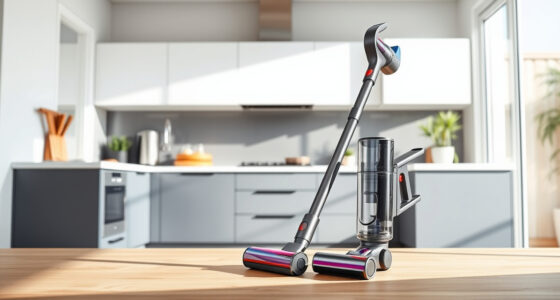
Cordless stick vacuums for pet hair work best when their floor head suits your surfaces, their brush is easy to clean, and their battery lasts at the power you actually use. Compare pickup on both hard floors and carpet, check filtration and included pet tools, and treat maximum runtime as a best-case figure.
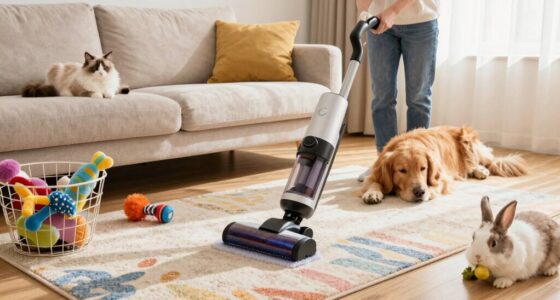
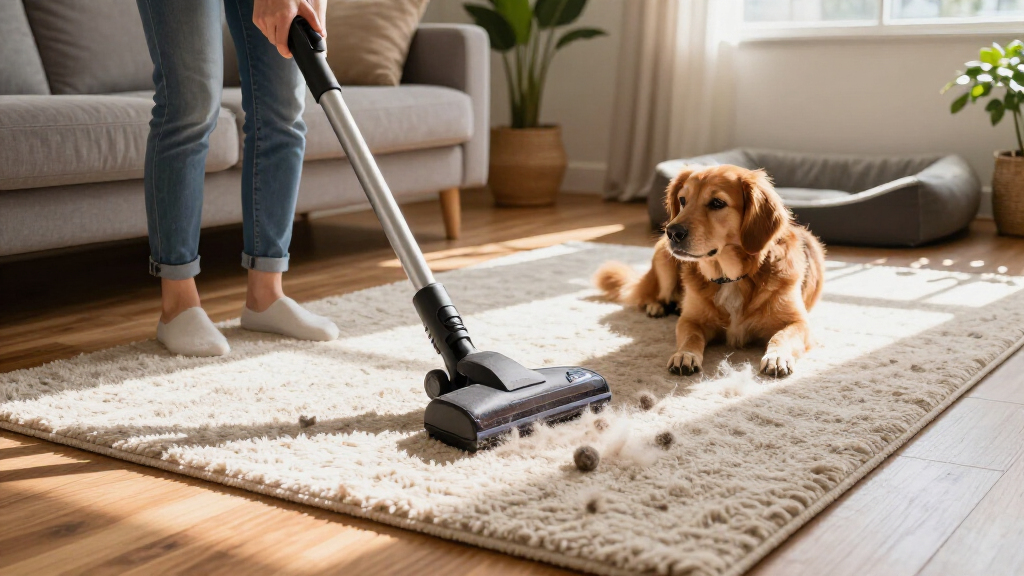
A tumbleweed of fur can roll across a clean floor before your coffee cools. Cordless stick vacuums for pet hair make quick cleanups easier, but the “pet” label alone won’t tell you whether one can lift fur from your carpet or keep long hair off its brush.
This guide helps you match a vacuum to your floors, your pet, and your routine. You’ll learn what to check in the brush, battery, filtration, tools, and upkeep before buying.
Compare fur pickup on your actual floor types; loose hair on hardwood and hair woven into carpet are different jobs.
Choose an accessible roller and treat anti-tangle features as help with maintenance, not a promise that hair won’t wrap.
Check runtime at the power setting and with the attachments you’ll use; maximum runtime is a best-case figure.
For allergy concerns, check whole-machine sealing and filter care instructions for the specific model.
Compare pet tools, bin capacity, replacement parts, battery options, and warranty alongside purchase price.
Start with the floors where hair collects
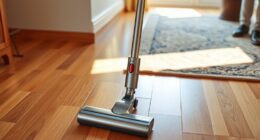
Cordless stick vacuums for pet hair should be judged on the surfaces you clean most: a hard hallway, a low-pile rug, or a thick bedroom carpet. Hair type and floor type determine whether fur stays loose on the surface or gets caught among carpet fibers. Short, coarse hairs can be especially stubborn once embedded, while longer tufts may gather into visible clumps that a floor head can push around if its airflow or brush action is poorly matched.
For example, imagine your short-haired dog naps beside the sofa. A head that gathers loose fur from hardwood may leave a gray fuzz line on the rug nearby because the brush does not agitate deep enough to lift hair from its fibers. Look for independent pickup tests on floor types like yours, and check whether reviewers tested upholstery if that matters in your home. Results across surfaces help you see whether a model is versatile or especially good at one kind of floor.
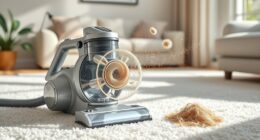
A motor label or high suction claim can’t tell the whole story. Brush agitation, airflow, and head design work together: agitation loosens hair, airflow carries it into the bin, and the head helps direct both. A powerful motor paired with a brush that scatters crumbs across tile can still frustrate you. A softer or adjustable brush may protect hard floors and contain debris, while a more aggressive motorized head may do better on carpet but use more battery and need more cleaning.
Choose a roller you can clean without a wrestling match
Cordless stick vacuums for pet hair need a brush roll that handles fur and gives you straightforward access when strands do wrap. Anti-tangle features reduce maintenance by guiding or cutting some hair before it winds tightly around the brush. That can mean fewer interruptions and less time spent unpicking strands, but no design makes a vacuum completely maintenance-free. Long hair can still gather around a roller, its bearings, or a tool opening, where it may slow the brush or restrict airflow.
Before you buy, check whether the roller comes out easily and whether you can reach the edges near the axle. This affects more than convenience: hair packed around an axle can be harder to remove and may interfere with rotation. If your spaniel leaves long, silky strands on the rug, a removable roller may save you from poking at a packed brush with scissors after every few cleanups. Consider how often you are willing to do that work when comparing a convenient anti-tangle design with a simpler, easy-to-open brush.
On hard floors, a brush designed for carpet can sometimes scatter grit or crumbs. A mixed-floor home benefits from a head that adjusts its brush or suction automatically, or clear manual settings that let you switch modes quickly. Automatic adjustment is convenient as you move between rooms, but manual controls can be more predictable if you prefer to choose the setting yourself. Either way, the useful question is whether the head can pick up hair without spreading other debris or demanding constant changes.
- Check roller access: Find out if the brush can be removed and whether you can reach the ends where hair collects.
- Match the brush to your floors: Compare hard-floor and carpet pickup results; a good result on one surface does not guarantee a good result on another.
- Expect upkeep: Inspect the roller regularly, especially if your pet has long hair, so buildup does not become a harder repair later.
Compare battery life by the way you actually clean
Cordless stick vacuums for pet hair run for different lengths of time depending on the setting, floor head, attachment, and battery condition. Maximum runtime is a best-case figure, often measured in a lower-power mode; high suction and a motorized tool can drain the battery faster. That makes the headline number a poor estimate for a long carpet-cleaning session, where the vacuum may need stronger suction and the brush consumes power too.
Suppose you clean a small apartment in short bursts after your cat sheds on the sofa. A single charge may suit that routine, and a lightweight model that is easy to grab could matter more than the longest advertised runtime. If you want to vacuum a large carpeted home in one pass, check runtime at a useful power setting and whether the battery is removable or replaceable. A spare battery can extend a session, but it adds purchase cost and does not help if the model’s floor head is ineffective at the power you need.
Some newer models show remaining charge or adjust suction with floor sensors. These features can help you manage a session: a clear charge display may help you prioritize rooms, while automatic suction changes can conserve power on easier surfaces. But a display or sensor doesn’t prove better hair pickup, and a sensor may still choose a setting that does not suit your preferred balance of cleaning strength and runtime. Compare real tests, check the runtime for the modes and tools you expect to use, and confirm whether spare batteries are available for that model.
Check filtration if fine dust bothers you
Cordless stick vacuums for pet hair can help manage loose fur and dust, but filtration depends on both the filter and the path air takes through the machine. A high-efficiency filter captures fine particles; a well-sealed system helps keep collected dust from leaking back into the room. The distinction matters: a capable filter cannot do its job if air bypasses it through gaps, while a sealed system still needs suitable filtration to trap small particles.
If you have allergies, read the specific model’s whole-vacuum filtration claims instead of relying on a broad “HEPA” mention on the box. A filter description may apply to one component rather than the complete airflow path, so look for documentation that explains the assembled machine. Follow the manufacturer’s instructions for cleaning and replacing filters. A washable filter needs to dry fully before you put it back; using it damp can restrict airflow and may create other problems.
Picture emptying the bin beside your front door after vacuuming a dusty rug. A bin that opens cleanly can make that task less messy, while a clogged filter can impair performance by restricting airflow. Filter care and emptying habits therefore affect both how well the vacuum runs and how much dust you release during routine handling. If emptying a bin tends to trigger symptoms, consider how it opens and whether the manufacturer offers a sealed or self-emptying option, while remembering that such systems also need space and maintenance.
Compare the features that change daily use
Cordless stick vacuums for pet hair vary most in how well they suit your floors, cleaning sessions, and storage space. Compare practical features side by side because one feature often brings a trade-off: a motorized upholstery tool may make sofa cleanup easier but adds weight and another attachment to store; a larger battery may run longer but make the vacuum heavier. A higher price or pet-specific bundle does not guarantee that those compromises fit your home.
| Home need | What to check | Trade-off |
|---|---|---|
| Hard floors and rugs | Floor head settings and pickup tests on both | A carpet-focused brush may scatter debris on hard floors |
| Deep or extensive carpet | Motorized head performance and useful-mode runtime | Higher power may reduce battery life |
| Long-haired pets | Anti-tangle design and removable roller | Hair can still wrap around moving parts |
| Stairs, beds, or car seats | Handheld conversion and a mini motorized tool | Attachments add weight or storage needs |
| Allergies | Whole-machine sealing and filter guidance | Filters need regular care and replacement |
For a practical example, a house with a shedding retriever, stairs, and a fabric sofa may benefit more from a mini motorized tool and a second battery than from a display showing dirt levels. The tool targets hair on upholstery, while the extra battery can cover a longer session if the carpet head performs well at the setting you need. Think about what matters most in your home before paying extra for features you may rarely use; otherwise, you may spend more and still need a second device for the surfaces the stick handles poorly.
Make upkeep quick enough to keep doing
Cordless stick vacuums for pet hair work better as part of a simple routine: empty the bin before it’s packed, inspect the roller, and care for filters as the manual directs. Pet hair fills small bins quickly, especially after you clean a bed or a favorite sofa corner. A packed bin can leave less room for airflow and means you may have to stop mid-clean, so capacity matters most when you regularly collect large amounts of fur.
After vacuuming your terrier’s blanket, tap the bin into the trash and check whether hair has collected around the roller ends. If you washed a filter, let it dry completely before reusing it. Those small habits help prevent blockages and keep performance steadier; they also make it easier to spot a problem before reduced suction becomes the first sign that something is clogged.
Check long-term costs too. Replacement batteries, filters, rollers, and spare-part availability affect how long the machine remains useful. A model with a lower purchase price may cost more to maintain if common parts are difficult to find, while a replaceable battery can extend its useful life at an added cost. A self-emptying dock can reduce how often you handle the bin, but it costs more, takes up space, and still needs upkeep. Compare these costs against how often you clean and how much time the feature is likely to save you.
Pick the setup that fits your whole home
Cordless stick vacuums for pet hair suit frequent, quick cleaning, but a single vacuum won’t suit every home. Large carpeted areas or heavy debris loads may call for a full-size vacuum or a complementary model, while a lighter stick can be easier to carry upstairs or use for daily touch-ups. The trade-off is practical: a stick may make frequent cleaning less of a chore, but you may need more charging breaks or a second vacuum for demanding carpet.
Try a simple buying process:
- List your surfaces: Note whether you have mostly hard floors, rugs, or deep carpet. Give the most demanding surface extra weight, because a model that works only on easy floors may not handle the room that needs the most cleaning.
- Match the tools: Look for a mini motorized attachment if you clean pet beds, upholstery, stairs, or car interiors. A useful attachment can save time, but only if it is comfortable to handle and simple to store.
- Check useful runtime: Compare power modes and battery options against the size of your cleaning session. A long low-power runtime may not help if your carpet needs a stronger setting.
- Review upkeep and cost: Check bin capacity, roller access, filter instructions, warranty, and part availability. These details determine how much routine work and replacement expense to expect after the initial purchase.
If your cat sheds mainly on a chair and hardwood, you may value a handy handheld mode and an easy-empty bin more than a huge battery. For a home with wall-to-wall carpet, focus first on tested carpet pickup and the runtime you’ll get at the setting you need. Choosing around the hardest or most frequent task helps avoid paying for headline features while discovering that the vacuum struggles where you rely on it most.
Frequently Asked Questions
Will a cordless stick vacuum pick up pet hair from carpet?
Many models pick up surface hair, but results vary on dense or deep-pile carpet. Check independent tests on a carpet like yours and look for an effective motorized head.
Do anti-tangle rollers really work?
They can reduce how much hair wraps around the brush and make cleanup easier. Long strands may still collect around rollers, bearings, or tool openings, so inspect the brush regularly.
How long does a cordless pet vacuum battery last?
Runtime depends on the power setting, floor head, attachment, and battery condition. Maximum-runtime claims usually describe a lower-power mode, so compare figures for the settings you expect to use.
Are cordless stick vacuums good for allergies?
They may help when the model has effective filtration and a well-sealed dust path. Check the whole-vacuum documentation, care for filters as directed, and empty the bin carefully.
Can one cordless stick vacuum clean my whole house?
It depends on home size, floor types, battery capacity, and the time you want to clean between charges. A removable spare battery can help where supported; large carpeted homes may benefit from a full-size or complementary vacuum.
Conclusion
Choose for the hair on your floors, the surfaces beneath it, and the length of your cleaning sessions. Test results, roller access, useful runtime, and the tools you’ll use tell you more than a “pet” label.
Make the right match and the tumbleweed of fur has a shorter trip across the room.
Fall Picks
fall essentials
As an affiliate, we earn on qualifying purchases.