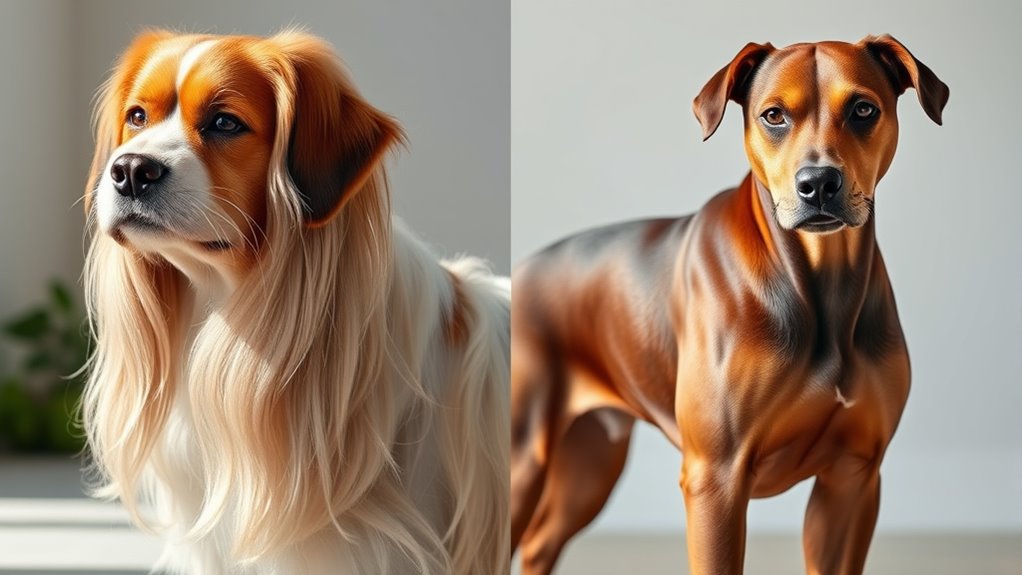

Grooming needs for long-haired breeds include daily brushing, frequent baths every 4-6 weeks, trimming, and regular coat checks to prevent mats, tangles, and skin issues. Short-haired breeds require less frequent grooming—every 6-8 weeks—with regular brushing to manage shedding and dirt. Both need nail trims, ear cleaning, and dental care, but long-haired dogs demand more attention. Staying on top of grooming improves their coat health and comfort—learn more to keep your pup looking and feeling great.
Key Takeaways
- Long-haired breeds require more frequent grooming, often daily brushing, to prevent mats and tangles, unlike short-haired breeds that need less frequent maintenance.
- Long-haired dogs need regular baths every 4-6 weeks and frequent trims, while short-haired breeds are typically bathed every 6-8 weeks with less trimming.
- Both breeds benefit from tools like brushes and nail clippers, but long-haired breeds need slicker brushes and scissors for coat management.
- Neglecting grooming in long-haired breeds can cause skin issues and discomfort, whereas short-haired breeds shed more visibly but require less intensive care.
- Consistent grooming routines improve coat health, reduce shedding, and promote overall well-being for both long- and short-haired dog breeds.

Grooming needs vary considerably between long-haired and short-haired breeds, and understanding these differences is vital for keeping your pet healthy and comfortable. The key to effective grooming starts with proper coat maintenance, which depends heavily on choosing the right grooming tools. Long-haired breeds, like Shih Tzus or Afghan Hounds, require more frequent attention to prevent mats and tangles. Regular brushing, often daily, helps keep their coats smooth and free of debris. You’ll want to use a slicker brush or a wide-tooth comb designed for long fur, which can reach through thick, flowing hair without pulling or causing discomfort. These grooming tools are indispensable because they distribute natural oils evenly, promoting a healthy shine and reducing shedding. Additionally, understanding the importance of coat health can help you develop a comprehensive grooming routine that benefits your pet’s overall well-being.
Long-haired breeds need daily brushing with slicker brushes or wide-tooth combs to prevent mats and tangles.
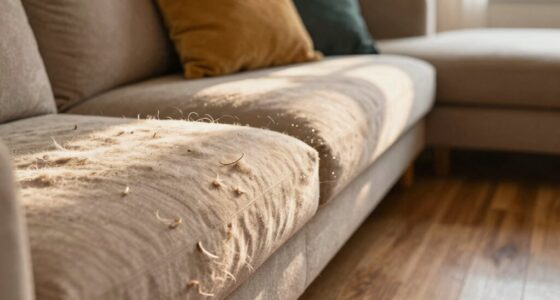
In contrast, short-haired breeds such as Beagles or Boxers generally need less frequent grooming, but it’s still important to maintain coat health. A simple bristle brush or grooming mitt can effectively remove loose hair and dirt, making maintenance easier. Short-haired coats tend to shed more visibly, especially during seasonal changes, so regular brushing helps manage hair around your home and keeps your pet comfortable. While they don’t require daily grooming, periodic baths with a gentle dog shampoo help keep their coat clean and skin healthy.
When it comes to coat maintenance, your grooming routine for long-haired breeds should include trimming around the eyes, ears, and paws to prevent matting and discomfort. You might also need grooming scissors or clippers for occasional trims, especially if your pet’s hair grows quickly or becomes tangled. Short-haired breeds rarely need trimming, but checking their coat regularly for mats or skin issues is still important. Bathing schedules differ based on the breed’s activity level and environment, but general advice suggests bathing long-haired dogs every 4-6 weeks and short-haired dogs every 6-8 weeks.
In addition to brushes and combs, grooming tools like nail clippers, ear cleaners, and dental brushes should be part of your regular grooming kit. Keeping your pet’s coat well-maintained isn’t just about appearance; it’s vital for their health. For long-haired breeds, neglecting coat maintenance can lead to painful mats, skin infections, and discomfort. For short-haired breeds, poor grooming can result in skin irritation or unnoticed injuries. By understanding your dog’s specific needs and investing in the right grooming tools, you’ll ensure your pet stays comfortable, healthy, and looking their best.

2PCS Slicker Brush for Dogs & Pet Comb,Professional Dog Grooming Brush (Goldendoodles,Poodles,Labradoodles) with Extra Long Pins to Effectively Remove Tangles, Knots and Mats (Blue, Large)
【Premium Dog Grooming Kit】Owning a professional dog slicker brush and a comb, you can effectively remove tangles, knots,…
As an affiliate, we earn on qualifying purchases.
As an affiliate, we earn on qualifying purchases.
Frequently Asked Questions
How Often Should I Trim My Long-Haired Dog’s Hair?
You should trim your long-haired dog’s hair every 6 to 8 weeks to maintain a healthy grooming schedule. Regular hair trimming frequency helps prevent mats and tangles, keeping your dog comfortable and looking good. Keep an eye on their coat between trims, and if you notice mats forming, schedule an extra grooming session. Consistent grooming not only improves their appearance but also promotes overall skin health.
Are Short-Haired Breeds More Prone to Skin Issues?
Imagine your short-haired dog scratching constantly—it’s common, but it could signal skin issues. Short-haired breeds are sometimes more prone to skin sensitivity and breed-specific skin conditions like dermatitis. Their exposed skin can absorb irritants more easily, leading to problems if not properly cared for. Regular grooming, checking for redness or irritation, and consulting your vet help prevent skin issues and keep your dog comfortable and healthy.
What Tools Are Best for Grooming Long-Haired Dogs?
For grooming long-haired dogs, you’ll want breed-specific tools like slicker brushes, wide-tooth combs, and grooming scissors to keep their coat healthy and tangle-free. Incorporate these into your grooming routine regularly to prevent mats and reduce shedding. Using the right tools makes grooming easier and more effective, ensuring your dog stays comfortable. Don’t forget to handle sensitive areas gently and check for any skin issues during each session.
How Can I Prevent Matting in Long-Haired Breeds?
You can prevent matting in long-haired breeds by brushing daily—yes, daily! This keeps fur shedding under control and stops tangles from turning into fierce knots. Use a slicker brush or comb designed for long hair, and don’t forget to trim those pesky areas regularly. Consistent grooming makes your dog’s coat smoother and more comfortable, saving you from messy, time-consuming detangling sessions later. Keep up the routine and enjoy a happy, mat-free pup!
Do Short-Haired Dogs Require Less Bathing Than Long-Haired Ones?
Short-haired dogs generally require less frequent bathing than long-haired breeds because their coats don’t trap dirt and debris as easily. You should still follow a regular grooming routine, typically bathing every 4-6 weeks, to keep their skin healthy. Adjust the grooming frequency based on your dog’s activity level and skin condition. Regular brushing also helps remove loose hair and dirt, reducing the need for frequent baths.

Professional 4 in 1 Dog & Cat Grooming Scissors Kit with Safety Round Tips,Sharp & Durable,Dog Shears for Grooming – Includes Straight, Curved, Thinning Scissors and Comb – Premium Pet Supplies
【Professional Dog Grooming Scissors】This dog grooming kit includes 1* thinning shear, 1*curved scissor, 1* straight scissor and 1*…
As an affiliate, we earn on qualifying purchases.
As an affiliate, we earn on qualifying purchases.
Conclusion
Whether you prefer long-haired or short-haired breeds, understanding their grooming needs helps you stay ahead of the game. With a little effort, you can keep your furry friend looking sharp and feeling comfortable. Remember, a well-groomed pet is a happy pet, and you don’t want to be caught with your pants down when unexpected messes happen. So, stay consistent with grooming, and your bond will grow even stronger—because a little care goes a long way.

Candure Dog Nail Clippers and Trimmer with Safety Guard to Avoid Over-Cutting Toe Nails Professional Grooming Pet Nail Clipper with Nail File for Small Medium-Large Breeds
Design: Candure Nail Cutter Dog Is Professionally Designed For Claw Cut. It's A Powerful And Easy To Use…
As an affiliate, we earn on qualifying purchases.
As an affiliate, we earn on qualifying purchases.

NVNAN Pet Hair Removal Glove for Dogs & Cats, 2-in-1 Deshedding Brush & Massage Mitt – Grooming Gloves for Shedding Control, Bathing and Washing, Safe for Short/Long Hair Pets 2-Pack (Blue)
All – in – One Grooming Solution: These dog grooming gloves and cat grooming gloves are a must…
As an affiliate, we earn on qualifying purchases.
As an affiliate, we earn on qualifying purchases.