The key to tackling pet hair isn’t just a powerful vacuum, but how you prepare your surfaces first. Removing loose hair with lint rollers or damp gloves and dislodging embedded hair with rakes or steam makes a huge difference. When fibers are loosened and surface hair is lifted, your vacuum can do its job more effectively. Keep doing these prep steps, and you’ll notice a big change—discover more tips to keep your home hair-free.
Key Takeaways
- Proper surface preparation, like removing loose hair with lint rollers or damp cloths, boosts vacuuming effectiveness.
- Dislodging embedded hair with tools like rakes or steamers prevents deep buildup that vacuums struggle to remove.
- Regular grooming reduces shedding and minimizes pet hair settling on surfaces, easing cleaning efforts.
- Using appropriate vacuum attachments and maintaining equipment ensures optimal pet hair removal performance.
- Targeted cleaning techniques, including fluffing carpet fibers and thorough pre-vacuum prep, make pet hair removal more efficient.
As an affiliate, we earn on qualifying purchases.
Why Pet Hair Sticks to Carpets and Upholstery
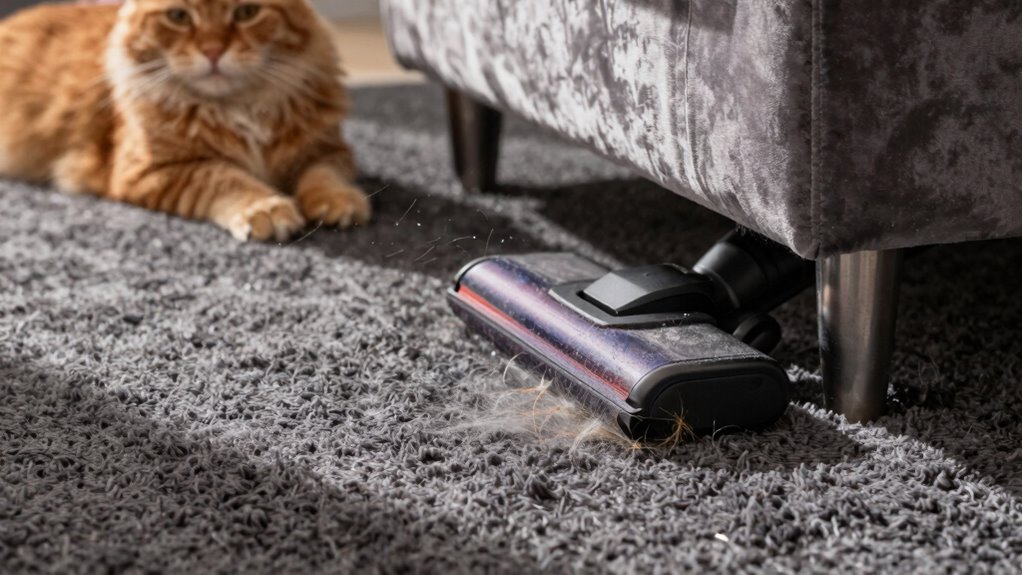
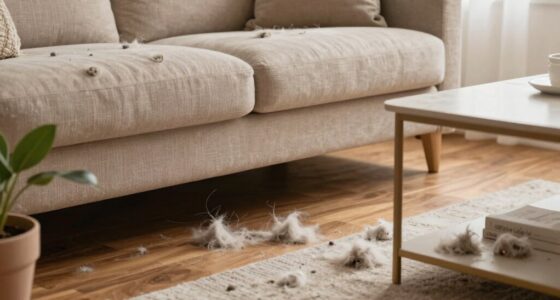
Pet hair tends to cling to carpets and upholstery because these surfaces have rough, textured fibers that create numerous tiny nooks and crevices. Many pet hair myths suggest that shedding is random or constant, but it actually follows shedding cycles, meaning your pet loses hair in predictable phases. During these cycles, hair loosens from the follicle and gets caught in fibers’ rough textures. This is why hair sticks stubbornly to carpets and upholstery—those fibers trap it more effectively than smooth surfaces. Understanding shedding cycles helps you anticipate when pet hair will be most noticeable, but it doesn’t mean you’re doing anything wrong. Recognizing these facts allows you to better prepare for pet hair buildup and choose the right cleaning approach. shedding cycles are influenced by various factors such as breed, health, and season, which can also affect how much hair is shed at any given time.
How to Prepare Your Surfaces for Better Pet Hair Removal
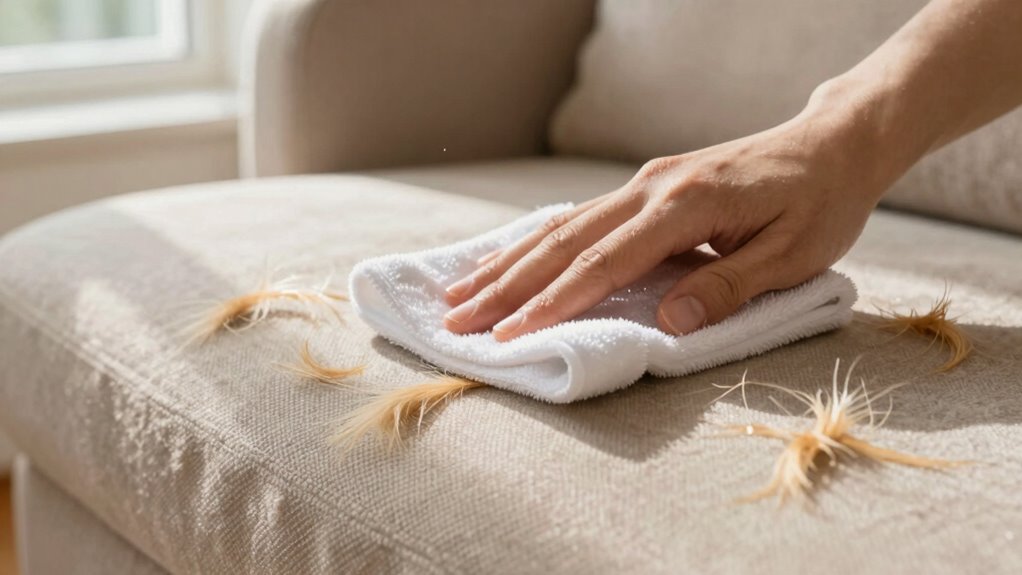
Since shedding cycles cause hair to loosen and settle into textured surfaces, preparing your furniture and carpets can make hair removal much easier. Many pet hair myths suggest you should only clean after shedding peaks, but surface preparation is key year-round. Start by removing loose hair with a lint roller or damp cloth to clear the surface and prevent it from embedding further. Vacuum or sweep regularly to lift hair before it settles deeply. Decluttering your space also helps, as clutter traps pet hair and makes cleaning harder. Remember, surface preparation isn’t just about cleaning; it’s about creating a surface that’s easier to clean later. Using a high-quality vacuum with strong suction and appropriate attachments can significantly increase the efficiency of hair removal. Additionally, choosing surfaces that resist pet hair accumulation can make ongoing maintenance easier. Being aware of shedding cycles helps in timing your cleaning routines for maximum effectiveness. Incorporating proper cleaning techniques ensures you remove pet hair more effectively and maintain a cleaner environment. Knowing that essential oils can help reduce stress-related shedding and improve overall coat health, incorporating a few drops into your cleaning routine or using them in diffusers may support a healthier environment for your pet. This simple step reduces pet hair buildup and makes your vacuuming more effective—no need to believe pet hair myths that only complicate the process.
How to Remove Loose Pet Hair Before Vacuuming
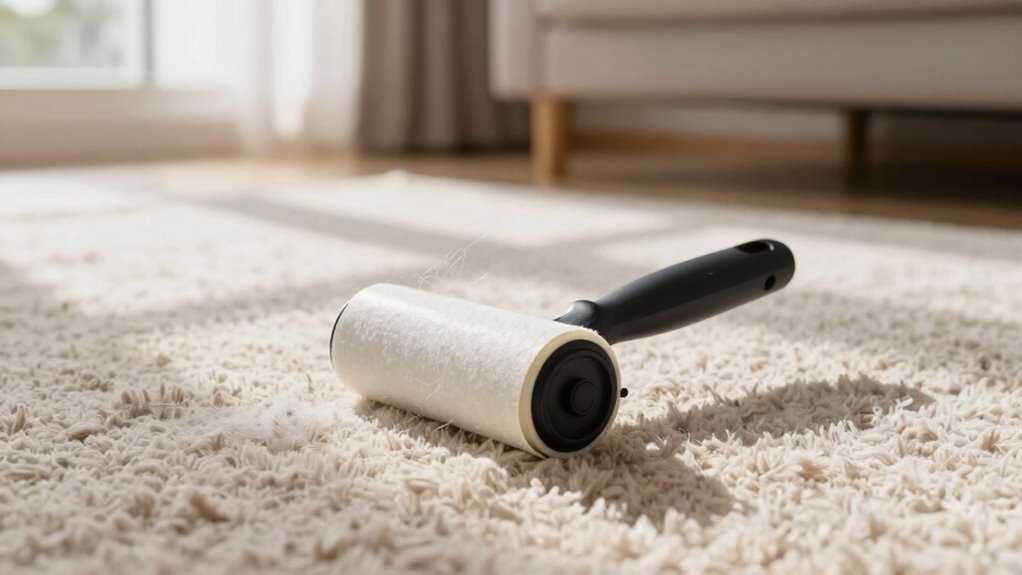
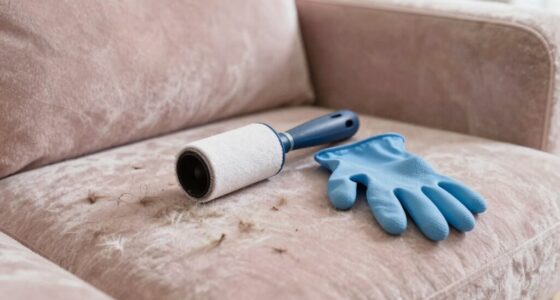
Before you vacuum, it’s important to remove as much loose pet hair as possible to prevent it from scattering and clogging your vacuum cleaner. Start by using a pet hair roller to pick up hair from furniture, clothing, and upholstery. For stubborn areas, try a damp rubber glove or cloth to lift loose hair more effectively. You can also apply pet hair sprays to surfaces, making hair easier to gather. Keep a lint brush handy for quick touch-ups on stairs or cushions. Regularly clean your vacuum’s filters and brushes to maintain ideal suction. Using these simple steps helps reduce loose hair, making vacuuming more efficient and preventing clogs. Incorporating effective removal techniques can significantly decrease the amount of pet hair that ends up in your vacuum, saving you time and effort. Additionally, choosing appropriate cleaning tools designed for pet hair can enhance your overall cleaning efficiency. Using a squeegee or rubber broom on carpets and rugs before vacuuming can further loosen embedded hair, making cleanup easier. A little prep goes a long way in managing pet hair effortlessly, especially when you incorporate natural cleaning techniques that support eco-friendly practices in your home. Being mindful of clog prevention can further extend the lifespan of your vacuum and improve its performance.
Effective Techniques to Dislodge Embedded Hair in Carpets
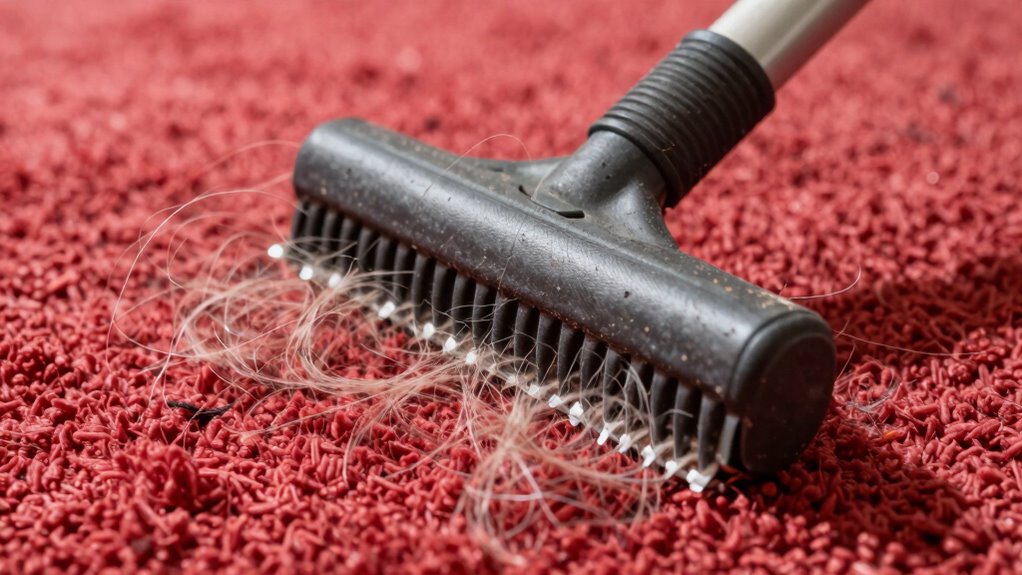
To effectively dislodge embedded pet hair, you can start by using a rake or comb to loosen it from the carpet fibers. Applying carpet fluffing techniques can help lift hair closer to the surface, making removal easier. For stubborn hair, a steamer or hot water can loosen fibers and release trapped hair more effectively.
Use a Rake or Comb
Using a rake or comb is an effective way to loosen embedded pet hair from carpets. It helps lift hair that vacuuming alone can’t reach, making cleanup easier. For pet hair detangling, a grooming brush or a specialized pet hair rake works wonders. To get the best results, run the rake or comb over the carpet in slow, deliberate strokes, focusing on heavily furred areas. This loosens stubborn hair and prevents it from matting or embedding further.
- Use a grooming brush for gentle pet hair detangling before raking
- Focus on high-traffic or heavily furred zones
- Always comb or rake in the direction of carpet fibers
- Apply firm, consistent pressure for better dislodging
- Follow up with a vacuum for a thorough clean
Apply Carpet Fluffing Techniques
After raking or combing to loosen surface hair, applying carpet fluffing techniques can help dislodge deeply embedded pet hair. Use a stiff-bristled brush or specialized carpet rake to perform carpet fluffing, lifting fibers and creating space beneath the surface. This process enhances upholstery aeration, allowing trapped hair and debris to rise to the top. This technique is supported by research indicating that smart contract technology can further streamline cleaning automation. Incorporating effective surface prep methods can also improve overall cleaning results. Work in small, overlapping sections, pressing firmly to break up compacted fibers. Fluffing not only loosens embedded hair but also restores the carpet’s texture, making vacuuming more effective. Incorporating visual cues can assist in identifying areas with the most embedded hair for targeted treatment. Focus on high-traffic or heavily soiled areas for maximum impact. Regularly performing deep cleaning techniques can prevent pet hair from settling deeply over time, reducing the effort needed during cleaning sessions and ensuring your carpets stay fresh and hair-free.
Use a Steamer or Hot Water
A steam cleaner or hot water extraction can be highly effective in dislodging deeply embedded pet hair from carpets. The heat loosens hair stuck deep in the fibers, making it easier to remove with subsequent cleaning. When using steam cleaning, ensure your water treatment is appropriate for your carpet type to prevent damage. Here are some tips:
- Pre-treat stubborn spots with a mild detergent before steaming
- Use a high-temperature steam cleaner for better hair dislodging
- Move slowly to allow heat to penetrate deep fibers
- Combine steam cleaning with a thorough vacuum afterward
- Regularly clean your steam cleaner’s water treatment system for ideal results
- Proper cleaning techniques can maximize the effectiveness of your steam cleaning process and help maintain your carpet’s longevity. Additionally, understanding the influence of natural surroundings on fiber durability can inform better maintenance practices.
- Being aware of cloud service dependencies can help prepare for potential disruptions and ensure consistent cleaning routines.
- Incorporating proper ventilation during and after steaming can help reduce moisture buildup and prevent mold growth, ensuring a healthier home environment.
- Recognizing material sensitivity ensures you select the safest cleaning method for your specific carpet type, preventing unintended damage.
This method effectively loosens pet hair, setting the stage for a cleaner, hair-free carpet.
How to Use a Lint Roller or Rubber Glove to Lift Pet Hair
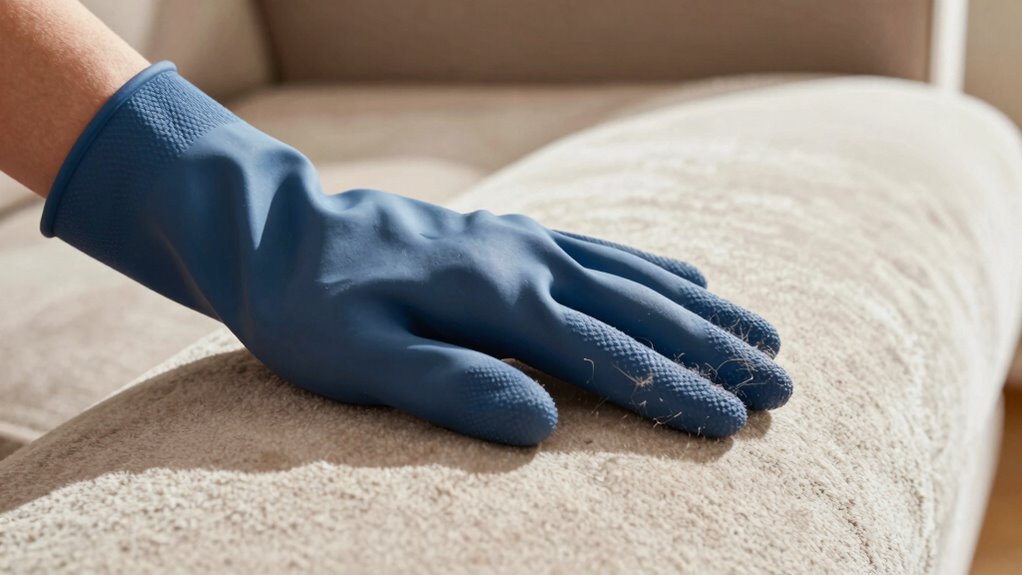
When tackling pet hair on clothing or furniture, a lint roller or rubber glove can be highly effective tools. Many pet hair myths suggest you need specialized equipment, but lint roller alternatives like a damp rubber glove work just as well. To use a lint roller, simply roll it over the surface, pressing down gently to lift hair from fabric. For a rubber glove, dampen it slightly and run your hand over the fabric in short, quick strokes. The pet hair sticks to the glove’s surface, making it easy to peel off and discard. These methods are quick, inexpensive, and eliminate the need for excessive cleaning products. They’re especially useful for quick touch-ups and work on most fabrics, ensuring pet hair doesn’t ruin your clean look. Understanding fabric types can help you choose the best method for different surfaces. Recognizing fabric properties can also assist in selecting the most gentle and effective hair removal technique. Additionally, using tools like electric vacuums with specialized attachments can enhance cleaning efficiency on various surfaces. Being aware of pet hair accumulation patterns can help you target trouble spots more effectively. Moreover, selecting the right hair removal tool for your specific fabric can make a noticeable difference in your cleaning routine.
Choosing the Best Vacuum Attachments for Pet Hair
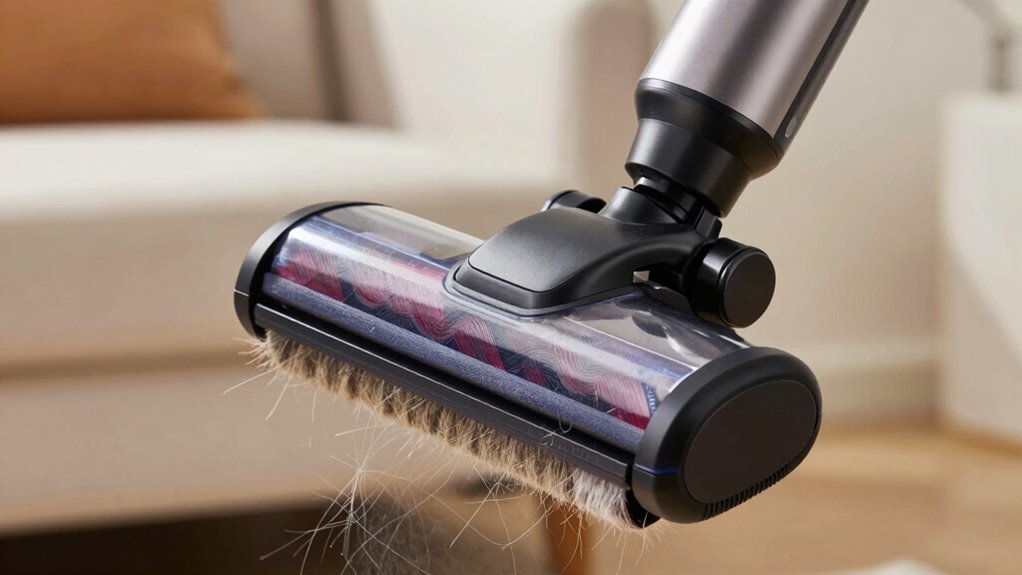
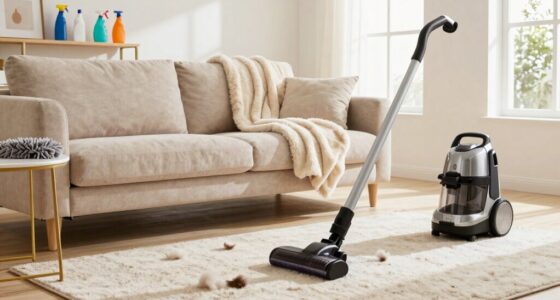
Choosing the right vacuum attachments can make a significant difference in effectively removing pet hair from your home. Selecting the proper tools enhances vacuum maintenance and helps dispel common pet hair myths. To maximize cleaning power, consider these attachments:
- Upholstery brush for furniture and cushions
- Motorized pet hair tool for carpets and rugs
- Crevice tool for tight corners and edges
- Dusting brush for delicate surfaces
- Handheld attachments for quick spot cleanups
Using the right attachments ensures you’re not wasting time on ineffective methods. Remember, many pet hair myths suggest that high suction alone solves everything—when in fact, the right attachment makes all the difference. Properly equipped, your vacuum can handle pet hair more efficiently, saving you effort and improving your home’s cleanliness. Additionally, understanding pet hair removal techniques can further enhance your cleaning routine.
Common Mistakes That Reduce Your Vacuum’s Effectiveness
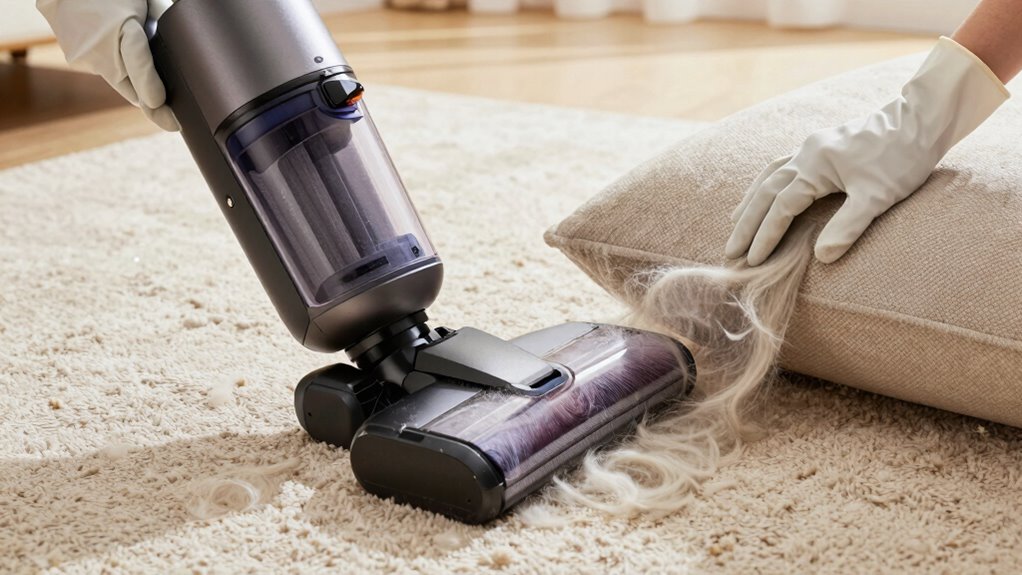
Even with the right attachments, your vacuum’s effectiveness can suffer if you make common mistakes during use. Ignoring regular vacuum maintenance can lead to clogged filters and reduced suction, making pet hair prevention harder. Additionally, using your vacuum on a messy, unprepared surface or failing to clear debris beforehand can limit its power. Check your vacuum’s brushroll for hair and debris buildup to ensure ideal cleaning. Avoid overlapping passes excessively, which wastes time and reduces efficiency.
| Mistake | Impact |
|---|---|
| Not cleaning filters regularly | Loss of suction, pet hair buildup |
| Ignoring brushroll maintenance | Reduced pet hair removal effectiveness |
| Vacuuming unprepared surfaces | Less hair pickup |
| Overlapping passes excessively | Wastes time, reduces efficiency |
| Skipping routine vacuum maintenance | Diminished vacuum performance |
Tips for Maintaining a Hair-Free Home

Maintaining a hair-free home requires consistent effort and effective strategies. Many pet hair myths suggest you only need occasional cleaning, but a regular grooming routine is key to reducing shedding. Stay on top of pet grooming to minimize loose hair around your space. Here are some tips to keep your home hair-free:
- Brush your pets frequently to reduce shedding.
- Use lint rollers or rubber gloves on furniture daily.
- Wash pet bedding and soft furnishings weekly.
- Vacuum high-traffic areas more often.
- Keep humidity levels moderate to prevent hair from sticking.
When to Call a Professional or Use Specialized Tools
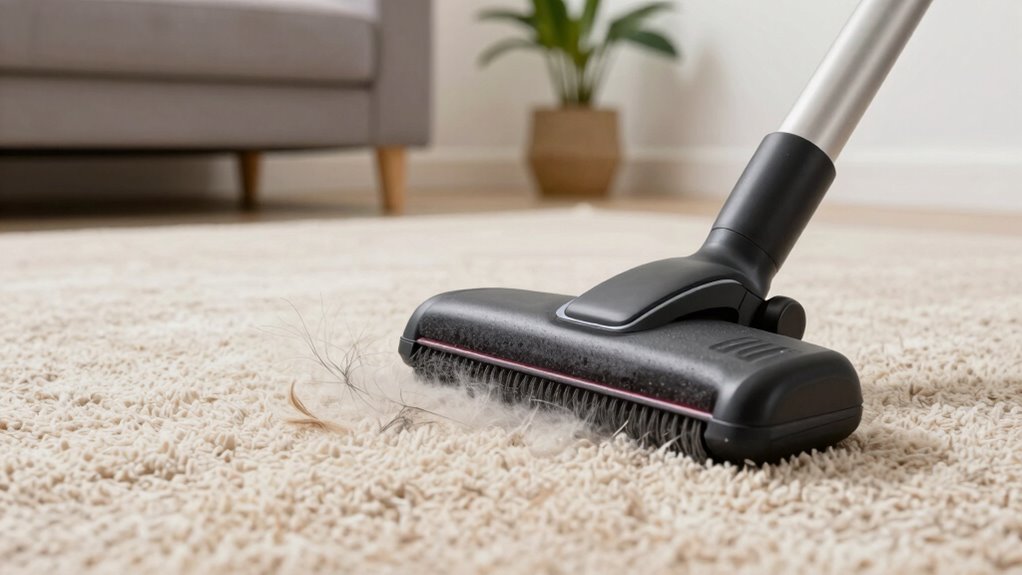
Sometimes, despite your best efforts, pet hair becomes stubborn or widespread, making regular cleaning tools insufficient. If you find yourself battling endless pet hair, it’s time to contemplate professional cleaning or specialized tools. Don’t fall for pet hair myths that suggest frequent vacuuming alone is enough; sometimes, deep cleaning is necessary. Professional cleaning services have industrial-grade equipment that can remove embedded hair from carpets and upholstery effectively. Additionally, investing in specialized tools like rubber brooms or handheld brushes can make a huge difference. Recognizing when your efforts are no longer enough ensures you don’t waste time or energy. Knowing when to call a professional or use these tools helps maintain a truly hair-free home and prevents misconceptions about pet hair being impossible to control.
Frequently Asked Questions
Can Regular Cleaning Schedules Prevent Pet Hair Buildup Effectively?
Regular cleaning schedules can effectively prevent pet hair buildup if you follow the right steps. Don’t fall for pet hair myths suggesting daily vacuuming is always necessary; instead, focus on consistent, targeted grooming and using proper tools. Many cleaning myths overlook the importance of pet hair prep, which makes all the difference. By staying consistent and following effective methods, you keep your home cleaner and reduce stubborn pet hair, saving you time and frustration.
What Household Products Help Loosen Pet Hair Before Vacuuming?
To loosen pet hair before vacuuming, try using pet hair sprays—they help break down the static and make hair easier to remove. You can also use sticky lint rollers on furniture and carpets to pick up loose hair quickly. These household products work together to prep surfaces, making your vacuuming much more effective and reducing pet hair buildup in the long run.
How Often Should I Replace or Upgrade Vacuum Attachments for Pet Hair?
You should replace vacuum attachments every 6-12 months, as over time, they lose effectiveness. Did you know that 70% of vacuum filter maintenance involves ensuring attachments are compatible and in good condition? Regularly check attachment compatibility tips and replace worn-out tools to maximize pet hair pickup. Upgrading your attachments helps maintain suction power and keeps your home pet-hair free, making cleaning more efficient and less frustrating.
Are There Specific Fabrics or Carpets Less Prone to Pet Hair Adhesion?
You’ll find that low-pile carpets and smooth fabrics like leather or microfiber are less prone to pet hair adhesion. These fabric types and carpet fibers don’t trap hair as easily, making cleanup simpler. Avoid plush carpets or shaggy rugs, which tend to hold onto pet hair more. Choosing these less hair-adhesive options helps keep your home cleaner and reduces the frequency of vacuuming needed.
How Do I Identify When Professional Cleaning Is Necessary?
You should schedule a professional inspection if you notice persistent allergy symptoms or if your vacuum struggles to remove pet hair despite regular cleaning. When dust, dander, or hair accumulate deep in carpets or upholstery, a professional cleaning can restore air quality and cleanliness. Trust the experts when you see stubborn pet hair buildup or ongoing allergy issues, as they can identify hidden allergens and guarantee your home stays safe and comfortable.
Conclusion
If you master these pet hair prep steps, you’ll turn your home into a hair-free fortress—so spotless, even a hairless cat would be jealous! Say goodbye to endless vacuuming struggles and hello to a home that looks like a pet hair-free palace. With just a little extra effort upfront, you’ll be amazed at how effortlessly pet hair disappears. Get ready to conquer pet hair once and for all—your vacuum and your home will thank you!