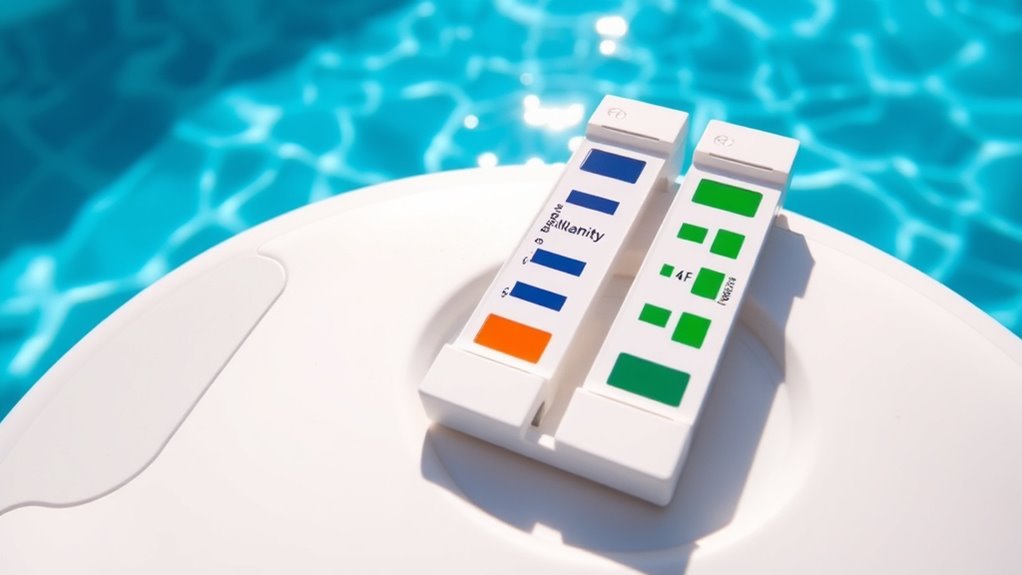

To balance total alkalinity and calcium hardness levels, test your water regularly and adjust each value carefully. Keep alkalinity between 80-120 ppm to prevent pH swings, and maintain calcium hardness around 200-400 ppm to avoid scaling or corrosion. Be cautious with chemical additions to avoid destabilizing your pool’s chemistry. Managing these levels helps keep your water clear, safe, and comfortable, and understanding the details behind proper balancing will help you keep your pool in excellent condition.
Key Takeaways
- Regularly test both alkalinity and calcium hardness to identify imbalances early.
- Adjust alkalinity with sodium bicarbonate and calcium hardness with calcium chloride incrementally.
- Maintain alkalinity levels between 80-120 ppm and calcium hardness between 200-400 ppm for optimal balance.
- Avoid large chemical swings to prevent destabilizing water chemistry and mineral scaling.
- Monitor the effects of adjustments on pH and mineral saturation to ensure stable, clear water.
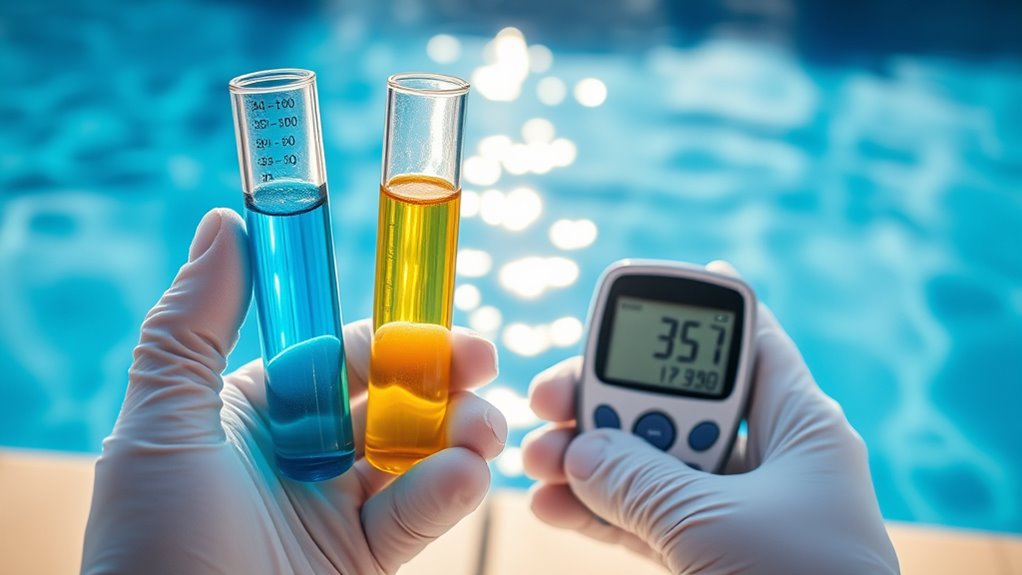
Maintaining proper alkalinity and calcium hardness levels is vital for a healthy and balanced swimming pool. When these levels are correctly managed, your pool water stays clear, safe, and comfortable for swimmers. One of the key aspects to focus on is pH stability, which directly influences how well your pool’s water maintains its chemical balance. Proper alkalinity acts as a buffer, preventing sudden pH swings that can cause algae growth, cloudy water, or corrosion. When alkalinity is too low, the pH can fluctuate wildly, leading to water that’s too acidic or too alkaline, both of which can damage pool equipment and irritate swimmers’ skin and eyes. Conversely, if alkalinity is too high, the pH becomes resistant to change, making it difficult to adjust and potentially leading to mineral saturation issues that cause scaling or cloudy water.
Proper alkalinity ensures pH stability, preventing algae, cloudy water, and equipment damage.
Calcium hardness is equally important because it influences water’s mineral saturation level. When calcium levels are too low, your pool water becomes corrosive, potentially damaging plaster, pipes, and equipment. High calcium levels, however, can lead to scale buildup on the pool surfaces and equipment, reducing efficiency and causing cloudy water. To keep calcium hardness balanced, you should regularly test and adjust the levels with appropriate chemicals. This helps prevent problems like staining, scaling, and water cloudiness, ensuring your pool stays in ideal condition.
Balancing alkalinity and calcium hardness isn’t just about adding chemicals; it’s about understanding how these levels interact with other water chemistry parameters. For instance, maintaining proper pH also depends on your alkalinity levels, since they work together to ensure water remains stable. When alkalinity is within the recommended range, it supports pH stability, which in turn minimizes fluctuations that can upset mineral saturation levels. Proper mineral saturation prevents unwanted deposits or corrosion, making your pool easier to maintain and more enjoyable for swimmers. You should regularly test your water and make incremental adjustments rather than large leaps, which can destabilize the entire system.
Additionally, understanding the concept of water mineral saturation can help you better manage your pool’s chemistry and prevent scale or corrosion issues. Consistent monitoring and adjusting your pool’s alkalinity and calcium hardness will help you avoid costly repairs and frequent chemical corrections. It’s a simple but essential part of pool maintenance that keeps the water clear, safe, and inviting. When you stay proactive about these levels, you’ll find your pool stays balanced longer, reducing chemical usage and improving overall water quality. In the end, keeping these parameters in check ensures your swimming experience is safe, comfortable, and free from avoidable issues caused by poor water chemistry management.
Top picks for "balanc total alkalinity"
Open Amazon search results for this keyword.
As an affiliate, we earn on qualifying purchases.
Frequently Asked Questions
How Often Should I Test My Pool’s Alkalinity and Hardness Levels?
You should test your pool’s alkalinity and hardness levels at least once a week during peak swimming season to maintain proper balance. Adjust your testing schedule seasonally, testing more frequently in hot, sunny months and less in cooler months. Regular testing helps prevent issues like cloudy water or scaling, ensuring your pool stays clean and safe. Always follow your pool’s specific guidelines for ideal results.
What Are the Signs of Imbalanced Alkalinity and Calcium Hardness?
Imagine swimming in a cloudy, chalky pool—this shows alkalinity fluctuations and hardness imbalance. You’ll notice cloudy water, scaling on tiles, or corrosion on equipment. Alkalinity fluctuations cause water to become too basic or acidic, leading to skin irritation. Hardness imbalance results in scaling or etching surfaces. These signs warn you to test and adjust levels promptly, ensuring your pool stays clean, safe, and inviting.
Can High Calcium Hardness Affect My Pool’s Water Clarity?
High calcium hardness can definitely affect your pool’s water clarity. When calcium levels are too high, it causes calcium scale formation on the pool surfaces and equipment, which can lead to water cloudiness. This scale not only looks unsightly but also reduces water flow and filtration efficiency. To keep your pool crystal clear, you should regularly test calcium hardness and take steps to lower it if needed, such as dilution or using a sequestering agent.
Are There Safe Home Remedies to Adjust Alkalinity and Hardness?
You can try DIY adjustments and natural remedies to safely balance your pool’s alkalinity and hardness. For alkalinity, adding baking soda can help raise levels, while muriatic acid or dry acid lowers them. To adjust calcium hardness naturally, consider using calcium chloride or diluting the water with softer water sources. Always test your water first, add substances gradually, and follow proper safety guidelines to avoid overcorrection.
How Do Weather Changes Impact Alkalinity and Calcium Hardness Levels?
Weather fluctuations and seasonal effects directly impact your pool’s alkalinity and calcium hardness levels. During hot, dry weather, evaporation concentrates minerals, increasing hardness and alkalinity. Conversely, heavy rain can dilute these levels, reducing stability. You need to regularly test and adjust your water chemistry to compensate for these changes, ensuring your pool remains balanced and safe for swimming despite seasonal shifts and weather fluctuations.
Conclusion
Balancing your alkalinity and calcium hardness is like tuning a delicate instrument. When these levels are just right, your pool water sparkles, inviting you in like a crystal-clear lake on a sunny day. It’s no coincidence that maintaining this harmony prevents corrosion and cloudy water, much like how a well-balanced garden flourishes with just the right amount of sunlight and water. Keep an eye on these levels, and your pool will always look inviting and pristine.