

When choosing between chlorine and bromine for your pool, consider your priorities. Chlorine is cost-effective, acts quickly, but can cause strong odors and skin irritation. Bromine is more stable, gentler, and produces fewer odors, making it ideal for sensitive users, but it’s pricier. Both keep your pool safe if properly maintained. To find out which option best fits your needs, explore the key differences and factors to contemplate.
Key Takeaways
- Chlorine offers quick sanitization and lower costs but can cause stronger odors and skin irritation.
- Bromine provides greater chemical stability, especially in warm or outdoor pools, with less odor and skin sensitivity.
- Chlorine dissipates faster in sunlight and outdoor conditions, requiring more frequent additions.
- Bromine’s longer-lasting nature reduces maintenance frequency but is generally more expensive.
- Choose based on your priorities: affordability and quick action versus stability, comfort, and reduced odors.
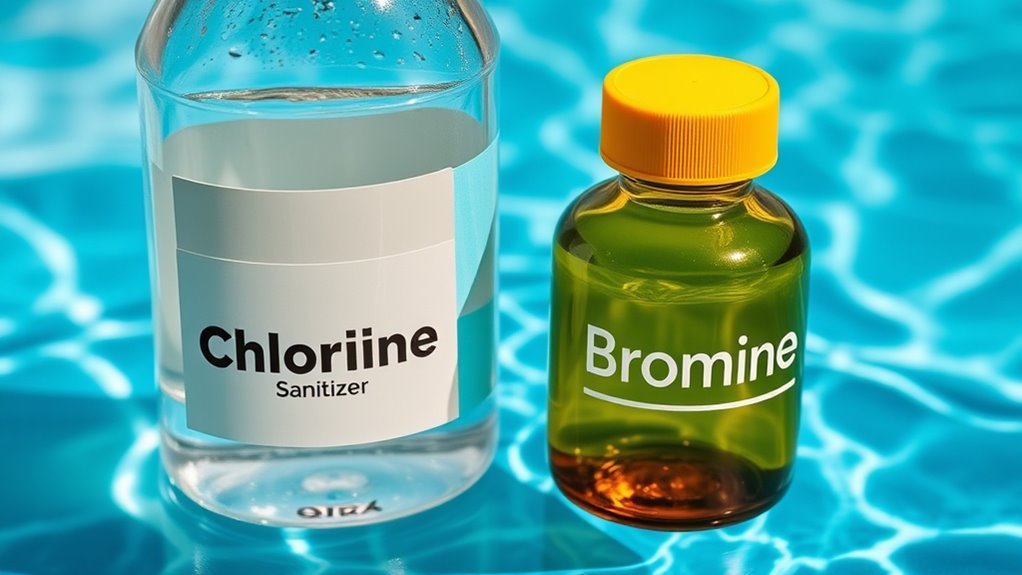
Are chlorine and bromine truly comparable when it comes to water treatment and sanitation? The answer depends on what you prioritize for your pool. Both chemicals serve as effective sanitizers, but they behave differently and impact your pool experience in distinct ways. When considering pool safety and chemical stability, it’s vital to understand how each chemical works to keep your water clean and safe. Chlorine has been the traditional choice for decades, largely because it’s affordable, readily available, and highly effective at killing bacteria and algae. Its ability to quickly neutralize contaminants makes it a reliable option for maintaining clear water. However, chlorine’s chemical stability can be affected by sunlight, high temperatures, and organic matter, which can cause it to dissipate faster. This means you might need to add chlorine more frequently to guarantee consistent sanitation, especially in outdoor pools exposed to the elements.
Bromine, on the other hand, offers a different set of advantages. It’s known for its greater chemical stability, particularly in warmer water, making it a common choice for hot tubs and indoor pools. Bromine’s stability means you don’t have to replenish it as often, which can simplify maintenance routines and provide a more consistent level of sanitation. Additionally, bromine’s effectiveness is less impacted by sunlight, so it remains active longer in outdoor environments. When it comes to pool safety, bromine produces fewer strong odors and less eye irritation compared to chlorine, which can be a significant benefit if you or your family are sensitive to chemical fumes. Bromine also tends to cause less bleaching of swimwear and pool liners, helping to preserve your equipment’s appearance over time.
Despite these benefits, bromine does have some drawbacks. It is generally more expensive than chlorine, and its chemical stability can sometimes lead to the buildup of bromamines, which are less effective sanitizers and can cause a lingering chemical smell. Proper maintenance and regular testing are vital to prevent this issue. Conversely, chlorine’s rapid action and lower cost make it easier to manage, but it often results in harsher smells and potential skin or eye irritation if not properly balanced. Ultimately, your choice hinges on your priorities: if you want a cost-effective, quick-acting sanitizer, chlorine might be your best bet. If you prefer a more stable, less odorous option with gentler effects on your skin and eyes, bromine could be the better choice. Both chemicals can keep your pool safe, but understanding their differences helps you make an informed decision tailored to your needs.
Frequently Asked Questions
Which Sanitizer Is More Environmentally Friendly?
You might find bromine more eco-friendly because it generally produces fewer harmful byproducts, making it a better choice for eco-conscious pool owners. When considering recycling and disposal, bromine tablets often break down more safely, reducing environmental impact. Chlorine, while effective, can release volatile compounds that harm the environment if not disposed of properly. So, for an eco-friendly option, bromine tends to be better, especially with mindful recycling and disposal practices.
How Do Chlorine and Bromine Affect Skin and Eye Irritation?
Chlorine can cause skin sensitivity, leading to dryness, irritation, and eye discomfort, especially with frequent exposure. Bromine tends to be gentler, but it may still cause minor skin or eye irritation for some users. If you have sensitive skin or experience eye discomfort, consider using bromine or maintaining proper pool pH levels to minimize irritation. Always shower after swimming and use protective goggles if needed.
Can Chlorine or Bromine Be Used Together?
Using chlorine and bromine together is like mixing oil and water; they often don’t blend well due to chemical compatibility issues. You can technically combine them, but it can upset your pool chemistry balance, leading to decreased sanitizer effectiveness and potential hazards. To keep your pool safe and clean, stick to one sanitizer and regularly test your water to maintain proper chemical levels, ensuring a healthy swimming environment.
What Are the Long-Term Health Risks of Each Sanitizer?
Chlorine and bromine both have potential long-term health risks, mainly due to their chemical stability and residual effects. You might experience skin or eye irritation, and prolonged exposure could affect respiratory health. Bromine tends to be gentler, but both can form disinfection byproducts that may pose health concerns over time. It is crucial to monitor chemical levels regularly to minimize these risks and guarantee safe, balanced sanitation.
How Do Chlorine and Bromine Impact Pool Equipment Longevity?
Chlorine can cause corrosion effects on pool equipment over time, leading to faster wear and more frequent maintenance. Bromine is gentler, reducing the risk of corrosion and helping extend equipment lifespan. If you want to minimize equipment maintenance and avoid damage, Bromine is often the better choice. However, proper water chemistry management is crucial for both to protect your pool gear and ensure longevity.
Conclusion
In the ultimate showdown of sanitizers, choosing between chlorine and bromine feels like deciding whether to wield a blazing sword or a mystical shield—both are powerful, but only one can reign supreme in your pool. Your decision could mean the difference between a sparkling oasis or a murky swamp that monsters would avoid. So, pick wisely, because the fate of your backyard paradise hangs in the balance—this isn’t just a choice, it’s a battle for pool perfection!