
To prevent algae buildup, you should regularly scrub your pool walls and steps using a suitable brush, paying special attention to corners and hard-to-reach areas. Keep your water chemistry balanced by testing pH, alkalinity, and sanitizer levels weekly. Run your filter consistently and clean it often to ensure effective circulation. Applying algaecides as a preventive measure and removing surface debris with skimming will also help. For more tips on keeping your pool crystal clear, keep exploring these simple steps.
Key Takeaways
- Regularly scrub pool walls and steps weekly with a suitable brush, focusing on corners and hard-to-reach areas.
- Maintain proper water chemistry by testing and adjusting pH and sanitizer levels to prevent algae growth.
- Operate and clean the filtration system consistently to ensure efficient removal of debris and algae spores.
- Use algaecides as a preventive measure, following manufacturer instructions for routine application.
- Remove organic debris through skimming and vacuuming to eliminate nutrients that support algae development.
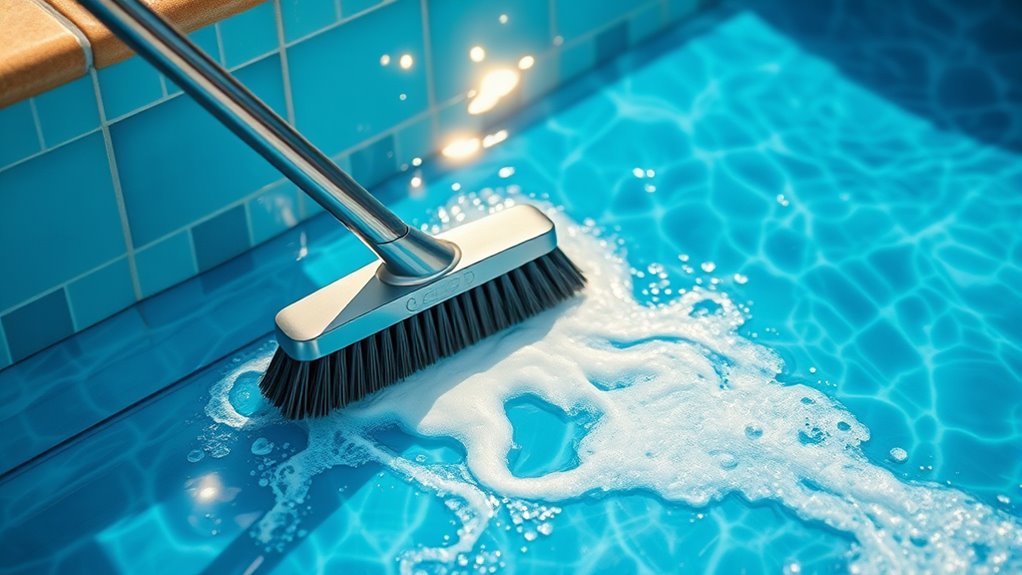
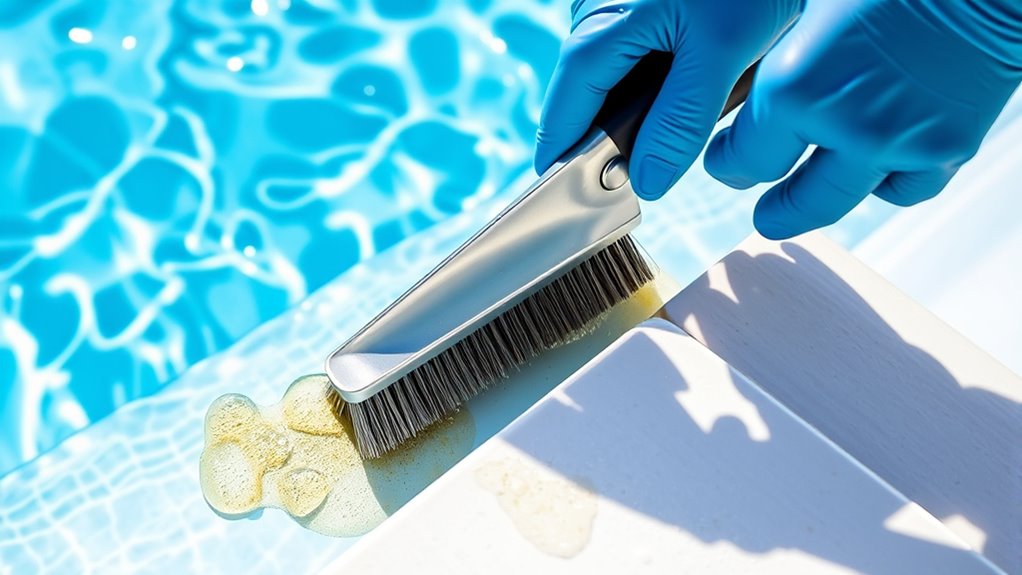
Have you ever wondered why your pool walls develop algae or grime over time? It’s a common concern for pool owners, and understanding the causes can help you keep your pool sparkling clean. One of the main factors behind algae buildup is inadequate surface scrubbing. When you neglect regular cleaning, algae spores settle on the walls and thrive in the warm, moist environment. To prevent this, you need to adopt a routine of surface scrubbing, which involves physically scrubbing the pool walls to remove algae spores, dirt, and other debris before they have a chance to grow. Using a pool brush suitable for your wall surface, you should scrub the walls thoroughly at least once a week, paying attention to corners, steps, and hard-to-reach areas.
Regular weekly surface scrubbing prevents algae buildup and keeps your pool clean and inviting.
Algae prevention hinges on more than just surface scrubbing, though. You also need to maintain proper water chemistry. Regularly testing your pool water ensures pH, alkalinity, and sanitizer levels are within recommended ranges. When these levels are off, it creates an ideal environment for algae to flourish. For example, if the pH becomes too high or low, sanitizer efficiency drops, giving algae the opportunity to grow unchecked. Maintaining proper chemical balance not only helps prevent algae but also extends the life of your pool equipment and keeps your water clear and inviting.
Another effective way to prevent algae buildup is to run your filtration system continuously, especially during peak usage times or hot weather. A functioning filter circulates water, distributing chemicals evenly and removing debris that could harbor algae. Make sure your filter is clean and in good working order, and backwash or clean it regularly. Additionally, using algaecides as a preventive measure can give you extra protection. Follow the manufacturer’s instructions carefully and incorporate algaecide treatments into your routine maintenance schedule to keep algae spores at bay.
Finally, keeping your pool’s surface free of organic matter like leaves, bugs, and dirt is essential. Regularly skimming the surface and vacuuming the bottom prevents these materials from decomposing and providing nutrients for algae. When combined with surface scrubbing, proper chemical balance, and filtration, these steps form an all-encompassing approach to algae prevention. Staying consistent with these practices will save you time and effort in the long run, ensuring your pool remains clean, clear, and inviting for every swim. Additionally, understanding the importance of proper water chemistry can significantly improve your pool’s cleanliness and reduce algae growth.
Frequently Asked Questions
How Often Should I Deep Clean My Pool Walls and Steps?
You should deep clean your pool walls and steps every 1 to 2 months to prevent algae buildup. Regularly check your pool’s chemical balance and maintain your pool filter to keep the water clear. When you notice algae or dirt, increase cleaning frequency. Proper chemical balancing and filter maintenance help minimize algae growth, making deep cleaning easier and less frequent, ensuring a healthier, more enjoyable swimming environment.
What Tools Are Best for Removing Stubborn Algae?
For stubborn algae removal, you’ll want to use sturdy cleaning tools like a nylon brush or algae scraper to scrub the walls and steps effectively. A pool brush with firm bristles is great for loosening algae, while a manual or telescopic algae scraper helps lift stubborn spots. Pair these tools with a quality pool algae remover or a diluted chlorine solution for best results, ensuring you thoroughly clean all affected areas.
Can I Clean Algae Without Draining the Pool?
Yes, you can clean algae without draining your pool. Use a pool brush and algae-specific pool cleaner to scrub the walls and steps thoroughly. Afterward, maintain proper algae prevention by balancing your pool’s chemistry, regularly vacuuming, and running your filter. Consistent pool maintenance helps prevent algae buildup, saving you time and effort in the long run. Keep up with these steps for a clean, clear pool all season.
How Do I Prevent Algae From Returning After Cleaning?
Algae prevention is your secret weapon against a pool that’s practically a swamp! To keep it at bay, maintain proper chemical balance, especially pH and chlorine levels. Regularly brush and vacuum the pool, and run the filter often to improve circulation. Consistent pool maintenance, like shocking the water weekly, also helps prevent algae from returning. Stay vigilant, and your pool will stay sparkling clean and algae-free.
Are There Eco-Friendly Cleaning Options for Pool Walls?
Yes, you can use eco-friendly cleaning options for your pool walls. Biodegradable cleaners are gentle on the environment and effective at removing dirt and algae, while natural scrubbing methods like using a brush with natural fibers help avoid harsh chemicals. Regularly using these options keeps your pool clean and algae-free without harming your surroundings. Plus, they’re safer for your family and pets, making your pool maintenance more sustainable.
Conclusion
By regularly rinsing, scrubbing, and rinsing again, you’ll prevent pesky algae from piling up on your pool walls and steps. Staying consistent with your cleaning routine keeps your pool pristine and problem-free, ensuring sparkling, smooth surfaces. So, stay vigilant, scrub swiftly, and succeed in keeping your pool pristine. A clean, clear, and carefree swimming space is just a routine rinse and rub away—making your pool perfect for a splash-tastic summer!