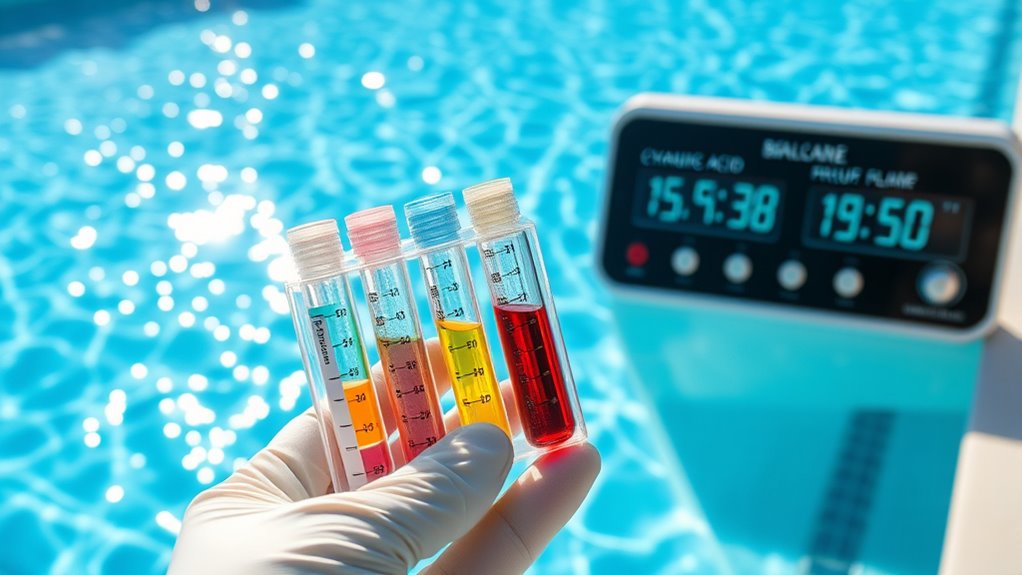

To manage cyanuric acid for chlorine protection, regularly test its levels using a reliable test kit. Keep the stabilizer between 30 and 50 ppm for ideal chlorine stability. If levels drop below, add more stabilizer; if they rise above, partially drain or dilute the water. Proper balance prevents chlorine degradation and ensures safe, clean water. Staying on top of cyanuric acid management helps maintain healthy pool conditions, and there’s more to explore if you continue.
Key Takeaways
- Regularly test cyanuric acid levels using appropriate test kits to ensure they stay within 30-50 ppm.
- Add stabilizer when levels fall below 30 ppm to protect chlorine from UV degradation.
- Avoid over-stabilization; keep cyanuric acid below 50 ppm to prevent reduced chlorine disinfecting ability.
- Dilute or partially drain water if cyanuric acid exceeds 50 ppm to restore proper chlorine effectiveness.
- Maintain balanced pH and sanitizer levels alongside cyanuric acid to optimize chlorine protection and overall water quality.
Are you aware of how essential proper cyanuric acid management is for maintaining a healthy pool? Cyanuric acid plays a key role in your pool’s chemistry by protecting chlorine from the sun’s UV rays. Without adequate cyanuric acid levels, your chlorine can quickly break down, leaving your pool vulnerable to bacteria and algae. On the other hand, too much cyanuric acid can hinder chlorine’s effectiveness. Striking the right balance is necessary for ideal cyanuric stability, which guarantees your pool remains sanitized and safe to swim in.
Understanding pool chemistry helps you grasp why cyanuric acid is so important. When you add chlorine to your pool, it acts as the sanitizer, killing bacteria and algae. Cyanuric acid acts as a stabilizer, preventing rapid chlorine loss caused by sunlight. This stabilizing effect means you need less frequent chlorine dosing, saving you time and money. However, managing cyanuric acid levels isn’t just about adding stabilizer; it’s about maintaining proper levels—typically between 30 and 50 parts per million (ppm). Staying within this range keeps your chlorine active longer, maintaining consistent sanitization without oversaturating the water.
Maintaining proper cyanuric acid levels ensures effective, long-lasting pool sanitation.
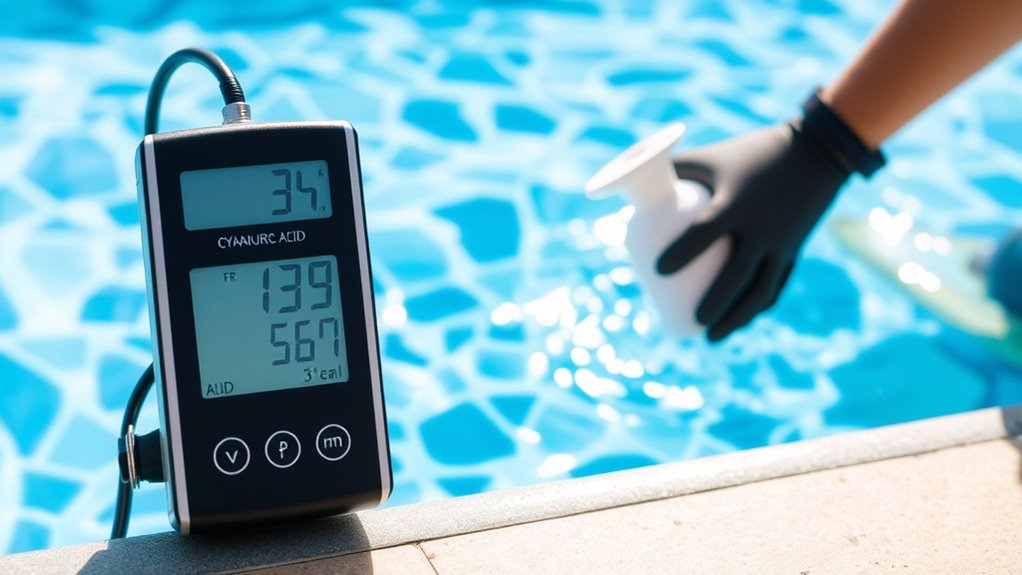
Monitoring your cyanuric acid levels regularly is key. You can test using pool test kits or digital testers designed specifically for cyanuric acid. When levels fall below the recommended range, it’s time to add more stabilizer. If levels become too high, you might notice chlorine becoming less effective, and algae can start to bloom despite having chlorine in the water. In such cases, you may need to dilute the water or drain and refill part of the pool to reduce cyanuric acid concentrations. Avoid overusing stabilizer, as excessive cyanuric acid can create a barrier that prevents chlorine from effectively disinfecting the water.
Proper pool chemistry isn’t just about stabilizer levels; it involves balancing pH, alkalinity, and sanitizer levels. When cyanuric acid is managed well, it enhances your pool’s overall stability. Maintaining the right cyanuric stability means you’re effectively protecting your chlorine, ensuring consistent disinfection, and prolonging your pool’s lifespan. Remember, good pool management is proactive—regular testing and adjustments keep everything in check. By understanding the role of cyanuric acid and its impact on pool chemistry, you can prevent common problems like cloudy water, algae growth, and chlorine wastage.
In the end, managing cyanuric acid isn’t complicated, but it does require attention and routine maintenance. This simple step ensures your chlorine remains effective, your water stays clean, and your pool remains a safe, inviting oasis. Take the time to understand your pool’s chemistry, test regularly, and adjust levels as needed—you’ll enjoy a healthier, clearer pool all season long.

Blue Devil B7525 Cyanuric Acid Test, 8-Ounce
As an affiliate, we earn on qualifying purchases.
As an affiliate, we earn on qualifying purchases.
Frequently Asked Questions
Can Cyanuric Acid Be Safely Used in Saltwater Pools?
Yes, you can safely use cyanuric acid in saltwater pools. During pool maintenance, it helps stabilize your chlorine, ensuring chemical stability even in sunlight. Just follow the recommended levels, typically 30-50 ppm, to prevent over-concentration. Properly managing cyanuric acid keeps your saltwater pool balanced and safe, boosting chlorine efficiency without harming swimmers or equipment. Regular testing is key to maintaining ideal chemical stability in your pool.
How Often Should I Test Cyanuric Acid Levels?
Like a vigilant guardian, you should test your cyanuric acid levels regularly to maintain a healthy pool. Testing frequency depends on usage, but generally, check every 1-2 weeks. Use reliable methods like test strips or a liquid test kit for accuracy. Staying attentive guarantees your cyanuric acid stays within the ideal range, preventing chlorine loss or damage, and keeps your pool sparkling and safe for everyone to enjoy.
What Are the Signs of Cyanuric Acid Over-Concentration?
You’ll notice signs of cyanuric acid over-concentration through poor pool water clarity, as excess levels can cause cloudiness. It may also lead to a chemical imbalance, making it harder to maintain proper chlorine levels. If your pool looks cloudy despite proper chlorination, test your cyanuric acid. High readings above recommended levels can signal over-concentration, so regular testing helps you keep water quality ideal and prevents issues.
Can Cyanuric Acid Be Removed Once Levels Are Too High?
Cyanuric acid levels soaring like a hot air balloon can be brought down, but it’s tricky. You can try chemical removal, but it’s often more effective to dilute the water considerably. Drain some of the pool water and replace it with fresh water to lower cyanuric acid levels. This method helps restore balance, preventing over-concentration from turning your pool into a chemical obstacle course.
How Does Cyanuric Acid Interact With Other Pool Chemicals?
Cyanuric acid interacts with other pool chemicals by affecting their chemical interactions and pH stability. It can reduce chlorine’s effectiveness by binding with it, making the sanitizer less potent. Cyanuric acid also influences pH levels, potentially causing fluctuations that impact water balance. To maintain ideal chemical interactions and pH stability, you should monitor cyanuric acid levels regularly and adjust other chemicals accordingly.

BubbyShine, Pool Stabilizer – Cyanuric Acid Pool Stabilizer, Liquid Chlorine Stabilizer for Pool Chemicals, Swimming Pool Conditioner Stabilizer, for Salt Pool & Chlorine, 1 Gallon
INCREASED EFFICIENCY : Our liquid stabilizer for pool and conditioner helps keep your pool chemicals from evaporating, making…
As an affiliate, we earn on qualifying purchases.
As an affiliate, we earn on qualifying purchases.
Conclusion
To keep your pool pristine and protected, prioritize proper cyanuric acid management. Balance, monitor, and maintain your levels with care and consistency. By doing so, you’ll dodge dangerous damage, dodge disruption, and delight in clear, clean water. Remember, responsible regulation of cyanuric acid is key to keeping chlorine effective and your pool inviting. Stay vigilant, stay vigilant, and enjoy endless enjoyable swims—because good guidance guarantees great glides!

TAYLOR TECHNOLOGIES INC R-0013-E CYANURIC ACID 16 OZ
Pint-size replacement bottle to replace depleted cyanuric acid in your testing kit
As an affiliate, we earn on qualifying purchases.
As an affiliate, we earn on qualifying purchases.

SIHAIAN Accessories Pool Drainage Outlet Kit, Open a Third Drain at the Bottom of the Pool with SIHAIAN Drainage Pipe Kit, Drain the Accumulated Water from the Pool Cover
🌞[Opening of New Drainage Outlets] If your pool drain is occupied by the pool water purifier or there…
As an affiliate, we earn on qualifying purchases.
As an affiliate, we earn on qualifying purchases.