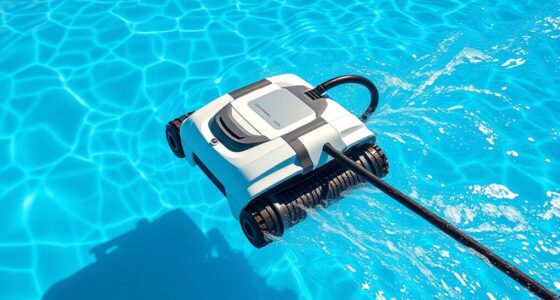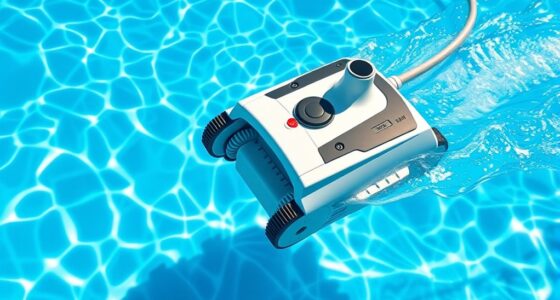
Every day, you should skim the pool surface with a net or skimmer to remove leaves, bugs, and debris that can clog filters or promote algae growth. It’s also important to regularly check your water level, making sure it’s about halfway up the skimmer opening or tile line for ideal performance. Maintaining these simple tasks helps keep your pool clean, safe, and inviting—stay tuned to discover more tips for effortless pool care.
Key Takeaways
- Use a skimmer or net daily to remove leaves, bugs, and debris from the pool surface.
- Check the water level, ensuring it’s halfway up the skimmer opening or tile line.
- Remove or add water as needed to maintain proper levels and prevent equipment damage.
- Regularly clean the skimmer basket for optimal debris removal and water flow.
- Consistently monitor water levels to support proper chemical balance and efficient pool operation.
Have you ever wondered what it takes to keep your pool sparkling and inviting every day? It all starts with simple, consistent tasks that guarantee your pool remains clean, safe, and enjoyable. Skimming the surface and checking water levels are two essential steps in daily pool maintenance. These tasks might seem small, but they play a big role in maintaining your pool’s overall health and beauty. When you focus on these routine chores, you’re actively supporting your pool equipment and water chemistry, making sure everything functions smoothly and your water stays clear.
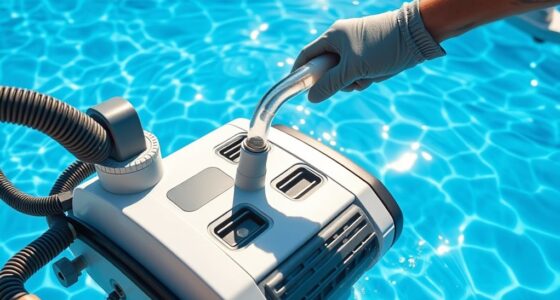
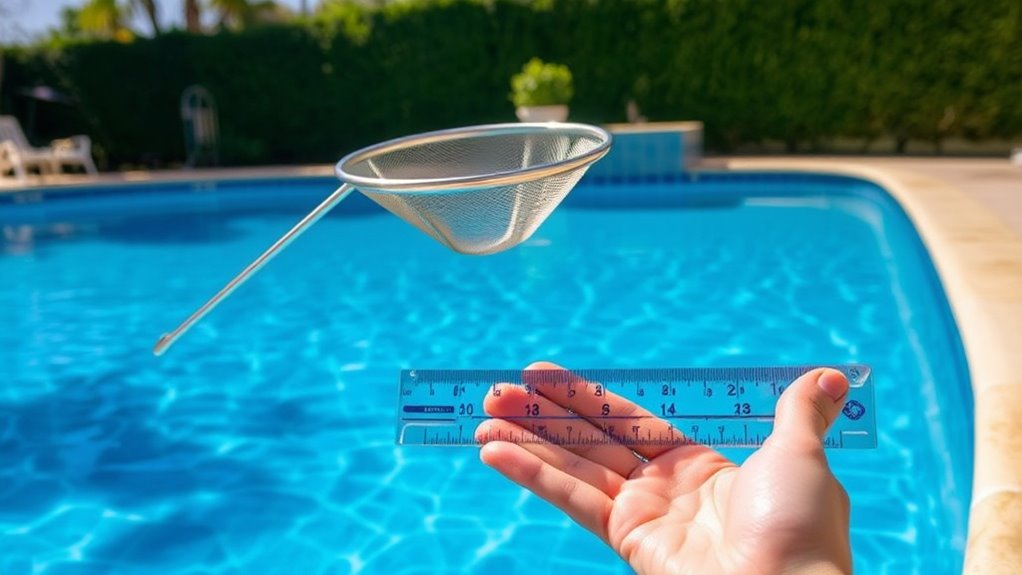
First, grab your pool skimmer or net. You’ll want to remove leaves, bugs, and debris floating on the surface. Not only does this keep your pool looking tidy, but it also prevents debris from sinking and clogging your pool’s filtration system. By reducing the amount of organic material in the water, you lessen the workload on your pool equipment, which helps extend its lifespan and efficiency. Plus, removing debris early prevents algae growth and other water quality issues that could turn your pristine pool into a cloudy mess. Check the skimmer basket as well, emptying it if it’s full, so water can flow freely through your filtration system.
Remove floating debris with a skimmer to protect your pool’s filtration system.
Next, check the water level in your pool. The ideal level is usually halfway up the skimmer opening or the tile line, ensuring your pump isn’t running dry or overflowing. Maintaining proper water levels is vital because it affects your pool equipment’s performance. If the water’s too low, your pump can suck in air, causing it to work harder and potentially get damaged. If it’s too high, water could overflow into your pool’s surroundings or cause issues with the skimmer and filtration system. Adjust the water level as needed by adding or removing water. This helps keep your pool’s water chemistry stable—important because proper water balance prevents corrosion, scaling, and other chemical imbalances. Additionally, the contrast ratio of your pool’s lighting can influence nighttime visibility and ambiance, making maintenance and safe swimming more enjoyable.
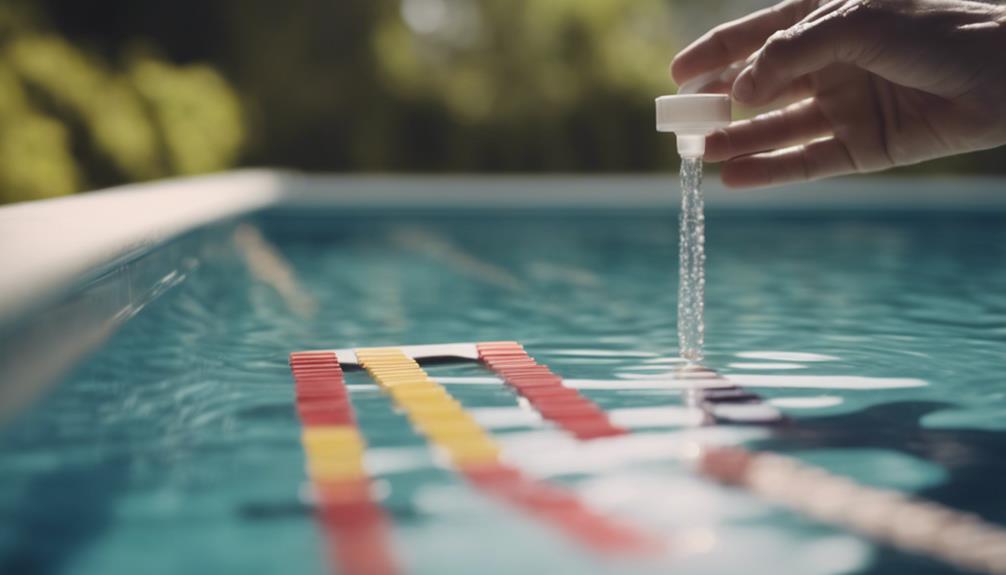
Throughout this process, don’t forget to keep an eye on your water chemistry. While daily tasks focus on debris and levels, it’s also wise to do quick tests to monitor pH, chlorine, and alkalinity. Keeping these in check guarantees your pool water remains safe, clear, and comfortable. Proper water chemistry supports your pool equipment by preventing corrosion or buildup that can impair functionality. It also minimizes the need for heavy chemical treatments later on, making maintenance simpler and more effective. By taking a few minutes each day to skim and check water levels, you’re actively maintaining your pool’s equipment and water chemistry, creating an inviting oasis that’s ready whenever you want to jump in.
Frequently Asked Questions
How Often Should I Replace My Pool Skimmer Net?
You should replace your skimmer net when it shows signs of wear or tears, typically every season or so. The durability of your skimmer net depends on how often you use it and the debris it catches. For maximum performance, stick to a regular replacement schedule, about once a year, or sooner if it becomes damaged. This ensures efficient skimming and keeps your pool clean.
What’s the Ideal Water Level for My Pool?
You should keep your pool’s water level at the skimmer opening, ensuring effective skimmer performance. If water drops too low, water level adjustment is needed to prevent skimmer inefficiency and debris buildup. Conversely, if it’s too high, it can disrupt circulation. Regularly check and adjust the water level, especially after heavy use or rain, to maintain ideal skimmer effectiveness and keep your pool clean and balanced.
Can Debris From Trees Affect Water Quality?
Tree debris can definitely affect your water quality. When leaves, twigs, or other debris fall into your pool, they can introduce contaminants and promote algae growth. This not only makes your water murky but also strains your filtration system. To keep your water clean and safe, regularly skim the surface and remove tree debris promptly, preventing water contamination and maintaining ideal pool conditions.
How Do I Prevent Algae Growth During Maintenance?
Think of your pool as a garden that needs constant tending. To prevent algae growth, you should focus on algae prevention by regularly brushing and skimming the water. Essential for this is chemical balancing—maintain ideal pH and sanitizer levels to create an inhospitable environment for algae. Consistent chemical adjustments and proper filtration keep your pool clear and algae-free, ensuring a sparkling, inviting oasis after every swim.
Is It Necessary to Run the Pump Daily?
Yes, you should run the pump daily to guarantee proper filtration. Regular pump operation helps circulate water, preventing stagnation and algae growth. Following a consistent filtration schedule keeps your pool clean and clear. Even if you’re not swimming, running the pump for several hours each day is essential to maintain water quality and balance, saving you time and effort on later cleaning or chemical treatments.
Conclusion
By dedicating just a few minutes daily to skimming debris and checking water levels, you can keep your pool crystal clear and inviting. Did you know that neglecting regular maintenance can lead to costly repairs and algae growth? Staying proactive not only saves you money but also guarantees a safe, enjoyable swimming experience. Make these simple tasks part of your routine—your pool will thank you, and so will your family and friends.