
To prevent fine debris from settling back into your pool, make sure your water is chemically balanced, including proper pH and sanitizer levels, to keep particles suspended. Keep your circulation system functioning well and position skimmers correctly to catch floating debris early. Use nets, skimmers, and regular vacuuming to clear settled particles. Maintain your cover and remove debris promptly, especially during storms or windy days. Consistent upkeep makes it easier to keep your pool crystal clear — discover more tips for easy debris control below.

Get cleaning gear delivered free — and shop member deals
- Fast, free delivery on millions of items
- Access to Prime Big Deal Days deals on October 6–7
- Prime Video, Amazon Music and more included
Key Takeaways
- Ensure proper water circulation with well-maintained pumps and strategically placed skimmers.
- Regularly vacuum the pool to remove settled fine debris from the bottom.
- Keep chemical levels balanced to prevent debris from clumping and settling.
- Use a fine mesh skimmer or net to catch floating debris before it sinks.
- Cover the pool when not in use and clean covers to minimize debris entry.
Keeping your pool clean can feel like an ongoing battle, especially when debris constantly finds its way into the water. Fine debris—like dust, pollen, and tiny leaves—tends to settle on the pool floor, making it tricky to keep your water crystal clear. To prevent this, you need a strategic approach that involves not just regular cleaning but also proactive maintenance practices.
Keeping your pool pristine requires proactive maintenance and regular cleaning to combat settling fine debris.
First, focusing on chemical balancing is vital. When your pool’s pH, alkalinity, and sanitizer levels are properly maintained, the water remains less inviting for dirt and debris to settle and multiply. Balanced water discourages algae growth and keeps particles suspended, reducing the amount that sinks to the bottom. Regularly test your water using a reliable kit, and make adjustments as needed. Proper chemical balancing also minimizes cloudiness, making debris easier to spot and remove with your skimmer or vacuum. Maintaining optimal chemical levels also supports the effectiveness of your filtration system, helping to keep debris suspended and preventing accumulation on the pool floor.
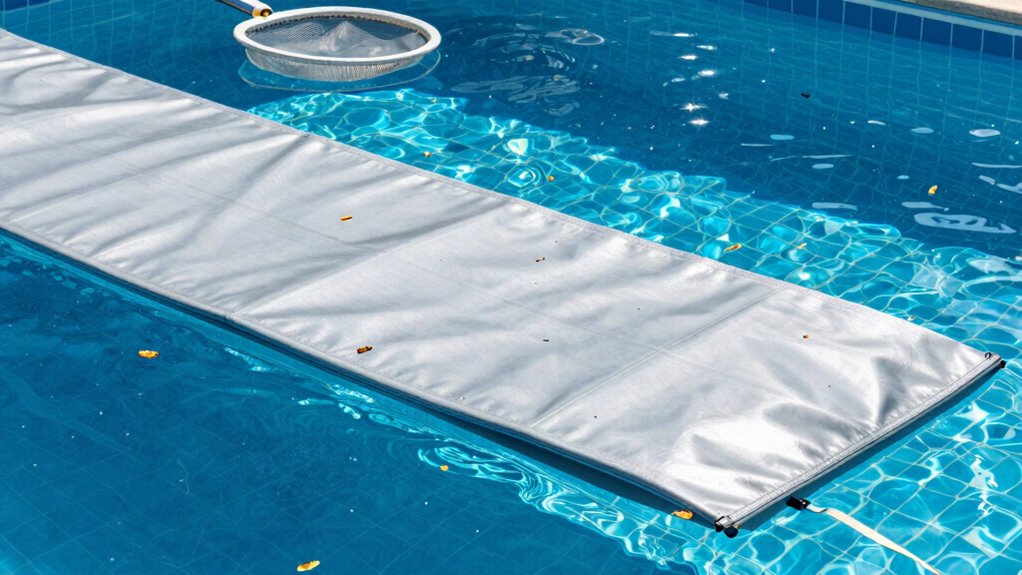
Pool cover maintenance plays an essential role in preventing fine debris from entering your pool in the first place. When your cover is in good condition—clean, free of tears, and properly fitted—you create a formidable barrier against dirt, pollen, and dust. Regularly inspect and clean your pool cover to remove accumulated debris that could blow into the water when the cover is removed or displaced. Using a cover pump during rainy periods helps drain excess water, which can carry debris into the pool if left unchecked. A well-maintained cover not only keeps debris out but also reduces the frequency of chemical balancing adjustments needed afterward. Ensuring your pool’s water circulation system is functioning properly also helps prevent debris from settling by keeping particles suspended in the water. Additionally, cover maintenance can extend the lifespan of your cover and ensure it remains an effective barrier against debris, as a worn or damaged cover is more likely to allow dirt entry. Proper skimmer placement and maintenance are also crucial in trapping floating debris before it sinks, further reducing clean-up efforts.
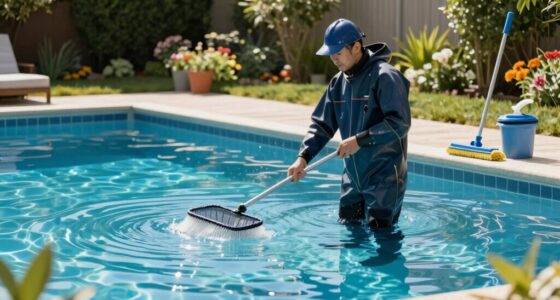
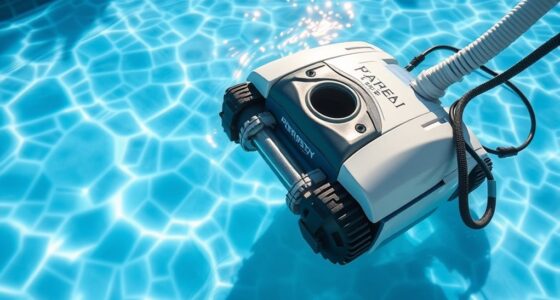
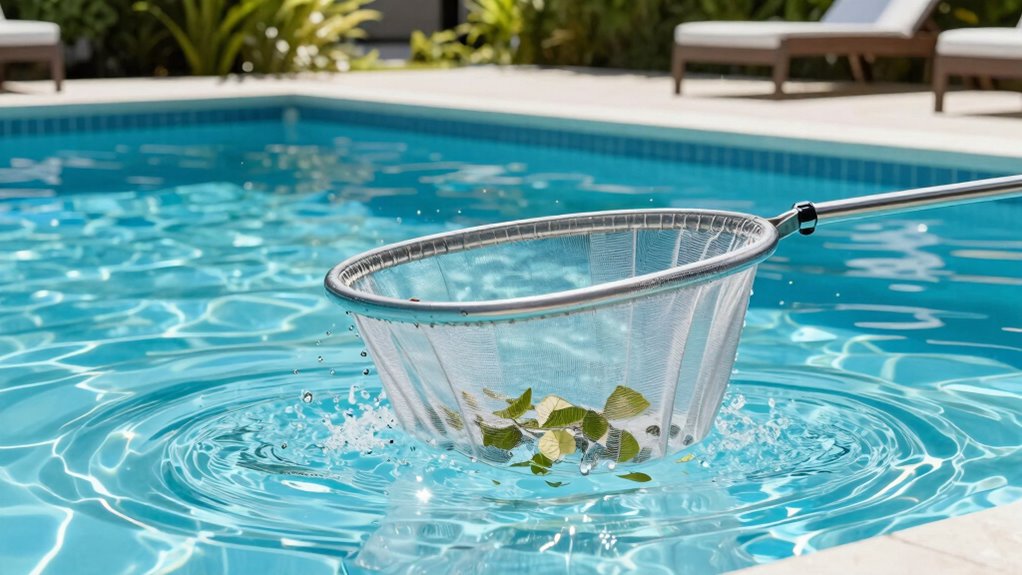
Additionally, employing a leaf net or fine mesh skimmer can catch smaller particles before they sink, making your cleaning routine more manageable. Pair this with a weekly vacuuming to get rid of debris that has already settled. When vacuuming, opt for a fine filter to trap tiny particles effectively. These steps, combined with consistent chemical balancing, markedly cut down on debris accumulation.
Incorporating pool cover maintenance into your routine is vital. Always ensure your cover is clean and tightly secured when not in use. This prevents debris from entering during storms or windy days. When you remove the cover, do a quick sweep with a leaf net or brush to clear off any residual debris and make chemical balancing easier. Staying vigilant with these preventative measures helps keep fine debris from settling back into your pool, saving you time and effort on deep cleaning and maintaining your pool’s inviting clarity throughout the season.
As an affiliate, we earn on qualifying purchases.
Frequently Asked Questions
How Often Should I Clean My Pool’s Skimmer Basket?
You should check and clean your pool’s skimmer basket at least once a week to maintain proper skimmer basket maintenance. Regular cleaning prevents debris from clogging the basket, which helps keep your pool water chemistry balanced and prevents strain on your filtration system. During heavy use or storms, consider checking it more frequently. Keeping the skimmer basket clean ensures efficient filtration and clearer, healthier water for your pool.
Can Certain Plants Help Reduce Debris in the Pool?
Certain plants can help reduce debris in your pool by acting as natural barriers. Plant barriers, like tall grasses or dense shrubs, catch leaves and other debris before they reach the water. Debris barriers, such as pond netting or floating plants, further prevent floating debris from drifting into the pool. By strategically placing these plants and barriers around your pool, you can markedly cut down on the amount of debris that settles in the water.
Is There a Specific Type of Pool Cover That Prevents Debris?
Think of a pool cover as a shield, much like a sturdy umbrella during a rainstorm. A solar cover made from thick, reflective material traps heat and blocks debris, while mesh covers allow water to pass through but keep leaves and dirt out. Using these covers, especially during off-season or windy days, prevents fine debris from settling, keeping your pool cleaner and saving you time on maintenance.
How Does Weather Affect Debris Accumulation in Pools?
Weather considerably impacts debris accumulation in your pool. Wind impact can blow leaves, dirt, and other particles into your water, increasing cleaning needs. Rain effects can wash additional debris into the pool and dilute chemicals, making maintenance more challenging. To minimize these effects, consider using a sturdy cover during storms, regularly skimming the surface, and checking chemical levels after heavy rain or windy days. Staying proactive helps keep your pool cleaner longer.
Are There Automatic Systems to Prevent Debris Buildup?
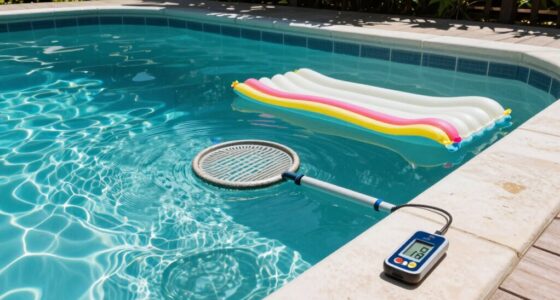
Yes, automatic systems like automatic skimming devices and debris sensors can prevent debris buildup efficiently. Automatic skimming continuously removes floating debris, keeping your pool clean without manual effort. Debris sensors detect when debris accumulates, activating skimmers or alerts for you to take action. These systems work together to maintain a clear pool, saving you time and effort, especially during windy or stormy weather when debris tends to gather quickly.
Conclusion
To keep your pool crystal clear, stay vigilant with regular skimming and proper filtration. Think of your pool as a garden—neglect it, and weeds will take over; tend to it diligently, and it thrives. I once watched a friend spend hours cleaning her pool, only to see debris settle again overnight. Consistent maintenance is your best defense against settling debris. Keep up the effort, and your pool will remain inviting and sparkling all season long.
Fall Picks
fall essentials
As an affiliate, we earn on qualifying purchases.