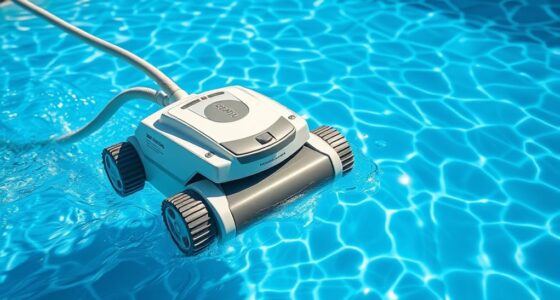
If your pool cleaner keeps missing the same spots, it’s likely due to calibration issues, worn parts, or blockages that interfere with its navigation. Debris buildup or misaligned wheels can cause it to skip areas or get stuck. Regular maintenance, like checking filters and replacing worn components, can improve coverage. Proper calibration is essential for accurate mapping. Keep these tips in mind, and you’ll discover more ways to guarantee your cleaner works flawlessly every time.

Get cleaning gear delivered free — and shop member deals
- Fast, free delivery on millions of items
- Access to Prime Big Deal Days deals on October 6–7
- Prime Video, Amazon Music and more included
Key Takeaways
- Worn or misaligned parts can impair navigation, causing the cleaner to miss specific spots repeatedly.
- Improper calibration of the robot’s navigation system leads to uneven coverage and missed areas.
- Debris buildup on sensors or brushes hinders proper movement and cleaning pattern.
- Complex pool layouts or obstacles can confuse the navigation system, resulting in missed spots.
- Lack of routine maintenance or cleaning causes sensors and moving parts to malfunction, affecting coverage.
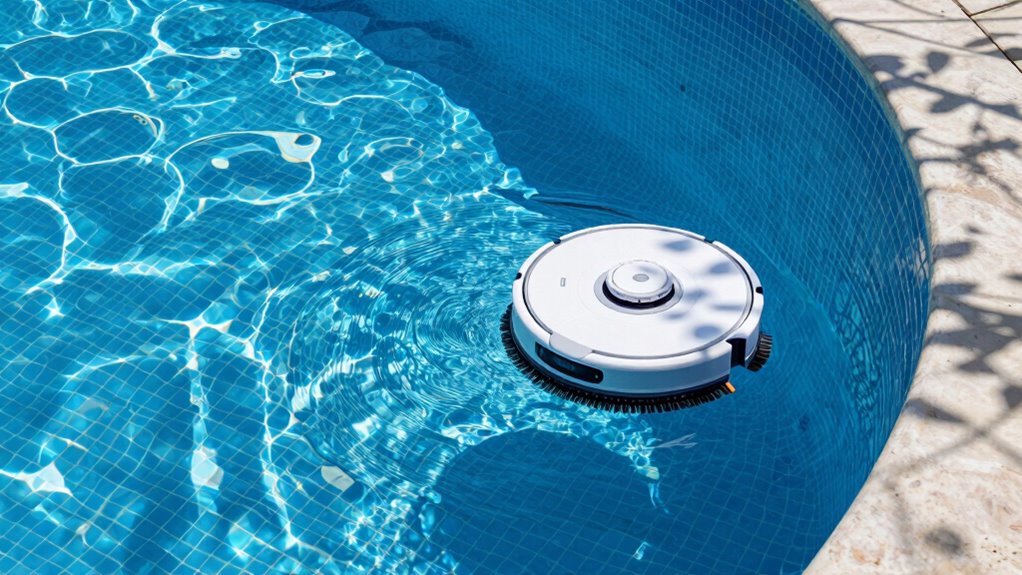
Have you ever noticed your pool cleaner repeatedly missing the same spots? It’s a frustrating problem that can make your cleaning routine feel ineffective. When this happens, it’s often due to issues with robot maintenance or debris accumulation that prevent your cleaner from doing its job properly. Your pool cleaner depends on smooth operation, and neglecting regular maintenance can cause it to overlook certain areas.
One common reason your cleaner misses spots is that it’s not functioning optimally because of poor robot maintenance. Over time, parts can wear out or become misaligned, affecting the cleaner’s navigation. Brushes, filters, and wheels need regular checks and replacements to keep everything working smoothly. If you skip these routine steps, your cleaner might get stuck or lose its ability to reach every corner of the pool. It’s essential to follow the manufacturer’s instructions for cleaning and servicing your robot regularly. This ensures that the robot’s sensors and moving parts stay in top shape, reducing blind spots during cleaning. Additionally, robot calibration plays a crucial role in ensuring comprehensive coverage. Proper calibration can significantly improve the robot’s ability to map and clean your pool effectively.
Regularly check and replace brushes, filters, and wheels for optimal robot performance and complete pool coverage.
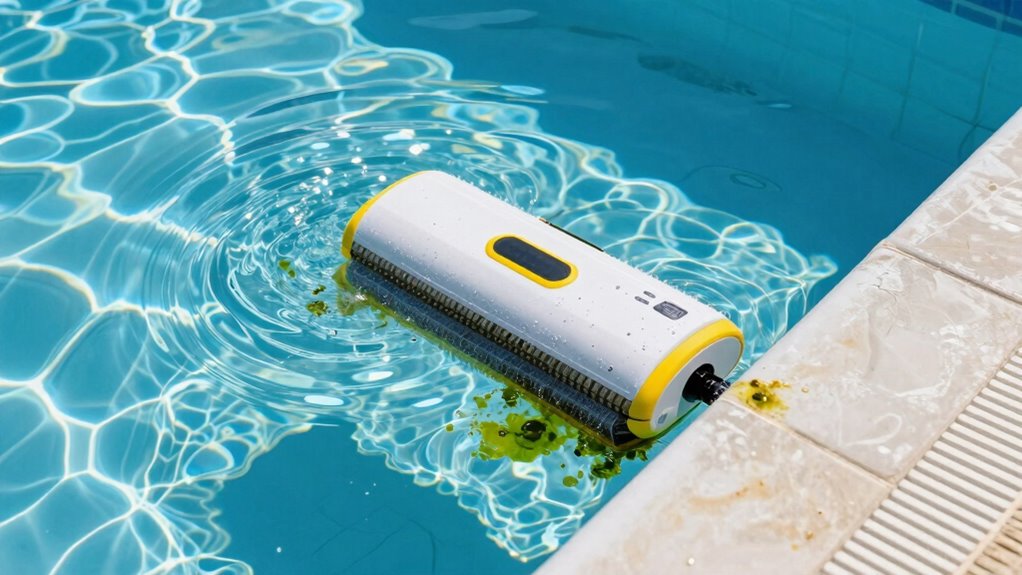
Another key factor is debris accumulation. When your pool has a lot of debris—leaves, dirt, or algae—it can clog sensors, filters, or brushes, impairing the cleaner’s movement. Sometimes, debris gets lodged in the robot’s wheels or other moving parts, causing it to get stuck or avoid certain areas altogether. If debris builds up around the cleaner’s brushes or filters, it might not have enough suction or mobility to navigate properly, leading it to miss spots repeatedly. Regularly removing debris from your pool and cleaning the robot’s filters and brushes can drastically improve its coverage. A clean, well-maintained robot is less likely to get stuck or miss sections of the pool. Additionally, understanding your pool’s layout and planning cleaning routes accordingly can help prevent missed spots caused by complex shapes or obstructions. It’s also helpful to refer to robot troubleshooting guides for specific issues that arise during cleaning.
Finally, it’s worth noting that the layout of your pool can influence cleaning efficiency. Obstructions or complex pool shapes can confuse the robot’s navigation system. If your cleaning device isn’t properly calibrated or if parts are worn out, it might favor certain paths while neglecting others. Ensuring that your robot is correctly set up and that its navigation system is calibrated can help it cover every area evenly. Additionally, considering pool design and making adjustments, such as removing obstacles, can enhance the robot’s overall performance. Regularly inspecting your pool’s structure and layout can also help identify areas that may need special attention during cleaning.
pool cleaner brushes replacement
As an affiliate, we earn on qualifying purchases.
As an affiliate, we earn on qualifying purchases.
Frequently Asked Questions
How Often Should I Replace My Pool Cleaner’s Brushes?
You should replace your pool cleaner’s brushes every 6 to 12 months to keep your pool maintenance ideal. Regularly inspect the brushes for wear and tear, especially if you notice missed spots or reduced cleaning efficiency. Replacing them helps prevent equipment troubleshooting issues and guarantees your cleaner works effectively. Consistent brush maintenance extends your cleaner’s lifespan and keeps your pool sparkling, saving you time and effort in the long run.
Can Debris Buildup Cause the Cleaner to Miss Spots?
Yes, debris buildup can cause your pool cleaner to miss spots. When debris accumulates on the brushes or filters, it hampers the cleaner’s movement and suction power. Filter clogging further reduces efficiency, making it harder for the cleaner to reach certain areas. Regularly removing debris and cleaning or replacing filters guarantees unobstructed operation, helping your pool cleaner cover the entire pool surface effectively without missing spots.
Does Pool Size Affect the Cleaner’s Efficiency?
Yes, pool size does affect your cleaner’s efficiency. Larger pools require more time and effort for thorough cleaning, which can lead to missed spots if your cleaner isn’t powerful enough or isn’t upgraded regularly. To improve pool maintenance, consider upgrading your cleaner to a more advanced model designed for bigger pools. Properly maintaining and upgrading your cleaner guarantees it covers every corner, making your pool cleaner more effective and saving you time.
Are Certain Pool Shapes More Prone to Missed Areas?
Some pool shapes, like irregular or kidney-shaped pools, are more prone to missed spots due to their complex contours, making it tricky for your cleaner to follow a consistent cleaning pattern. These shapes create dead zones where the cleaner struggles to reach, like a horse that’s hard to saddle. To combat this, customize your cleaning routine or upgrade to a smarter cleaner that adapts to your pool’s unique shape.
How Does Water Chemistry Impact Cleaner Performance?
Water chemistry directly impacts your pool cleaner’s performance. If water isn’t properly balanced, with correct chemical levels, it can cause debris to cling or float unevenly, making certain spots harder to reach. Poor water balance can also affect the cleaner’s movement and suction, leading to missed areas. Regularly check and adjust chemical levels to maintain ideal water chemistry, ensuring your cleaner works efficiently and covers every inch of your pool.
Conclusion
You might think your pool cleaner’s missed spots are just bad luck, but they often reveal a deeper issue—like stubborn shadows in your pool’s layout. While the cleaner tirelessly covers the area, those overlooked corners remind you that even the most diligent machines can miss the mark without proper adjustments. Just as a missed spot can disrupt the whole clean, small tweaks in your approach can restore balance, ensuring every inch shines as brightly as the rest.
Fall Picks
fall essentials
As an affiliate, we earn on qualifying purchases.