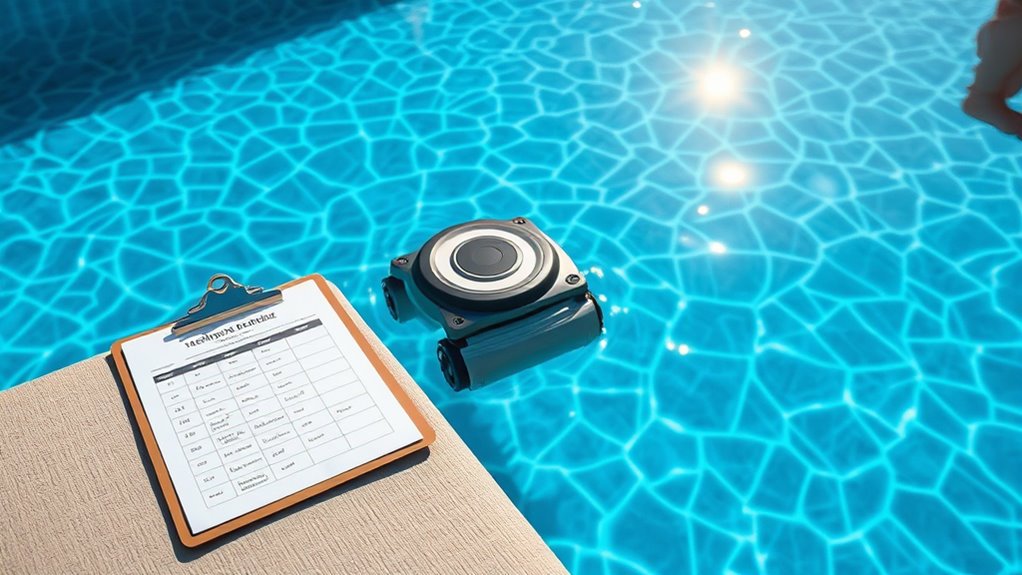

To set a pool cleaning schedule based on usage, first determine how often your pool is used—daily, multiple times a week, or infrequent. For heavy use, clean the surface daily, check filters often, and test water at least twice a week to balance chemicals. Less frequent use still needs regular debris removal and water testing. Adjust your routine seasonally and as your pool activity varies. Keep going for more tips to guarantee your pool stays pristine and inviting.
Key Takeaways
- Assess weekly pool usage to determine cleaning frequency, increasing tasks for heavy or daily use.
- Regularly skim surface and check skimmer and pump baskets based on debris accumulation.
- Test and adjust chemical levels at least twice weekly, especially during periods of high usage.
- Clean filters every 1-2 weeks to maintain proper water circulation and clarity.
- Adjust maintenance routines seasonally, increasing cleaning during warm months and reducing during off-peak periods.
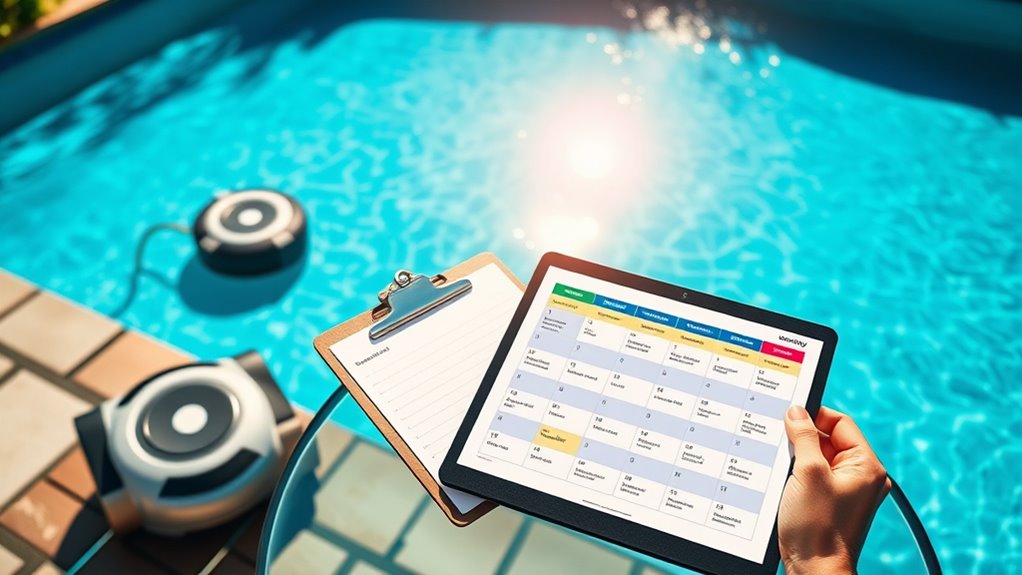
Are you wondering how to keep your pool sparkling and safe all season long? The key lies in setting a practical pool cleaning schedule based on how often you use it. Regular pool maintenance isn’t just about making it look inviting; it’s essential for guaranteeing the water remains clean, safe, and inviting. When you tailor your cleaning routine to your usage, you’ll prevent issues like algae growth, cloudy water, or bacteria buildup, saving you time and money in the long run.
Maintaining a clean, safe pool depends on customizing your cleaning schedule to your usage habits.
Start by evaluating how frequently your pool gets used each week. If you’re swimming daily or hosting frequent gatherings, you’ll need to be more diligent. For heavy use, plan to skim the surface daily to remove leaves, bugs, and debris that can quickly accumulate. Also, check and clean the skimmer and pump baskets regularly to keep the circulation system working efficiently. For less frequent use, every two to three days might be sufficient, but always stay vigilant for debris or cloudiness. The goal is to prevent dirt from settling on the bottom and guarantee proper water circulation.
Pool maintenance extends beyond debris removal. Chemical balancing is an essential part of your routine. Testing your water at least twice a week allows you to maintain proper pH levels, chlorine or sanitizer levels, alkalinity, and calcium hardness. Proper chemical balance not only keeps the water safe and comfortable but also reduces strain on your pool equipment. When chemicals are in balance, algae and bacteria find it harder to thrive, which means fewer shocking treatments are needed. Regular testing and adjusting of chemicals keep your water clear, safe, and pleasant to swim in.
Creating a schedule based on usage also involves routine filter cleaning. Depending on how often you swim, your filter may need cleaning every one to two weeks. A clean filter ensures good water flow and effective filtration, which directly impacts water quality. Remember, a well-maintained filter works hand-in-hand with chemical balancing to keep your pool in prime condition. Incorporating effective filtration techniques can further enhance water clarity and reduce maintenance time.
In addition, consider schedule adjustments for seasonal changes. In warmer months with frequent use, increase your cleaning frequency. During cooler or off-peak times, reduce maintenance but don’t neglect regular checks. By syncing your cleaning routine with your pool’s usage pattern, you’ll maintain water clarity, guarantee the safety of swimmers, and extend the lifespan of your equipment. This strategic approach to pool maintenance ensures your pool remains a refreshing oasis all season long, with less stress and more enjoyment.
Frequently Asked Questions
How Does Outdoor Weather Affect My Cleaning Schedule?
Outdoor weather directly impacts your cleaning schedule. Warmer, sunny weather encourages seasonal algae growth, so you’ll need more frequent brushing and chemical checks. Wind-blown debris increases the amount of dirt and leaves in your pool, requiring extra skimming and filtering. Rain can dilute chemicals and cause dirt buildup. By monitoring weather patterns, you can adjust your cleaning routine accordingly, keeping your pool clean and safe year-round.
Should I Adjust My Pool Cleaning Routine During Holidays?
Think of your pool as a vintage jukebox needing extra care during holidays. During holiday maintenance and guest-related cleaning, you should adjust your routine by increasing skimming and checking chemical levels more often. This prevents debris buildup and keeps the water sparkling. If you expect more visitors, consider more frequent vacuuming. Staying proactive ensures your pool remains inviting, even with holiday festivities, so everyone can enjoy a clean, invigorating swim.
What Equipment Is Best for Frequent Pool Cleaning?
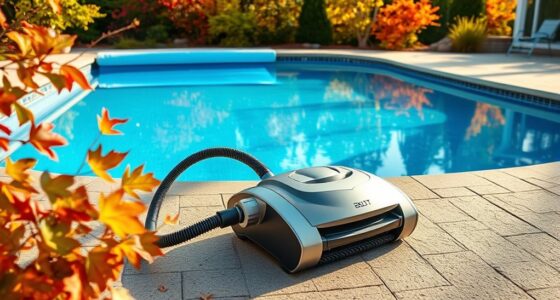
For frequent pool cleaning, a robot vacuum is your best bet because it automates debris removal efficiently. Pair it with manual skimming to catch surface leaves and bugs the robot might miss, especially during heavy use or windy days. This combo keeps your pool pristine with less effort, saving you time and ensuring the water stays clean and clear. Regular use of these tools makes maintenance quick and manageable.
How Can I Tell if My Pool Needs More Frequent Cleaning?
You can tell if your pool needs more frequent cleaning by checking the chemical balance regularly; if the pH or chlorine levels are off, it indicates more debris or contaminants. Also, monitor your skimmer; if it fills up quickly or debris isn’t being removed efficiently, it’s time for more frequent skimmer maintenance. Keeping these in check helps maintain a cleaner, healthier pool and reduces the need for intensive cleaning.
Are There Risks to Over-Cleaning My Pool Regularly?
Sure, over-cleaning your pool might seem like a good idea, but it can actually cause more harm than good. You risk disrupting the chemical balance, leading to algae or bacteria growth, and wear out your equipment faster. Ironically, too much cleaning can make your pool less safe and more costly in the long run. Strike a balance to keep your pool pristine without causing unnecessary damage.
Conclusion
By setting a pool cleaning schedule based on usage, you guarantee your pool stays clean, clear, and inviting. You monitor, maintain, and adjust as needed, creating a routine that suits your lifestyle. You check the debris, you balance the chemicals, you inspect the equipment. With this consistent approach, you protect your investment, promote healthy swimming, and enjoy peace of mind. In daily care, in weekly checks, in seasonal adjustments, your pool remains pristine and ready whenever you are.