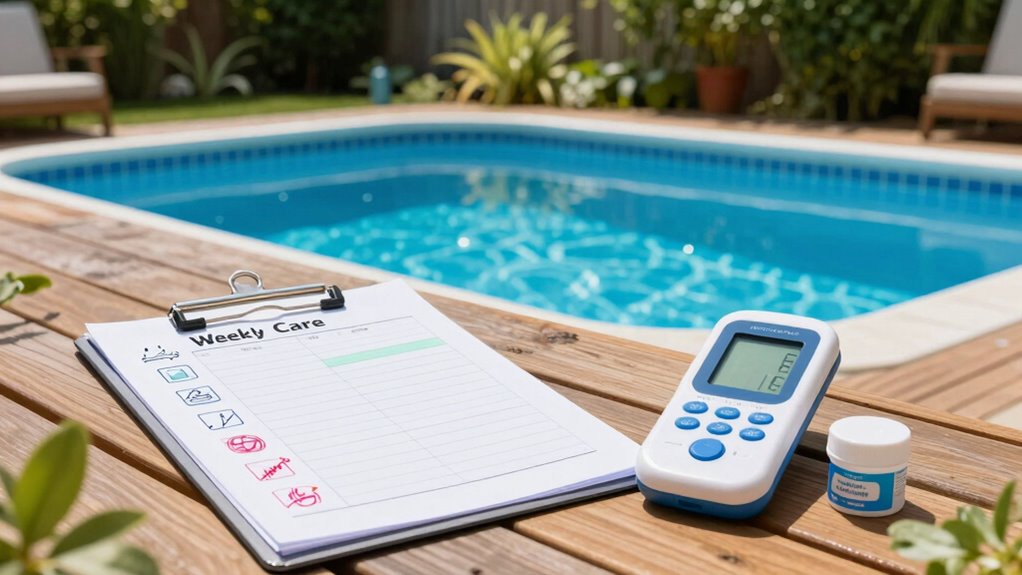

To build a simple weekly pool care checklist, start by scheduling regular tasks like checking and adjusting pH, chlorine, alkalinity, and stabilizer levels using a reliable test kit. Inspect equipment for leaks or wear, clean the skimmer and brushes, vacuum the pool, and skim the surface daily to remove debris. Make certain the water level stays at the skimmer midpoint. Focusing on these basics keeps your pool safe and inviting—keep going to discover more helpful tips.

Get cleaning gear delivered free with Prime
- Fast, free delivery on millions of items
- Prime Video, Amazon Music and more included
- Member-only deals all year
Key Takeaways
- Identify and schedule specific days for weekly maintenance tasks to ensure consistency.
- Include checks for pH, chlorine, alkalinity, and stabilizer levels using reliable test kits.
- Incorporate surface cleaning, debris removal, and vacuuming to maintain water clarity.
- Inspect equipment such as filters, pumps, and heaters for proper operation and signs of wear.
- Maintain water level at the skimmer midpoint to ensure optimal circulation and chemical distribution.

Are you wondering how to keep your pool clean and safe with minimal effort? Creating a simple weekly pool care checklist can make maintenance straightforward and less overwhelming. Start each week by checking the pool’s chemical balance. Maintaining the right pH level—typically between 7.2 and 7.6—is essential for safe swimming and to prevent algae growth. Use a reliable test kit to measure the pH, chlorine, alkalinity, and stabilizer levels. If any of these are out of range, adjust them promptly. For example, if the pH is too high, add a pH reducer; if it’s too low, use a pH increaser. Consistent monitoring ensures your water stays clear, healthy, and properly sanitized.
Maintain your pool’s health with weekly pH, chlorine, and alkalinity checks using a reliable test kit.
Next, inspect your equipment. Regular equipment inspection is key to preventing breakdowns and ensuring everything operates efficiently. Check the pump and filter system to confirm they’re running smoothly. Look for any leaks, strange noises, or signs of wear. Clean out the skimmer and pump baskets to remove leaves, debris, and buildup that could hinder circulation. Examine the filter media—whether it’s sand, cartridge, or DE—and backwash or clean as recommended by the manufacturer. Inspect the pool heater and chlorinator, making sure they’re functioning properly. These inspections help catch small issues before they escalate into costly repairs, saving you time and money in the long run. Additionally, consider the importance of biodiversity in maintaining a healthy pool ecosystem, which can reduce chemical reliance.
Vacuum the pool and brush the walls weekly to prevent algae and bacteria from taking hold. Use a pool brush to scrub the walls and floor, especially in corners and steps where algae might hide. After brushing, vacuum the pool to remove loosened dirt and debris. This process keeps the water sparkling and reduces the need for chemical overuse. Additionally, skim the surface daily or as needed to remove floating debris like leaves, insects, or twigs, which can quickly cloud the water and promote algae growth.
Finally, check your pool’s water level. It should be at the midpoint of the skimmer opening for optimal circulation. Add water if it’s too low, especially after heavy rain or evaporation. This simple step ensures your pool’s circulation system functions properly, maintaining even chemical distribution. By sticking to this weekly routine—monitoring chemical levels, inspecting equipment, cleaning surfaces, and maintaining water levels—you’ll keep your pool safe, clean, and inviting with minimal effort. Setting aside a specific day each week for these tasks turns pool maintenance into a manageable habit, giving you more time to enjoy your pool rather than worry about it.
pool test kit for pH chlorine alkalinity
As an affiliate, we earn on qualifying purchases.
As an affiliate, we earn on qualifying purchases.
Frequently Asked Questions
What Tools Are Necessary for Weekly Pool Maintenance?
You’ll need basic tools for weekly pool maintenance, including a pool skimmer net for pool cleaning and a brush to scrub the walls and floor. A pool vacuum helps with debris removal, while a thermometer guarantees proper water temperature. Don’t forget a test kit to check chemical levels, and perform equipment inspection to spot issues early. These tools keep your pool clean, safe, and well-maintained each week.
How Do I Test Pool Water pH Levels Accurately?
To test your pool water pH levels accurately, use a reliable pool water testing kit or test strips designed for pH measurement. Follow the instructions carefully, dipping the strip into the water sample or using the testing device. Record the pH reading and compare it to the ideal range (7.2-7.6). Proper chemical balancing guarantees safe, clear water, so adjust chemicals as needed for ideal pH levels and overall water quality.
When Should I Add Pool Chemicals During the Week?
You should add pool chemicals right after checking the water’s pH and chlorine levels, ideally at the beginning of the week. This keeps your water perfectly balanced and prevents issues from snowballing. Remember, chemical balance and water circulation are your best friends—adding chemicals during peak circulation ensures even distribution. Recheck levels mid-week and top up as needed, keeping your pool sparkling and safe all week long.
How Can I Prevent Algae Growth in My Pool?
To prevent algae growth, you should regularly maintain proper chemical balance and perform weekly shocking treatments. Use algaecides as needed and guarantee your pH, chlorine, and alkalinity levels stay within recommended ranges. Good circulation and filtration also help prevent algae. By staying consistent with chemical balance and routine cleaning, you create an environment that discourages algae growth, keeping your pool crystal clear and inviting all season long.
What Are Signs My Pool Needs Professional Servicing?
You might notice your pool’s water level drops unexpectedly or your bills spike, which could be signs it needs professional servicing. Coincidentally, issues like strange noises or inconsistent water flow often point to problems with pool equipment or leak detection. If you observe cloudy water, lingering odors, or equipment malfunctions, it’s time to call in experts for a thorough pool equipment inspection and leak detection to prevent further damage.
Conclusion
By following this simple weekly pool care checklist, you’ll keep your pool clean, clear, and inviting. You’ll prevent problems before they start, save time and money, and enjoy a safe swimming environment. Regular maintenance is about consistency, attention, and care—every week, every step, every time. Stick to your routine, stay vigilant, and watch your pool thrive. With these easy steps, you’ll turn swimming season into a long-lasting, worry-free experience.
Fall Picks
fall essentials
As an affiliate, we earn on qualifying purchases.