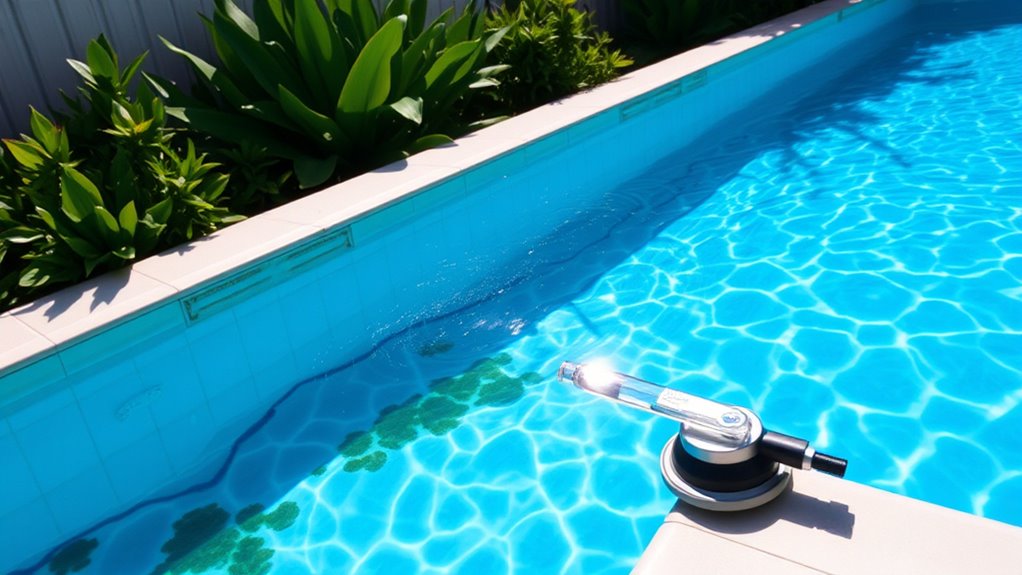

To fix cloudy water and algae, start by testing your pool’s chemical levels regularly, especially pH, alkalinity, and chlorine. Balance these chemicals to maintain clear water and prevent algae growth; keep chlorine levels high enough and shock the pool when needed. Guarantee your pump and filter run properly to promote circulation, and brush or vacuum surfaces to remove debris. Staying on top of maintenance helps prevent future issues—continue to explore for more expert tips.
Key Takeaways
- Regularly test and adjust water chemistry, especially pH and alkalinity, to maintain clarity and prevent cloudiness.
- Ensure proper circulation with the pump and filter to inhibit algae growth and debris buildup.
- Use chlorine and shock treatments consistently to disinfect water and control organic contaminants.
- Brush and vacuum pool surfaces regularly to remove algae, dirt, and organic matter.
- Apply algaecides as a preventive measure and maintain sanitizer levels to inhibit algae spores.

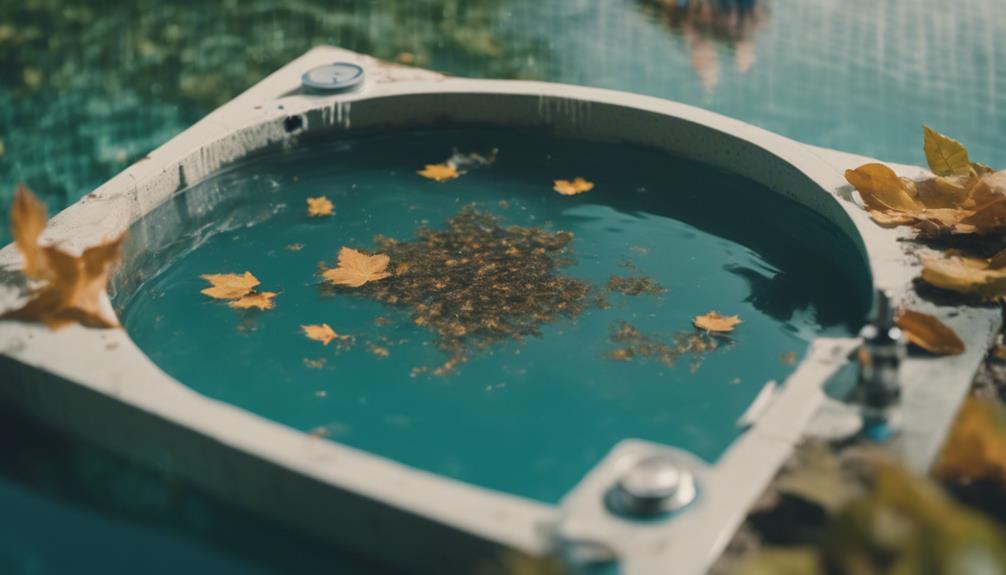
Managing a shared pool can be challenging, especially when multiple users have different expectations and habits. One of the most common issues you’ll face is cloudy water. It’s not just an eyesore; it signals that your pool isn’t properly maintained. To clear things up, you need to focus on proper pool maintenance, particularly chemical balancing. When your pool’s chemicals are out of sync, it can lead to murky water. Start by testing your water regularly using reliable test kits. Check the pH, alkalinity, and sanitizer levels, and adjust them accordingly. Keeping the pH between 7.2 and 7.6 is vital, as it helps the sanitizer work effectively and prevents cloudiness. If the pH is too high, the water can become dull and cloudy because the chemicals aren’t dissolving properly. On the other hand, low pH can cause corrosion and other problems. Balancing your chemicals isn’t just about adding the right products; it’s about understanding how they interact. For example, adding chlorine helps disinfect the water, but if the levels are too low, algae and bacteria can thrive, making your pool look greenish and cloudy. Regularly shocking the pool with a chlorine boost can also help eliminate organic contaminants that cause cloudiness. Proper chemical balancing is especially important because inconsistent chemical levels can undermine your efforts and lead to recurring issues.
Algae growth is another frequent problem that stems from poor chemical balancing and inadequate pool maintenance. Algae can turn your pristine pool into a green, slimy mess in a matter of days. To combat this, you need to keep sanitizer levels consistently high enough to prevent algae spores from taking hold. Using algaecides as a preventative measure can be effective, but they shouldn’t replace proper chemical balancing. Regular brushing and vacuuming of the pool surfaces also prevent algae from establishing themselves in corners or beneath steps. If algae already appears, you’ll need to increase your chlorine levels temporarily and scrub the affected areas thoroughly. Maintaining good circulation is equally vital; stagnation encourages algae growth, so ensure your pool’s pump and filter are functioning at their best.
Ultimately, consistent pool maintenance and vigilant chemical balancing are your best defenses against cloudy water and algae. By testing and adjusting your chemicals regularly, you guarantee your pool stays clear, inviting, and safe for everyone. Staying on top of these tasks might seem tedious at first, but once they become part of your routine, you’ll find that problems like cloudiness and algae are easier to prevent and manage.
As an affiliate, we earn on qualifying purchases.
Frequently Asked Questions
How Often Should I Test My Pool Water Chemistry?
You should test your pool water chemistry at least twice a week during peak swimming season to make certain proper chemical balancing techniques. Regular testing helps you catch imbalances early, preventing issues like cloudy water and algae growth. Don’t forget to check your pool filter maintenance regularly, as a clean filter supports effective chemical circulation. Consistent testing and maintenance keep your pool safe, clear, and inviting for swimmers.
What Are Natural Remedies for Algae Prevention?
Think of your pool as a peaceful garden; to keep it thriving, you need natural inhibitors against algae growth. You can add beneficial plants like water lilies or use barley straw, which releases natural compounds that inhibit algae. Regularly brushing the walls and maintaining proper circulation also helps prevent algae from taking hold. These natural remedies create an environment that discourages algae growth, keeping your pool clear and inviting without harsh chemicals.
How Can I Reduce Pool Water Evaporation?
To reduce pool water evaporation, you should use evaporation prevention techniques like installing a pool cover when not in use. This simple step helps conserve water and keeps debris out. Additionally, minimize splashing and wind exposure around your pool, and consider using a windbreak or fencing. These actions promote water conservation and keep your pool water levels stable, saving you money and effort on refilling and chemical balancing.
What Are Safe DIY Methods to Clean Cloudy Water?
Like a knight polishing armor, you can DIY clean cloudy water safely. Start with pool filter maintenance—clean or replace filters to improve water clarity. Check and adjust pool chemical balance, especially pH and chlorine levels, to combat cloudiness. Use a clarifier if needed, following instructions carefully. Regular brushing and skimming help, too. These simple steps keep your pool sparkling without harsh chemicals or professional help.
How Do I Identify if My Pool Has a Leak?
You can tell if your pool has a leak by checking your pool skimmer for water level changes and inspecting your pool liner for cracks or wet spots. Keep an eye on the water level—if it drops consistently despite proper evaporation rates, it’s a sign of a leak. Regular pool skimmer maintenance and liner inspection help detect issues early, preventing costly repairs and water loss.
Conclusion
By regularly testing and balancing your pool’s chemicals, you can effectively prevent cloudy water and algae growth. Some believe maintaining proper pH levels alone suffices, but research shows a combined approach—using chlorine and algaecides—delivers better results. Staying proactive and consistent is key. Trusting this integrated method not only keeps your pool crystal clear but also extends its lifespan, proving that thorough care truly makes a difference in solving common pool issues.