To vacuum the pool floor effectively, start by removing large debris with a net skimmer. Attach the vacuum head to a telescopic pole and connect it to a hose or automatic cleaner, ensuring equipment is in good condition. Move the vacuum across the pool floor with overlapping strokes, keeping it flat for proper suction. Using the right technique and equipment makes cleaning easier and more thorough—continue to explore for detailed tips and methods.
Key Takeaways
- Use a telescopic pole and appropriate vacuum head to control movement and ensure thorough cleaning.
- Remove large debris first with a skimmer net before vacuuming to prevent clogs.
- Move the vacuum in overlapping strokes, focusing on corners and hard-to-reach areas for complete coverage.
- Ensure the vacuum head stays flat against the pool floor for optimal suction and cleaning efficiency.
- Turn off the pool pump and verify equipment condition before starting to ensure safety and proper operation.
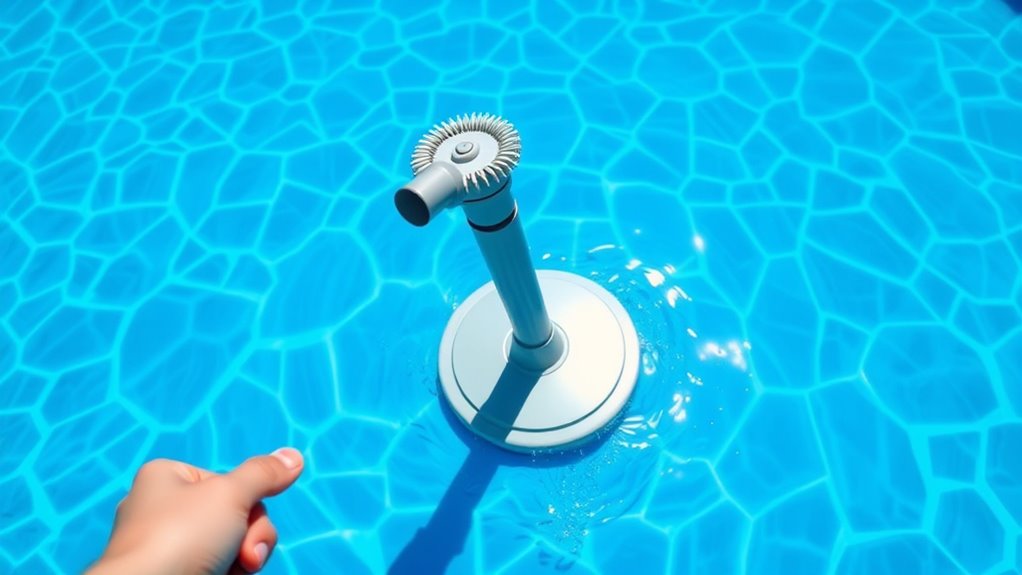
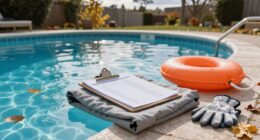
Regularly vacuuming the pool floor is vital to keep your swimming pool clean and inviting. This task plays an essential role in pool maintenance, helping to remove dirt, debris, and algae that settle at the bottom. When you vacuum regularly, you prevent buildup that can affect water quality and make your pool less appealing. But before you plunge into vacuuming, it’s important to understand the safety precautions involved. Working around electrical equipment and water requires careful attention to avoid accidents. Always turn off the pool pump and filter system before starting, and verify that your vacuum equipment is in good condition, with no frayed cords or damaged hoses. Wearing goggles and gloves can protect you from debris and chemicals, and it’s wise to keep the area dry to prevent slips and falls.
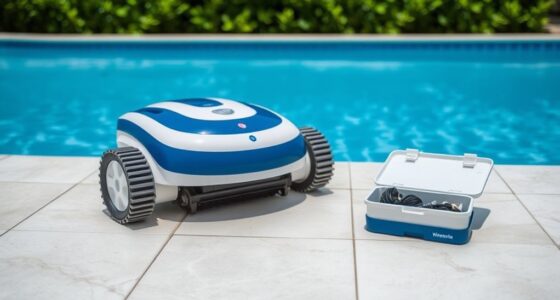
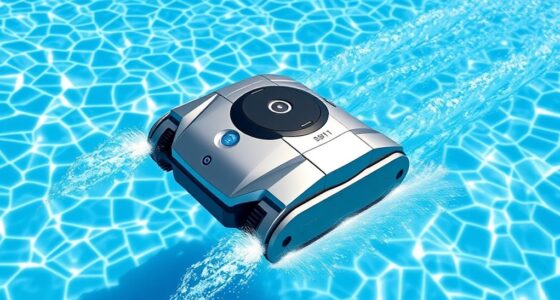
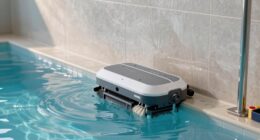
Using the right equipment makes a significant difference in how effectively you clean the pool floor. Manual vacuums, which attach to your telescopic pole and hose, give you control over cleaning specific areas, but they can be physically demanding. Automatic or robotic vacuums are more convenient, especially if you prefer to set them and let them work independently. These devices come with various features, from simple models to advanced ones with programmable schedules and powerful suction. Whichever type you choose, make sure it’s compatible with your pool size and shape. Proper equipment not only speeds up the cleaning process but also enhances safety, as you won’t need to bend or stretch awkwardly, reducing the risk of injury.
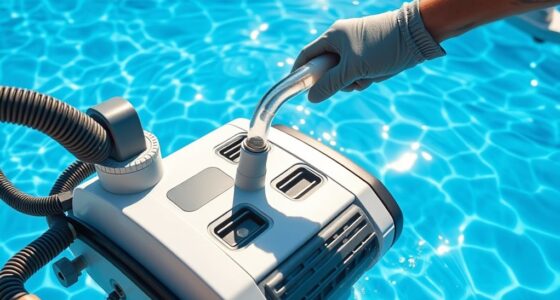
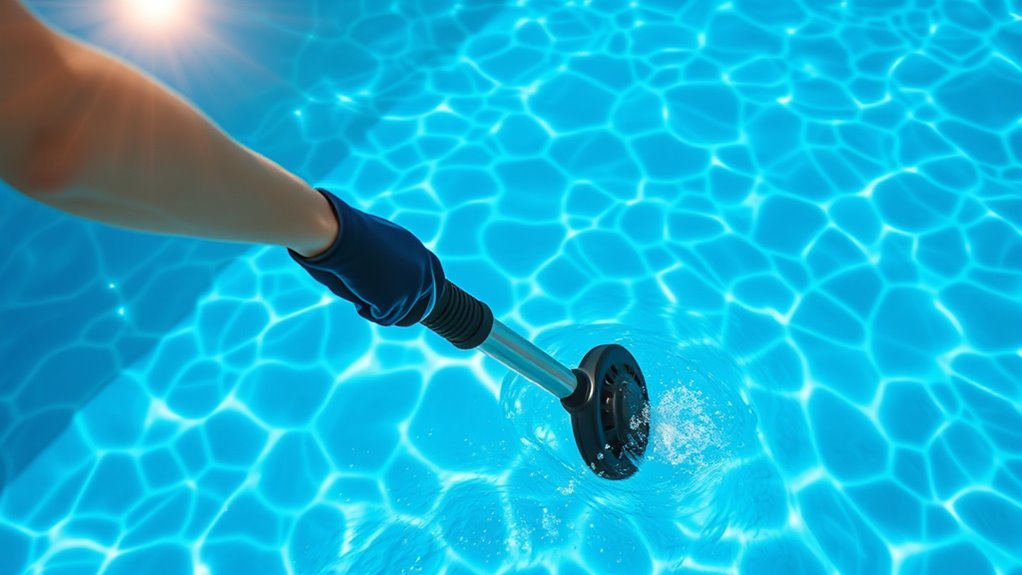
When vacuuming, start by removing any larger debris like leaves or twigs with a net skimmer. This prevents clogs and guarantees your vacuum operates smoothly. Attach the vacuum head to the telescopic pole and connect it to the hose or power source, depending on the type. Slowly move the vacuum across the pool floor in overlapping strokes, paying attention to corners and hard-to-reach spots. Keep the vacuum head flat against the surface to maximize suction and avoid missing debris. Regular vacuuming helps maintain clear water and reduces the need for chemical treatments, saving you time and money in the long run.

SWIMLINE HYDROTOOLS Manual Vacuum Head Attachment For Inground & Above Ground Pools |Weighted Flexible Swimming Pool Vac Head Rectangle Shape W/ Wheels| Swivel Hose 1-1/4 or 1-1/2’’| Clean 8150
{DEEP CLEAN}: This Hydrotools vacuum head is perfect for deep cleaning of all pool types. Featuring an extra-large…
As an affiliate, we earn on qualifying purchases.
As an affiliate, we earn on qualifying purchases.
Frequently Asked Questions
How Often Should I Vacuum My Pool Floor?
You should vacuum your pool floor at least once a week to prevent buildup of pool algae and debris. Regular vacuum maintenance keeps your pool clean and clear. If you notice more dirt or algae, vacuum more frequently. Consistent cleaning minimizes chemicals needed and maintains water quality. Remember, a clean pool not only looks better but also extends the life of your equipment. Stay proactive with your vacuum routine for maximum results.
Can I Vacuum a Partially Filled Pool?
Yes, you can vacuum a partially filled pool, but you should proceed with caution like walking a tightrope. Make sure your equipment is designed for low water levels and prioritize pool safety. Keep an eye on water levels to prevent damage, and regularly maintain your equipment to avoid malfunctions. Vacuuming correctly guarantees your pool stays sparkling while safeguarding your investment and enjoying worry-free swimming.
What Safety Precautions Are Necessary When Vacuuming?
When vacuuming your pool, prioritize pool safety by guarantee the power is off before connecting or disconnecting equipment. Wear goggles and gloves to protect yourself from debris. Regular vacuum maintenance helps prevent equipment malfunctions and keeps your pool clean. Keep electrical cords away from water to avoid shocks, and never vacuum alone. These precautions ensure safe, effective cleaning while maintaining your equipment’s longevity.
How Do I Troubleshoot Vacuuming Equipment Issues?
Did you know that improper equipment maintenance causes 30% of pool vacuum issues? To troubleshoot vacuuming equipment, first check your hoses, fittings, and pump for leaks or blockages. Use troubleshooting tools like a pressure gauge to identify pressure drops or clogs. Confirm your filter is clean and connections are secure. Regularly inspecting and maintaining your equipment helps prevent problems, making your pool cleaning more efficient and hassle-free.
Is Manual or Automatic Vacuuming More Effective?
Manual vacuuming can be more effective for detailed cleaning, especially in hard-to-reach spots, but automatic vacuums save you time and energy. If you prioritize energy efficiency, automatic pool cleaners are usually better because they operate efficiently over longer periods. However, for thorough cleaning and control, manual vacuuming allows you to target specific areas. Choose based on your pool size, budget, and how much time you want to spend cleaning.
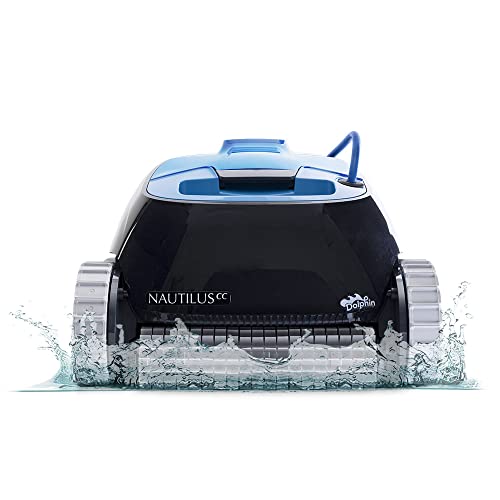
Dolphin Nautilus CC Automatic Robotic Pool Vacuum Cleaner, Wall Climbing Scrubber Brush, Top Load Filter Access, Ideal for Above/In-Ground Pools up to 33 FT in Length
WALL-SCRUBBING POWER: Dolphin Nautilus CC climbs walls efficiently, ensuring thorough cleaning on any pool surface, no matter the…
As an affiliate, we earn on qualifying purchases.
As an affiliate, we earn on qualifying purchases.
Conclusion
Remember, a clean pool is a happy pool. With the right techniques and equipment, you can keep your pool floor spotless and inviting. Regular vacuuming not only extends the life of your pool but also guarantees a safe, enjoyable swimming experience. Don’t forget, “A stitch in time saves nine”—staying on top of your pool maintenance now prevents bigger headaches later. Keep at it, and your pool will always be ready for a revitalizing dip!

ENHULK Pool Vacuum for Above Ground Pool, Upgraded 13.4" Wide Head & Telescopic Pole, 18.5 GPM Suction, 60 Min Runtime, Cordless Handheld Rechargeable Pool Cleaner for Inground Pools (Blue)
【DOUBLE CLEANING EFFICIENCY】Enhulk PC15 pool vacuum for above ground pool boasts a 13.4-inch removable pool vacuum head and…
As an affiliate, we earn on qualifying purchases.
As an affiliate, we earn on qualifying purchases.
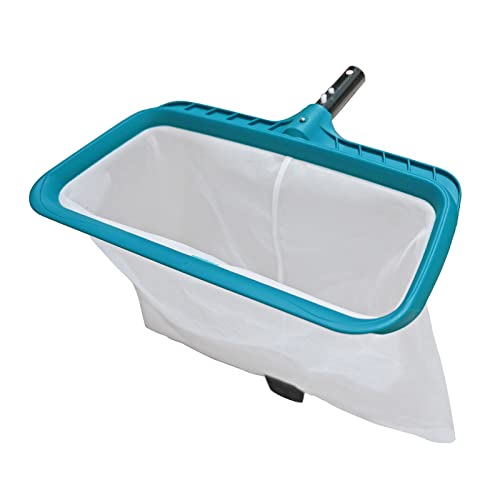
POOLWHALE Professional Pool Skimmer Net, Heavy Duty Swimming Leaf Rake Cleaning Tool with Deep Fine Nylon Mesh Net Bag – Fast Cleaning,Easy Scoop Edge,Debris Pickup Removal (No Pole)
Large Capacity: 17" swimming pool leaf rake, 11" W, 14" deep net.The heavy duty lightweight plastic molded frame…
As an affiliate, we earn on qualifying purchases.
As an affiliate, we earn on qualifying purchases.