
To know when to replace your pool filter media, watch for signs like murky water despite cleaning, rising pressure gauge readings, or debris bypassing the filter. If the media looks clogged or dirty, it’s time for a change. Also, increased energy bills or decreased water clarity indicate failure. Regularly monitor pressure levels and water quality to catch issues early—if these signs sound familiar, you’ll find more helpful tips just ahead.
Key Takeaways
- Monitor pressure gauges; a consistent rise of 8-10 psi indicates it’s time to replace the media.
- Observe water clarity; persistent murkiness or cloudiness despite cleaning suggests worn or clogged media.
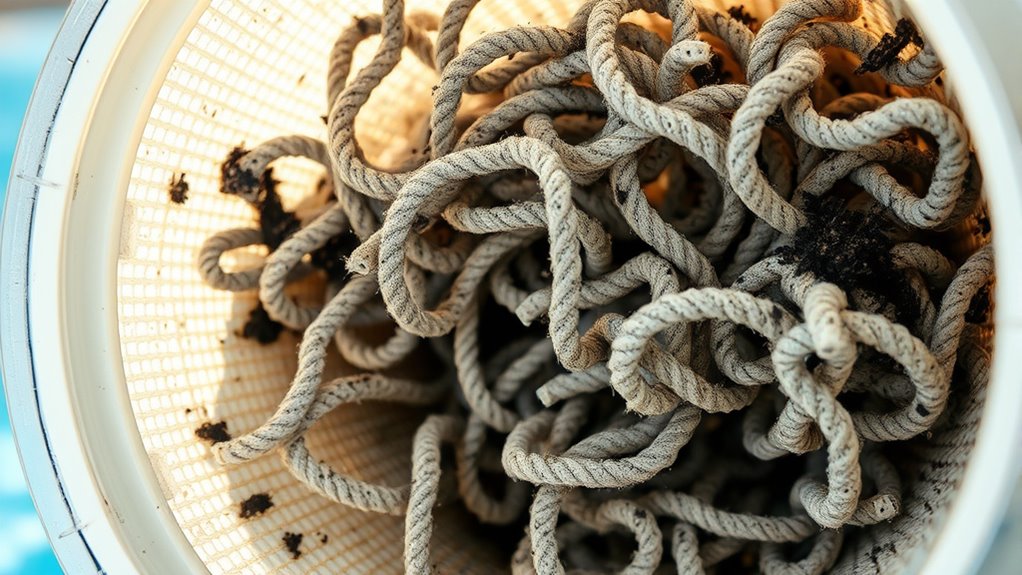
- Check for visible debris or dirt buildup on filter media, signaling the need for replacement.
- Notice increased pump workload or higher energy bills, which point to reduced filtration efficiency.
- Replace filter media regularly based on manufacturer recommendations to maintain optimal water quality and system performance.

Regularly replacing your pool filter media is vital to keep your pool clean and your filtration system functioning efficiently. When your filter media is in good shape, it maintains superior pool water clarity and reduces the strain on your pump. Over time, however, debris, oils, and minerals accumulate within the filter media, diminishing its effectiveness. This buildup can lead to decreased pool filter efficiency, making it harder for your system to keep the water clear. Recognizing the signs of clogging is essential, as a clogged filter not only hampers filtration but can also cause increased energy costs and potential damage to your equipment.
Routine filter media replacement ensures clear water, efficient filtration, and prevents costly damage to your pool system.
One of the most obvious indicators that you need to replace your pool filter media is a noticeable decline in water clarity. If your pool appears murky or cloudy despite regular cleaning and chemical balancing, your filter may be struggling to trap dirt and debris effectively. Similarly, if you notice a persistent smell or an increase in algae growth, it’s often a sign that your filter media isn’t functioning properly and needs replacement. These issues suggest that debris is bypassing the filter or that the media has become so clogged that water is passing through without proper cleaning.
Another sign of clogging is a significant increase in your pool’s pressure gauge reading. Most filtration systems have a pressure indicator that shows when the filter is under stress. When the pressure rises well above the normal range—usually 8-10 psi over the starting pressure—it indicates that the media is clogged, restricting water flow. If you notice this pressure spike, it’s a clear sign that your filter media is no longer effective and should be replaced promptly.
You may also observe that your pump has to work harder to circulate water, which can lead to higher energy bills and increased wear on your equipment. A clogged filter media causes restricted flow, forcing your pump to operate longer and more intensely. Regularly inspecting your filter and monitoring pressure levels helps catch these issues early, preventing more costly repairs down the line. Additionally, understanding the importance of filter media quality can help you choose the best replacement media to extend the lifespan of your filtration system.
Top picks for "know replace pool"
Open Amazon search results for this keyword.
As an affiliate, we earn on qualifying purchases.
Frequently Asked Questions
How Long Does Pool Filter Media Typically Last?
Your pool filter media typically lasts about 1 to 3 years, depending on usage and water quality. To maintain peak filtration, follow a regular replacement schedule based on the filter media lifespan and your pool’s needs. Keep an eye out for signs like decreased water flow or cloudy water, which indicate it’s time for a replacement. Regular maintenance ensures your pool stays clean and safe all season long.
Can I Extend the Life of My Filter Media?
Did you know that proper maintenance can extend your filter media’s lifespan by up to 50%? To do this, regularly clean your filter, backwash it as needed, and keep your pool water balanced. This helps improve filter media longevity and prevents clogging. By taking these steps, you can effectively extend filter life, saving you money and ensuring cleaner water. Stay proactive, and your filter will thank you!
What Are Signs of a Failing Pool Filter?
You’ll notice signs of filter failure when your pool water becomes cloudy, algae growth appears, or the pressure gauge shows a persistent high reading. These indicate your filter media has reached the end of its lifespan and needs replacing. If you ignore these signs, the filter won’t effectively clean, reducing water quality. Regularly check for these signs to maintain ideal filtration and extend your filter media’s lifespan.
Is It Safe to Replace Filter Media Myself?
Replacing pool filter media yourself is safe if you follow proper procedures. Did you know that DIY installation saves about 50% compared to professional services? You should verify chemical compatibility and wear gloves for safety. Carefully follow manufacturer instructions, and turn off the pump before starting. If you’re comfortable with basic maintenance, replacing filter media can be a straightforward task, saving you money and giving you a sense of accomplishment.
How Often Should I Backwash My Pool Filter?
You should backwash your pool filter whenever the pressure gauge rises 8-10 psi above the normal operating level. Regular backwashing is key to effective pool maintenance and guarantees your filter works efficiently. Don’t wait too long, as dirty filters strain your pump and reduce water quality. Remember, backwashing is a temporary fix—eventually, you’ll need to plan for filter replacement when the media becomes too clogged or worn out.
Conclusion
When your pool filter media starts to falter, it’s like trying to hear a whisper through a thick fog—you lose clarity and sparkle. Don’t wait until the water turns cloudy or your filter groans under the strain. Replace it at the right moment, and you’ll release a crystal-clear oasis that invites you in. Think of it as giving your pool a fresh breath—renewed, vibrant, and ready to shine for endless summer days.