To prevent damage when winterizing your pool, start by choosing a sturdy cover that fits well and securing it tightly to prevent wind from causing issues. Balance your chemicals, ensuring pH and chlorine levels are ideal, and lower the water level below skimmer lines. Disconnect and store equipment, and add antifreeze if needed. Regularly check the cover’s condition and chemical balance throughout winter. Keep going to discover more tips to protect your pool all season long.
Key Takeaways
- Choose a durable, appropriately fitting pool cover and secure it tightly to prevent debris entry and wind damage.
- Properly balance water chemistry, adjusting pH, alkalinity, and chlorine levels before sealing the pool.
- Lower water levels below skimmer and jets, then disconnect and store equipment to prevent freezing damage.
- Run filtration system to circulate chemicals, and add pool-specific antifreeze if necessary for your climate.
- Inspect the cover and equipment regularly during winter to ensure security, integrity, and readiness for spring reopening.

As winter approaches, preparing your pool to withstand the cold months and avoid costly repairs come spring is essential. Proper winterization involves protecting your investment and ensuring your pool remains in good condition when you’re ready to reopen it. One of the first steps is choosing the right pool cover options. A sturdy, high-quality cover acts as a barrier against leaves, debris, and harsh weather, preventing them from sinking and causing potential damage or clogging your filtration system. There are different types of covers, such as solid safety covers, mesh covers, and winter-specific covers, each offering varying levels of protection and durability. Select the one that best fits your pool size, climate, and budget. Installing the cover correctly is vital, so ensure it’s tightly secured around the pool’s edges to prevent wind from displacing it during storms.
Choose the right pool cover to protect your investment during winter.
Alongside covering your pool, chemical balancing becomes a pivotal factor in winterizing. Before sealing everything up, you should thoroughly test and adjust your pool’s water chemistry. Proper chemical balancing inhibits algae growth and prevents corrosion of pool equipment during the off-season. You want your pH levels to stay between 7.2 and 7.6, and alkalinity should be stabilized around 80-120 ppm. Chlorine levels need to be adequate to sanitize the water but not so high that they cause damage or create overly aggressive chemical reactions. Using a winterizing algaecide can also help prevent algae blooms during the months your pool is closed. Always follow manufacturer instructions when adding chemicals and recheck your water chemistry after treatment to guarantee it’s within the recommended ranges.
In addition to chemical balancing, you’ll want to lower the water level below the skimmer and return jets to prevent freezing and cracking. Consider adding an antifreeze solution designed for pools if you live in particularly cold regions. Before closing the pool, run the filtration system for a few hours to circulate chemicals thoroughly. Once you’ve secured the cover, double-check that it’s taut and free of tears or gaps. This prevents debris from entering and keeps the pool protected from winter storms.
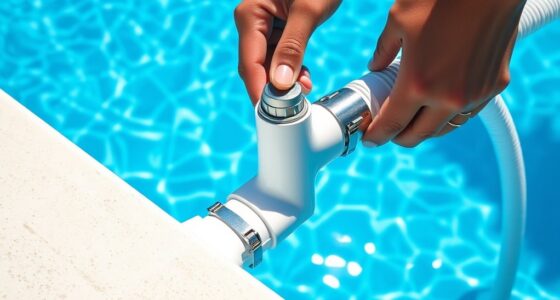
Finally, don’t forget to disconnect and drain equipment like pumps and filters if recommended by the manufacturer. Properly storing these items in a dry, protected area prevents damage from freezing temperatures. By paying attention to your pool cover options and maintaining proper chemical balancing, you set the stage for a smooth reopening in spring. Your proactive approach ensures your pool stays in top condition, saving you time and money when warmer days return.
Frequently Asked Questions
When Is the Best Time to Start Winterizing My Pool?
You should start winterizing your pool when temperatures consistently stay below 50°F, usually in late fall. Begin by balancing your pool chemicals to prevent algae growth and corrosion. Then, install your pool cover to keep debris out during the winter months. By taking these steps at the right time, you protect your pool from damage and make spring startup easier. Don’t wait too long, as early preparation saves you trouble later.
Can I Winterize My Pool Myself or Should I Hire a Professional?
You can definitely winterize your pool yourself with some DIY tips, but hiring professional services offers peace of mind and guarantees everything’s done correctly. If you’re comfortable with pool maintenance and follow detailed instructions, DIY is feasible. However, if you’re unsure or want to avoid costly mistakes, it’s best to hire professionals. They have the experience to winterize your pool efficiently, preventing damage and saving you time and effort.
What Tools and Supplies Are Necessary for Winterizing?
Think of winterizing as armoring your pool for a long hibernation. You’ll need a sturdy pool cover to shield it from winter’s chill and debris. Gather winterizing chemicals to keep water balanced and prevent algae growth. Essential tools include a leaf net, pump, and a telescoping pole for easy access. With these supplies, you’re prepared to safeguard your pool and ensure it wakes up happy in spring.
How Do I Prevent Algae Growth During Winter?
To prevent algae growth during winter, you should focus on algae prevention and chemical balancing. First, guarantee your pool’s pH, alkalinity, and sanitizer levels are properly balanced. Then, add a winter algaecide and a long-lasting sanitizer to inhibit algae development. Regularly circulate the water, even in winter, and keep your pool covered to minimize debris and sunlight exposure, which can promote algae growth.
What Are the Common Mistakes to Avoid When Winterizing?
Don’t rush your pool cover selection or neglect proper chemical balance, as these are common mistakes. Avoid using the wrong cover type that doesn’t fit your pool, which can lead to debris accumulation or damage. Always balance chemicals before closing your pool; skipping this step can cause algae or corrosion during winter. Take your time to prepare thoroughly, and you’ll prevent costly repairs and ensure a smooth opening in spring.
Conclusion
So, after all that winterizing, you might think your pool is completely protected. But don’t get too comfortable—nature has a funny way of testing your preparations. A sudden freeze or unanticipated storm could still surprise you. Ironically, the best way to guarantee your pool survives winter is to do everything you can, then remember that sometimes, even the most careful planning can’t prevent Mother Nature’s surprises. Stay vigilant, and you might just outsmart the weather.