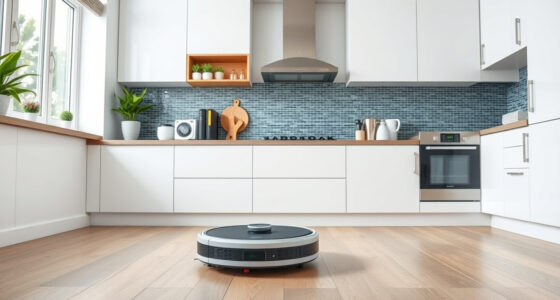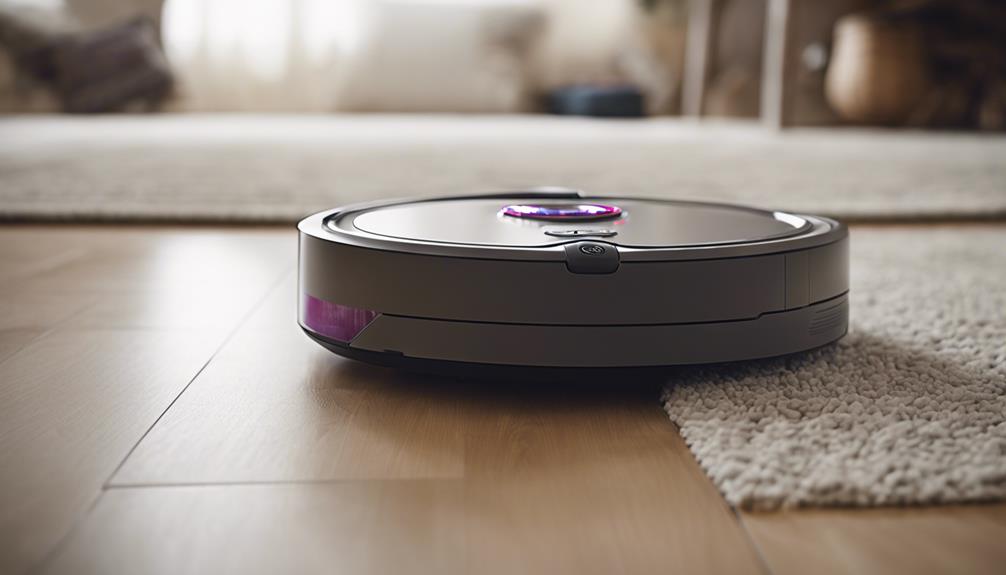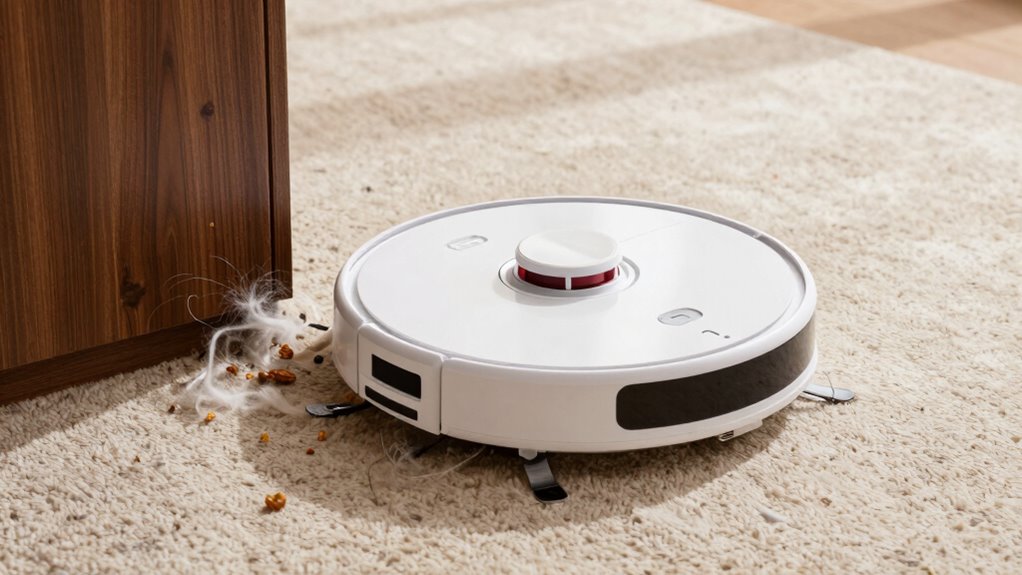

You might notice some robot vacuums miss corners due to design choices, navigation tech, and suction power. Models with limited corner-focused features or poor navigation algorithms often skip tight spots, especially if their sensors don’t recognize edges well. Less powerful motors may also struggle to clean debris in corners. If you want to understand how these factors play a role and what to look for, keep exploring the details further.

Get cleaning gear delivered free with Prime
- Fast, free delivery on millions of items
- Prime Video, Amazon Music and more included
- Member-only deals all year
Key Takeaways
- Navigation algorithms may prioritize open areas, causing corners to be overlooked.
- Limited battery life can prevent thorough corner cleaning in extended sessions.
- Smaller motors with less suction power struggle to effectively clean tight corners.
- Design and functionality differences influence a vacuum’s ability to reach and clean corners thoroughly.
- Quieter models often have weaker motors, reducing effectiveness in corner and edge debris removal.
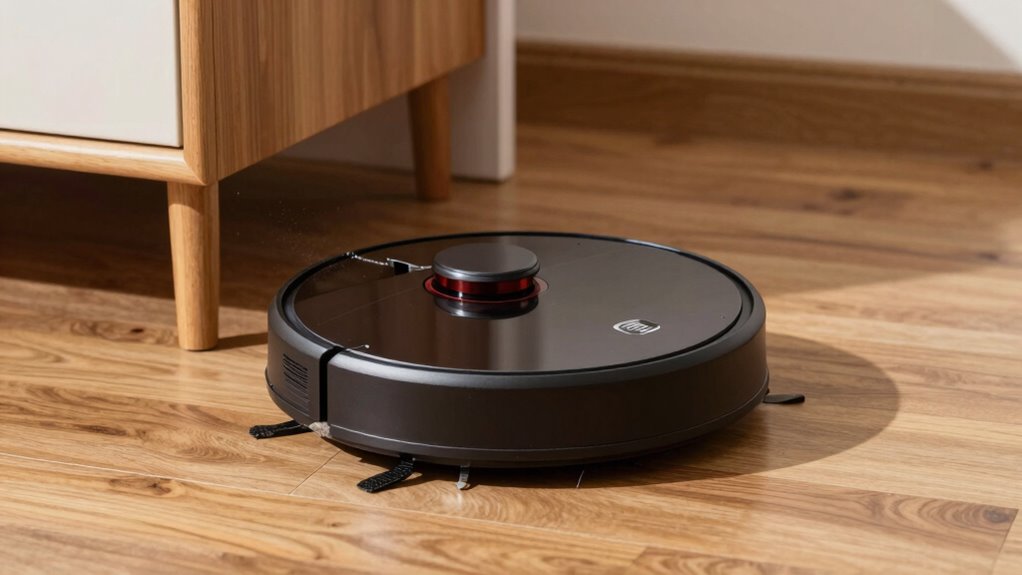
Robot vacuums have become a popular way to keep floors clean with minimal effort, but not all models clean equally well—especially when it comes to corners and edges. If you’ve noticed that some of your robot’s cleaning sessions leave dust and debris tucked away in tight spots, it’s likely due to design and functionality differences among models. Two key factors that influence how well a robot vacuum can tackle corners are battery life and noise levels. Long battery life allows the vacuum to cover more ground without needing to recharge, giving it the time to reach those tricky edges. Conversely, a short battery life might cause the robot to cut its cleaning session short, leaving corners untouched. Some models, although equipped with powerful batteries, may still struggle because they’re programmed to prioritize open spaces over edges, or their navigation algorithms don’t emphasize corner cleaning. Additionally, the effectiveness of a robot vacuum often depends on its navigation system, which determines how well it recognizes and covers all areas, including corners. Noise levels also play a role in corner cleaning performance. You might think that quieter vacuums are less effective, but often, models designed to operate silently tend to have smaller motors and less suction power, which can hinder thorough cleaning in corners. On the other hand, louder vacuums usually have more robust motors that can generate stronger suction, helping them pick up debris from tight corners and edges more effectively. However, if you’re sensitive to noise, you could find yourself hesitant to run a loud vacuum regularly, which might result in less frequent cleanings and accumulation of dirt in those hard-to-reach spots.
Products Worth Considering

Shark IQ Robot Self-Empty XL Robot Vacuum with Home Mapping, Self-Cleaning Brushroll, and Wi-Fi, Black

Roborock Qrevo S Pro Robot Vacuum and Mop

Dreame L50 Ultra Robot Vacuum and Mop Combo
As an affiliate, we earn on qualifying purchases.
Frequently Asked Questions
How Do Robot Vacuums Detect Edges and Corners?
You might wonder how robot vacuums detect edges and corners. They use sensor technology like infrared, ultrasonic sensors, and cameras to identify boundaries and obstacles. These sensors help the vacuum navigate with efficient cleaning patterns, avoiding falls and missing spots. However, their ability to detect corners depends on sensor placement and type, which can sometimes make it hard for some models to clean those tight spots thoroughly.
Do Robot Vacuum Brands Differ in Corner-Cleaning Efficiency?
Ever wonder if your robot vacuum’s brand makes a difference? It does! Different brands vary in corner-cleaning efficiency due to sensor accuracy and brush design. Some have advanced sensors that detect edges better, while others feature corner-specific brushes that reach tight spaces. You’ll notice the difference in how thoroughly they clean your corners—so selecting a brand with precise sensors and smart brush design guarantees your floors get completely spotless.
Can Adjusting a Robot Vacuum’s Settings Improve Corner Cleaning?
Adjusting your robot vacuum’s settings can improve corner cleaning. You should calibrate sensors regularly to guarantee precise navigation, helping it detect edges better. Also, optimize the battery by scheduling cleanings when the battery is fully charged, allowing longer, more effective sessions. These tweaks enhance the vacuum’s ability to reach corners, preventing missed spots. Regular maintenance and setting adjustments make your robot more efficient at corner cleaning.
How Does Room Layout Affect a Robot Vacuum’s Corner Cleaning?
Room layout greatly impacts your robot vacuum’s corner cleaning. Complex layouts with furniture, tight spaces, or uneven floor types can challenge its navigation sensors, causing missed corners. Open spaces allow better sensor performance and easier navigation. To improve cleaning, clear clutter, and optimize sensor placement. Understanding how floor types and room layout influence your vacuum’s navigation helps you position furniture strategically, ensuring thorough corner cleaning and reducing missed spots.
Are There Specific Models Designed for Better Corner Cleaning?
Some robot vacuums are like laser-guided missiles for corners. You’ll want models with advanced edge-cleaning brushes and precise navigation, often found in brands like iRobot Roomba s9+ or Eufy RoboVac X8. These models focus on corner cleaning, boasting longer battery life to cover more ground and lower noise levels for peaceful operation. Investing in these guarantees your corners get the attention they deserve, leaving no dirt behind.
Conclusion
So, next time you watch your robot vacuum dance around your room, remember it’s a tiny explorer with a big challenge—corners. Some sweep smoothly, like a river carving its path, while others stumble like a leaf caught in a gust. Choosing the right one means giving your home a thorough hug, not just a quick pat. With the right robot, every corner becomes a quiet victory, swept clean, leaving no hidden secret behind.