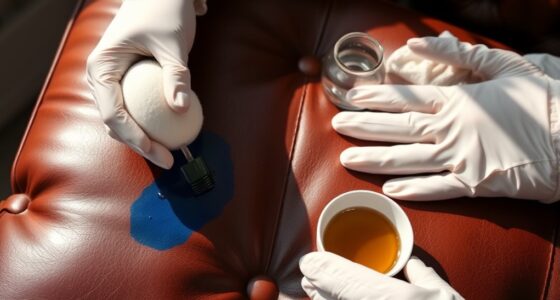
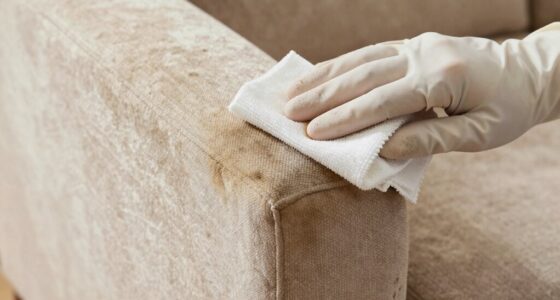
When removing stains, blotting is better than rubbing because it gently lifts dirt and liquids without pushing them deeper into the fabric. Rubbing can damage delicate fibers, cause pilling, or create uneven spots. Blotting controls how much cleaner you use and prevents spreading the stain. It’s safer for all fabric types and helps preserve your clothes’ look and longevity. Stick with blotting, and you’ll prevent damage—if you keep looking, you’ll discover more tips to protect your fabrics.
Listen free for 30 days with Audible
Thousands of audiobooks and originals — cancel anytime.
As an affiliate, we earn on qualifying purchases.
Key Takeaways
- Blotting gently lifts stains without pushing them deeper into fabric fibers.
- Rubbing can cause fabric fraying, damage, or pilling, compromising garment integrity.
- Blotting minimizes stain spreading and uneven treatment, ensuring more effective removal.
- Rubbing may embed stains further or spread oil-based marks, making removal harder.
- Blotting offers controlled application of cleaning solutions, reducing fabric oversaturation and harm.
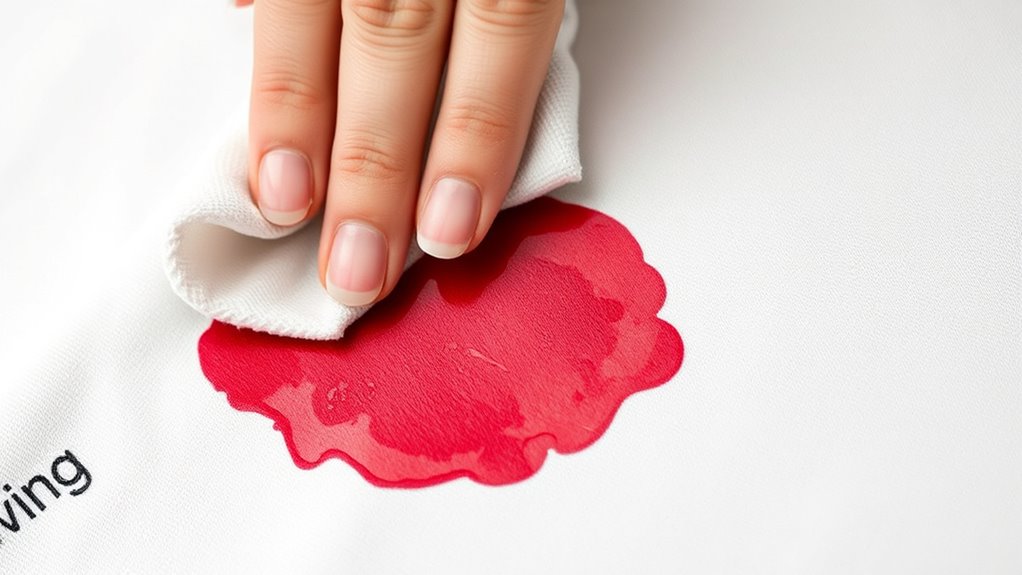
When it comes to removing stains, many people instinctively rub the fabric to speed up the process. However, this common reaction can actually do more harm than good. The key lies in understanding how different fabric textures and stain types respond to treatment. Rubbing can push the stain deeper into the fibers, making it more difficult to remove completely. It can also fray or damage delicate fabrics, leaving behind visible wear or even holes. Instead, blotting offers a gentler, more effective approach. By gently pressing a clean cloth or paper towel onto the stain, you lift the offending substance without grinding it further into the material.
Blot stains gently to lift them without pushing deeper or causing damage.
Different fabric textures react uniquely to stain removal techniques. Smooth fabrics like cotton or polyester tend to handle blotting well, but delicate textiles such as silk or wool require even more gentle care. Rubbing these fragile materials risks tearing or distorting their fibers. With textured fabrics like burlap or linen, rubbing can cause pilling or roughness, diminishing their appearance over time. Recognizing the fabric’s texture helps you decide whether to blot or rub; in most cases, blotting is safer and preserves the material’s integrity.
Stain types also dictate your best approach. Water-based stains, like coffee or juice, usually respond well to blotting with cold water or a mild detergent. Oil-based stains, such as grease or makeup, often need a different strategy—using absorbent powders or solvents before blotting to lift the stain effectively. Rubbing these types might spread the stain or embed it further into the fibers. For stubborn stains, patience and a gentle touch are *vital*. Blotting helps prevent spreading and allows the cleaning solution to work gradually, breaking down the stain without damaging the fabric.
Additionally, understanding how automation technology is improving stain removal tools can further enhance your cleaning efficiency by providing more precise and controlled techniques. Moreover, the act of blotting encourages better control and minimizes accidental damage. When you press gently, you avoid the friction that causes fiber distortion, discoloration, or pilling. This technique also helps you control the amount of cleaning solution or stain remover applied, reducing the risk of oversaturation. Rubbing, on the other hand, often leads to uneven treatment—some areas get more exposure than others—resulting in inconsistent cleaning and potential fabric discoloration.
As an affiliate, we earn on qualifying purchases.
Frequently Asked Questions
Can Blotting Prevent Fabric Damage Better Than Rubbing?
Yes, blotting prevents fabric damage better than rubbing because it’s a gentle technique that prioritizes fabric safety. When you blot, you gently lift the stain without applying excessive pressure or friction, reducing the risk of stretching or tearing. Rubbing can embed the stain further and weaken fibers. So, by using blotting, you protect your fabric while effectively removing stains, ensuring your clothes stay in good condition.
Does Blotting Work Equally Well on All Types of Stains?
They say a stitch in time saves nine, and that’s true for stain removal. Blotting works better on most stains because it helps preserve fabric and prevents spreading. However, it may not be equally effective on all types, like oil or ink, which might need specialized treatments. To protect your fabric, always choose gentle blotting over rubbing, especially for delicate materials or stubborn stains.
How Does Blotting Help Preserve Fabric Color?
Blotting helps preserve fabric color by gently lifting stains without rubbing, which can cause color fading or fabric damage. When you blot, you minimize friction, maintaining the fabric’s integrity and vibrant hues. This gentle approach also extends the fabric’s longevity, preventing wear and tear caused by aggressive scrubbing. By using blotting techniques, you protect your clothing’s appearance and durability, ensuring it stays fresh and colorful for longer.
Is Blotting Suitable for Delicate or Sensitive Materials?
Yes, blotting is suitable for delicate fabrics and sensitive materials. You gently press and lift the stain without rubbing or scrubbing, reducing the risk of damage or distortion. This method preserves the fabric’s integrity, prevents color fading, and minimizes wear. By using blotting, you protect your delicate and sensitive items, ensuring they stay looking their best, soft, and undamaged, even after stain removal.
Can Improper Blotting Worsen Stubborn Stains?
Yes, improper blotting can worsen stubborn stains. If you press too hard or rub, you risk spreading the stain further, causing it to spread across more fabric. This can also lead to fabric distortion, damaging the material’s texture. Instead, gently blot the stain, lifting it without spreading or distorting the fibers. Proper blotting minimizes damage and helps remove the stain more effectively, preventing it from worsening.
Conclusion
Next time you face a stubborn stain, remember that blotting is your gentle hand, lifting the blemish like a soft breeze carries away dust. Rubbing, in contrast, can turn a delicate fabric into a frayed canvas, spreading the stain like ripples on water. By choosing blotting, you nurture your fabric’s integrity, allowing the stain to fade quietly into the background. Embrace this subtle art, and your clothes will thank you with renewed life and quiet elegance.
Fall Picks
fall essentials
As an affiliate, we earn on qualifying purchases.