
The spot-cleaning rule is simple: address stains immediately to prevent them from settling in or spreading. When you act quickly, you reduce the chance of stains becoming stubborn or causing permanent damage. Use appropriate tools and gentle techniques to lift the stain effectively without harming the surface. Consistent quick response saves time, effort, and money in the long run. Keep these tips in mind—if you continue, you’ll discover more ways to keep things spotless and protected over time.
Key Takeaways
- Address stains immediately to prevent them from setting and becoming more difficult to remove later.
- Use the right cleaning tools and techniques promptly to avoid spreading or embedding stains further.
- Understand stain behavior to select effective cleaning solutions and prevent permanent damage.
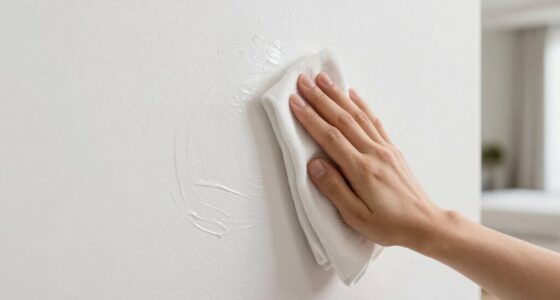
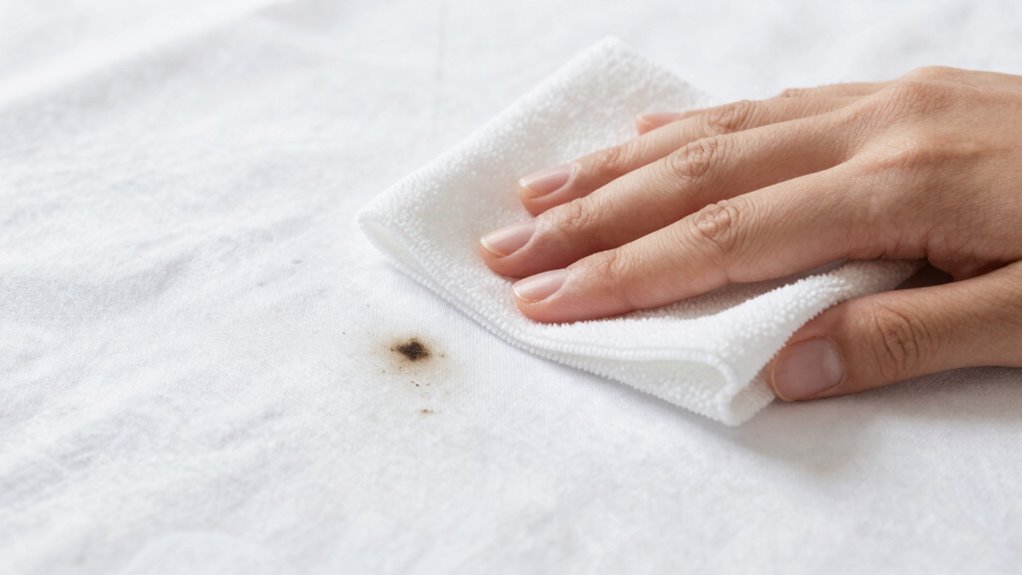
- Blot spills gently with a damp cloth instead of rubbing, reducing the risk of worsening the stain.
- Consistent, quick action preserves surface integrity and minimizes the need for aggressive cleaning efforts later.
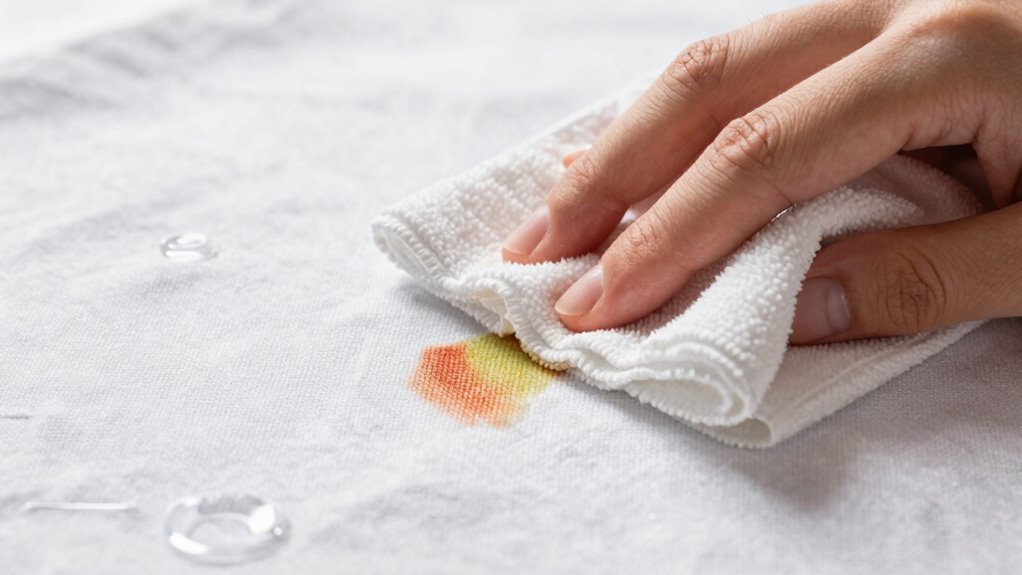
Have you ever wondered why some stains seem to stubbornly linger while others come out easily? The secret often lies in how quickly and effectively you respond to the mess. The spot-cleaning rule is simple but powerful: address stains immediately with the right cleaning tools to prevent them from settling in and becoming more challenging to remove later. When you spot a stain, don’t wait or ignore it, because time is your enemy in stain removal. The longer a stain sits, the more it seeps into fibers, making it tougher to lift without damaging the fabric or surface. Recognizing the importance of timely intervention can make all the difference in maintaining a clean home. Being aware of stain behavior helps you understand why quick action is crucial in preventing permanent damage. Additionally, understanding the science of stains can help you choose the most effective cleaning methods for different types of messes.
Your first step is to gather the appropriate cleaning tools. Whether you’re dealing with carpet, upholstery, clothing, or hard surfaces, having a dedicated set of tools makes all the difference. A clean cloth, soft-bristled brush, or sponge can be your best allies. For liquid stains, blotting immediately with a clean, damp cloth can prevent the stain from spreading or setting. Using the right stain removal techniques guarantees you’re applying the proper pressure and technique, which is essential in stain removal. For more stubborn spots, a gentle scrub with a soft brush combined with a suitable cleaning solution can work wonders. Using the right tools guarantees you’re applying the proper pressure and technique, which is essential in stain removal. Avoid using harsh brushes or abrasive materials that can damage delicate fabrics or surfaces.
As an affiliate, we earn on qualifying purchases.
Frequently Asked Questions
How Quickly Should I Spot-Clean Stains After They Occur?
You should spot-clean stains as soon as they happen to prevent them from setting. Quick stain removal using effective cleaning techniques minimizes the risk of permanent damage. Blot the stain gently, avoid rubbing, and use appropriate cleaning solutions for different stains. Acting promptly guarantees easier stain removal, keeps your surfaces looking fresh, and saves you time and effort in the long run. Don’t wait—immediate action is key to successful stain removal.
Can Spot-Cleaning Damage Certain Fabrics or Surfaces?
Imagine gently touching a delicate fabric or surface; spot-cleaning can sometimes cause damage if you’re unaware of its fabric sensitivity or surface compatibility. Certain fabrics, like silk or wool, can stain or fray with harsh cleaners, while some surfaces might stain or scratch. Always test a small, hidden area first, and use gentle, appropriate cleaners to avoid unintended harm. Being cautious helps preserve your items’ beauty and longevity.
What Tools Are Best for Effective Spot-Cleaning?
For effective stain removal, you should use a clean, white cloth or soft-bristled brush to avoid spreading the stain. Apply a small amount of appropriate cleaning solutions—like a mix of dish soap and water or a specialized fabric cleaner—directly to the stain. Gently blot or scrub, working from the outside in, to prevent spreading. These tools and techniques guarantee thorough cleaning without damaging your surface or fabric.
How Do I Prevent Stains From Setting In?
To prevent stains from setting in, act quickly with stain removal. Blot the spill gently to absorb excess liquid, then apply cleaning solutions promptly. Avoid rubbing, as it can spread the stain. Using the right cleaning solutions tailored for the stain type increases your chances of successful removal. The sooner you address the stain, the less likely it is to set, making cleaning easier and more effective.
Is There a Difference Between Spot-Cleaning and Deep Cleaning?
You’re right on the mark—spot-cleaning and deep cleaning aren’t the same. Spot-cleaning targets specific stains or spots using stain removal techniques, focusing on quick, targeted action. Deep cleaning involves thorough cleaning techniques that cover entire surfaces or areas, removing embedded dirt and grime. Think of it as the difference between quick fixes and a full overhaul. Both are essential, but knowing when to use each keeps your space sparkling and stain-free.
Conclusion
Next time a spill or stain appears, remember this spot-cleaning rule. Think of your cleaning efforts as patching up tiny cracks before they turn into a flood. Each gentle dab and swift action keeps your home’s fabric from sinking into stubborn stains and lingering odors. Your quick response acts like a shield, protecting your space from bigger problems later. With a little effort now, you create a fresh, inviting haven where every corner gleams with cleanliness and care.