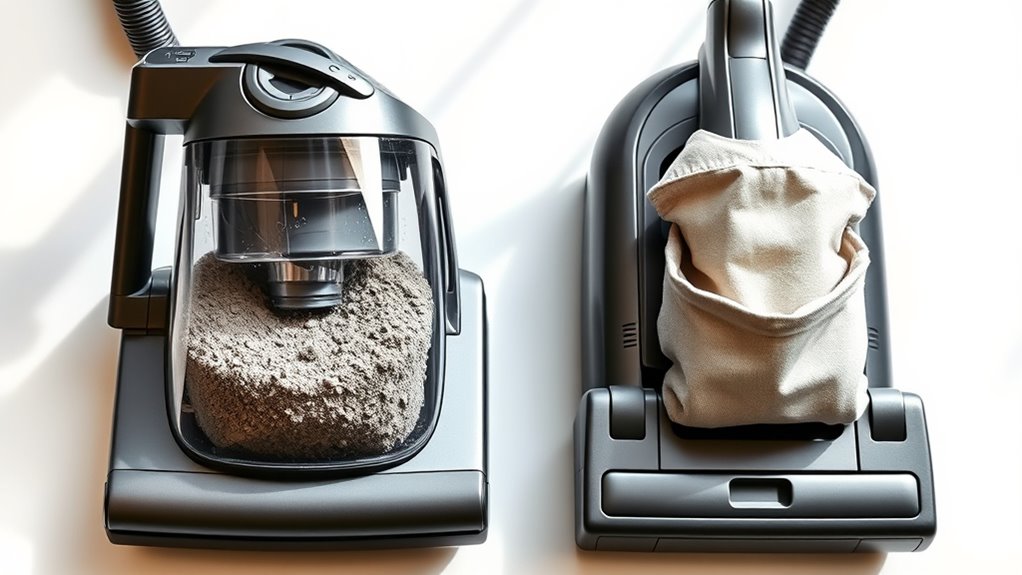

With a bagless vacuum, you’ll spend time regularly emptying the canister and cleaning or replacing filters to maintain suction and hygiene. Bagged vacuums, on the other hand, require occasional bag replacements and less frequent filter maintenance, making cleanup easier and less messy. Your choice affects upkeep: bagless models demand more ongoing attention for peak performance, but both types benefit from routine filter checks. Keep exploring to discover tips on making maintenance smoother.
Key Takeaways
- Bagless vacuums require regular filter cleaning and can be messier during dust disposal.
- Bagged vacuums need periodic bag replacements, providing a cleaner, more hygienic disposal process.
- Filter maintenance is more frequent in bagless models, which need cleaning or replacing filters to maintain suction.
- Bagged vacuums generally have less filter upkeep, as dust is contained within the disposable bag.
- Overall, bagged vacuums offer simpler, less messy maintenance, while bagless models demand more routine filter care.
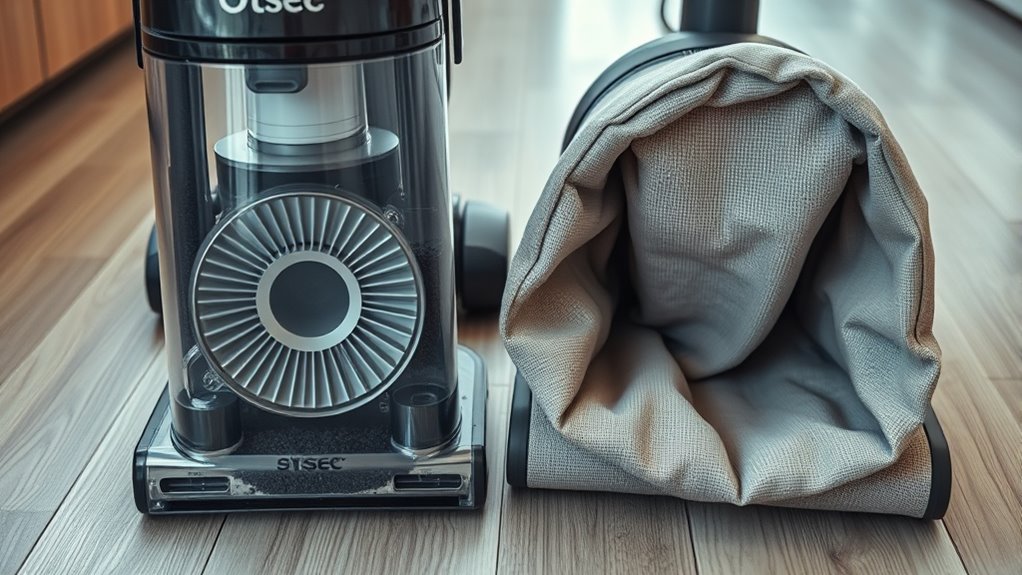
When choosing between bagless and bagged vacuums, understanding their differences can help you make an informed decision. One key aspect to factor in is maintenance, especially how each type handles filter upkeep and dust disposal. Bagless vacuums typically feature transparent canisters that you empty directly into the trash, making dust disposal straightforward—you just lift out the canister and empty it. This process can be quick, but it also means you’re exposed to dust and allergens every time you do it, which might be a concern if you have allergies or asthma. On the other hand, bagged vacuums use disposable bags that trap dust and debris securely. When the bag is full, you replace it entirely, which minimizes your contact with dust during disposal. This can be more hygienic and less messy, especially if you’re sensitive to dust.
Filter maintenance is another critical difference. Bagless vacuums usually rely on filters that need regular cleaning or replacement to keep the vacuum operating efficiently. Over time, dust and debris can clog these filters, reducing suction power and increasing filter upkeep frequency. You’ll need to check the manufacturer’s recommendations for cleaning or replacing filters, which can be as simple as rinsing them with water or swapping out a cartridge. Conversely, bagged vacuums generally have filters that are either built into the bag or are replaceable when you change the bag. Since the dust stays inside the bag, the filters tend to stay cleaner longer, and replacing the bag often coincides with replacing or cleaning the filter. This can reduce the overall maintenance effort, but it does mean you’ll need to keep a supply of replacement bags on hand.
Bagged vacuums typically have filters that stay cleaner longer, reducing maintenance effort.
In terms of long-term upkeep, bagless vacuums require you to stay vigilant about filter maintenance to sustain their performance. Neglecting filter cleaning can lead to decreased suction and longer cleaning times. Bagged vacuums, while requiring you to buy and replace bags periodically, often need less frequent filter upkeep because the dust remains contained. However, you should still check and replace filters as recommended to guarantee ideal airflow and filtration. Additionally, newer models are designed with more energy-efficient components that can help reduce overall power consumption during operation.
Ultimately, your choice depends on your preferences for dust disposal and filter upkeep routines. If you prefer to see your dust and have quick disposal, a bagless model might suit you better—but be prepared for regular filter cleaning. If you want a more hygienic, less hands-on approach with less frequent filter upkeep, a bagged vacuum could be the better option.
Frequently Asked Questions
Which Vacuum Type Has Better Air Filtration Capabilities?
You’ll find that bagged vacuums generally have better air filtration capabilities because they often use HEPA filters, which trap more allergens and tiny particles. These vacuums improve air quality by preventing dust from escaping back into the room. Bagless models can also have HEPA filters, but they may require more frequent replacements to maintain peak filtration. Overall, if air quality is your priority, bagged vacuums with HEPA filters are usually the better choice.
Are Bagless Vacuums More Environmentally Friendly Than Bagged Models?
Imagine your vacuum as a tiny eco-warrior. Bagless vacuums are more environmentally friendly because they reduce waste through recycling benefits, avoiding disposable bags. Plus, they lower chemical exposure since you’re not handling dusty bags. While they save resources, keep in mind that emptying them can release dust into the air. Overall, choosing a bagless model supports sustainability and cleaner indoor air, making it a smarter, greener choice.
How Do Filter Replacements Compare Between the Two Types?
Filter replacements in bagless vacuums generally require more frequent attention, with a shorter filter lifespan and higher replacement frequency, since they often rely on washable filters that need regular cleaning or replacement to maintain performance. In contrast, bagged vacuums typically have longer-lasting filters that need less frequent replacement, making maintenance less constant. You should check your vacuum’s manual to determine the ideal replacement schedule for each type.
Which Vacuum Type Is Quieter During Operation?
You’ll find that bagged vacuums are generally quieter during operation, thanks to their enclosed design that dampens noise. The noise level of bagless models tends to be higher because of exposed components and the motor’s direct sound. So, if a peaceful cleaning experience matters most, opting for a bagged vacuum could make all the difference, turning what’s usually a noisy chore into a more calming routine.
Do Bagless Vacuums Require More Frequent Maintenance?
Yes, bagless vacuums often require more frequent maintenance because dust buildup in the canister can clog filters and reduce suction. You’ll need to empty the canister regularly and clean filters to prevent motor wear. This ongoing upkeep helps keep your vacuum functioning efficiently and prolongs its lifespan. Being diligent with maintenance guarantees you avoid costly repairs and maintain ideal cleaning power.
Conclusion
Choosing between bagless and bagged vacuums is like picking the right pair of shoes—each has its own fit and feel. Bagless models are like a sleek sports car, quick to maintain but sometimes messy. Bagged vacuums are your trusty hiking boots—more effort upfront, but they keep you clean and comfortable. Ultimately, your choice depends on your cleaning style. Whichever you pick, understanding maintenance helps you keep your vacuum running smoothly, like a well-tuned engine.