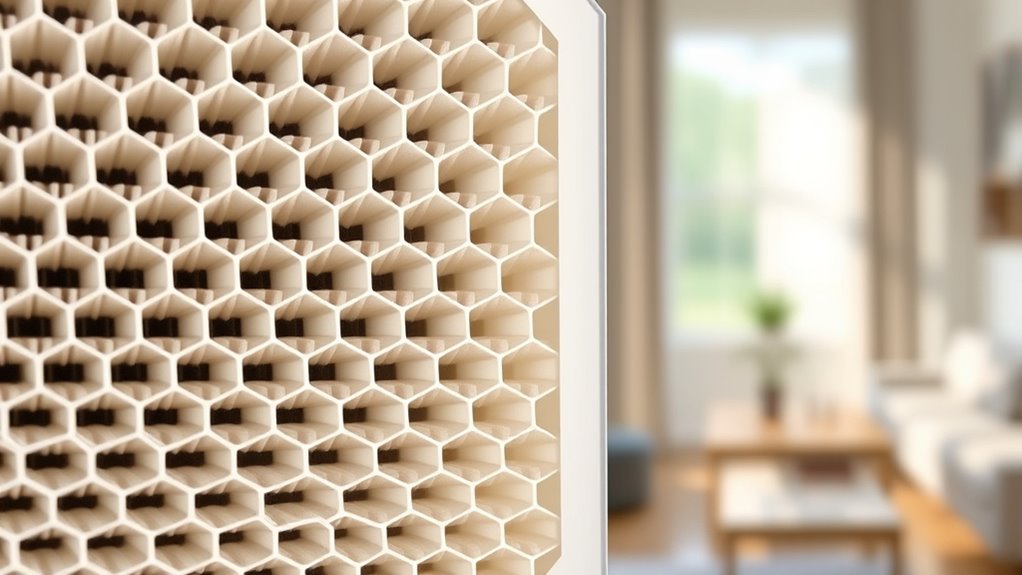

HEPA filters are highly effective for allergy sufferers because they trap tiny airborne allergens like pollen, pet dander, dust mites, and mold spores, notably improving indoor air quality. Using a HEPA filter in your air purifier helps reduce allergy symptoms and creates a healthier environment. Proper maintenance, such as regular filter changes, guarantees they work at their best. Keep exploring to discover more tips on optimizing your indoor air quality and allergy relief.
Key Takeaways
- HEPA filters trap tiny airborne allergens like pollen, pet dander, dust mites, and mold spores, reducing allergy symptoms.
- Regular replacement or cleaning of HEPA filters ensures optimal allergen removal and maintains air purifier efficiency.
- HEPA filters improve indoor air quality by capturing particles that can trigger allergy and asthma flare-ups.
- Combining HEPA filtration with humidity control and allergen reduction techniques enhances overall allergy symptom relief.
- Proper placement of HEPA-equipped devices in allergy-prone areas maximizes their effectiveness in filtering airborne irritants.
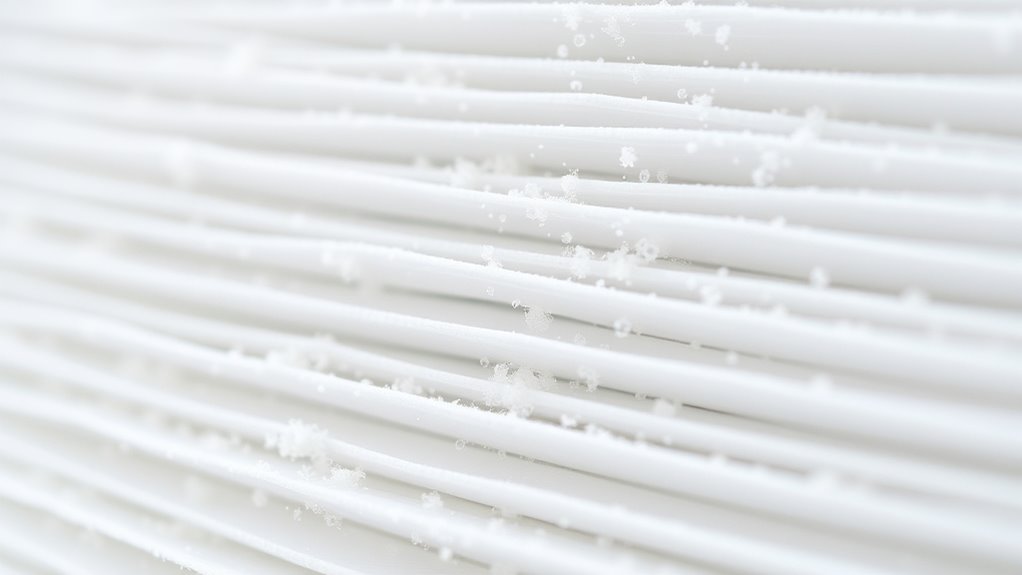
If you suffer from allergies, you know how frustrating it can be to breathe in airborne irritants. Allergens like pollen, pet dander, dust mites, and mold spores can make daily life uncomfortable and even unbearable at times. Fortunately, using a HEPA filter can make a significant difference in reducing these triggers. But to maximize its benefits, you need to focus on air purifier maintenance and allergen reduction techniques. Regularly changing or cleaning your HEPA filter is essential to guarantee it continues trapping tiny particles effectively. Over time, filters become clogged, decreasing their efficiency and potentially circulating allergens back into the air. Setting a schedule for filter replacement—usually every 6 to 12 months, depending on usage—helps keep your air purifier working at peak performance. Additionally, cleaning surrounding areas and vacuuming with a HEPA-equipped vacuum can prevent dust and pet dander from accumulating.
Understanding allergen reduction techniques is vital when you’re trying to minimize allergy symptoms. Besides maintaining your air purifier, you should also consider reducing sources of allergens within your home. Regularly washing bedding, curtains, and plush toys in hot water removes accumulated dust mites and pet dander. Keeping windows closed during high pollen seasons prevents outdoor allergens from entering your living space. Using washable rugs instead of wall-to-wall carpets can also make a difference, since carpets tend to trap dust and pet hair. In addition, maintaining low humidity levels—around 30-50%—reduces mold growth and dust mite populations, both common indoor allergens. Employing exhaust fans in kitchens and bathrooms helps control moisture and prevents mold proliferation.
Proper placement of your air purifier—preferably in high-traffic or allergy-prone areas like bedrooms—maximizes its ability to filter airborne irritants. It is also beneficial to select models with UV-C light technology, which aid in germ and odor elimination, further improving indoor air quality. Additionally, consider using HEPA filters in conjunction with other devices, such as humidifiers or dehumidifiers, to further control indoor air quality.
Frequently Asked Questions
Do HEPA Filters Remove All Types of Airborne Allergens?
HEPA filters can’t remove all airborne allergens because of their limitations and allergen specificity. While they effectively trap common particles like dust mites, pet dander, and pollen, tiny allergens such as some bacteria, viruses, or chemical fumes might slip through. You should know that HEPA filters improve air quality but aren’t a complete solution for every allergen. Combining them with other air purification methods can give you better overall allergy relief.
How Often Should HEPA Filters Be Replaced for Optimal Performance?
Think of your HEPA filter as a loyal guardian, constantly battling airborne allergens. To keep it fighting effectively, you should follow a regular replacement schedule, typically every 6 to 12 months. Proper filter maintenance guarantees ideal performance, so don’t wait until it’s visibly dirty. Regularly check your filter and replace it when needed, because a well-maintained filter is your best defense against allergens.
Are HEPA Filters Effective Against Airborne Viruses and Bacteria?
Yes, HEPA filters are effective against airborne viruses and bacteria. They excel at virus filtration and bacterial removal by capturing tiny particles as small as 0.3 microns, which includes many harmful pathogens. When you use a HEPA filter, it actively traps these microbes, reducing your risk of infection. Regularly replacing the filter guarantees peak performance, maintaining its ability to filter out airborne viruses and bacteria efficiently.
Can HEPA Filters Improve Indoor Air Quality in Large Spaces?
Yes, HEPA filters can markedly improve indoor air quality in large spaces. Imagine fresh, clean air circulating effortlessly throughout the entire area—this is possible when you optimize space coverage and enhance air circulation. Properly installed, these filters trap airborne pollutants, ensuring every corner receives cleaner air. So, if you’re concerned about air quality in big rooms, HEPA filters could be your game-changer for healthier, fresher indoor environments.
Do HEPA Filters Produce Any Harmful Emissions or Odors?
HEPA filters don’t produce harmful emissions or odors, so you can trust their emission safety. They effectively filter odors by capturing airborne particles that cause smells, improving indoor air quality. Unlike some air purifiers with chemical treatments, HEPA filters work purely through physical filtration, meaning you won’t notice any unpleasant odors or emissions from the filter itself. This makes them a safe, reliable choice for cleaner, fresher indoor air.
Conclusion
By choosing HEPA filters, you’re wielding a powerful shield against allergy triggers, turning your space into a sanctuary of breathability. Think of these filters as vigilant guardians, tirelessly snaring airborne foes before they can reach you. With each filtered breath, you’re clearing the fog of allergens that cloud your comfort. Embrace HEPA technology and let your home become a fortress where fresh air reigns supreme, nurturing your well-being with every inhale.