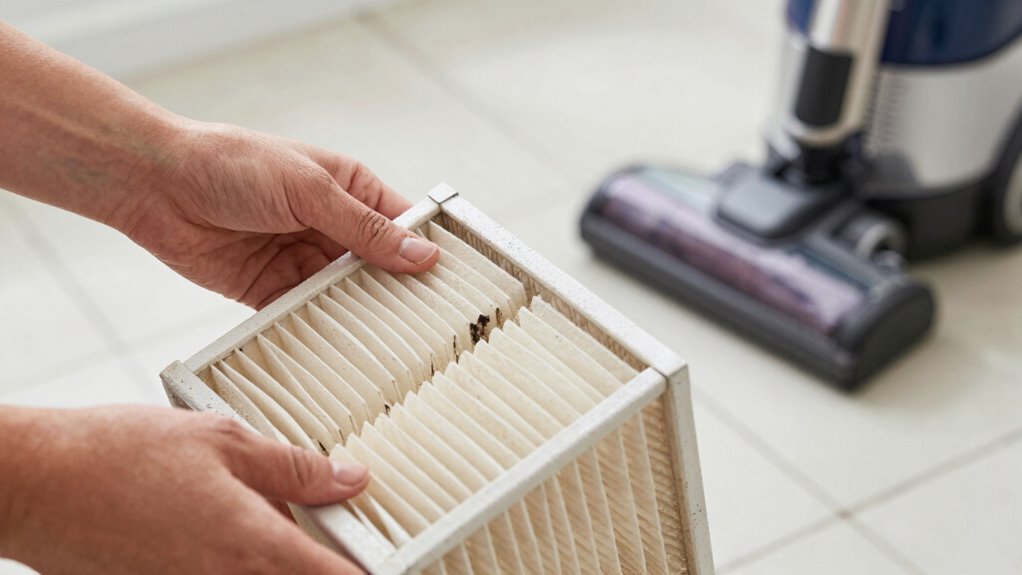
Stop washing your vacuum filter with harsh cleaners, vigorous scrubbing, or soaking it in water unless the manufacturer says it’s safe. Using improper methods can tear delicate fibers, warp parts, or weaken the filter’s structure, reducing efficiency and lifespan. Instead, gently tap, brush, or use compressed air to clean filters suited for dry cleaning—like HEPA or foam. To learn more about proper filter maintenance, keep going for expert advice on the right techniques.

Get cleaning gear delivered free — and shop member deals
- Fast, free delivery on millions of items
- Access to Prime Big Deal Days deals on October 6–7
- Prime Video, Amazon Music and more included
Key Takeaways
- Avoid washing HEPA and charcoal filters; follow manufacturer instructions for cleaning or replacement.
- Use gentle methods like tapping or soft brushing instead of aggressive washing to clean filters.
- Never use harsh chemicals or abrasive tools, which can damage delicate filter materials.
- Ensure filters are completely dry before reinstalling to prevent mold and odors.
- Replace filters regularly based on usage and signs of wear, rather than over-cleaning.
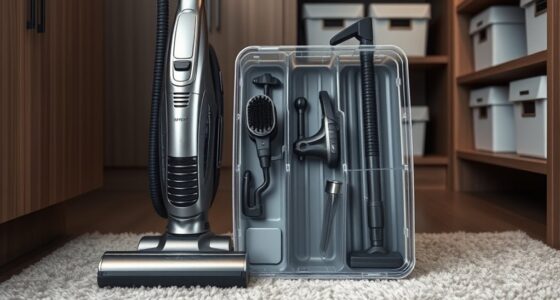
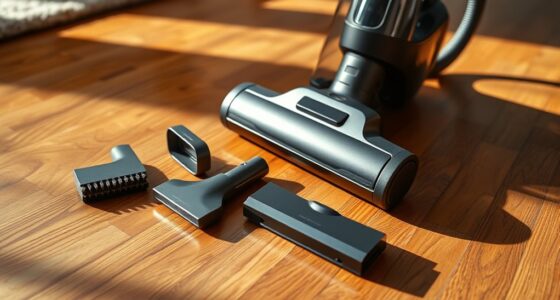
HEPA vacuum filter cleaning tools
As an affiliate, we earn on qualifying purchases.
As an affiliate, we earn on qualifying purchases.
What Causes Vacuum Filters to Get Damaged When Cleaned Incorrectly?

When you clean your vacuum filter incorrectly, you’re risking damage that can reduce its effectiveness and lifespan. Using harsh cleaning methods or abrasive tools can harm the filter material, causing tears or cracks that compromise filtration. Over-cleaning or cleaning too frequently can also wear down delicate components, making the filter less efficient. Conversely, neglecting regular cleaning allows dirt and debris to accumulate, which can clog the filter and strain the vacuum’s motor. The type of filter material plays a role—some are more delicate and require gentle handling, while others are more durable. Understanding the proper cleaning frequency is essential; cleaning too often or too infrequently increases the risk of damage. Proper care guarantees your filter stays effective and lasts longer. Additionally, being aware of filter technology can help you choose the right cleaning methods to prevent unnecessary wear. Practicing proper cleaning techniques and understanding filter durability can significantly extend the life of your vacuum filter and ensure optimal performance. Recognizing the signs of damage early can also help prevent further issues with your vacuum. Maintaining awareness of filter maintenance best practices is crucial for keeping your vacuum working efficiently over time.
How to Remove and Inspect Your Vacuum Filter Properly

To properly remove and inspect your vacuum filter, start by turning off and unplugging your vacuum to guarantee safety. Carefully remove the filter, noting its filter materials and placement. Use the following inspection techniques to assess its condition:
Always turn off and unplug your vacuum before removing and inspecting the filter for safety.
- Check for visible debris or dust buildup on the surface.
- Examine for tears, holes, or warping in the filter materials.
- Smell for any musty or moldy odors indicating mold growth.
- Hold the filter up to light to see if it’s clogged or if airflow is restricted.
- Regularly monitor your equipment to ensure optimal performance and prevent long-term issues. Proper maintenance can also help preserve the filter’s color vibrancy and shine, especially for highlighted hair. Regular inspection and proper cleaning can also extend the filter lifespan and reduce the need for frequent replacements. Additionally, understanding micromobility safety tips can inspire better maintenance routines for your vacuum, as both require attention to detail for safe and effective operation. Handle with care to avoid damaging delicate filter materials. Incorporating preventive maintenance routines can further enhance the durability and efficiency of your vacuum filters.
What’s the Best Way to Clean Your Vacuum Filter Without Water?
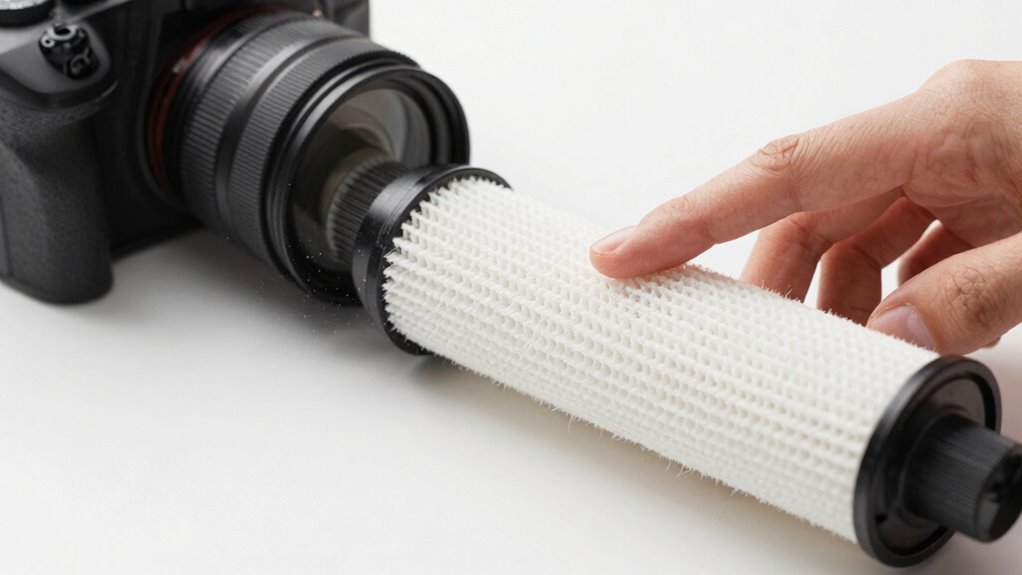
Cleaning your vacuum filter without water is an effective way to maintain its performance while avoiding potential damage from moisture. To do this, start by examining the filter materials—some are made of foam, paper, or HEPA fibers—and choose appropriate cleaning tools. A soft brush or compressed air can dislodge dust and debris from the filter’s surface without harming it. Gently tap or brush the filter over a trash can to remove loose particles. Avoid using water or damp cloths, as moisture can degrade certain filter materials and reduce filtration efficiency. Regularly cleaning with these tools helps extend your filter’s lifespan and keeps your vacuum working at its best. Just be sure to handle the filter carefully to prevent damage. Proper maintenance can also preserve filter integrity and ensure optimal performance over time. Additionally, understanding the odor of your vacuum components can help identify when cleaning is needed to prevent buildup. Regular inspection can reveal clogged filters, helping you address issues before they impact your home’s air quality. Being aware of filter types can help you choose the most suitable cleaning method and prolong its usability. Maintaining a clean filter also promotes air quality inside your home, ensuring healthier air circulation.
How Often Should You Replace Your Vacuum Filter?
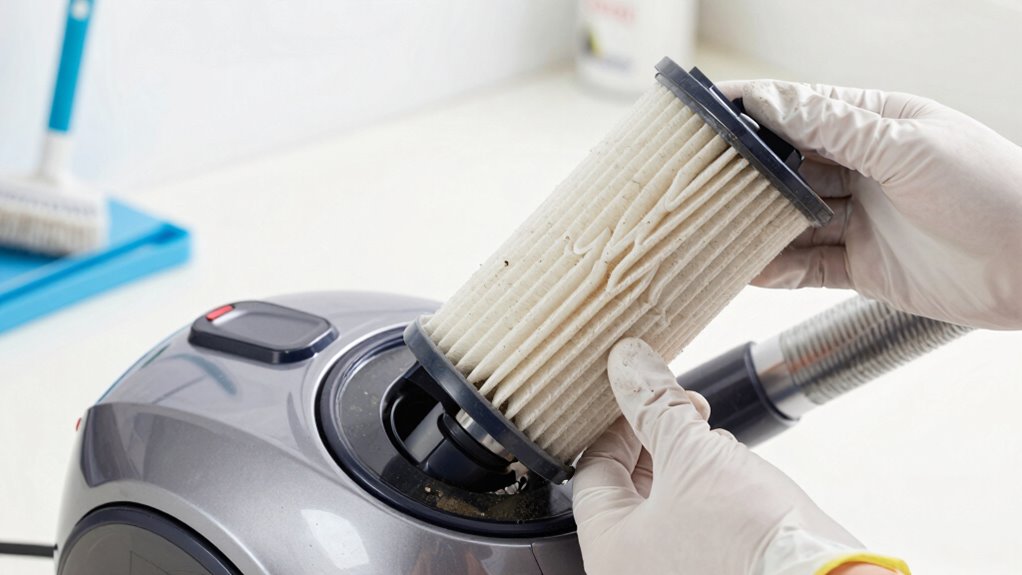
Most vacuum filters need replacing every 3 to 6 months, depending on usage and the environment. Following a consistent maintenance schedule guarantees your vacuum performs at its best and prolongs its lifespan. Here are key points to take into account:
Vacuum filters should be replaced every 3 to 6 months for optimal performance and longevity.
- Regularly check your filter for wear and tear.
- Replace filters more frequently if you have pets or allergies.
- Follow the manufacturer’s recommended maintenance schedule.
- Keep an eye on suction power; a decline often indicates it’s time for a filter replacement.
- Be mindful of filter efficiency to ensure optimal cleaning performance. Proper airflow and vacuum performance are directly impacted by filter condition, making timely replacements essential. Maintaining a clean filter also helps reduce indoor air pollutants, contributing to healthier indoor air quality. Regularly inspecting your filter helps maintain airflow integrity and prevents blockages that could damage your vacuum. Additionally, understanding the filter lifespan can help you plan replacements before issues arise.
Common Mistakes When Maintaining Your Vacuum Filter (And How to Avoid Them)

Many people over-wash their vacuum filters, thinking it will make them last longer, but this can damage the filter material. Using harsh cleaners can also weaken or ruin the filter, reducing its effectiveness. To keep your vacuum working well, avoid these common mistakes and stick to gentle cleaning methods. Additionally, understanding the proper maintenance of filters can help prolong their lifespan and ensure optimal performance. Regularly checking the filter material for tears or damage is essential for maintaining filtration efficiency. Incorporating energy-efficient cleaning practices can further support the longevity and sustainability of your vacuum filters. Implementing correct cleaning techniques can prevent unnecessary wear and tear, ensuring your vacuum maintains its suction power. Remember that improper cleaning can lead to reduced suction and diminished cleaning power, so proper care is crucial.
Over-Washing Vacuum Filters
Have you ever thought that washing your vacuum filter too often or too vigorously could do more harm than good? Over-washing can damage the filter material, reducing its effectiveness and lifespan. To avoid this, consider these key points about cleaning frequency:
- Wash only when visibly dirty or as recommended by the manufacturer.
- Use gentle cleaning methods to preserve filter integrity.
- Understand your filter material—some types, like HEPA, are more delicate.
- Excessive washing can cause tears or deformities, decreasing filtration performance.
- Proper maintenance includes knowing the specific filter guidelines, ensuring longevity and optimal function.
Using Harsh Cleaners
Using harsh cleaners on your vacuum filter can quickly damage its delicate fibers, making it less effective at trapping dust and allergens. Many people believe stronger cleaning solutions are better, but they often harm filter materials. Instead, opt for gentle cleaning methods. For filters made of paper or foam, avoid strong chemicals; instead, use lukewarm water. For HEPA filters, check manufacturer instructions before cleaning. Here’s a quick comparison:
| Filter Material | Recommended Cleaning Solutions |
|---|---|
| Paper/foam | Mild soap and water, air dry |
| HEPA | Manufacturer-approved cleaning or replace |
| Cloth | Gentle vacuuming or hand wash, air dry |
| Charcoal | Usually needs replacement, avoid water |
Choosing the right cleaning solutions preserves filter integrity and prolongs its lifespan.
Tips to Extend Your Vacuum Filter’s Life and Keep Suction Strong
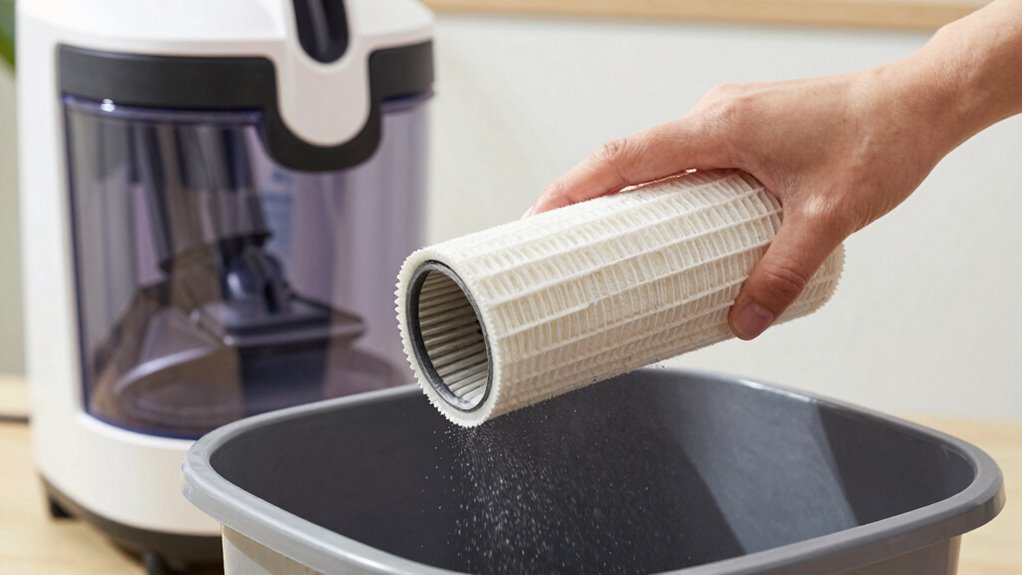
To keep your vacuum performing at its best, providing your filter proper care is essential. Proper vacuum filter maintenance and cleaning techniques help maintain strong suction and extend filter life. Here are tips to achieve that:
- Regularly check and replace filters as recommended by the manufacturer.
- Use gentle cleaning techniques, like tapping or brushing, instead of harsh washing.
- Avoid over-washing filters, which can damage their structure.
- Allow filters to fully dry before reinstalling to prevent mold and odors.
Frequently Asked Questions
Can Cleaning Vacuum Filters With Harsh Chemicals Damage Them?
Yes, cleaning vacuum filters with harsh chemicals can cause chemical damage, leading to filter deterioration over time. You might think you’re cleaning effectively, but strong cleaners can break down the filter material, reducing its lifespan and filtration efficiency. Instead, use mild soap and water for cleaning, ensuring you avoid harsh chemicals to preserve the filter’s integrity and keep your vacuum working properly longer.
Are There Specific Vacuum Models That Require Special Filter Care?
Surprisingly, yes, some vacuum models actually demand special filter care. You should always check the vacuum model’s manual and filter specifications before cleaning. For example, HEPA filters in certain models need gentle handling and specific cleaning methods, or they could be ruined. Ignoring these details might seem like a minor oversight, but it can compromise your vacuum’s performance and longevity. So, don’t overlook the importance of following proper filter care instructions.
How Do I Know When My Vacuum Filter Needs Replacing?
You’ll know your vacuum filter needs replacing when it shows signs of reduced suction, a visible buildup of dirt, or a persistent musty smell. Check the filter’s lifespan recommendations, usually every 3-6 months, depending on usage. Replacement indicators include difficulty cleaning or a decline in performance. Regularly inspecting your filter helps maintain peak cleaning power and guarantees your vacuum operates efficiently, preventing damage and extending its lifespan.
Is It Safe to Wash HEPA Filters With Water?
It’s not safe to wash HEPA filters with water because water damage can cause filter deterioration and reduce efficiency. HEPA filters are usually made with delicate materials that can’t handle moisture, which might lead to mold growth or compromised filtering ability. Instead, gently tap or vacuum the filter to remove dust. If it’s heavily soiled or damaged, replace it to maintain your vacuum’s performance and guarantee healthy air quality.
What Are the Signs of a Clogged or Damaged Vacuum Filter?
You’ll notice a clogged or damaged vacuum filter if airflow decreases substantially or your vacuum struggles to pick up debris. Reduced airflow indicates the filter is blocking proper suction, which shortens its lifespan. Also, if the filter looks dirty, discolored, or has tears, it’s time to replace it. Ignoring these signs can lead to motor strain and decreased cleaning efficiency, so check your filter regularly to maintain peak performance.
Conclusion
By being careful and clear when cleaning your vacuum filter, you can prevent damage, prolong its life, and preserve powerful suction. Avoid accidental abrasions and improper washing by following proper procedures and tips. Remember, regular maintenance makes a remarkable difference—saving you time, money, and trouble. So stay smart, handle your filter with care, and enjoy a spotless, super-efficient vacuum that keeps your space pristine and your cleaning routine simple!
Halloween Picks
halloween
As an affiliate, we earn on qualifying purchases.