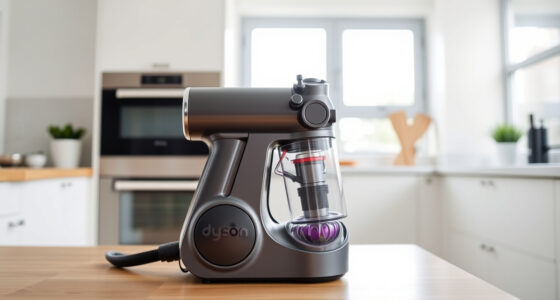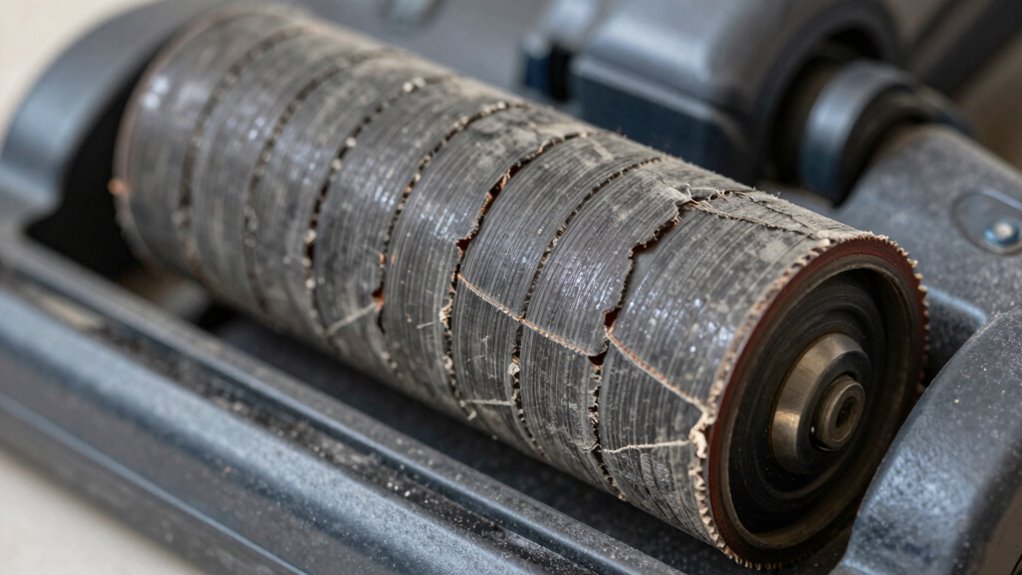

If your vacuum belt shows signs of wear, you might notice it feeling loose, slipping off pulleys, or looking worn and frayed. Reduced suction, unusual squeaking sounds, or the brush not spinning properly are also clues it’s weakening. Keep an eye on cracks or chunks missing, and check if the belt runs crooked or wobbles. Staying alert to these signs now can help you prevent a sudden break. Keep going to learn more about spotting early warning signs.
Key Takeaways
- Check for visible cracks, fraying, or chunks missing on the belt surface during inspection.
- Notice if the belt feels loose, slack, or shows reduced tension when manually tested.
- Observe slipping or wobbling of the belt on pulleys during operation.
- Listen for squeaking, slipping sounds, or a loss of suction power indicating belt issues.
- Ensure the belt runs straight, snug, and properly aligned around pulleys without wobbling.
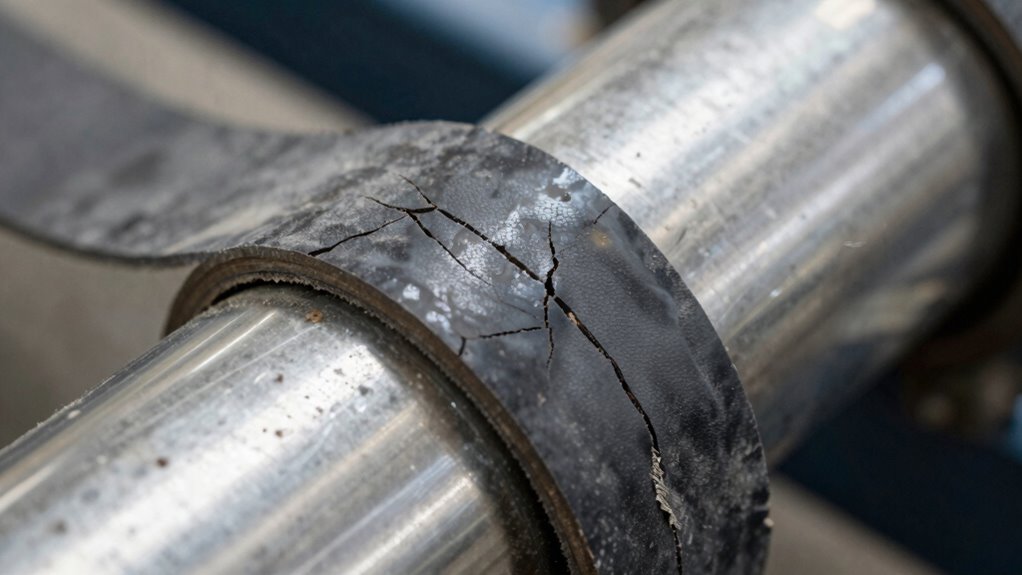
A vacuum belt is a crucial part of your cleaner’s operation, and knowing when it needs replacing can save you time and effort. The belt connects the motor to the brush roll, enabling the brush to spin and pick up dirt effectively. When the belt is worn or slipping, your vacuum won’t perform as well, and you might notice issues before it snaps. One of the first signs to watch for is changes in vacuum belt tension. If the belt feels loose or slack, it’s a clear indicator that it’s stretched out and losing its grip. Over time, the constant motion causes the belt to wear thin, reducing tension and potentially slipping off the pulleys during use. Regularly checking the belt tension can help you catch these signs early, preventing complete failure. Additionally, inspecting the belt for cracks, fraying, or chunks missing can help determine if it’s nearing the end of its lifespan.
Belt alignment is equally important. A properly aligned belt runs straight and snug around the motor pulley and brush roll without wobbling or slipping. If you notice the belt is crooked or appears misaligned, it could be due to a pulley that’s shifted or a worn-out tensioner. Misalignment not only causes uneven wear on the belt but can also lead to premature snapping. When the belt isn’t aligned correctly, it’s under uneven stress, which accelerates deterioration. To assess belt alignment, remove the vacuum’s cover and observe how the belt sits on the pulleys. If it’s off-center or loose, realigning it or replacing worn pulleys can restore proper tension and alignment, extending the belt’s lifespan. Regular maintenance and attentive inspection are key to preventing unexpected belt failures. Maintaining proper belt tension and alignment is essential for optimal vacuum performance. Listening to your vacuum during operation can give you additional clues. A squeaking or slipping sound often indicates the belt is slipping due to looseness or wear. Also, if the brush isn’t spinning or rotates slowly, it’s likely the belt isn’t providing enough power because of poor tension or misalignment. Regularly inspecting the belt for cracks, fraying, or chunks missing, and ensuring proper belt installation can prevent early failure. Using a visual inspection to check for signs of wear can help you identify problems before they cause complete failure. When replacing the belt, always ensure it’s the correct size and type for your vacuum model, maintaining proper tension and alignment during installation. Doing so will guarantee your vacuum maintains peak performance and prevents unexpected breakdowns. Staying attentive to these signs and performing routine checks can save you from the inconvenience of a broken belt during cleaning, keeping your device running smoothly for longer.
vacuum cleaner belt replacement kit
As an affiliate, we earn on qualifying purchases.
As an affiliate, we earn on qualifying purchases.
Frequently Asked Questions
How Often Should I Check My Vacuum Belt for Wear?
You should check your vacuum belt for wear every three to six months, depending on usage. Inspect the belt material—if it’s cracking, fraying, or slipping, it’s time for replacement. Regular checks help prevent sudden belt snapping and keep your vacuum working efficiently. Keep an eye on the replacement frequency suggested by the manufacturer, and replace the belt promptly when signs of wear appear to maintain peak suction and performance.
Can a Loose Belt Cause Vacuum Performance Issues?
A loose belt is like a slack rope, tugging at your vacuum’s performance. It can cause the vacuum to work harder, leading to decreased suction and increased vacuum noise. Over time, the belt material wears thin, making it slip and lose grip. This slippage reduces cleaning power and can strain your motor. Keep your belt tight to make sure your vacuum runs smoothly and quietly, avoiding those performance hiccups.
What Tools Are Needed to Replace a Vacuum Belt?
To replace a vacuum belt, you’ll need a screwdriver, pliers, and possibly a replacement belt suited to your vacuum model. Check the belt tension to verify it’s neither too loose nor too tight, which can affect performance. Regular replacement frequency depends on usage, but inspect the belt every few months and replace it when it shows signs of wear or cracks. Proper tools and attention to belt tension help maintain peak vacuum efficiency.
Is It Safe to Use My Vacuum With a Worn Belt?
Using a vacuum with a worn belt is like driving with a flat tire—you risk damage to your vacuum motor and decreased cleaning power. A worn belt, made of rubber or other belt material, can slip or snap, straining the motor. It’s safer to replace the belt promptly, ensuring your vacuum runs efficiently and prevents damage to internal components. Don’t wait until it completely breaks; early replacement keeps your vacuum in top shape.
How Can I Prevent My Vacuum Belt From Wearing Out Quickly?
To prevent your vacuum belt from wearing out quickly, practice regular vacuum maintenance by checking the belt for signs of wear and cleaning the brush roll. Make sure the belt is properly aligned and not overstretched, which can reduce belt longevity. Avoid using the vacuum on rough surfaces or pulling excessively on the cord. These simple steps help extend the life of your belt, keeping your vacuum running smoothly and efficiently longer.
Conclusion
If your vacuum isn’t picking up debris as effectively or makes strange squealing noises, it’s probably time to check the belt. Imagine you notice your vacuum suddenly losing suction after years of reliable service; replacing the belt could be the simple fix. Don’t wait for it to snap—regular inspections can save you from a bigger mess later. Keep an eye on the belt’s condition, and your vacuum will keep running smoothly for years to come.