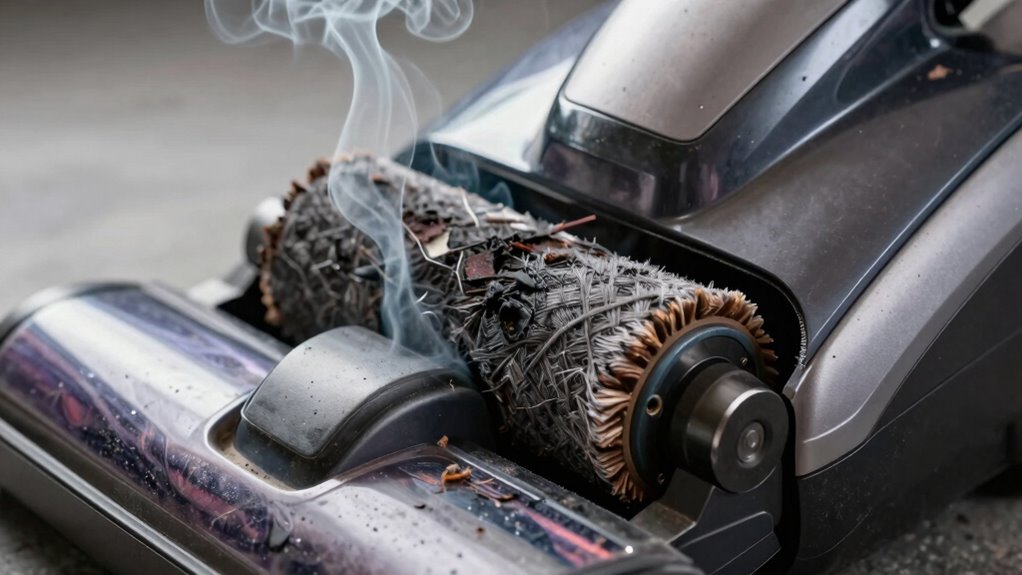

A burning smell from your vacuum usually signals overheating caused by clogged filters, tangled hair around the brush roll, or debris blocking airflow. It can also indicate worn belts, motor issues, or electrical problems. To prevent hazards, turn off and unplug your vacuum immediately, inspect these parts, and clean out blockages. Continuing to use it might cause more damage or fire risks. Keep exploring for detailed steps to identify and fix the issue safely.

Get cleaning gear delivered free — and shop member deals
- Fast, free delivery on millions of items
- Access to Prime Big Deal Days deals on October 6–7
- Prime Video, Amazon Music and more included
Key Takeaways
- The vacuum may be overheating due to clogged filters, debris buildup, or tangled hair around the brush roll.
- Burning smells often indicate worn belts or motor parts generating heat and friction.
- Overheating airflow blockages or debris in filters, hoses, or vents can cause a burning odor.
- A burning smell could signal electrical wiring damage or motor overheating, requiring immediate inspection.
- Persistent odors suggest the need for cleaning filters, removing debris, or replacing worn parts to prevent fire hazards.
As an affiliate, we earn on qualifying purchases.
Why Does My Vacuum Smell Like It’s Burning?

If your vacuum starts to smell like it’s burning, it’s usually a sign that something inside is overheating or malfunctioning. Poor vacuum maintenance can lead to clogged filters or dirty brushes, which increase strain on motor parts and cause the odor causes. When debris builds up, airflow is restricted, forcing the motor to work harder and generating heat. This overheating can produce a burning smell. Additionally, tangled hair or fibers around the brush roll can cause friction, further contributing to the odor. Regularly cleaning filters, emptying the dustbin, and inspecting brushes help prevent these issues. Recognizing these odor causes early can save your vacuum from more serious damage and keep it running smoothly. Proper maintenance is key to avoiding that unpleasant burnt smell, and understanding the motor components can help identify specific issues before they worsen.
What Causes a Vacuum to Smell Burnt?
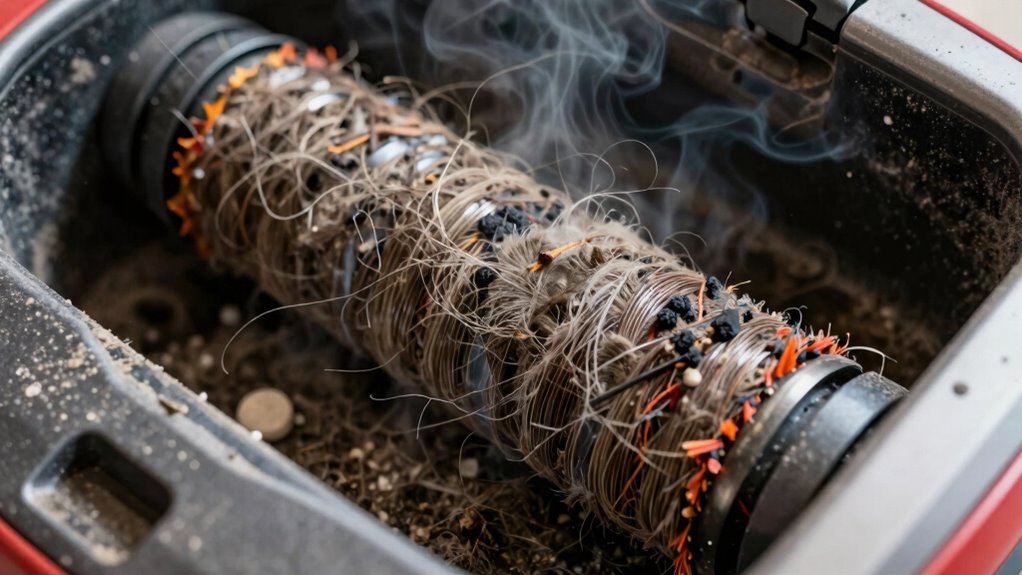
What exactly causes a vacuum to smell burnt? Often, it’s due to neglected vacuum maintenance or debris clogging the motor or belt. When dirt, hair, or dust accumulate in the brush roll or filters, they can overheat, producing a burnt odor. Overworking the motor without proper airflow can also cause overheating, leading to that unmistakable smell. Additionally, worn-out belts or motor parts may generate friction and heat, contributing to the smell. To prevent this, regular odor prevention measures include cleaning filters, replacing worn belts, and removing trapped debris. Proper maintenance keeps your vacuum running smoothly and prevents overheating, reducing the likelihood of a burnt smell. Regularly checking appliance performance can help identify potential problems early and ensure your vacuum operates efficiently. Maintaining good airflow around your vacuum can also help prevent overheating and associated odors, which is especially important for prolonging the life of your appliance. Ensuring proper ventilation during use can further reduce the risk of overheating and odors.
How to Inspect Your Vacuum for Fire Risks
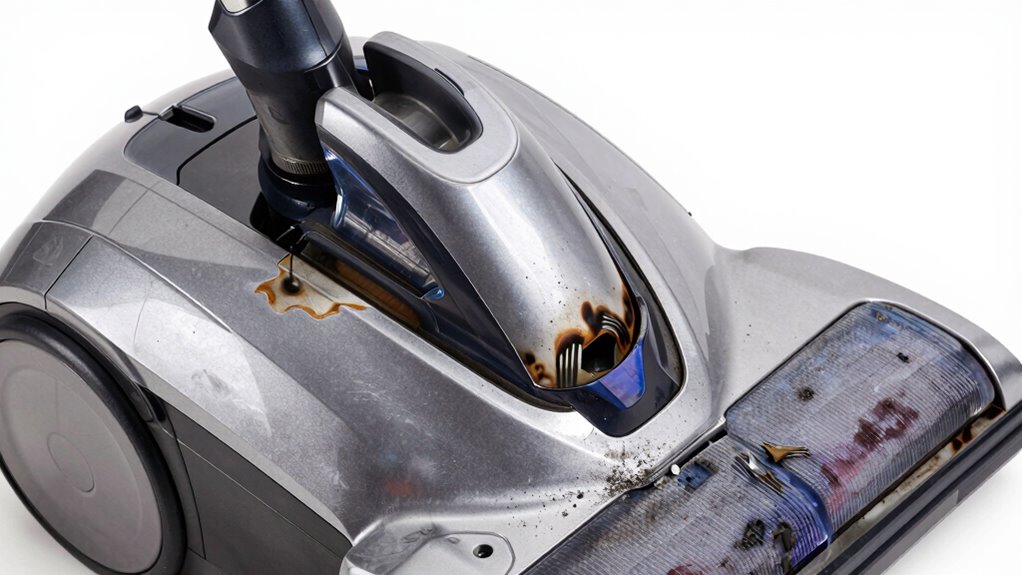
Regularly inspecting your vacuum for potential fire hazards can prevent accidents and keep your home safe. To do this effectively, focus on these key areas:
- Check the vacuum motor for overheating or unusual smells. Monitoring motor temperature can help you detect early signs of failure. Additionally, ensuring proper ventilation considerations around the motor can help dissipate heat and reduce the risk of overheating. Being aware of electrical safety guidelines can further minimize hazards associated with the motor.
- Examine the brush roller for debris buildup or tangled fibers that could cause friction.
- Inspect the power cord for frays or exposed wires.
- Ensure the vacuum’s vents are clear of dust or blockages.
- Regular cleaning and maintenance of these parts can prevent fire risks and extend the lifespan of your vacuum. Incorporating connected equipment such as smart sensors can also alert you to overheating or electrical issues before they become hazards.
Pay close attention to the motor, as overheating can ignite flammable materials. The brush roller should spin freely without excessive resistance, reducing the risk of sparks. Regularly cleaning and maintaining these parts helps prevent fire risks and prolongs your vacuum’s lifespan. Always unplug your vacuum before inspecting or servicing any internal components.
Troubleshooting a Burning-Smelling Vacuum
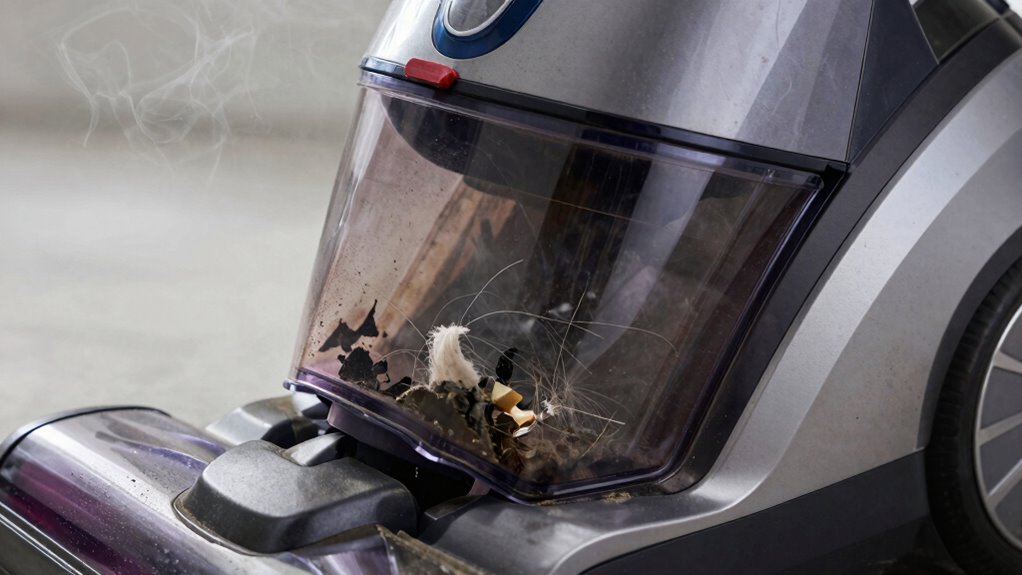
Troubleshooting a Burning-Smelling Vacuum
A vacuum that emits a burning smell signals an immediate need for troubleshooting to prevent potential hazards. Start by inspecting the motor and belt area for overheating or signs of wear. Regular vacuum maintenance helps prevent issues that cause odors, like dust buildup or debris caught in the motor or brush roll. Check for blockages in the hoses or filters, as these can cause strain and heat. Ensure the brush roll isn’t tangled with hair or threads, which can generate friction and smell. If you notice burning or hot plastic smells, turn off the vacuum immediately and clean or replace worn parts. Proper odor elimination involves cleaning filters and vents regularly. Addressing these issues promptly keeps your vacuum running safely and efficiently, reducing the risk of further damage. Additionally, understanding the mechanics of vacuum motors can help you identify early signs of failure before odors develop. Maintaining vacuum components and understanding their function can also extend the lifespan of your appliance. Regular inspections of the electrical wiring can prevent short circuits and overheating that contribute to burning smells. Moreover, paying attention to signs of motor failure can help catch problems before they become severe. Recognizing early warning signs can also guide you when considering professional repair services to ensure safe operation.
When Should You Replace Vacuum Parts or the Entire Vacuum?
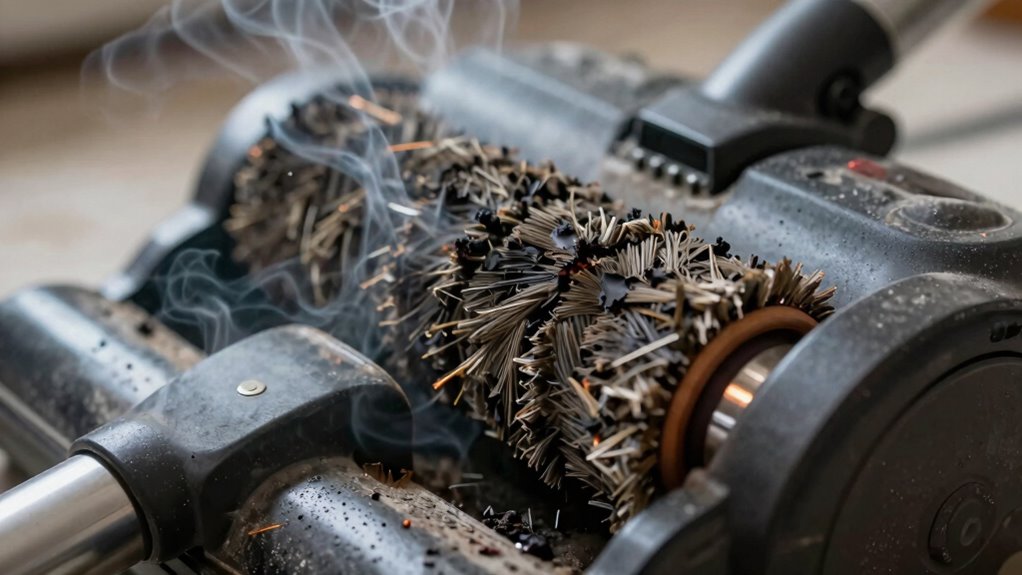
When you notice persistent burning smells or ongoing issues despite troubleshooting, it’s a clear sign that some vacuum parts may have reached the end of their lifespan. Knowing when to replace parts or the entire vacuum depends on your vacuum’s age and performance. Follow these replacement guidelines:
Persistent burning smells or ongoing issues signal vacuum parts may need replacing.
- If your vacuum is over 8-10 years old and shows frequent problems, consider replacing it.
- When key components like belts, brushes, or motors frequently fail or require costly repairs, replacement makes sense.
- Persistent burning smells that don’t resolve after troubleshooting suggest a failing motor or wiring needing replacement.
- If your vacuum’s suction drops markedly despite cleaning, it might be time for a new device.
- Regularly inspecting vacuum wear and tear can help you identify early signs of decline and prevent sudden breakdowns. Keeping an eye on motor health and other critical parts can extend your vacuum’s lifespan and maintain optimal performance. Additionally, understanding proper maintenance techniques can help you prolong the life of your vacuum and maintain efficient operation. Regular maintenance, including replacing filters and checking for blockages, can significantly improve performance and durability. Being proactive with vacuum repairs can also save you money and ensure consistent cleaning results.
Monitoring your vacuum’s lifespan helps you avoid ongoing issues and guarantees peak cleaning performance.
Tips to Prevent Burning Odors in Your Vacuum
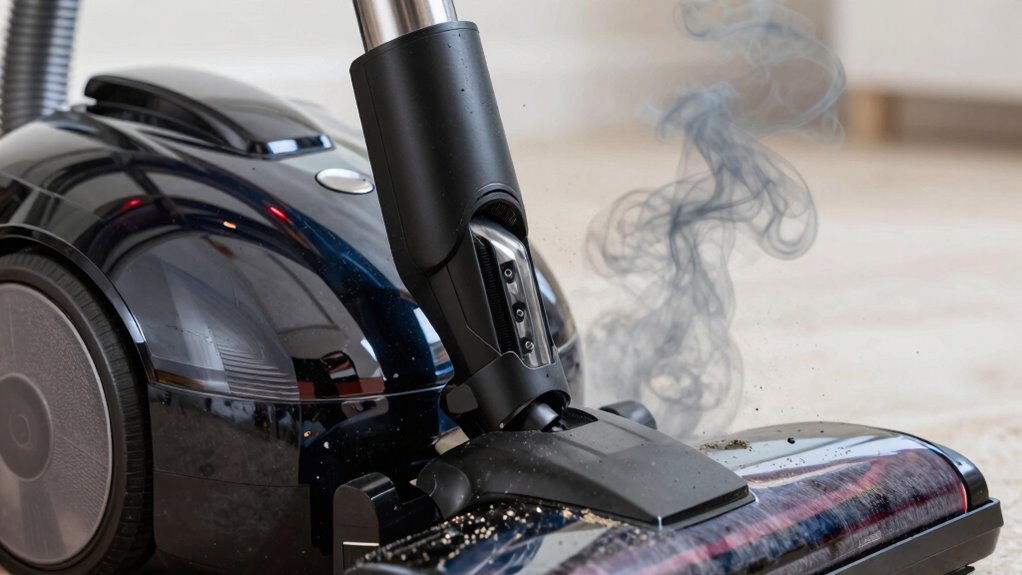
To prevent burning odors, you should regularly check your vacuum’s filters and replace or clean them as needed. Clearing obstructions promptly keeps airflow smooth and prevents overheating. Additionally, maintaining the proper bag or canister guarantees your vacuum runs efficiently without straining. Regular maintenance of kitchen tools ensures that all parts function correctly and can help avoid issues like overheating or burning smells. Incorporating vacuum performance tips can further extend the lifespan of your appliance and prevent odor problems, especially by paying attention to proper airflow and ensuring no blockages hinder the motor’s cooling. Monitoring airflow management can also help detect early signs of potential problems before they develop into burning odors, as understanding hydraulics plays a key role in maintaining optimal airflow within the system.
Regularly Check Filters
Regularly checking your vacuum filters is essential to prevent burning odors. Dirty filters restrict airflow, forcing your vacuum motor to work harder and risking overheating. Proper air filter maintenance keeps suction power strong and prevents the smell of burning dust or debris. To maintain peak performance:
- Inspect filters weekly for dirt buildup.
- Replace filters according to your manufacturer’s schedule.
- Clean reusable filters with water and let them dry completely.
- Ensure filters are seated properly after maintenance.
Keeping filters clean improves airflow and reduces strain on the motor, lowering the chance of a burning smell. Regular filter checks are a simple step that safeguards your vacuum’s health and prolongs its lifespan while maintaining effective cleaning.
Clear Obstructions Promptly
Obstructions in your vacuum’s airflow can cause the motor to overheat and produce burning odors. Airflow blockage often results from debris, tangled hair, or a jammed brush roller. Regularly inspect the brush roller for obstructions and remove any debris promptly to keep airflow clear. Check the hose and attachments for blockages that might restrict suction and cause the motor to work harder than necessary. Clearing obstructions quickly prevents overheating and reduces the risk of a burning smell. Keep in mind that a clogged airflow path forces the motor to strain, increasing wear and tear. Staying vigilant about these obstructions helps maintain your vacuum’s performance and prolongs its lifespan, ensuring it runs smoothly without unpleasant odors. Additionally, understanding your vacuum’s navigation and mapping features can help identify areas where debris tends to accumulate, making it easier to perform targeted cleaning and prevent blockages.
Maintain Proper Bag/Canister
Ensuring your vacuum’s bag or canister is properly maintained plays a key role in preventing burning odors. Regular vacuum maintenance involves checking and replacing the bag or canister before it becomes too full. A full bag restricts airflow, causing the motor to overheat and emit a burning smell. Here are four tips to keep your vacuum running smoothly:
- Check the bag or canister weekly for fullness.
- Replace the bag promptly when it’s about 75% full.
- Use the correct bag type recommended by the manufacturer.
- Empty the canister regularly if you have a bagless model.
Consistent bag replacement and maintenance prevent strain on the motor and reduce the risk of burning odors, keeping your vacuum functioning efficiently.
Safety Tips for Handling a Vacuum That Smells Burnt
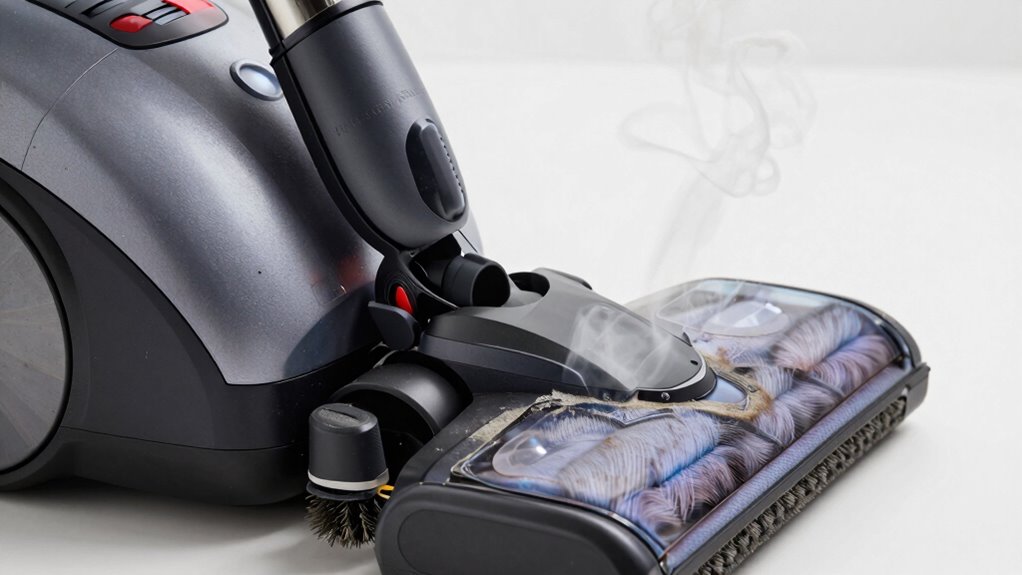
If your vacuum starts to smell burnt, it’s essential to prioritize safety before continuing to use it. Turn off the vacuum immediately and unplug it from the power source. For cordless models, remove the battery to prevent any electrical hazards. Check for overheating or visible signs of damage, especially if you’ve been vacuuming pet hair, which can clog filters or brushes and cause overheating. Avoid using the vacuum again until you identify and fix the problem. Do not attempt to open or repair the device yourself unless you’re qualified, as exposed wiring can be dangerous. If you’re unsure or the smell persists, contact a professional technician. Always prioritize safety to prevent fires or further damage to your vacuum.
Should You Repair or Replace Your Burning Vacuum?
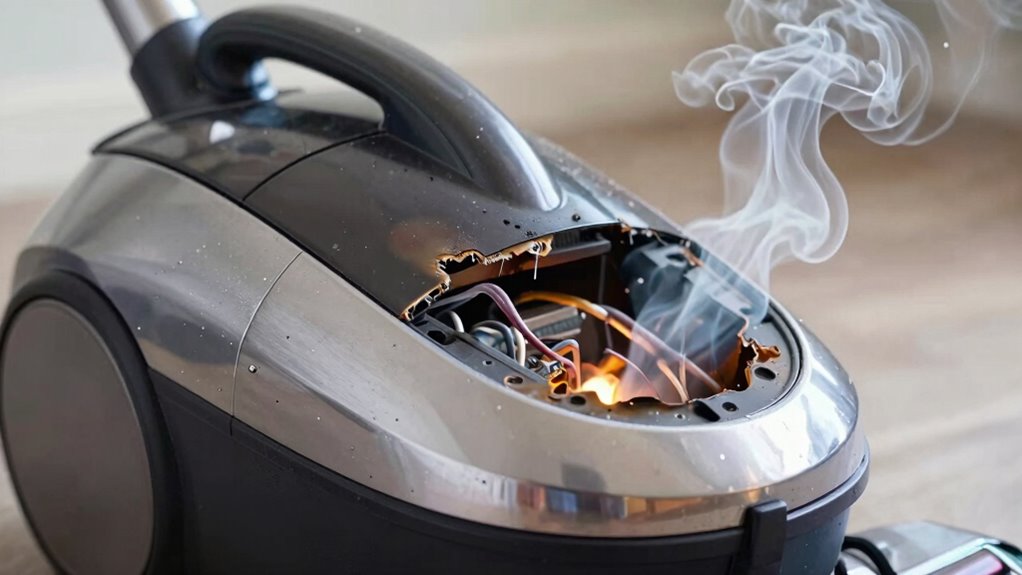
Once you’ve addressed safety concerns and turned off your vacuum, it’s time to decide whether to repair it or replace it. Consider these factors:
- Vacuum efficiency—if cleaning performance has declined despite repairs, replacement might be better.
- Age of the vacuum—older models often struggle with carpet maintenance and may not justify repair costs.
- Cost of repairs—if fixing the burning smell is expensive and won’t restore peak performance, replacing is smarter.
- Frequency of use—heavy daily use may warrant a new, more reliable vacuum to ensure consistent carpet maintenance.
Evaluating these points helps you make an informed choice, ensuring your vacuum maintains ideal performance and keeps your carpets clean without risking further damage or hazards.
Frequently Asked Questions
Can a Burning Smell Indicate an Electrical Problem in My Vacuum?
Yes, a burning smell can indicate electrical issues in your vacuum, which might lead to smoke emission. If you notice this smell, stop using your vacuum immediately to prevent further damage or fire risk. Check for overheating or burnt components, and consider having a professional inspect the electrical parts. Ignoring these signs can worsen the problem and compromise your safety, so don’t delay in addressing it.
How Often Should I Clean or Replace Vacuum Filters?
You should clean or replace your vacuum filters every three to six months, depending on usage and filter type. Regular filter maintenance guarantees peak performance and prevents overheating or burning smells. Check the manufacturer’s recommendation for replacement frequency, and if you notice reduced suction or a persistent odor, it’s time to clean or swap out the filters. Staying on top of filter maintenance keeps your vacuum running smoothly and extends its lifespan.
Is It Safe to Continue Using My Vacuum if It Smells Burnt?
If your vacuum smells burnt, stop using it immediately to guarantee safety. Continuing to operate it can cause damage or fire hazards. Follow safety precautions by unplugging the device and troubleshooting tips like checking for clogs, cleaning or replacing filters, and inspecting the motor. Addressing these issues promptly helps prevent further damage and keeps your home safe. Don’t ignore the smell—take action before resuming use.
What Specific Vacuum Models Are More Prone to Burning Smells?
Think of certain vacuum models as delicate musical instruments; some are more prone to discordant sounds like burning smells. You’ll notice that budget-friendly brands or older models often lack the robust motor compatibility of trusted, reliable brands like Dyson or Miele. These less dependable options tend to overheat or burn out faster. When shopping, prioritize brand reliability and check model compatibility to avoid the risk of a burning smell and potential damage.
Are There Eco-Friendly Ways to Dispose of a Damaged Vacuum?
You can eco-friendly dispose of a damaged vacuum by exploring recycling options available in your area, which guarantee proper disposal of electronic components. Additionally, consider donation possibilities if the vacuum still works or can be repaired, giving it a second life and reducing waste. Always check local programs or organizations that accept such items, helping you responsibly manage the disposal while minimizing environmental impact.
Conclusion
If your vacuum smells like it’s burning, don’t ignore it—acting quickly can prevent potential fires. Did you know that overheating issues account for nearly 30% of vacuum fires? Regular inspections and maintenance can keep your vacuum running safely and efficiently. When in doubt, replacing worn-out parts or the entire unit is often the safest choice. Stay vigilant, follow safety tips, and keep your home’s air clean and safe.
Halloween Picks
halloween
As an affiliate, we earn on qualifying purchases.