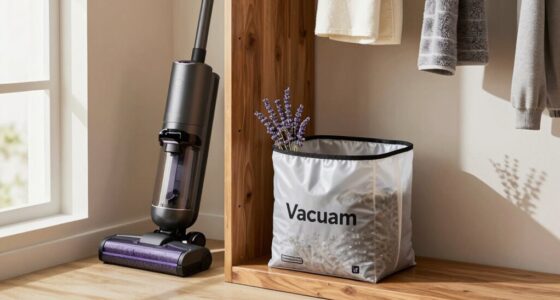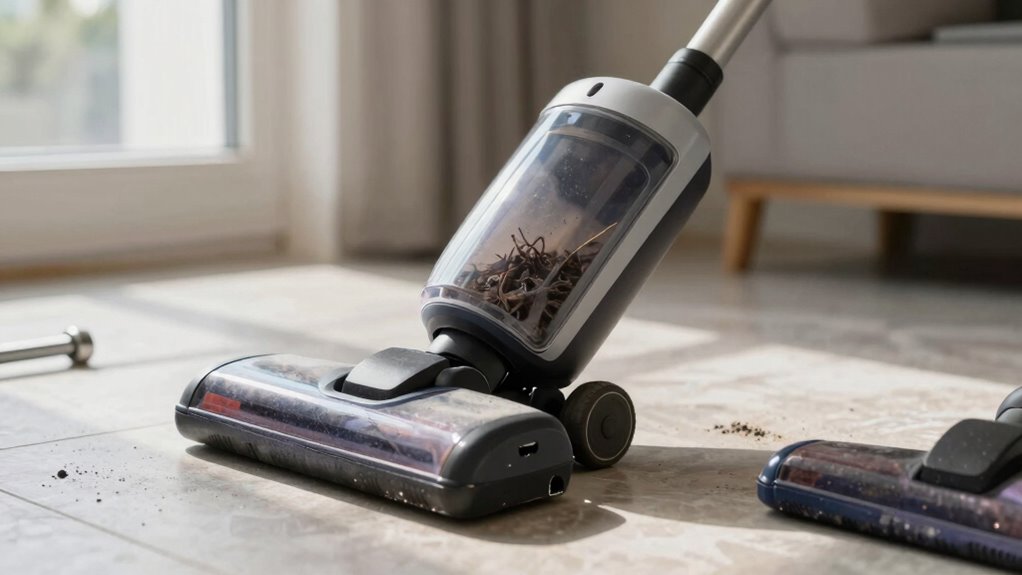

If your vacuum’s suction drops, makes unusual noises, or it stops spinning properly, it’s time for a repair instead of another deep clean. Often, worn belts, clogged filters, or tangled brush rollers cause these issues. Ignoring these signs can lead to internal damage and costly repairs later. Address problems early by seeking professional help to keep your vacuum running smoothly. Keep going to discover more tips on maintaining your vacuum’s performance and avoiding unnecessary downtime.

Get cleaning gear delivered free — and shop member deals
- Fast, free delivery on millions of items
- Access to Prime Big Deal Days deals on October 6–7
- Prime Video, Amazon Music and more included
Key Takeaways
- Persistent loss of suction despite cleaning indicates internal mechanical issues needing repair.
- Unusual noises or strange vibrations suggest worn or damaged components requiring professional attention.
- Regular filter or brush maintenance doesn’t improve performance, signaling a need for repair.
- Visible damage to belts, hoses, or the roller points to mechanical failure needing repair.
- Declining cleaning efficiency over time, despite routine maintenance, indicates internal parts may be worn out.
When your vacuum starts losing suction or making strange noises, it’s tempting to think a deep clean will fix the issue. But sometimes, the problem runs deeper than surface dirt. Before pulling out the cleaning supplies again, consider whether your vacuum needs repair. One common cause of poor performance is neglecting air filter maintenance. Over time, filters collect dust and debris, restricting airflow and reducing suction power. If you haven’t checked or replaced your air filter recently, it’s likely clogged, which means your vacuum isn’t functioning at full capacity. Regularly inspecting and changing the air filter can restore suction and improve overall efficiency. Don’t overlook this simple step; it’s often the quickest fix for ongoing performance issues. Additionally, components like the air filter need regular replacement to ensure optimal airflow and suction.
Check and replace your vacuum’s air filter regularly to restore suction and improve performance.
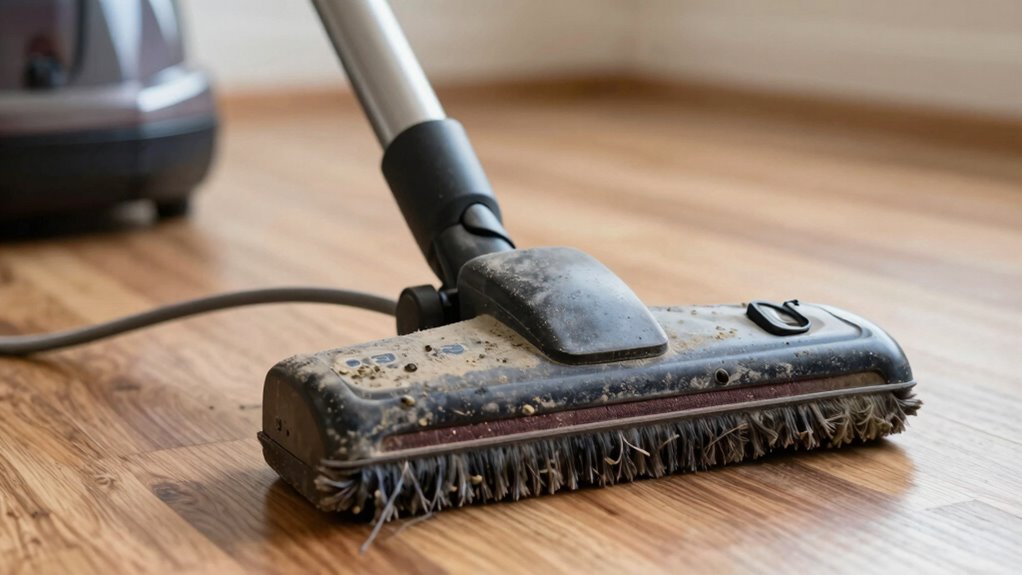
Another frequent culprit behind vacuum problems is brush roller issues. The brush roller, responsible for agitating carpet fibers and loosening dirt, can become tangled with hair, string, or debris. When it’s clogged or jammed, your vacuum may struggle to pick up dirt and could even make strange noises or stop spinning altogether. If you notice uneven cleaning or that the brush roller isn’t spinning, it’s time to examine it closely. Remove any hair or debris wrapped around the roller, and check for damage or worn bristles. Sometimes, the brush roller needs to be replaced if it’s damaged or excessively worn. Regularly maintaining the brush roller prevents dirt buildup and ensures your vacuum performs at its best. Keeping these parts in good condition also helps prevent internal damage that could lead to more costly repairs.
Beyond these issues, mechanical parts like belts, hoses, and filters can also cause your vacuum to underperform. If cleaning or replacing the air filter and fixing brush roller issues don’t resolve the problem, it’s worth investigating these components. A loose belt or cracked hose can considerably impact suction and cleaning power. Sometimes, internal parts may require professional repair, especially if the vacuum is making unusual noises or if performance continues to decline despite basic troubleshooting. Recognizing early signs of mechanical wear can help you avoid more extensive repairs later on. In the end, recognizing when your vacuum needs repair rather than just another deep clean saves you time and money. Routine maintenance—like checking the air filter and brush roller—goes a long way in preventing bigger issues. But if these steps don’t restore performance, don’t hesitate to seek professional help. Addressing mechanical problems early can extend your vacuum’s lifespan and keep your home clean without unnecessary frustration. When you understand what’s causing the problem, you can act quickly and avoid wasting effort on ineffective cleaning routines.
As an affiliate, we earn on qualifying purchases.
Frequently Asked Questions
How Often Should I Schedule Vacuum Repairs?
You should schedule vacuum repairs whenever you notice consistent loss of suction, strange noises, or a decline in cleaning performance, rather than just sticking to regular maintenance. Incorporate vacuum maintenance into your cleaning tips by checking the brush roll and filters regularly. Typically, a professional repair every 6-12 months helps keep your vacuum in top shape, ensuring it works efficiently and prolongs its lifespan.
Can I Fix My Vacuum Myself?
You can try DIY troubleshooting for minor issues, but don’t attempt complex vacuum repairs yourself. Regular vacuum maintenance helps prevent major problems, and basic tasks like cleaning filters and checking for blockages are manageable. However, if your vacuum isn’t performing well after these steps, it’s best to seek professional repair. Knowing when to fix your vacuum yourself guarantees it stays in good shape without risking further damage or voiding warranties.
What Are Signs My Vacuum Needs Repair?
Imagine your vacuum struggling to pick up dirt, like a tired worker. If you notice loss of suction, strange noises, or a burning smell, it’s a sign your vacuum needs repair. Regular vacuum maintenance and cleaning tips can prevent issues, but don’t ignore these signs. Address problems early to keep your vacuum running efficiently, ensuring it’s ready to handle your cleaning tasks without fuss or frustration.
How Long Does a Typical Vacuum Repair Take?
A typical vacuum repair usually takes between one to three hours, depending on the issue. During vacuum troubleshooting, a technician assesses the problem and fixes it efficiently. The repair cost comparison can vary, but most repairs are affordable compared to buying a new vacuum. If your vacuum isn’t performing well despite troubleshooting, expect a quick turnaround, ensuring you get back to cleaning without long delays.
Is Replacing Parts More Cost-Effective Than Repair?
Replacing parts can be more cost-effective than full repairs if the damage is minor or the part is inexpensive. The cost comparison often favors replacement for small components, saving you money and time. Replacement benefits include quick fixes and extending your vacuum’s lifespan without the higher expense of a complete overhaul. Consider the extent of damage and part prices to determine whether replacing parts or repairing is the better choice financially.
Conclusion
Think of your vacuum like a trusty steed. When it stumbles, you don’t keep riding it harder; you repair and restore it. Ignoring the warning signs of a malfunction is like pushing your horse past its limit—eventually, it’ll give out. Instead, give it the care it needs. A well-maintained vacuum, like a well-cared-for horse, will serve you better and longer, ensuring your home stays spotless without the unexpected breakdowns.
Fall Picks
fall essentials
As an affiliate, we earn on qualifying purchases.