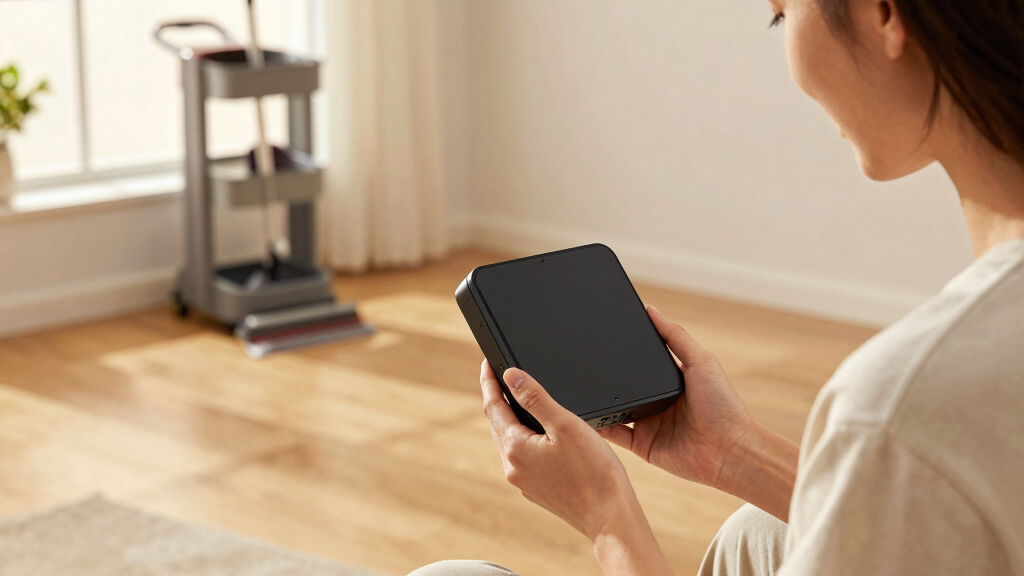

The GMKtec M6 Ultra with 1TB SSD is my best overall mini PC because its Ryzen 5 7640HS, 32GB of DDR5 memory, fast dual networking, and USB4 create the strongest balance in this lineup. The GEEKOM A9 Max has a much higher performance ceiling for demanding creative work, while the BOSGAME P4 Ultra offers a practical value combination of 16GB of memory and 1TB of storage. Choosing among the best mini PCs comes down to how much processor and graphics power I would pay for, whether upgrade access matters, and which ports the setup requires. Compact size alone does not make every model equally suitable for gaming, office work, or long-term expansion. Continue reading for my full breakdown of the performance tiers, tradeoffs, and best choices for different buyers.

Get cleaning gear delivered free with Prime
- Fast, free delivery on millions of items
- Prime Video, Amazon Music and more included
- Member-only deals all year
Complete the kit


Key Takeaways
- The GMKtec M6 Ultra 1TB leads the roundup because 32GB of DDR5, USB4, dual 2.5GbE ports, and a capable Ryzen 5 7640HS cover more use cases than most similarly sized alternatives.
- The GEEKOM A9 Max is the performance leader, but its Ryzen AI 9 HX 370 and Wi-Fi 7 are better matched to heavy creation, development, and rendering than routine home-office work.
- The BOSGAME P3 is my gaming-focused pick because its Ryzen 7 7840HS offers a more capable modern platform than the Ryzen 7 7730U machines, though none of these systems replaces a powerful desktop graphics card.
- The GMKtec M7 Ultra has the lineup’s clearest expansion advantage: OCuLink makes an external graphics setup more practical than relying only on USB4, at the cost of extra hardware and desk space.
- The KAMRUI AK1PLUS occupies a separate entry-level tier; its Celeron N5095 can handle basic browsing and media, but the stronger Ryzen and Core systems are much better long-term purchases for multitasking.
| GMKtec M6 Ultra |  | Best Overall | Processor: AMD Ryzen 5 7640HS | Graphics: AMD Radeon 760M integrated graphics | Memory: 32GB DDR5 | VIEW LATEST PRICE | See Our Full Breakdown |
| BOSGAME P4 Ultra |  | Best for Multi-Monitor Office Work | Processor: AMD Ryzen 7 7730U, 8 cores and 16 threads, up to 4.5GHz | Memory: 16GB DDR4-3200, expandable to 64GB | Storage: 1TB PCIe 3.0 NVMe SSD | VIEW LATEST PRICE | See Our Full Breakdown |
| BOSGAME P3 |  | Best for Integrated-Graphics Gaming | Processor: AMD Ryzen 7 7840HS | Graphics: AMD Radeon 780M integrated graphics | Memory: 16GB DDR5, upgradeable to 64GB | VIEW LATEST PRICE | See Our Full Breakdown |
| GEEKOM A6 |  | Best Premium Build and Warranty | Processor: AMD Ryzen 7 6800H | Graphics: AMD Radeon 680M integrated graphics | Memory: 16GB DDR5, upgradeable to 64GB | VIEW LATEST PRICE | See Our Full Breakdown |
| GMKtec M7 Ultra |  | Best for External-GPU Expansion | Processor: AMD Ryzen 7 PRO 6850U | Graphics: AMD Radeon 680M with 12 graphics cores | Memory: 32GB DDR5-4800, expandable to 128GB | VIEW LATEST PRICE | See Our Full Breakdown |
| KAMRUI E3B Mini Gaming PC |  | Best Low-Power Triple-Display Pick | Processor: AMD Ryzen 7 7730U | Memory: 16GB DDR4, expandable to 64GB | Storage: 1TB M.2 SSD, expandable to 4TB | VIEW LATEST PRICE | See Our Full Breakdown |
| GEEKOM IT13 Mini PC |  | Best for Business Connectivity | Processor: 13th Gen Intel Core i5-13600H, 12 cores and 16 threads, up to 4.8GHz | Memory: 16GB DDR4, upgradable to 96GB | Storage: 1TB PCIe Gen4 NVMe SSD | VIEW LATEST PRICE | See Our Full Breakdown |
| BOSGAME P6 Ryzen 9 6900HX Mini PC |  | Best for Light Gaming | Processor: AMD Ryzen 9 6900HX, 8 cores and 16 threads, up to 4.9GHz | Memory: 24GB LPDDR5X at 4800MT/s | Storage: 1TB PCIe 4.0 SSD, expandable to 8TB | VIEW LATEST PRICE | See Our Full Breakdown |
| ACEMAGIC M5 Mini PC |  | Best for CPU-Heavy Multitasking | Processor: Intel Core i5-14450HX | Memory: 32GB DDR4 | Storage: 1TB NVMe PCIe 4.0 SSD | VIEW LATEST PRICE | See Our Full Breakdown |
| GEEKOM A5 2026 Edition Mini PC |  | Best Upgradeable Home-Office Pick | Processor: AMD Ryzen 5 7430U | Memory: 16GB, upgradable to 64GB | Storage: 512GB NVMe SSD, upgradable to 4TB | VIEW LATEST PRICE | See Our Full Breakdown |
| GMKtec M6 Ultra |  | Best Midrange Multitasker | Processor: AMD Ryzen 7640HS, 6 cores, up to 5GHz | Graphics: AMD Radeon 760M, 8 compute units, up to 2600MHz | Memory: 32GB DDR5 | VIEW LATEST PRICE | See Our Full Breakdown |
| GEEKOM AX8 Max |  | Best for Multi-Display Workstations | Processor: AMD Ryzen 7 8745HS | Graphics: AMD Radeon 780M | Memory: 16GB DDR5, expandable to 128GB | VIEW LATEST PRICE | See Our Full Breakdown |
| GMKtec M2 Pro S |  | Best Intel Office Pick | Processor: Intel Core i7-1185G7, up to 4.8GHz | Graphics: Intel Iris Xe G7, 96 execution units | Memory: 16GB DDR4, expandable to 64GB | VIEW LATEST PRICE | See Our Full Breakdown |
| GEEKOM A9 Max |  | Best Premium Performance Pick | Processor: AMD Ryzen AI 9 HX 370, up to 5.1GHz | Graphics: AMD Radeon 890M, 16 RDNA 3.5 compute units | Memory: 32GB DDR5-5600 | VIEW LATEST PRICE | See Our Full Breakdown |
| KAMRUI AK1PLUS |  | Best Budget Pick for Basic Computing | Processor: Intel Celeron N5095 | Graphics: Intel UHD Graphics | Memory: 16GB LPDDR4X | VIEW LATEST PRICE | See Our Full Breakdown |
| mini PC | Processor | Memory | Storage | Graphics |
|---|---|---|---|---|
| GMKtec M6 Ultra | AMD Ryzen 5 7640HS | 32GB DDR5 | 1TB PCIe SSD | AMD Radeon 760M integrated graphics |
| BOSGAME P4 Ultra | AMD Ryzen 7 7730U, 8 cores and 16 threads, up to 4.5GHz | 16GB DDR4-3200, expandable to 64GB | 1TB PCIe 3.0 NVMe SSD | — |
| BOSGAME P3 | AMD Ryzen 7 7840HS | 16GB DDR5, upgradeable to 64GB | 1TB PCIe 4.0 NVMe SSD | AMD Radeon 780M integrated graphics |
| GEEKOM A6 | AMD Ryzen 7 6800H | 16GB DDR5, upgradeable to 64GB | 1TB PCIe 4.0 SSD | AMD Radeon 680M integrated graphics |
| GMKtec M7 Ultra | AMD Ryzen 7 PRO 6850U | 32GB DDR5-4800, expandable to 128GB | 512GB PCIe SSD; two slots support up to 4TB total | AMD Radeon 680M with 12 graphics cores |
| KAMRUI E3B Mini Gaming PC | AMD Ryzen 7 7730U | 16GB DDR4, expandable to 64GB | 1TB M.2 SSD, expandable to 4TB | AMD Radeon Vega 8, up to 2000 MHz |
| GEEKOM IT13 Mini PC | 13th Gen Intel Core i5-13600H, 12 cores and 16 threads, up to 4.8GHz | 16GB DDR4, upgradable to 96GB | 1TB PCIe Gen4 NVMe SSD | Intel Iris Xe Graphics |
| BOSGAME P6 Ryzen 9 6900HX Mini | AMD Ryzen 9 6900HX, 8 cores and 16 threads, up to 4.9GHz | 24GB LPDDR5X at 4800MT/s | 1TB PCIe 4.0 SSD, expandable to 8TB | Integrated AMD Radeon 680M |
| ACEMAGIC M5 Mini PC | Intel Core i5-14450HX | 32GB DDR4 | 1TB NVMe PCIe 4.0 SSD | Intel UHD Graphics up to 1.55GHz |
| GEEKOM A5 2026 Edition Mini PC | AMD Ryzen 5 7430U | 16GB, upgradable to 64GB | 512GB NVMe SSD, upgradable to 4TB | AMD Radeon Vega 7 |
| GMKtec M6 Ultra | AMD Ryzen 7640HS, 6 cores, up to 5GHz | 32GB DDR5 | 512GB PCIe SSD, expandable to 4TB | AMD Radeon 760M, 8 compute units, up to 2600MHz |
| GEEKOM AX8 Max | AMD Ryzen 7 8745HS | 16GB DDR5, expandable to 128GB | 1TB NVMe SSD, upgradable to 8TB | AMD Radeon 780M |
| GMKtec M2 Pro S | Intel Core i7-1185G7, up to 4.8GHz | 16GB DDR4, expandable to 64GB | 1TB NVMe SSD, expandable to 2TB | Intel Iris Xe G7, 96 execution units |
| GEEKOM A9 Max | AMD Ryzen AI 9 HX 370, up to 5.1GHz | 32GB DDR5-5600 | 1TB SSD | AMD Radeon 890M, 16 RDNA 3.5 compute units |
| KAMRUI AK1PLUS | Intel Celeron N5095 | 16GB LPDDR4X | 256GB SSD, expandable to 4TB total | Intel UHD Graphics |
More Details on Our Top Picks
GMKtec M6 Ultra
I rank the GMKtec M6 Ultra first because its Ryzen 7640HS, 32GB of DDR5 memory, and dual 2.5GbE ports form the most balanced package here. Compared with the BOSGAME P3, it supplies twice the memory and faster wired networking, making it better prepared for virtual machines, large workspaces, and network-heavy tasks. Its USB4 output supports 8K at 60Hz, while HDMI and DisplayPort accommodate a practical three-monitor desk. The Radeon 760M can handle lighter games, but the P3’s Radeon 780M is the stronger choice when frame rates matter more than memory capacity. I also see the one-year warranty as a meaningful compromise beside the GEEKOM A6’s three-year coverage. This is my broadest recommendation, though it is not a substitute for a desktop with dedicated graphics.
Pros:- 32GB of DDR5 memory suits demanding multitasking without an immediate upgrade
- Dual 2.5GbE ports support fast transfers and network-lab configurations
- USB4, HDMI, and DisplayPort provide flexible triple-display connectivity
- Ryzen 7640HS offers a strong balance of processing speed and efficiency
Cons:- Radeon 760M graphics fall behind the BOSGAME P3’s Radeon 780M in gaming
- One-year warranty is short compared with the GEEKOM A6’s coverage
- Memory or storage expansion adds cost beyond the supplied configuration
Best for: I recommend it to developers, home-office power users, and network-lab builders who want 32GB of memory, fast Ethernet, and several displays in one compact system.
Not ideal for: I would skip it for buyers focused on demanding AAA gaming or long warranty coverage, since it relies on integrated graphics and includes only one year of protection.
- Processor:AMD Ryzen 5 7640HS
- Graphics:AMD Radeon 760M integrated graphics
- Memory:32GB DDR5
- Storage:1TB PCIe SSD
- Display Support:Three 4K displays; 8K at 60Hz through USB4
- Wired Networking:Dual 2.5GbE LAN
- Wireless:Wi-Fi 6 and Bluetooth 5.2
- Warranty:1 year
Our verdict“I would choose the GMKtec M6 Ultra as the most balanced mini PC here for serious multitasking, fast networking, and flexible display setups.”
BOSGAME P4 Ultra
The BOSGAME P4 Ultra is my office-focused pick for buyers who value more CPU cores, three 4K outputs, and dual 2.5GbE connections over gaming speed. Its eight-core Ryzen 7 7730U is well suited to heavy browser use, spreadsheets, conferencing, and background applications. Compared with the GMKtec M6 Ultra, however, its 16GB of slower DDR4 memory leaves less headroom out of the box, while the older integrated graphics make it a weaker entertainment machine. Wi-Fi 6E and Windows 11 Pro add useful business features, and the VESA mount can clear the computer from a crowded desk. I would still favor the BOSGAME P3 for creative work or light gaming because of its Radeon 780M graphics. The P4 earns its place through practical workplace connectivity, not visual performance, and its cooling may become audible during sustained workloads.
Pros:- Eight-core, 16-thread processor handles busy office workflows well
- Three 4K outputs support expansive productivity workspaces
- Dual 2.5GbE LAN is useful for fast local storage or separate networks
- VESA mounting helps keep compact desks uncluttered
Cons:- 16GB of DDR4 memory is less capable out of the box than DDR5-equipped rivals
- Integrated graphics are unsuitable for demanding modern games
- Cooling noise may become noticeable under prolonged heavy load
Best for: I recommend it to office users, financial analysts, and home workers who need three monitors, Windows 11 Pro, and two fast wired network connections.
Not ideal for: I would steer gamers and GPU-heavy creators elsewhere because the older Ryzen 7 platform and integrated graphics are poorly matched to demanding visual workloads.
- Processor:AMD Ryzen 7 7730U, 8 cores and 16 threads, up to 4.5GHz
- Memory:16GB DDR4-3200, expandable to 64GB
- Storage:1TB PCIe 3.0 NVMe SSD
- Display Support:Three 4K displays at 60Hz through HDMI, DisplayPort, and USB-C
- Ethernet:Dual 2.5GbE LAN
- Wireless:Wi-Fi 6E and Bluetooth 5.2
- Chassis:3.2-liter enclosure with VESA mount
- Operating System:Windows 11 Pro
Our verdict“I see the BOSGAME P4 Ultra as a capable three-monitor office hub for buyers who prioritize networking and CPU multitasking over graphics speed.”
BOSGAME P3
I place the BOSGAME P3 ahead of the office-oriented models for buyers who want the strongest gaming and creative performance without adding a graphics card. Its Ryzen 7 7840HS and Radeon 780M graphics offer a clear visual-performance advantage over the Radeon 760M in the GMKtec M6 Ultra and the Radeon 680M in the GEEKOM A6. That difference can produce smoother play at sensible settings and quicker acceleration in supported editing applications. The 1TB PCIe 4.0 SSD is another strength, while triple-4K support gives creators room for timelines, previews, and reference material. My reservation is the supplied 16GB of memory: it is adequate for mainstream use but less generous than the M6 Ultra’s 32GB. The dual Gigabit Ethernet connections also trail the 2.5GbE ports fitted to several rivals, so this is a graphics-led choice rather than a networking pick.
Pros:- Radeon 780M is the strongest integrated graphics option among these five models
- Ryzen 7 7840HS suits gaming, editing, and demanding multitasking
- PCIe 4.0 storage provides fast application and project loading
- Triple-4K support accommodates wide creative workspaces
Cons:- Supplied 16GB memory may need upgrading for large creative workloads
- Dual Gigabit Ethernet is slower than the 2.5GbE networking on key rivals
- Integrated graphics still cannot match a dedicated GPU in demanding AAA games
Best for: I recommend it to casual PC gamers, emulation fans, and entry-level video editors who want capable integrated graphics without the size of a conventional tower.
Not ideal for: I would skip it for network-lab users and buyers running memory-heavy creative projects, since its Ethernet is limited to Gigabit speeds and it ships with 16GB of RAM.
- Processor:AMD Ryzen 7 7840HS
- Graphics:AMD Radeon 780M integrated graphics
- Memory:16GB DDR5, upgradeable to 64GB
- Storage:1TB PCIe 4.0 NVMe SSD
- Display Support:Three 4K displays
- Ethernet:Dual Gigabit Ethernet
- Wi-Fi:Wi-Fi 6E
- Bluetooth:Bluetooth 5.2
Our verdict“I would buy the BOSGAME P3 for the best self-contained gaming and creative performance here, provided 16GB of starting memory and Gigabit networking are acceptable.”
GEEKOM A6
The GEEKOM A6 makes the most sense when build quality, display capacity, and after-sales coverage carry more weight than getting the newest graphics architecture. Its aluminum-alloy enclosure is more substantial than the typical plastic mini-PC shell, and its three-year warranty is far more reassuring than the GMKtec M6 Ultra’s one-year term. It can run four 4K monitors, one more than the BOSGAME P3, which gives traders, developers, and control-room users extra workspace. USB4, Wi-Fi 6E, 2.5GbE LAN, and a PCIe 4.0 SSD keep the supporting hardware modern. The tradeoff is value: the Ryzen 7 6800H and Radeon 680M remain capable, but the P3’s Ryzen 7 7840HS and Radeon 780M are stronger for gaming. With only 16GB of supplied DDR5, an upgrade may also be needed for heavier professional workloads. I rank it as the polished ownership choice, not the speed leader.
Pros:- Aluminum-alloy chassis offers a more durable, polished build
- Three-year warranty exceeds the coverage supplied with the GMKtec M6 Ultra
- Four-display support suits unusually large professional workspaces
- USB4, Wi-Fi 6E, and 2.5GbE LAN provide versatile connectivity
Cons:- Radeon 680M graphics trail the BOSGAME P3’s Radeon 780M
- Premium positioning may deliver less performance per dollar
- 16GB of included memory can be restrictive for demanding professional projects
Best for: I recommend it to professionals building four-monitor workstations who place a durable metal enclosure and long warranty above maximum gaming performance.
Not ideal for: I would skip it for value-focused gamers because the BOSGAME P3 offers newer, faster integrated graphics, while the A6 may still need a memory upgrade.
- Processor:AMD Ryzen 7 6800H
- Graphics:AMD Radeon 680M integrated graphics
- Memory:16GB DDR5, upgradeable to 64GB
- Storage:1TB PCIe 4.0 SSD
- Display Support:Up to four 4K monitors
- Connectivity:USB4, Wi-Fi 6E, Bluetooth 5.2, and 2.5GbE LAN
- Chassis:Aluminum alloy
- Warranty:3 years
Our verdict“I recommend the GEEKOM A6 to buyers willing to pay for a metal build, four-monitor support, and stronger warranty coverage rather than the fastest integrated graphics.”
GMKtec M7 Ultra
The GMKtec M7 Ultra earns a specialized place through OCuLink, which gives enthusiasts a high-bandwidth route to an external graphics card. That makes it more adaptable than the BOSGAME P3: the P3 has faster integrated Radeon 780M graphics, but it lacks the M7 Ultra’s straightforward path to much stronger desktop-class graphics. The M7 also supplies 32GB of DDR5 memory, dual 2.5GbE networking, and expansion support for up to 128GB of RAM and 4TB across two storage slots. Its 512GB factory SSD is the catch, offering half the starting capacity of every other model in this group. I also expect the dual-fan cooling system to become audible in Performance mode, while adding an external GPU reduces the space-saving appeal. The Ryzen 7 PRO 6850U is no longer the quickest processor here, yet OCuLink and broad upgrade capacity make this my choice for buyers who enjoy building outward.
Pros:- OCuLink provides a high-bandwidth connection for an external graphics card
- 32GB of included DDR5 memory supports serious multitasking immediately
- Memory expansion to 128GB and dual storage slots allow substantial growth
- Dual 2.5GbE LAN and Wi-Fi 6E suit fast local and wireless networks
Cons:- 512GB SSD is the smallest starting storage capacity in this five-product group
- Radeon 680M cannot deliver high-end gaming performance without an external GPU
- Performance mode may produce noticeable fan noise
Best for: I recommend it to PC enthusiasts, homelab users, and compact-workstation builders who plan to add storage, large memory capacity, or an OCuLink external GPU.
Not ideal for: I would avoid it for buyers wanting a quiet, finished gaming system with ample storage from day one, since it has no dedicated GPU and includes only a 512GB SSD.
- Processor:AMD Ryzen 7 PRO 6850U
- Graphics:AMD Radeon 680M with 12 graphics cores
- Memory:32GB DDR5-4800, expandable to 128GB
- Storage:512GB PCIe SSD; two slots support up to 4TB total
- Display Outputs:HDMI 2.1, USB4, and USB-C DisplayPort with support up to 8K
- Networking:Dual 2.5GbE LAN, Wi-Fi 6E, and Bluetooth 5.2
- Expansion:OCuLink external-GPU interface
- Cooling:Dual fans with copper base and Quiet, Balance, and Performance modes
Our verdict“I would choose the GMKtec M7 Ultra when OCuLink and long-term upgrade capacity matter more than quiet operation or generous factory storage.”
KAMRUI E3B Mini Gaming PC
I recommend the KAMRUI E3B for buyers who want an efficient workstation that can drive three 4K screens without occupying much desk space. Its Ryzen 7 7730U and 16GB of memory provide enough speed for office multitasking, streaming, and lighter creative work, while the 28-watt power draw is far lower than the 90-watt GEEKOM IT13. The included 1TB SSD also gives it more starting capacity than the GEEKOM A5. Despite the gaming label, Vega 8 graphics place it behind the BOSGAME P6 and its Radeon 680M for demanding games. I also see sustained cooling and limited internal expansion as the main compromises. This is a compact productivity machine, rather than a substitute for a desktop with dedicated graphics.
Pros:- Ryzen 7 processor handles demanding office multitasking well
- Supports three 4K displays from a compact chassis
- 1TB SSD provides generous starting storage
- Low 28-watt power consumption suits always-on workstations
Cons:- Vega 8 graphics are poorly matched to the gaming-focused product name
- Extended heavy workloads may push the compact cooling system
- Internal expansion is more restricted than on a conventional desktop
Best for: Remote workers and market-monitoring users who need three 4K displays, ample storage, and low power consumption in a small workspace
Not ideal for: Players seeking modern games at high settings, because the integrated Vega 8 graphics offer limited gaming headroom
- Processor:AMD Ryzen 7 7730U
- Memory:16GB DDR4, expandable to 64GB
- Storage:1TB M.2 SSD, expandable to 4TB
- Graphics:AMD Radeon Vega 8, up to 2000 MHz
- Display support:Three 4K UHD displays
- Wireless:Wi-Fi 6 and Bluetooth 5.2
- Dimensions:5.05 x 5.05 x 1.9 inches
- Power consumption:28 watts
Our verdict“Choose the KAMRUI E3B for an efficient three-screen workstation, but skip it if gaming performance is the main goal.”
GEEKOM IT13 Mini PC
The GEEKOM IT13 earns its place through connectivity and business-friendly support rather than graphics power. Its 12-core Core i5-13600H is better suited to compilation, large spreadsheets, and busy office workflows than the Ryzen 5 inside the GEEKOM A5. USB4, 2.5GbE, Wi-Fi 6E, and quad-display capability also make the IT13 easier to integrate with fast storage, docks, and wired networks. I favor it over the ACEMAGIC M5 for buyers who value faster networking and a three-year warranty, though the M5 starts with twice the RAM. Intel Iris Xe graphics can handle media and modest games, but the BOSGAME P6 is the stronger gaming choice. The IT13 also has the highest stated power draw here at 90 watts, making performance-per-watt its clearest weakness.
Pros:- Core i5-13600H delivers strong multicore performance for business workloads
- USB4 and 2.5GbE support fast peripherals and network transfers
- Can drive up to four displays, including an 8K output
- Three-year warranty adds value for professional deployment
Cons:- 90-watt power consumption is high for a mini PC
- Intel Iris Xe trails Radeon 680M graphics in gaming
- Memory upgrades require more technical confidence than buying a higher-capacity configuration
Best for: Small businesses, developers, and digital-signage operators who need USB4, 2.5GbE, multiple displays, and long warranty coverage
Not ideal for: Energy-conscious buyers or graphics-heavy gamers, due to the 90-watt power rating and integrated Iris Xe graphics
- Processor:13th Gen Intel Core i5-13600H, 12 cores and 16 threads, up to 4.8GHz
- Memory:16GB DDR4, upgradable to 96GB
- Storage:1TB PCIe Gen4 NVMe SSD
- Graphics:Intel Iris Xe Graphics
- Maximum resolution:7680 x 4320 at 8K
- Networking:Wi-Fi 6E, Bluetooth 5.2, and 2.5GbE
- Expansion ports:USB4
- Dimensions:4.6 x 4.4 x 1.9 inches
Our verdict“The GEEKOM IT13 is my business pick for buyers who prioritize ports, networking, and CPU speed over low power use or gaming.”
BOSGAME P6 Ryzen 9 6900HX Mini PC
Among these five systems, I give the BOSGAME P6 the gaming-focused role because its Radeon 680M is a meaningful step above the Vega 7 graphics in the GEEKOM A5 and the Intel UHD graphics in the ACEMAGIC M5. That advantage makes lighter games and graphics-accelerated applications more practical, while the Ryzen 9 6900HX and 24GB of LPDDR5X memory support heavier multitasking. Dual Ethernet ports are also useful for a compact server, firewall lab, or separated office network. The compromises are clear: this is still integrated graphics, so recent demanding games require reduced settings and resolution. Its memory appears fixed rather than socketed, unlike the upgradable GEEKOM models, and Bluetooth 5.3 may need a driver update. I see it as the best-balanced entertainment option, not a high-end gaming tower.
Pros:- Radeon 680M is the strongest integrated gaming option among these five products
- Ryzen 9 6900HX and 24GB LPDDR5X support responsive multitasking
- Triple 4K output suits work and entertainment setups
- Dual Ethernet ports broaden its home-lab and networking uses
Cons:- Integrated graphics remain inadequate for demanding games at high settings
- LPDDR5X memory is not listed as user-upgradable
- Bluetooth 5.3 functionality may require manual driver updates
Best for: Casual PC gamers and home-office users who want stronger integrated graphics, three 4K outputs, and dual-network connectivity
Not ideal for: Enthusiast gamers and memory upgraders, because demanding titles exceed the Radeon 680M’s limits and the LPDDR5X memory is not listed as expandable
- Processor:AMD Ryzen 9 6900HX, 8 cores and 16 threads, up to 4.9GHz
- Memory:24GB LPDDR5X at 4800MT/s
- Storage:1TB PCIe 4.0 SSD, expandable to 8TB
- Graphics:Integrated AMD Radeon 680M
- Display support:Three 4K 60Hz displays
- Wired networking:Dual 1Gbps Ethernet
- Wireless:Wi-Fi 6E and Bluetooth 5.3
- Noise level:Under 36dB
Our verdict“Pick the BOSGAME P6 for light gaming and versatile networking, while treating its integrated GPU and fixed memory as firm limits.”
ACEMAGIC M5 Mini PC
I place the ACEMAGIC M5 ahead of the lower-powered options for buyers running virtual machines, large spreadsheets, code builds, or many applications at once. Its Core i5-14450HX and 32GB of RAM provide more out-of-box multitasking capacity than the 16GB GEEKOM IT13 and GEEKOM A5. The 1TB PCIe 4.0 SSD and triple 4K outputs reinforce that workstation focus, while a stated 35dB noise level should keep routine office use discreet. Yet the Intel UHD GPU creates a sharp divide between processor and graphics capability: the BOSGAME P6 is much better suited to light gaming. The M5 also lacks the IT13’s USB4, Wi-Fi 6E, and 2.5GbE connection set. I recommend it for compute-heavy desk work, provided buyers can accept basic integrated graphics and less ambitious networking.
Pros:- Core i5-14450HX targets demanding CPU-based workloads
- 32GB RAM provides strong multitasking capacity from the start
- 1TB PCIe 4.0 SSD offers fast and useful local storage
- Triple 4K output supports expansive office layouts
Cons:- Intel UHD graphics sharply limit gaming and graphics-intensive work
- Gigabit Ethernet is slower than the GEEKOM IT13’s 2.5GbE connection
- RAM and storage expansion options are described as limited
Best for: Analysts, programmers, and virtual-machine users who want 32GB of memory and strong CPU performance without a full-size workstation
Not ideal for: Gamers, 3D creators, and high-speed network users who need a capable GPU, USB4, or 2.5GbE
- Processor:Intel Core i5-14450HX
- Memory:32GB DDR4
- Storage:1TB NVMe PCIe 4.0 SSD
- Graphics:Intel UHD Graphics up to 1.55GHz
- Display support:Three 4K displays
- Networking:Wi-Fi 6, Bluetooth 5.2, and Gigabit Ethernet
- Dimensions:5.03 x 5.03 x 1.62 inches
- Acoustic rating:35dB
Our verdict“The ACEMAGIC M5 makes sense for CPU-heavy work and large memory demands, but graphics and connectivity are not its strengths.”
GEEKOM A5 2026 Edition Mini PC
The GEEKOM A5 is my home-office choice for buyers who want room to expand without paying for maximum performance immediately. Its 16GB of RAM can rise to 64GB, while the 512GB SSD can be replaced with a drive up to 4TB; extra M.2 and hard-drive slots offer more flexibility than the KAMRUI E3B. Four 4K displays and an 8K Type-C output also give it broader screen support than many entry-level office PCs. The Ryzen 5 7430U is capable for documents, browser-heavy work, and video calls, but it falls behind the GEEKOM IT13 and ACEMAGIC M5 on demanding CPU tasks. Vega 7 graphics also trail the BOSGAME P6 in games. I rank it as the most adaptable everyday system, with its three-year warranty offsetting the smaller starting SSD.
Pros:- Memory can be expanded from 16GB to 64GB
- Multiple storage slots allow more flexible future upgrades
- Supports four 4K displays and an 8K Type-C output
- Three-year warranty suits buyers planning long-term use
Cons:- 512GB starting storage is half the capacity of the other four products
- Ryzen 5 7430U trails the higher-power processors in demanding workloads
- Vega 7 graphics are limited to basic creative work and light games
Best for: Home-office buyers who want a warrantied mini PC with accessible memory, storage, and multi-monitor expansion
Not ideal for: Heavy content creators and frequent gamers who need stronger processor and graphics performance from day one
- Processor:AMD Ryzen 5 7430U
- Memory:16GB, upgradable to 64GB
- Storage:512GB NVMe SSD, upgradable to 4TB
- Additional storage:Extra M.2 and HDD slots
- Graphics:AMD Radeon Vega 7
- Display support:Up to four 4K displays; 8K through Type-C
- Wireless:Wi-Fi 6 and Bluetooth 5.2
- Warranty:3 years
Our verdict“Choose the GEEKOM A5 for a flexible, long-term home-office setup rather than maximum performance at purchase.”
GMKtec M6 Ultra
I rank the GMKtec M6 Ultra as the midrange choice for buyers who split their time between office workloads, light gaming, and network-heavy tasks. Its Ryzen 7640HS and 32GB of DDR5 memory give it more multitasking headroom than the GMKtec M2 Pro S, while the Radeon 760M is capable enough for esports and older games at sensible settings. Dual 2.5GbE ports also make this model better suited to a home lab or fast NAS setup than many compact PCs. The compromise is its 512GB starting SSD, which feels restrictive beside the 1TB GEEKOM AX8 Max. It also trails that model’s Radeon 780M graphics. I would choose the M6 Ultra for balanced performance and connectivity, but not as a substitute for a desktop fitted with dedicated graphics.
Pros:- Ryzen 7640HS delivers strong performance for mixed office and creative workloads
- 32GB of DDR5 memory supports heavier multitasking without an immediate upgrade
- Dual 2.5GbE LAN is useful for fast storage, routing, and home-lab duties
- Triple-display support creates a flexible productivity setup
Cons:- 512GB of included storage is small for a gaming-oriented configuration
- Radeon 760M graphics are not suited to demanding games at high settings
- Warranty coverage is not clearly detailed in the supplied product information
Best for: Home-office power users, light gamers, and home-lab builders who need 32GB of memory and dual 2.5GbE networking
Not ideal for: Buyers with large game libraries or demanding AAA gaming plans, since the 512GB drive is modest and the Radeon 760M is integrated graphics
- Processor:AMD Ryzen 7640HS, 6 cores, up to 5GHz
- Graphics:AMD Radeon 760M, 8 compute units, up to 2600MHz
- Memory:32GB DDR5
- Storage:512GB PCIe SSD, expandable to 4TB
- Display support:Three 4K displays; USB4 supports up to 8K at 60Hz
- Networking:Dual 2.5GbE LAN, WiFi 6, Bluetooth 5.2
- Operating system:Windows 11 Pro
- Power consumption:45W
Our verdict“I recommend the M6 Ultra to buyers seeking a well-connected midrange mini PC for multitasking and light gaming, provided they can budget for more storage.”
GEEKOM AX8 Max
The GEEKOM AX8 Max earns its place through display flexibility, stronger integrated graphics, and unusually broad upgrade capacity. I see it as the better workstation foundation than the GMKtec M6 Ultra when four-screen support, a 1TB starting drive, or the Radeon 780M matters more than having 32GB installed immediately. Its Ryzen 7 8745HS suits demanding multitasking, while USB4 and dual 2.5GbE accommodate fast peripherals and network storage. The aluminum chassis and IceBlast 2.0 cooling also target buyers who want a quieter desk setup. There are tradeoffs: 16GB of memory is merely adequate for heavier creative work, and configuring four high-resolution displays can require extra cables or adapters. The integrated Radeon 780M is faster than the M6 Ultra’s Radeon 760M, but serious gaming still calls for lower settings or external graphics support.
Pros:- Supports as many as four high-resolution displays
- Radeon 780M offers stronger integrated graphics than many midrange mini PCs
- Memory and storage capacities allow substantial future expansion
- Dual 2.5GbE and 40Gbps USB4 suit fast workstation peripherals
Cons:- Only 16GB of RAM is installed despite the performance-focused processor
- Integrated graphics remain limiting for demanding modern games
- A four-display setup may require additional adapters and careful port planning
Best for: Financial analysts, developers, digital-signage operators, and creators building a quiet three- or four-display workstation
Not ideal for: Dedicated PC gamers and creators who need 32GB of memory immediately, since the integrated GPU has limits and the base configuration includes 16GB
- Processor:AMD Ryzen 7 8745HS
- Graphics:AMD Radeon 780M
- Memory:16GB DDR5, expandable to 128GB
- Storage:1TB NVMe SSD, upgradable to 8TB
- Display support:Up to four 8K displays
- Connectivity:Dual 2.5GbE LAN, 40Gbps USB4, HDMI, SD card slot
- Cooling:IceBlast 2.0
- Operating system:Windows 11 Pro
Our verdict“I would pick the AX8 Max for a quiet, expandable multi-monitor workstation rather than for uncompromised gaming.”
GMKtec M2 Pro S
I place the GMKtec M2 Pro S in the lineup for buyers who favor an Intel office platform and need generous storage without paying for newer gaming hardware. The Core i7-1185G7 remains suitable for spreadsheets, browser-heavy work, video calls, and media playback, while its 1TB NVMe SSD offers twice the included capacity of the GMKtec M6 Ultra. Three 4K outputs also make it a practical desk computer. Yet the older four-core processor and DDR4 memory leave it behind the Ryzen-powered M6 Ultra and GEEKOM AX8 Max during sustained rendering or heavy parallel workloads. Intel Iris Xe graphics can handle desktop visuals and light creative tasks, but it is a weak match for modern games. I rank this below those AMD models on raw performance, while giving it a clearer role for efficient everyday productivity at a stated 35W.
Pros:- 1TB NVMe SSD provides useful capacity from the start
- Three 4K outputs support a productive multi-monitor desk
- WiFi 6 and 2.5GbE LAN provide modern network options
- 35W power figure suits an always-on office system
Cons:- Older four-core processor trails newer Ryzen HS chips in demanding workloads
- DDR4 memory is slower than the DDR5 used by higher-ranked models
- Intel Iris Xe graphics are poorly suited to current demanding games
Best for: Intel-preferring office users who need three monitors, a 1TB system drive, and dependable performance for documents, web apps, and conferencing
Not ideal for: Video editors, 3D creators, and modern-game players who would benefit from a newer multi-core processor and faster integrated graphics
- Processor:Intel Core i7-1185G7, up to 4.8GHz
- Graphics:Intel Iris Xe G7, 96 execution units
- Memory:16GB DDR4, expandable to 64GB
- Storage:1TB NVMe SSD, expandable to 2TB
- Display support:Three 4K displays through two HDMI ports and USB-C
- Networking:WiFi 6, Bluetooth 5.2, 2.5GbE LAN
- Power consumption:35W
Our verdict“I recommend the M2 Pro S for conventional Intel-based office work, but performance-focused buyers should move to one of the newer Ryzen models.”
GEEKOM A9 Max
The GEEKOM A9 Max sits at the top of this group because its Ryzen AI 9 HX 370, Radeon 890M, and dedicated NPU target workloads that overwhelm cheaper mini PCs. I would choose it over the GEEKOM AX8 Max for local AI tools, 3D work, heavier video production, or the strongest integrated gaming performance available among these five. Its 32GB DDR5 configuration also avoids the AX8 Max’s immediate memory-upgrade question, while WiFi 7 and HDMI 2.1 make the platform more current. That performance comes with a likely premium, and the supplied data gives little clarity about internal expansion. A compact Radeon 890M still cannot match a powerful desktop graphics card for sustained rendering or high-resolution AAA gaming. Even so, the three-year warranty and all-metal construction strengthen its case for professionals who need high compute density.
Pros:- Ryzen AI 9 HX 370 combines high CPU performance with a dedicated NPU
- Radeon 890M is the strongest integrated graphics option in this batch
- 32GB of DDR5 memory is ready for demanding creative and AI workloads
- WiFi 7, USB4, HDMI 2.1, and dual 2.5GbE provide current connectivity
Cons:- Premium hardware is likely excessive for routine office and media use
- Integrated graphics still trail powerful discrete desktop GPUs
- The supplied product data offers limited detail about memory and storage upgrade paths
Best for: AI developers, video creators, 3D professionals, and power users who need the fastest compact system in this five-product group
Not ideal for: Budget-focused office users or gamers expecting desktop-class dedicated-GPU performance, since much of the premium pays for advanced compute hardware
- Processor:AMD Ryzen AI 9 HX 370, up to 5.1GHz
- Graphics:AMD Radeon 890M, 16 RDNA 3.5 compute units
- Memory:32GB DDR5-5600
- Storage:1TB SSD
- Networking:WiFi 7, Bluetooth 5.4, dual 2.5GbE LAN
- Video and data ports:USB4, HDMI 2.1
- Dimensions:5.32 x 5.2 x 1.8 inches
- Operating system:Windows 11 Pro
- Warranty:3 years
Our verdict“I would buy the A9 Max for maximum mini-PC performance and modern connectivity, not for basic computing on a tight budget.”
KAMRUI AK1PLUS
I rank the KAMRUI AK1PLUS as the budget specialist, not a smaller substitute for the performance models above it. Its 16GB of memory is generous for a Celeron system, and dual 4K HDMI outputs make it useful for reception desks, digital menus, homework stations, or basic home-office setups. Compared with the GMKtec M2 Pro S, however, the Celeron N5095 has far less processor headroom for large spreadsheets, creative software, and sustained multitasking. The included 256GB SSD will also fill quickly, though support for an added 2.5-inch drive gives buyers an inexpensive growth path. Four USB 3.2 ports are practical for desktop accessories, but WiFi specifications are less detailed than those of the Ryzen and Core i7 alternatives. I would buy this for low-demand everyday tasks; gaming, video editing, and other intensive work need a faster model.
Pros:- 16GB of memory is generous for an entry-level mini PC
- Two HDMI 2.0 ports can drive dual 4K displays at 60Hz
- Supports both M.2 and 2.5-inch storage expansion
- Four USB 3.2 ports accommodate common desktop accessories
Cons:- Celeron N5095 performance is limited to light computing workloads
- 256GB system drive is restrictive for media libraries and many applications
- Intel UHD graphics are unsuitable for demanding games and creative acceleration
Best for: Students, reception desks, digital-signage operators, and home users running email, documents, streaming, or other light applications
Not ideal for: Heavy multitaskers, content creators, and gamers, because the Celeron processor and Intel UHD graphics offer limited performance headroom
- Processor:Intel Celeron N5095
- Graphics:Intel UHD Graphics
- Memory:16GB LPDDR4X
- Storage:256GB SSD, expandable to 4TB total
- Drive expansion:2.5-inch SSD or HDD up to 2TB; M.2 SSD up to 2TB
- Display outputs:Two HDMI 2.0 ports supporting 4K at 60Hz
- Networking:WiFi, Bluetooth, Gigabit Ethernet
- USB connectivity:Four USB 3.2 ports
Our verdict“I recommend the AK1PLUS as an affordable dual-display computer for basic tasks, while anyone planning heavier work should spend more on the GMKtec M2 Pro S or a Ryzen model.”
How We Picked
I ranked these mini PCs by balancing processor and graphics capability, memory and storage, connectivity, upgrade potential, cooling, and the usefulness of the included Windows configuration. I gave extra weight to features that change daily use, including USB4, 2.5GbE networking, multiple display outputs, replaceable storage, and enough memory to avoid immediate upgrades. A long feature list earned less credit when the processor placed a hard ceiling on performance.
The order also reflects how broadly each model fits real buyers. A balanced machine ranks above a faster but specialized option when it can serve office users, home-lab owners, light creators, and casual gamers without a major weakness. Premium hardware earned a higher position only when its added speed or connectivity justified the likely cost increase, while entry-level models were judged against basic computing needs rather than workstation workloads. Since prices change frequently, I treated value as the relationship between hardware, flexibility, and expected useful life rather than relying on a temporary discount.
Factors to Consider When Choosing Best Mini PCs
The best mini PC is not always the model with the fastest processor. I would match the hardware to the workload, display setup, network, and upgrade plan before paying for performance that may sit unused. The factors below explain where extra spending produces a visible benefit and where a simpler configuration is enough.
Match the Processor Tier to the Workload
Processor names can make two mini PCs appear closer than they really are. For email, streaming, and document work, a Ryzen 5 or modern Core i5 already provides ample headroom, while a Celeron-class chip is better reserved for light, single-purpose use. Buyers running code builds, large spreadsheets, video exports, or several demanding applications will gain more from HS-, HX-, or Ryzen AI-class processors. Older Ryzen 7 branding does not automatically beat a newer Ryzen 5 because architecture, power limits, and cooling all affect delivered speed. I would also check whether sustained workloads are common, since a tiny chassis may reduce performance after prolonged heavy use. Paying for the A9 Max makes sense when minutes saved on repeated production jobs have value; it is excessive for browser-based work.
Treat Integrated Graphics as a Defined Performance Tier
Mini PCs often use integrated graphics, which share system memory rather than carrying dedicated video memory. Modern Radeon graphics paired with chips such as the Ryzen 7 7840HS can handle esports, older games, emulation, and some creative acceleration at sensible settings. A product label that includes “gaming” does not mean recent demanding games will run well at 4K. Display support and gaming performance are also different: an 8K output can drive a desktop or video screen without delivering playable 8K rendering. I would target 1080p, moderate settings, and realistic frame-rate expectations for every self-contained system here. Buyers who want a later graphics upgrade should favor OCuLink on the GMKtec M7 Ultra, although the external GPU, enclosure, and power supply reduce the space-saving appeal.
Choose Memory and Storage for the Next Few Years
16GB of RAM is the practical starting point for office work, media, and moderate multitasking, while 32GB better suits virtual machines, development tools, large creative files, and heavier browser use. Capacity is only part of the decision because soldered LPDDR memory may be fast but cannot be replaced. I would verify whether both memory slots and storage bays are accessible when future upgrades are part of the plan. A 512GB drive fills quickly after large applications and game libraries, making 1TB the more comfortable default in a primary computer. Buyers should compare the price of a higher-capacity configuration with the cost of installing their own SSD. The two GMKtec M6 Ultra listings illustrate this choice clearly: their core platform is similar, so the 1TB version deserves priority unless the 512GB model is meaningfully cheaper or an upgrade is already planned.
Count the Ports Your Actual Setup Needs
A compact computer can become awkward when several adapters are required. I would map every planned device—monitors, storage, audio gear, keyboard, camera, and network cable—to a physical port before buying. USB4 offers the most flexibility for fast storage, docks, and compatible displays, but its presence does not make every dock or cable perform identically. Multiple HDMI or DisplayPort outputs matter for permanent multi-monitor desks, while advertised triple- or quad-display support may depend on mixing connector types. Home-lab and network-storage users gain more from dual 2.5GbE ports than a typical household will. Wi-Fi 7 on the A9 Max has little immediate benefit without a matching router and suitable network conditions, whereas reliable Ethernet may produce a more predictable improvement.
Account for Cooling, Noise, and Placement
Small cases concentrate heat, so cooling design affects both speed and sound. A processor with a high short-term power limit may lead benchmarks yet become louder or slower during long exports and compilation jobs. I would give quiet operation extra weight in a bedroom, recording area, or shared office, which is where the GEEKOM AX8 Max earns its specialized role. Dual-fan designs can spread the cooling load, but they also add another moving component that may collect dust. Mounting a mini PC behind a monitor saves space, though restricted airflow can work against that benefit. Leave room around the vents and check whether the memory, SSD, and fan are serviceable before treating a tightly packed machine as maintenance-free.
Know When Paying More Produces Real Value
The least expensive mini PC can cost more over time if limited storage, slow processing, or fixed memory forces an early replacement. At the other end, premium hardware is poor value when the workload never reaches its capabilities. I would spend more for 32GB of memory, a 1TB SSD, USB4, or faster networking when those features replace immediate upgrades or extra adapters. Buyers choosing a secondary media box can save money because silent playback and basic connectivity matter more than peak multicore speed. Business users should also account for warranty support, security needs, and the time required to reinstall or repair a system. The best value point in this group sits around modern Ryzen 5 or Ryzen 7 U-series hardware with 16GB and 1TB, while the A9 Max belongs to buyers who can use its added processing power regularly.
Frequently Asked Questions
Is a Mini PC Powerful Enough to Replace a Desktop Computer?
For office work, web use, coding, media, and light content creation, most Ryzen 5, Ryzen 7, and Core i5 models here can replace a conventional desktop. The biggest gap appears in graphics-heavy gaming, advanced 3D work, and workflows that need several internal drives or add-in cards. I would choose at least 16GB of memory and a 1TB SSD for a full-time replacement. The GMKtec M6 Ultra is the most balanced substitute, while the A9 Max suits heavier production workloads. A tower remains the better fit when internal expansion and powerful discrete graphics matter more than desk space.
Which Mini PC in This Roundup Is Best for Gaming?
I would choose the BOSGAME P3 with Ryzen 7 7840HS for self-contained light gaming because its platform is better suited to integrated-graphics workloads than the older 7730U systems. It makes the most sense for esports, indie titles, emulation, and older games at 1080p with adjusted settings. Buyers planning to add a desktop graphics card should choose the GMKtec M7 Ultra with OCuLink instead. That route can deliver much higher graphics performance, but it adds cost, cables, an enclosure, and a separate power supply. For demanding new releases at high settings, I would buy a small-form-factor desktop with a dedicated GPU rather than rely on a standard mini PC.
Should I Buy 16GB or 32GB of RAM in a Mini PC?
16GB is enough for mainstream buyers running office applications, streaming, video calls, and ordinary browser multitasking. I would choose 32GB for virtual machines, software development, large image files, video editing, or a computer expected to remain in service for many years. The GMKtec M6 Ultra includes 32GB without pushing into the A9 Max performance tier, which helps its overall ranking. Before selecting a smaller configuration, check whether its RAM is socketed or soldered. Upgradeable memory makes a 16GB purchase less risky, while fixed memory should be sized for future workloads from the start.
Do I Need USB4, OCuLink, or Dual 2.5GbE Networking?
These connections solve different problems, so I would not pay for all three automatically. USB4 is the broadest upgrade because it supports fast storage, docks, and display connections with compatible equipment. OCuLink is more specialized and makes the most sense for buyers planning an external GPU or another high-bandwidth PCIe device. Dual 2.5GbE ports benefit home labs, firewalls, network-attached storage, and users moving large local files. A typical home-office setup with one monitor and ordinary internet access can work perfectly well with HDMI, standard USB ports, Wi-Fi 6, and a single Ethernet connection.
Is the KAMRUI AK1PLUS a Good Budget Alternative to the Ryzen Models?
The KAMRUI AK1PLUS is suitable for narrow, low-demand jobs such as basic browsing, digital signage, simple documents, or media playback. Its 16GB of memory helps multitasking, but the Celeron N5095 remains much slower than the Ryzen processors in the rest of this roundup. I would not select it as a primary machine for heavy browser use, gaming, creative applications, or software development. The option to add a 2.5-inch drive is useful when inexpensive local storage matters. Unless its price is far below the Ryzen 5 machines, the GEEKOM A5 is the stronger long-term purchase for a beginner or home-office buyer.
Conclusion
For the broadest mix of performance, memory, storage, displays, and networking, my best overall choice is the 1TB GMKtec M6 Ultra. The BOSGAME P4 Ultra is my value pick for buyers who want 16GB of memory and a roomy 1TB SSD without paying for workstation-class hardware, while the GEEKOM A5 is the friendliest starting point for beginners and everyday home-office use. I would select the GEEKOM A9 Max as the premium option for frequent video editing, rendering, development, and other demanding work. The BOSGAME P3 is the better self-contained choice for light gaming, the GMKtec M7 Ultra is the specialist pick for an OCuLink external GPU, and the GEEKOM AX8 Max suits noise-sensitive rooms. Intel-focused productivity buyers can favor the GEEKOM IT13 or ACEMAGIC M5, while the KAMRUI AK1PLUS should be reserved for very basic tasks and a strict budget.
Halloween Picks
halloween
As an affiliate, we earn on qualifying purchases.