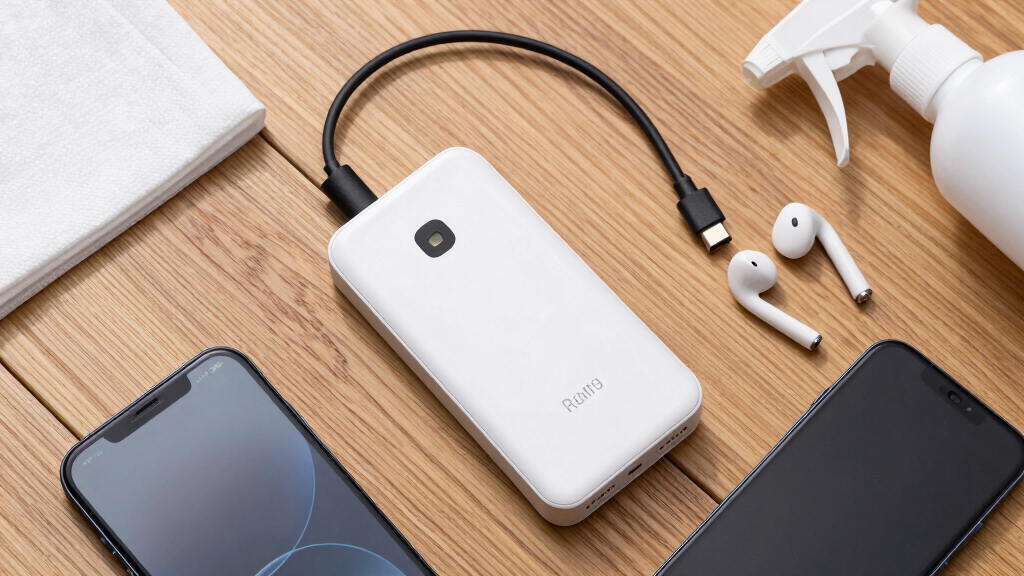

The Anker Nano 45W 10,000mAh is my best overall power bank because its retractable USB-C cable, useful charging speed, and portable capacity create the strongest everyday balance. The INIU 45W 10,000mAh is the better value choice, while the Anker Prime 26,250mAh 300W leads for premium multi-device charging. Choosing among the best power banks comes down to balancing capacity against weight, matching output to each device, and deciding whether built-in cables or wireless charging justify extra bulk. Phone users rarely need the size or expense of a 200W-plus model, while laptop owners may find a basic 10,000mAh pack too limited. Continue reading for my full breakdown of all 15 options and the buyer each one suits best.

Get cleaning gear delivered free with Prime
- Fast, free delivery on millions of items
- Prime Video, Amazon Music and more included
- Member-only deals all year
Complete the kit


Key Takeaways
- The Anker Nano 45W ranks first because it combines a practical 10,000mAh capacity with a retractable cable and more output than basic phone-focused packs.
- INIU offers the strongest value choices: its 45W 10,000mAh model competes closely with the Anker Nano, while its larger packs provide laptop-friendly capacity at less premium positioning.
- High wattage matters mainly for laptops and multi-device charging. The 220W and 300W Anker Prime models offer far more power than most phone buyers can use.
- Magnetic convenience carries a performance tradeoff. The Anker MagGo is slimmer and simpler for iPhone charging, but wired models charge faster and waste less energy.
- More capacity is not always better for travel. The 50,000mAh generic model offers the largest stated reserve, yet its size, uncertain support, and likely airline restrictions push it below the established 24,000mAh to 27,000mAh alternatives.
| Anker Nano Power Bank, 45W 10,000mAh Portable Charger with Built-In Retractable USB-C Cable |  | Best Overall Compact Power Bank | Capacity: 10,000mAh | Maximum output: 45W | Maximum input: 30W | VIEW LATEST PRICE | See Our Full Breakdown |
| INIU 45W Fast Charging Portable Charger, 10000mAh, Compact Travel Power Bank with Detachable USB-C Cable |  | Best Value Travel Pick | Capacity: 10,000mAh | Maximum output: 45W | Relative size: 40% smaller than conventional chargers | VIEW LATEST PRICE | See Our Full Breakdown |
| Anker MagGo Power Bank, 10,000mAh Slim Magnetic Battery Pack, Qi2 Certified 15W Fast Wireless Charger |  | Best Magnetic Power Bank | Capacity: 10,000mAh | Wireless standard: Qi2 certified | Wireless output: 15W | VIEW LATEST PRICE | See Our Full Breakdown |
| Anker Power Bank 10,000mAh Portable Charger with USB-C and PowerIQ |  | Best Slim Basic Pick | Capacity: 10,000mAh | Length: 5.99 inches | Width: 2.81 inches | VIEW LATEST PRICE | See Our Full Breakdown |
| INIU 140W Laptop Power Bank, 27000mAh Portable Charger with 3 Ports and Digital Display |  | Best for Laptop Charging | Capacity: 27,000mAh | Maximum output: 140W | Charging standard: PD 3.1 | VIEW LATEST PRICE | See Our Full Breakdown |
| Anker Zolo Power Bank (2025 Upgraded Version) |  | Best Everyday High-Capacity Pick | Capacity: 20,000mAh | Maximum Output: 30W | Maximum Input: 20W | VIEW LATEST PRICE | See Our Full Breakdown |
| Anker 737 Power Bank |  | Best for Charging Insight | Capacity: 24,000mAh | Maximum Output: 140W | Charging Standard: Power Delivery 3.1 | VIEW LATEST PRICE | See Our Full Breakdown |
| UGREEN Power Bank 25,000mAh 145W |  | Best Value for Laptop Charging | Capacity: 25,000mAh | Maximum Output: 145W | Charging Ports: 3 USB-C ports | VIEW LATEST PRICE | See Our Full Breakdown |
| Anker Prime Power Bank 20,100mAh 220W |  | Best High-Power Travel Pick | Capacity: 20,100mAh | Total Output: 220W | Maximum Fast Charging: 140W | VIEW LATEST PRICE | See Our Full Breakdown |
| UGREEN Nexode Power Bank 25,000mAh 200W |  | Best for Multi-Device Workstations | Capacity: 25,000mAh | Battery Energy: 90Wh | Total Output: 200W | VIEW LATEST PRICE | See Our Full Breakdown |
| Anker Zolo Magnetic Power Bank |  | Best Magnetic Pick with a Built-In Cable | Capacity: 10,000mAh | Wired charging power: 30W | Wireless charging power: 7.5W | VIEW LATEST PRICE | See Our Full Breakdown |
| INIU 20000mAh Portable Power Bank |  | Best Value for Multi-Day Phone Charging | Capacity: 20,000mAh | Maximum charging power: 22.5W | Port types: USB-C and USB-A | VIEW LATEST PRICE | See Our Full Breakdown |
| Anker Prime Power Bank 26,250mAh 300W |  | Best Premium Power Bank | Capacity: 26,250mAh | Energy rating: 99.75Wh | Maximum output: 300W | VIEW LATEST PRICE | See Our Full Breakdown |
| Portable Charger 50000mAh Power Bank |  | Best for Off-Grid Capacity | Capacity: 50,000mAh | Fast charging power: 22.5W PD and QC 4.0 | Connections: USB-C, USB-A, Micro USB, and built-in cables | VIEW LATEST PRICE | See Our Full Breakdown |
| Anker 25,000mAh Portable Laptop Power Bank |  | Best Laptop Power Bank for Travel | Capacity: 25,000mAh | Total output: 165W | USB-C connections: 3 | VIEW LATEST PRICE | See Our Full Breakdown |
| power bank | Capacity |
|---|---|
| Anker Nano Power Bank | 10,000mAh |
| INIU 45W Fast Charging Portabl | 10,000mAh |
| Anker MagGo Power Bank | 10,000mAh |
| Anker Power Bank 10,000mAh Por | 10,000mAh |
| INIU 140W Laptop Power Bank | 27,000mAh |
| Anker Zolo Power Bank | 20,000mAh |
| Anker 737 Power Bank | 24,000mAh |
| UGREEN Power Bank 25,000mAh 14 | 25,000mAh |
| Anker Prime Power Bank 20,100m | 20,100mAh |
| UGREEN Nexode Power Bank 25,00 | 25,000mAh |
| Anker Zolo Magnetic Power Bank | 10,000mAh |
| INIU 20000mAh Portable Power B | 20,000mAh |
| Anker Prime Power Bank 26,250m | 26,250mAh |
| Portable Charger 50000mAh Powe | 50,000mAh |
| Anker 25,000mAh Portable Lapto | 25,000mAh |
More Details on Our Top Picks
Anker Nano Power Bank, 45W 10,000mAh Portable Charger with Built-In Retractable USB-C Cable
I rank the Anker Nano Power Bank highest among these compact models because it combines 45W charging with a retractable USB-C cable that cannot be misplaced in a bag. It delivers the same stated wattage and capacity as the INIU 45W Fast Charging Portable Charger, but its integrated cable makes it the tidier everyday choice; the INIU counters with a detachable cable that is easier to replace. At 8.2 ounces, the Nano remains practical for commuting while offering enough power for phones, tablets, and some lighter USB-C devices. The compromise is endurance: 10,000mAh suits daily backup, not several days away from an outlet. Its roughly two-hour recharge also makes it less convenient than models that recover faster. I favor it for buyers who value portability and cable management over maximum capacity.
Pros:- 45W output can charge compatible phones and tablets faster than basic pocket power banks
- Retractable USB-C cable reduces packing clutter and cannot be easily lost
- 8.2-ounce body is manageable for everyday carry
- 30W input supports reasonably quick refilling
Cons:- 10,000mAh capacity is modest for tablets, laptops, or several days of use
- A damaged built-in cable is less easily replaced than INIU’s detachable cable
- Approximately two hours are needed to recharge the power bank
Best for: Commuters and frequent flyers who want 45W wired charging without carrying a separate USB-C cable
Not ideal for: Laptop-heavy travelers or multi-day campers who need more than 10,000mAh between outlet visits
- Capacity:10,000mAh
- Maximum output:45W
- Maximum input:30W
- Length:3.21 inches
- Width:1.99 inches
- Depth:1.42 inches
- Weight:8.2 oz
- Cable:Built-in retractable USB-C
Our verdict“I recommend this as the strongest compact all-rounder for buyers who prioritize fast wired charging and built-in cable convenience.”
INIU 45W Fast Charging Portable Charger, 10000mAh, Compact Travel Power Bank with Detachable USB-C Cable
The INIU 45W Fast Charging Portable Charger earns my value role by matching the Anker Nano’s 10,000mAh capacity and 45W ceiling while using a replaceable braided USB-C cable. That cable can serve other USB-C gear and is less troublesome if it wears out, although it lacks the Nano’s neat retractable storage. INIU describes the unit as 40% smaller and lighter than conventional chargers, which supports its travel focus, and its flight-safe design removes uncertainty at airport security. The capacity still limits it to emergency or daily charging rather than prolonged off-grid use, while the supplied 0.4-foot cable may feel restrictive beside a wall outlet. I place it below the Nano because cable management is less polished, but its practical versatility makes it a compelling pick for price-conscious travelers.
Pros:- 45W output is competitive with the higher-ranked Anker Nano
- Detachable braided cable can be replaced or used separately
- Compact design is suited to carry-on bags and daypacks
- TSA-compliant, flight-safe format supports air travel
Cons:- 10,000mAh provides limited reserve for tablets and other larger devices
- Loose cable is easier to misplace than the Anker Nano’s retractable lead
- Short 0.4-foot cable offers little reach during charging
Best for: Budget-minded travelers who want 45W charging and prefer a short, replaceable USB-C cable
Not ideal for: Buyers seeking multi-day capacity or a cable permanently integrated into the power bank
- Capacity:10,000mAh
- Maximum output:45W
- Relative size:40% smaller than conventional chargers
- Relative weight:40% lighter than conventional chargers
- Cable type:Detachable braided USB-C
- Cable length:0.4 ft
- Air-travel status:TSA-compliant and flight safe
Our verdict“I would choose this for affordable 45W travel charging when replaceable accessories matter more than integrated cable storage.”
Anker MagGo Power Bank, 10,000mAh Slim Magnetic Battery Pack, Qi2 Certified 15W Fast Wireless Charger
I give the Anker MagGo Power Bank the magnetic-charging role because its Qi2-certified pad delivers up to 15W wirelessly while retaining a 30W USB-C port. Compared with the Anker Nano, it lets compatible iPhone owners charge without a dangling cable and has a flatter 0.58-inch profile. The Nano remains faster over USB-C at 45W, however, and its retractable lead is more useful across a mixed collection of devices. MagGo’s stated capacity can provide up to 1.8 iPhone 15 Pro charges, making it suitable for a long day rather than a week away. Thermal insulation addresses heat management, but magnetic convenience is uneven outside the supported ecosystem: Android phones may require accessories, align poorly, or miss the full 15W rate. I rank it as the specialist choice for iPhone users, not the most flexible power bank here.
Pros:- Qi2-certified magnetic charging supplies up to 15W wirelessly
- 30W USB-C output gives buyers a faster wired alternative
- Slim 0.58-inch profile sits more neatly against a phone
- 10,000mAh capacity provides up to 1.8 stated iPhone 15 Pro charges
Cons:- Wireless output is slower than the Anker Nano’s 45W wired maximum
- Magnetic alignment and full charging speed are less dependable with Android devices
- Compatibility benefits are concentrated around a limited set of phones
Best for: iPhone 12 through 16 owners who want a slim, cable-free battery for long days away from a charger
Not ideal for: Android users or speed-focused buyers who cannot benefit fully from magnetic alignment and 15W Qi2 charging
- Capacity:10,000mAh
- Wireless standard:Qi2 certified
- Wireless output:15W
- USB-C output:30W
- Thickness:0.58 inches
- Width:2.78 inches
- Length:4.09 inches
- Compatibility:iPhone 12–16 series and Samsung S25 series
Our verdict“I recommend the MagGo to compatible iPhone owners who value magnetic freedom more than the fastest possible output.”
Anker Power Bank 10,000mAh Portable Charger with USB-C and PowerIQ
The Anker Power Bank 10,000mAh is my straightforward choice for buyers who want a familiar rectangular battery without an attached cable or magnetic system. Its 0.61-inch-thick body is easier to slide beside a phone than the chunkier Anker Nano, while the USB-C port handles both input and output. PowerIQ supplies high-speed charging, but no specific maximum wattage is provided here; shoppers who need a confirmed 45W rate have a clearer choice in the Nano or INIU 45W. The single listed USB-C connection also offers less flexibility than multi-port laptop banks. Drop-tested construction makes sense for daily bags, yet its 8.6-ounce weight is slightly higher than the more capable Nano’s 8.2 ounces. I rank this below the feature-rich compact picks because simplicity is its main advantage, and that comes with fewer stated charging capabilities.
Pros:- Slim 0.61-inch body fits easily into narrow bag compartments
- USB-C supports both charging the bank and powering a device
- PowerIQ provides high-speed charging for compatible hardware
- Drop-tested construction is suited to everyday transport
Cons:- No exact maximum charging wattage is supplied in the product data
- Single listed USB-C port limits simultaneous device charging
- Capacity may deliver fewer than two full charges for larger phones or devices
Best for: Phone users who want a slim, uncomplicated 10,000mAh battery with one USB-C connection for charging in either direction
Not ideal for: Power users who need a stated high-wattage output, several ports, or enough capacity for repeated device charges
- Capacity:10,000mAh
- Length:5.99 inches
- Width:2.81 inches
- Thickness:0.61 inches
- Weight:8.6 oz
- Port type:USB-C
- USB-C functions:Input and output
- Charging technology:PowerIQ
Our verdict“I would pick this for uncomplicated daily phone backup, while performance-focused buyers should choose a model with a stated 45W output.”
INIU 140W Laptop Power Bank, 27000mAh Portable Charger with 3 Ports and Digital Display
I reserve the laptop role for the INIU 140W Laptop Power Bank, whose 27,000mAh battery and 140W PD 3.1 output sit far above the four 10,000mAh models in this batch. Compared with the Anker MagGo, it sacrifices slim magnetic convenience for the ability to power demanding laptops, run three connections, and show live battery information on a digital display. Its second 45W USB-C port is useful when a laptop and phone need power together, while USB-A keeps older accessories relevant. The drawbacks follow directly from that capability: no dimensions or weight are supplied, so buyers cannot judge its bag burden from the listed data, and 27,000mAh will be less pocketable than the Anker Nano. Getting full speed also requires compatible PD 3.1 hardware and cables. I rank it as the performance pick for mobile work, not casual phone backup.
Pros:- 140W PD 3.1 output supports demanding compatible laptops
- 27,000mAh capacity provides far more reserve than the 10,000mAh picks
- Three ports can serve modern USB-C and older USB-A devices
- Digital display provides clearer battery monitoring than basic indicator lights
Cons:- Missing dimensions and weight make portability difficult to judge before purchase
- Full 140W performance depends on compatible PD 3.1 devices and cables
- Large capacity makes it less suitable for pockets and short daily outings
Best for: Remote workers and creators who need to charge a high-power USB-C laptop alongside phones or legacy USB-A accessories
Not ideal for: Light packers who only need phone backup and want verified dimensions, weight, or pocket-friendly portability
- Capacity:27,000mAh
- Maximum output:140W
- Charging standard:PD 3.1
- Port count:3
- Primary port:USB-C input/output
- Secondary USB-C output:45W
- Legacy port:USB-A
- Battery type:Li-polymer
- Display:Digital battery-status display
Our verdict“I recommend this to laptop-carrying professionals who need high output and several ports and can accept added bulk.”
Anker Zolo Power Bank (2025 Upgraded Version)
I rank the Anker Zolo Power Bank as the most practical high-capacity choice here for phone-focused buyers. Its 20,000mAh battery and built-in USB-C cable provide several phone charges without requiring a loose cable, while 30W output is quick enough for compatible phones and smaller tablets. Compared with the Anker 737, it is much lighter and easier to carry, but it lacks the 737’s laptop-ready 140W output. The cable’s rated resistance to more than 10,000 bends adds everyday durability, and ActiveShield 2.0 manages charging conditions. My main reservations are its 12.45-ounce weight and narrower usefulness for high-powered devices. Buyers carrying a laptop should move up the lineup; commuters wanting dependable phone power get the better balance here.
Pros:- 20,000mAh capacity supports multiple phone charges
- Built-in USB-C cable reduces travel clutter
- 30W output suits compatible phones and smaller tablets
- ActiveShield 2.0 provides intelligent power management
Cons:- 12.45-ounce body is heavy for pocket carry
- 30W output is inadequate for many laptops
- Device compatibility is narrower than that of the higher-powered alternatives
Best for: Phone-focused commuters and travelers who want several wired charges without carrying a separate USB-C cable
Not ideal for: Laptop users and ultralight travelers who need higher output or a power bank below 10 ounces
- Capacity:20,000mAh
- Maximum Output:30W
- Maximum Input:20W
- Built-in Cable:USB-C, 5.98 inches
- Weight:12.45 oz
- Dimensions:4.72 × 2.89 × 1.23 inches
Our verdict“This is my pick for buyers who value cable-free convenience and ample phone capacity more than laptop charging.”
Anker 737 Power Bank
The Anker 737 Power Bank earns its place through a useful combination of laptop-class charging and unusually clear feedback. Its smart display shows live charging information, making it easier for me to judge remaining runtime than with the screenless UGREEN 25,000mAh 145W model. A 140W Power Delivery 3.1 output can serve demanding laptops, while 24,000mAh offers more reserve than the 20,000mAh Anker Zolo. That visibility comes in a dense package: at 22 ounces, the 737 belongs in a backpack rather than a pocket. Reaching its advertised speed also depends on having both a 5A cable and a suitable 140W charger. I place it below newer multi-device powerhouses such as the Anker Prime 220W, but ahead for buyers who prioritize readable charging data and proven 140W delivery.
Pros:- 140W Power Delivery 3.1 supports demanding laptops
- Smart display provides real-time charging and battery data
- 24,000mAh capacity supplies substantial backup power
- TSA-friendly capacity suits air travel
Cons:- 22-ounce weight makes it cumbersome for daily light carry
- Full charging speed requires a 5A cable and 140W charger
- Lower total output than newer 200W-plus alternatives
Best for: Laptop users who want detailed real-time charging information and routinely carry their power bank in a backpack
Not ideal for: Minimalist travelers who lack a 140W charger and 5A cable or want a lightweight phone-only battery
- Capacity:24,000mAh
- Maximum Output:140W
- Charging Standard:Power Delivery 3.1
- Display:Smart digital display
- Weight:22 oz
- Dimensions:6.1 × 2.1 × 1.9 inches
- Travel Status:TSA-friendly
Our verdict“Choose the Anker 737 when a smart display and dependable 140W laptop charging matter more than low weight.”
UGREEN Power Bank 25,000mAh 145W
I give the UGREEN 25,000mAh 145W Power Bank the value role because it concentrates on capacity, laptop output, and three-device charging without making a display its main selling point. Its 25,000mAh capacity slightly exceeds the Anker 737’s 24,000mAh, and the 145W rating gives it comparable laptop ambitions. A two-hour recharge with a 65W charger also limits downtime between trips. The catch is that the required 65W charger is not included, and suitable cables are needed to reach the fastest rates. It is bulkier than phone-centered picks such as the Anker Zolo, while buyers who want live battery analytics may prefer the Anker 737 or UGREEN Nexode. For mixed laptop, tablet, phone, and gaming-console use, however, its broad compatibility and three USB-C ports make it the sensible workhorse.
Pros:- 25,000mAh capacity supports extended mixed-device use
- 145W output is suitable for compatible laptops
- Three USB-C ports support simultaneous charging
- Can recharge in two hours with a 65W charger
Cons:- 65W charger needed for the stated recharge time is not included
- Bulkier than 10,000mAh and 20,000mAh phone-focused models
- Fastest performance depends on correctly rated cables
Best for: Budget-conscious laptop owners who need high capacity and three USB-C connections for mixed-device travel
Not ideal for: Buyers who want a small pocket charger, an included 65W adapter, or a detailed status display
- Capacity:25,000mAh
- Maximum Output:145W
- Charging Ports:3 USB-C ports
- Recharge Time:2 hours with a 65W charger
- Computer Compatibility:MacBook and Dell XPS laptops
- Mobile Compatibility:iPhone, Galaxy, and tablets
- Gaming Compatibility:Gaming consoles
Our verdict“This UGREEN model makes the most sense for value-minded laptop users willing to supply their own charger and cables.”
Anker Prime Power Bank 20,100mAh 220W
The Anker Prime Power Bank ranks highest in this group for travelers who need serious multi-device output without moving to the larger 26,250mAh Anker Prime 300W. Its 220W combined output leaves more headroom than the UGREEN Nexode’s 200W, while one USB-C connection can deliver up to 140W to a compatible laptop. Rapid two-way charging can restore 50% in 25 minutes, a meaningful advantage during short airport stops, and the 90Wh-class travel category is represented here by TSA approval. Capacity is the compromise: 20,100mAh trails both UGREEN 25,000mAh models, so it favors speed over maximum runtime. The charging base costs extra, and rated performance depends on suitable cables and device support. I would choose it for fast turnaround and power sharing, not for the most watt-hours per trip.
Pros:- 220W total output supports multiple demanding devices
- Single-port charging reaches up to 140W
- Can recharge to 50% in 25 minutes
- TSA-approved capacity is suitable for air travel
Cons:- 20,100mAh capacity is lower than competing 25,000mAh models
- Charging base is sold separately
- Maximum speeds require compatible devices and properly rated cables
Best for: Frequent flyers and mobile professionals who need to fast-charge a laptop and additional devices during short stops
Not ideal for: Capacity-first buyers who prefer 25,000mAh or more and do not want to buy a separate charging base or rated cables
- Capacity:20,100mAh
- Total Output:220W
- Maximum Fast Charging:140W
- USB-C Ports:2
- USB-A Ports:1
- Recharge Speed:50% in 25 minutes
- Travel Status:TSA approved
Our verdict“Pick the Anker Prime 220W when rapid recharging and high shared output outweigh the appeal of a larger battery.”
UGREEN Nexode Power Bank 25,000mAh 200W
I place the UGREEN Nexode 25,000mAh 200W in the workstation role because its port allocation is built for powering several serious devices at once. USB-C1 reaches 140W for a laptop, USB-C2 offers up to 100W, and three ports share a 200W total ceiling. That arrangement is more flexible than the Anker 737’s 140W maximum, while the TFT display provides the live status missing from the cheaper UGREEN 145W model. Its 25,000mAh battery also favors longer sessions over the faster but smaller Anker Prime 20,100mAh. Portability is the price: this is described as heavy and bulky, making it a desk-to-bag option rather than casual pocket gear. Available product data also gives limited detail on safety certifications. I rank it for high-output visibility and simultaneous charging, with the Anker Prime 220W ahead for travel speed.
Pros:- 200W total output can serve several high-demand devices
- 140W and 100W USB-C outputs provide flexible laptop charging
- TFT display shows real-time battery and charging information
- 25,000mAh capacity supports longer multi-device sessions
Cons:- Heavy, bulky construction limits everyday portability
- Safety-certification details are limited in the supplied product information
- Total output is lower than the Anker Prime 220W
Best for: Mobile creators and hybrid workers who regularly charge a laptop, tablet, and phone from one monitored power source
Not ideal for: Pocket-first travelers or buyers who require clearly documented safety certifications before purchase
- Capacity:25,000mAh
- Battery Energy:90Wh
- Total Output:200W
- USB-C1 Output:140W
- USB-C2 Output:100W
- Charging Ports:3
- Display:TFT smart display
- Compatibility:MacBook Pro/Air, iPad, iPhone 17/16, Samsung S26, Dell, and HP
Our verdict“The Nexode is my choice for a portable three-device workstation where display detail and port flexibility justify extra bulk.”
Anker Zolo Magnetic Power Bank
I rank the Anker Zolo Magnetic Power Bank as the most flexible iPhone-focused option here because it combines magnetic charging, a stand, and a durable integrated USB-C cable. Its 30W wired output is the practical advantage: when speed matters, plugging in delivers far more power than its 7.5W wireless mode. The Anker MagGo Power Bank offers faster 15W Qi2 wireless charging, making that model better for buyers who rarely use cables. The Zolo answers back with greater charging flexibility and hands-free viewing without extra accessories. Its 10,000mAh capacity is easier to carry than the INIU 20,000mAh model, but it supplies fewer total charges. I would skip it for Android phones because the magnetic design favors compatible iPhones, and even iPhone owners must accept modest wireless speed.
Pros:- 30W wired charging provides a faster alternative to its wireless mode
- Built-in right-angle USB-C cable removes the need to pack a separate lead
- Adjustable stand supports hands-free viewing while charging
- 10,000mAh capacity balances useful backup power with portability
Cons:- 7.5W wireless output is half the speed offered by the Qi2-certified Anker MagGo
- Magnetic attachment is designed primarily for compatible iPhones
- 8.46-ounce weight is substantial for a phone-mounted battery
Best for: iPhone 12-17 owners who want magnetic charging, a viewing stand, and a built-in cable in one compact battery
Not ideal for: Android users and buyers who prioritize the fastest wireless charging, since magnetic compatibility is Apple-focused and wireless output stops at 7.5W
- Capacity:10,000mAh
- Wired charging power:30W
- Wireless charging power:7.5W
- Dimensions:4.15 × 2.72 × 0.81 inches
- Weight:8.46 oz
- Built-in cable:Right-angle USB-C, rated for over 10,000 bends
- Compatibility:iPhone 12-17 series and AirPods
Our verdict“This is my pick for iPhone owners who value cable-free convenience but still want a fast wired option ready when time is short.”
INIU 20000mAh Portable Power Bank
The INIU 20000mAh Portable Power Bank earns my value role by offering twice the stated capacity of the Anker Zolo Magnetic Power Bank without shifting toward laptop-grade pricing or power. Its 22.5W charging is sufficient for routine phone refills, while the detachable cable, USB-C and USB-A connections make it easier to share across older and newer devices. It cannot match the Anker 25,000mAh model’s 100W-per-port capability, so laptop users should spend more for that option. This INIU model instead suits travelers who want several phone charges, an LED readout, and flight-safe capacity in a smaller format. The tradeoff is density: a 20,000mAh battery will feel heavier than a typical 10,000mAh pack, and 22.5W becomes limiting with tablets or notebooks. I see the flashlight as useful backup rather than a reason to buy.
Pros:- 20,000mAh capacity supports multiple phone recharges
- 22.5W output is suitable for everyday fast phone charging
- USB-C and USB-A connections accommodate mixed-device kits
- Detachable cable, LED display, and flashlight add travel utility
Cons:- Output is too limited for practical fast charging of most laptops
- A 20,000mAh pack is heavier than compact 10,000mAh alternatives
- Three-year warranty is shorter than some buyers may expect for a high-use battery
Best for: Budget-minded travelers who need several phone charges, legacy USB-A support, and an airline-friendly battery
Not ideal for: Laptop users or ultralight packers, because 22.5W output is modest and the high-capacity cells add weight
- Capacity:20,000mAh
- Maximum charging power:22.5W
- Port types:USB-C and USB-A
- Cable:Detachable cable included
- Display:LED battery display
- Travel status:Flight-safe
- Color:Black
- Additional feature:Built-in flashlight
Our verdict“I recommend this model to phone-focused travelers who want more capacity per dollar and can accept extra weight and moderate charging speed.”
Anker Prime Power Bank 26,250mAh 300W
I place the Anker Prime Power Bank at the premium end because its 300W combined ceiling, 140W fast charging, and app-based monitoring target demanding multi-device setups rather than basic phone backup. Compared with the Anker 25,000mAh 165W model, it provides far more shared output and slightly greater capacity, making it better suited to charging a laptop alongside phones or other gear. Dual USB-C input can restore 50% in 13 minutes under the stated conditions, reducing downtime between heavy sessions. That performance comes with dependencies: buyers need suitable high-power cables, and the charging base costs extra. The three-port layout is also less expansive than the output figure may suggest. I rank it above lower-powered laptop banks for raw capability, but its premium hardware is excessive for anyone carrying only a phone or tablet.
Pros:- 300W maximum output supports demanding multi-device charging
- 26,250mAh capacity sits just below the stated 100Wh airline threshold
- Dual USB-C input can recharge the battery rapidly
- App control provides detailed charging management
Cons:- Charging base is not included
- Reaching advertised speeds depends on compatible high-power cables and devices
- Three ports may feel restrictive for a power bank built around very high shared output
Best for: Power users who travel with a high-performance laptop, phone, and additional USB device and want detailed charging control
Not ideal for: Phone-only buyers and shoppers without high-wattage cables, since much of the 300W capability would go unused
- Capacity:26,250mAh
- Energy rating:99.75Wh
- Maximum output:300W
- Fast charging power:140W
- Ports:Two USB-C and one USB-A
- Recharge performance:50% in 13 minutes with dual USB-C input
- Device management:App control
- Compatibility:MacBook Pro, iPhone 16/17 series, and other compatible devices
Our verdict“This is my premium choice for buyers who can make real use of 300W shared power and are willing to supply the right charging accessories.”
Portable Charger 50000mAh Power Bank
The defining reason I include this 50,000mAh power bank is endurance. Its stated capacity doubles the Anker 25,000mAh model’s figure, while built-in cables and extra ports allow as many as six devices to connect. That makes it the stronger choice for camping, outages, or group charging where wall access matters more than pack weight. It is not a better general travel bank: at roughly 185Wh by nominal calculation, it exceeds the usual 100Wh carry-on limit and is described as unsuitable for flights. Despite the large battery, 22.5W output is phone-class rather than laptop-class, especially when several devices share power. The 1.1-pound body also belongs in a bag, not a pocket. Compared with the Anker Prime 300W, this model favors runtime and connection convenience over high-power performance, brand-specific app controls, and rapid turnaround.
Pros:- 50,000mAh stated capacity is suited to extended off-grid phone charging
- Built-in cables reduce the number of accessories needed
- Supports connections for up to six devices
- Digital display makes remaining charge easier to track
Cons:- Capacity is above standard airline carry-on limits
- 22.5W output is low relative to the battery size and unsuitable for many laptops
- 1.1-pound weight and 1.1-inch thickness make pocket carry impractical
Best for: Campers, emergency-kit owners, and groups who need many phone charges away from mains power and are not flying
Not ideal for: Air travelers, pocket carry, and laptop users, because the battery exceeds standard flight limits and output is capped at 22.5W
- Capacity:50,000mAh
- Fast charging power:22.5W PD and QC 4.0
- Connections:USB-C, USB-A, Micro USB, and built-in cables
- Simultaneous device support:Up to 6 devices
- Dimensions:5.6 × 2.9 × 1.1 inches
- Weight:1.1 lbs
- Display:Digital battery display
- Compatibility:iPhone, iPad, Samsung, Google Pixel, Switch, and Android devices
Our verdict“I would choose this for ground-based trips or emergency storage where maximum runtime matters more than flight access, speed, or pocketability.”
Anker 25,000mAh Portable Laptop Power Bank
I give the Anker 25,000mAh Portable Laptop Power Bank the travel-laptop role because it pairs 165W shared output with two integrated USB-C cables, including a retractable lead and a cable that doubles as a strap. Compared with the 300W Anker Prime, it sacrifices peak output and app control for simpler cable management and a lower stated capacity that remains within the 100Wh airline boundary. Each of its three USB-C connections can deliver up to 100W, so it suits many laptops while leaving room to charge a phone or tablet. The 165W total means those ports cannot all sustain 100W simultaneously, and buyers need a 100W-or-higher wall charger for fast refills. It also cannot serve very high-draw machines as confidently as the Prime. For mainstream laptop travel, though, I find its balance of power and convenience more persuasive.
Pros:- 165W total output can charge a laptop and mobile devices together
- Three USB-C connections each support up to 100W
- Two built-in USB-C cables simplify travel packing
- 25,000mAh capacity stays within the stated airline-friendly 100Wh limit
Cons:- 165W shared output prevents all three USB-C connections from delivering 100W at once
- 100W-or-higher wall charger is needed for fast recharging and is not included
- Less suitable than the 300W Anker Prime for multiple high-draw devices
Best for: Frequent flyers carrying a USB-C laptop, phone, and tablet who want high output without packing separate charging cables
Not ideal for: Owners of very high-power laptops or buyers lacking a 100W wall charger, since total output is 165W and the charger is sold separately
- Capacity:25,000mAh
- Total output:165W
- USB-C connections:3
- Maximum output per USB-C connection:100W
- Built-in cables:Two USB-C cables
- Cable designs:One retractable cable and one durable strap cable
- Recommended recharge adapter:100W or higher
- Airline capacity class:Within 100Wh restriction
Our verdict“This is my travel pick for USB-C laptop owners who want strong multi-device charging and built-in cables without crossing the airline capacity boundary.”
How We Picked
I ranked these power banks by how well they balance usable capacity, charging output, portability, and connection design. A higher wattage or larger battery did not automatically earn a higher position. I gave more weight to models that fit common daily needs without adding unnecessary size, and I compared built-in cables, detachable cables, magnetic charging, port selection, displays, and stands by the friction they remove for a buyer. I also treated wireless output separately from wired output because the two methods differ in speed, heat, and energy efficiency.
My ranking places versatile everyday models first, followed by options with a clear advantage for value, magnetic charging, long trips, or laptops. Premium units earned their positions through high simultaneous output, detailed battery information, and broader device support, but I marked them down when their price and weight exceeded what phone users need. I also factored in brand support, specification clarity, airline practicality, and accessory dependence. Generic high-capacity packs rank lower because a large printed capacity cannot offset weaker confidence in cell quality, warranty service, or safety documentation.
Factors to Consider When Choosing Best Power Banks
I recommend choosing a power bank around the devices and situations it will actually serve, rather than buying the largest number printed on the case. The right match comes from combining battery capacity, USB-C output, physical size, and travel rules. These five factors help separate useful extra capability from weight and cost that may sit unused.
Match Capacity to a Real Charging Routine
Capacity measured in milliamp-hours is useful for comparison, but it does not equal the amount delivered to a phone or laptop. Conversion losses, cable resistance, and battery management mean a 10,000mAh pack will not provide its full labeled capacity at the device. I see 10,000mAh as the practical range for daily phone charging, while 20,000mAh better suits weekends, heavy use, or multiple devices. Packs around 25,000mAh to 27,000mAh make more sense when a laptop is part of the plan. A 50,000mAh model adds substantial weight and may create airline problems without offering much benefit during an ordinary day. The common mistake is buying excess capacity and then leaving the power bank at home because it is too bulky.
Choose Output for the Most Demanding Device
Charging wattage sets the ceiling, but the connected device decides how much power it accepts. A 30W to 45W USB-C output covers phones, tablets, handheld consoles, and some lightweight laptops, making it a flexible everyday range. Larger notebooks may need 65W, 100W, or more to charge reliably while running. Ratings above 140W become most useful when charging several devices together, since the advertised total is usually divided across ports. I recommend checking the output available from each individual port and the power split with two or three devices attached. Paying for 200W or 300W brings little value if the pack will spend its life charging one phone.
Understand Built-In Cable Tradeoffs
A built-in cable reduces the chance of reaching for a power bank and discovering the charging lead is missing. Retractable designs keep that convenience tidier, while detachable cables are easier to replace if damaged. The drawback is that a fixed cable can become the pack’s weakest component, especially when it doubles as a carrying loop. I favor models that retain at least one standard USB-C port so the battery remains useful if the attached lead fails. Buyers who change devices often may prefer separate cables because connector needs can evolve before the battery wears out. For travel, an integrated cable has greater value because it reduces the number of loose items packed.
Decide Whether Wireless Charging Earns Its Space
Magnetic wireless power banks remove cable clutter and can keep an iPhone usable while attached. Qi2 support is the better target for compatible phones because it provides aligned 15W magnetic charging rather than relying on loose positioning. Wireless charging still loses more energy as heat, so a 10,000mAh magnetic pack usually delivers fewer full charges than a wired pack with the same rating. Cases, camera bumps, and magnetic strength can also affect how securely the battery sits. A stand adds value at a desk or hotel, but it adds thickness for pocket carry. I recommend magnetic models for convenience-led buyers and wired models for anyone prioritizing speed, cooler operation, or maximum usable energy.
Check Airline Limits and Battery Documentation
Airlines regulate power banks by watt-hours, not just milliamp-hours, and the battery normally must travel in carry-on luggage. Many 25,000mAh to 27,000mAh packs are designed to remain below the common 100Wh threshold, but I would verify the Wh rating printed on the product before packing. A 50,000mAh pack will often exceed that threshold and may require approval or be prohibited, depending on its rated voltage and the carrier’s rules. Clear labeling matters because airport staff may reject a battery whose capacity cannot be confirmed. I would also protect exposed ports and keep the pack accessible rather than burying it inside a bag. Travelers should check their airline’s current policy before departure because enforcement and approval procedures can differ.
Frequently Asked Questions
Is a 10,000mAh or 20,000mAh Power Bank Better for Everyday Use?
I recommend 10,000mAh for everyday phone charging because it offers a useful reserve without becoming burdensome in a pocket or small bag. A 20,000mAh model is better for several devices, long weekends, or users who regularly drain a phone more than once. The larger pack will take longer to recharge and may weigh close to twice as much. Capacity losses also mean neither size delivers every labeled milliamp-hour to a device. If portability decides whether the battery gets carried at all, the smaller model is the smarter purchase.
How Much Charging Power Does My Laptop Need?
I would start with the wattage printed on the laptop’s original USB-C charger. Thin laptops may work well with 45W or 65W, while larger productivity and gaming models can require 100W or more. A lower-output pack may still charge a sleeping laptop but lose ground while the computer is under load. The cable must also support the requested wattage, since an under-specced cable can limit an otherwise capable battery. For charging a laptop and phone together, choose a pack whose multi-port power allocation leaves enough output for the computer.
Is a Magnetic Power Bank Better Than a Wired Model?
A magnetic model is better when attachment convenience and cable-free use matter more than efficiency. It can be particularly handy for commuting, video calls, or using a phone as a bedside display. Wired charging is usually faster, produces less heat, and extracts more usable energy from the same battery capacity. Magnetic compatibility also depends on the phone, case, and alignment standard. I would choose the Anker MagGo for a compatible iPhone-focused setup, but the Anker Nano or INIU 45W makes more sense for mixed devices.
Can I Take a 25,000mAh or 50,000mAh Power Bank on a Plane?
Many 25,000mAh power banks fall below 100Wh and can travel in carry-on luggage, provided their rating is clearly marked. A 50,000mAh pack commonly exceeds 100Wh, which can trigger airline approval requirements or a ban. Milliamp-hours alone do not settle the question because watt-hours also depend on the battery’s nominal voltage. Power banks generally cannot go in checked baggage, and terminals should be protected from short circuits. I recommend checking the printed Wh figure against the airline’s current policy before every trip.
When Is a Premium 200W or 300W Power Bank Worth the Cost?
A premium high-output pack makes sense for someone who regularly charges multiple laptops, tablets, or other demanding USB-C devices away from an outlet. These models can also justify their price through better displays, power-allocation data, app features, and faster input charging. A phone-only buyer will see little practical gain because the phone limits the power it accepts. High-output batteries are heavier, costlier, and may require a high-wattage wall charger purchased separately. I would pay the premium for mobile workstation use, not as insurance against an occasional low phone battery.
Conclusion
For most buyers, my best overall recommendation is the Anker Nano 45W 10,000mAh because it combines useful speed, manageable size, and a retractable cable without moving into laptop-bank bulk. The INIU 45W 10,000mAh is my best value pick for shoppers who want similar everyday capability with a detachable cable, while the basic Anker 10,000mAh PowerIQ model is the easiest starting point for beginners with modest charging needs. For premium buyers and multi-device professionals, the Anker Prime 26,250mAh 300W offers the broadest power ceiling; laptop users seeking a more balanced package should choose the Anker 25,000mAh 165W model with built-in cables. The Anker MagGo 10,000mAh is my choice for slim Qi2 magnetic charging, and the Anker Zolo Magnetic adds a cable and stand for buyers who favor versatility over thinness. For extended trips, I would choose the INIU 27,000mAh 140W, Anker 737, or UGREEN 25,000mAh models before the generic 50,000mAh pack, since their capacity, output, and travel practicality form a more convincing balance.
Halloween Picks
halloween
As an affiliate, we earn on qualifying purchases.