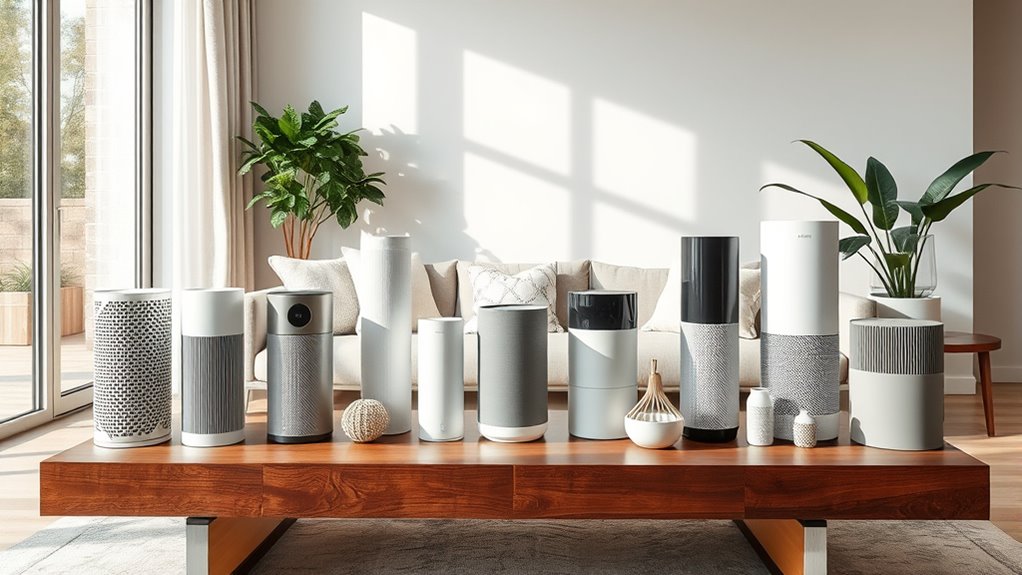
Formaldehyde is a persistent indoor pollutant, often off-gassing from furniture, flooring, and cleaning products, making standard HEPA filters insufficient on their own. The Dyson Purifier Cool Formaldehyde TP09 stands out as the best overall choice because it actively destroys formaldehyde rather than just trapping it, using a catalytic filter that regenerates itself. For those facing severe chemical sensitivity or larger industrial spaces, the IQAir GC MultiGas XE offers superior carbon filtration capacity, though it comes with a higher maintenance cost. The primary tradeoff in this category is between active destruction technology, which is convenient but often pricier, and heavy-duty activated carbon, which is highly effective but requires frequent filter replacements. Keep reading to see which model aligns with your specific air quality needs and budget constraints.

Get cleaning gear delivered free with Prime
- Fast, free delivery on millions of items
- Prime Video, Amazon Music and more included
- Member-only deals all year
Complete the kit


Key Takeaways
- Catalytic oxidation filters, like those in Dyson models, eliminate formaldehyde permanently without filter replacement, unlike traditional carbon filters that saturate over time.
- Activated carbon weight directly correlates with formaldehyde removal speed; models with less than 2 pounds of carbon struggle with high-concentration sources.
- Smart sensors for formaldehyde are rare and often inaccurate; relying on PM2.5 sensors combined with known chemical sources is a more practical approach for most users.
- CADR ratings for gaseous pollutants (including formaldehyde) are not standardized like particle CADR, making brand-specific technical data more reliable than generic marketing claims.
- Ozone generation is a risk with some ionizing air purifiers; CARB certification is a non-negotiable requirement for anyone using these devices in California or seeking guaranteed safety.
| Dyson Purifier Cool Formaldehyde TP09 Air Purifier and Fan |  | Best Overall for Active Formaldehyde Control | Formaldehyde control: Detects and continuously destroys formaldehyde | Particle filtration: HEPA captures 99.97% of pollutants as small as 0.3 microns | Oscillation: 0 to 350 degrees | VIEW ON AMAZON | See Our Full Breakdown |
| Daikin MCB50YSAU Room Air Purifier for Home |  | Best for Smaller Rooms and Straightforward Filtration | Room coverage: 245 sq ft at 4.8 air exchanges per hour | Filtration stages: Pre-filter, HEPA, activated carbon, and UVC LED | Noise: As low as 21 dB in Quiet mode | VIEW ON AMAZON | See Our Full Breakdown |
| Airpura C700 DLX Air Purifier, Black |  | Best for Large Spaces with Heavy Chemical-Filter Capacity | Coverage area: Up to 2,000 sq ft | Airflow: 635 CFM | Activated carbon filter weight: 26 lb | VIEW ON AMAZON | See Our Full Breakdown |
| AirDoctor AD3500 Air Purifier |  | Best for Large-Room Particle Capture and Automatic Monitoring | Coverage: 630 sq ft in 15 minutes; up to 2,520 sq ft in 1 hour | Filtration: 3-stage: pre-filter, premium activated carbon, and UltraHEPA | Particle capture: 99.99% at 0.003 microns | VIEW ON AMAZON | See Our Full Breakdown |
| AirHub Large Room Air Purifier for Home and Bedroom |  | Best Feature-Rich Pick for Bedrooms | Coverage area: Up to 1,092 sq ft | Air changes: 4.8 ACH in a 209 sq ft room | Filtration system: 3-stage: pre-filter, True HEPA, and activated carbon | VIEW ON AMAZON | See Our Full Breakdown |
| AROEVE Air Purifier with Air Quality Indicator and Auto Mode |  | Best for Large Open Spaces | Coverage Area: 1,504 sq ft | CADR: 176 CFM / 300 m³/h | Noise Level: 23 dB | VIEW ON AMAZON | See Our Full Breakdown |
| Dyson Purifier Hot+Cool HP2 De-NOx | 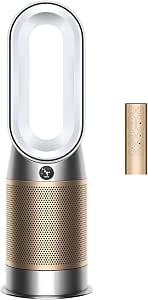 | Best Premium Multi-Function Unit | Floor Area: 109 square feet | Filter Type: HEPA H13, Catalytic | Particle Retention: 0.3 microns | VIEW ON AMAZON | See Our Full Breakdown |
| Clorox Medium Room Air Purifier with True HEPA Filter |  | Best for Allergen Control | Coverage: Up to 1,000 sq. ft. (1x per hour) | Filtration: True HEPA, activated carbon, pre-filter | Filter Lifespan: 6-12 months | VIEW ON AMAZON | See Our Full Breakdown |
| Wyze Smart Air Purifier with Formaldehyde Filter |  | Best Customizable Filtration | Coverage: 500 ft² | CADR: 350 m³/h | Filter Options: Standard, Special, Premium | VIEW ON AMAZON | See Our Full Breakdown |
| Levoit Core 300 Air Purifier for Home Allergies and Pets |  | Best Budget Starter | Room Size: 222 sq ft | CADR: 143 CFM (smoke), 153 CFM (dust) | Noise Level: 24dB in Sleep Mode | VIEW ON AMAZON | See Our Full Breakdown |
| Dyson Purifier Big+Quiet Formaldehyde BP03 |  | Best Premium Whole-Room Projection | Model: BP03 | Filtration Grade: HEPA H13 | Particle Capture Rate: 99.97% of fine particles | VIEW ON AMAZON | See Our Full Breakdown |
| Honeywell HEPA Air Purifier for Large Rooms up to 1700 sq ft, Black |  | Best High-Capacity Value | Room Size: 1700 sq ft | Filtration: HEPA, activated carbon pre-filter | Cleaning Levels: 4 including Turbo Clean | VIEW ON AMAZON | See Our Full Breakdown |
| Levoit Vital 200S-P Smart Air Purifier for Large Rooms up to 1875 sq ft |  | Best for Allergy and Pet Owners | Coverage Area: Up to 1875 sq ft | Certification: AHAM Verified | Target Pollutants: Pollen, pet dander, dust, odors | VIEW ON AMAZON | See Our Full Breakdown |
| IQAir GC MultiGas XE Air Purifier with Activated Carbon and Wi-Fi |  | Best for Heavy Gas and VOC Control | Coverage Area: Up to 1,125 sq ft | Filtration: HyperHEPA, activated carbon, gas cartridges | Connectivity: Wi-Fi; IQAir AirVisual app | VIEW ON AMAZON | See Our Full Breakdown |
More Details on Our Top Picks
Dyson Purifier Cool Formaldehyde TP09 Air Purifier and Fan
The TP09 earns my lead spot because its formaldehyde feature goes beyond general odor and particle filtration: it detects and continuously destroys formaldehyde. That makes its approach more directly suited to this roundup than the Daikin MCB50YSAU, whose listed filtration includes activated carbon and UVC but no formaldehyde-specific detection or destruction claim. The TP09 also pairs HEPA particle capture with a fan, cooling modes, broad oscillation, and app control, so it can serve as a year-round room appliance rather than a purifier alone. The tradeoff is that its connected features depend on a compatible device and network, and replacement filters remain part of ownership. Choose it for targeted formaldehyde handling and added airflow; skip it if you mainly want a straightforward purifier without app features or fan functions.
Pros:- Detects and continuously destroys formaldehyde, a direct match for this roundup
- HEPA filter captures 99.97% of particles as small as 0.3 microns
- Combines purification with fan, cooling, and up to 350-degree oscillation
- Offers night mode and app control
Cons:- App features require a compatible device and network connection
- Replacement filters are required
- Its fan and connected features may be unnecessary for buyers seeking a basic purifier
Best for: Households seeking formaldehyde-specific detection and destruction alongside particle filtration and fan-style airflow.
Not ideal for: Buyers who want a simple purifier without connected controls, or who do not need its fan and cooling functions.
- Formaldehyde control:Detects and continuously destroys formaldehyde
- Particle filtration:HEPA captures 99.97% of pollutants as small as 0.3 microns
- Oscillation:0 to 350 degrees
- Noise:20% quieter than the previous model
- Timer:30 minutes to 8 hours
- Connectivity:MyDyson app via Wi-Fi or mobile data and Bluetooth 4.0
Our verdict“Choose the TP09 if formaldehyde-specific treatment and fan functionality matter more than keeping the setup simple.”
Daikin MCB50YSAU Room Air Purifier for Home
The Daikin MCB50YSAU is my pick for a smaller room where quiet operation and a clear, conventional filter stack matter more than formaldehyde-specific technology. Its pre-filter, HEPA, activated carbon, and UVC LED stages cover particles, odors, and biological contaminants, while the listed zero-ozone certification adds useful context for buyers weighing UVC-equipped units. Against the Dyson TP09, though, Daikin does not claim to detect or destroy formaldehyde; its activated carbon stage is the relevant listed component for odors and gases, not a stated formaldehyde treatment system. The 245-square-foot coverage also makes it a more room-specific choice than the large-area AirDoctor AD3500. Its quiet mode and easy filter access suit bedroom or office use, but buyers needing smart controls or broader coverage should look elsewhere.
Pros:- Combines pre-filter, HEPA, activated carbon, and UVC LED stages
- Quiet mode operates as low as 21 dB
- AHAM Verified, CARB Certified, and Zero Ozone Product Certified
- Side handles and simple filter replacement support easier placement and upkeep
Cons:- Coverage is limited to rooms up to 245 square feet
- No formaldehyde-specific detection or destruction claim is listed
- No smart connectivity features are specified
Best for: People furnishing a bedroom, office, or other room up to 245 square feet who want multi-stage filtration and quiet operation.
Not ideal for: Buyers seeking formaldehyde-specific detection or destruction, app controls, or one purifier for a large open-plan space.
- Room coverage:245 sq ft at 4.8 air exchanges per hour
- Filtration stages:Pre-filter, HEPA, activated carbon, and UVC LED
- Noise:As low as 21 dB in Quiet mode
- Fan speeds:4
- Certifications:AHAM Verified, CARB Certified, Zero Ozone Product Certified
- Dimensions:10.5 x 10.5 x 19.5 inches
Our verdict“Choose Daikin for quiet, certified multi-stage filtration in a modest-sized room, not for targeted formaldehyde treatment.”
Airpura C700 DLX Air Purifier, Black
For a large home, office, or facility where chemical and odor filtration is the priority, the Airpura C700 DLX stands apart through its 26-pound activated carbon filter and stated coverage of up to 2,000 square feet. That gives it a different role from the Daikin MCB50YSAU, which is sized for a single room, and from the Dyson TP09, which makes a more specific claim about detecting and destroying formaldehyde. Airpura’s supplied data describes chemical filtration but does not specify a formaldehyde detection or destruction function, so I would not treat the carbon load as equivalent to that targeted claim. Its 635 CFM airflow supports a much larger footprint, but high speed reaches 63 dB, and the unit is heavy. Filter upkeep also differs: the HEPA filter is listed for replacement every 12 months.
Pros:- Large stated coverage area of up to 2,000 square feet
- 26-pound activated carbon filter is geared toward chemical and odor filtration
- 635 CFM airflow
- Low-speed noise is listed at 30.2 dB
Cons:- No formaldehyde-specific detection or destruction claim is provided
- High-speed noise reaches 63 dB
- Large carbon capacity makes the unit heavy, and the HEPA filter is listed for annual replacement
Best for: Owners of large homes, offices, or facilities prioritizing substantial activated-carbon capacity for chemical and odor filtration.
Not ideal for: Buyers who need formaldehyde-specific detection or destruction, a lightweight unit, or quiet operation at high fan speed.
- Coverage area:Up to 2,000 sq ft
- Airflow:635 CFM
- Activated carbon filter weight:26 lb
- Particle filtration:HEPA Barrier captures 95% of airborne particles at 1 micron or larger
- Noise:30.2 dB on low to 63.0 dB on high
- Carbon filter replacement:24 months
- HEPA filter replacement:12 months
- Ozone emissions:None
Our verdict“Pick the C700 DLX for a large space and substantial carbon filtration, but choose the Dyson TP09 if explicit formaldehyde treatment is your priority.”
AirDoctor AD3500 Air Purifier
The AirDoctor AD3500 is the strongest fit here for buyers who want large-area particle filtration with automatic air-quality response. Its UltraHEPA specification lists capture down to 0.003 microns, while a PM2.5 sensor and auto mode can adjust fan speed as conditions change. Compared with the Airpura C700 DLX, the AD3500 provides a much finer stated particle-capture threshold and real-time monitoring; Airpura instead emphasizes its heavy carbon load and broad chemical-filtration role. AirDoctor includes premium activated carbon for gases, odors, and VOCs, but the supplied details do not claim formaldehyde detection or destruction, unlike the Dyson TP09. Coverage figures also describe different run times: 630 square feet in 15 minutes or up to 2,520 square feet in an hour. Factor in regular filter changes and the recommendation to use genuine replacements.
Pros:- UltraHEPA filtration is specified to capture 99.99% of particles at 0.003 microns
- PM2.5 monitoring and auto mode adjust fan speed to changing readings
- Coverage is listed as 630 sq ft in 15 minutes or up to 2,520 sq ft in one hour
- Activated carbon filter targets gases, odors, and VOCs
Cons:- No formaldehyde-specific detection or destruction claim is listed
- Carbon filters require replacement every 6 months and UltraHEPA filters every 12 months
- Manufacturer recommends genuine replacement filters
Best for: Households with large living areas that want fine particle filtration, PM2.5 monitoring, and automatic fan adjustment.
Not ideal for: Buyers whose main requirement is a stated formaldehyde-specific detection and destruction system, or who want minimal filter upkeep.
- Coverage:630 sq ft in 15 minutes; up to 2,520 sq ft in 1 hour
- Filtration:3-stage: pre-filter, premium activated carbon, and UltraHEPA
- Particle capture:99.99% at 0.003 microns
- Sensor:Real-time PM2.5 monitoring
- Fan speeds:4
- Carbon filter replacement:Every 6 months
- UltraHEPA filter replacement:Every 12 months
- Eligibility:FSA and HSA eligible
Our verdict“Choose the AD3500 for large-room particle capture and automatic monitoring, but favor the Dyson TP09 for explicit formaldehyde destruction.”
AirHub Large Room Air Purifier for Home and Bedroom
The AirHub suits buyers who want broad stated coverage and bedroom-friendly controls in one unit. It combines a pre-filter, True HEPA, and activated carbon with auto mode, a PM2.5 sensor, child lock, filter-life indicator, and a sleep mode rated at 20 dB. Its included replacement filters—two pre-filters and two HEPA-and-carbon filters—also give buyers a supplied spare set, unlike the AirDoctor AD3500, whose listed filter schedule calls for recurring replacements. The distinction for this formaldehyde roundup is that AirHub’s carbon stage is not described as detecting or destroying formaldehyde; the Dyson TP09 makes that specific claim. AirHub is therefore better framed as a general particle-and-odor purifier than a targeted formaldehyde device. The feature set and aroma diffuser slot may appeal to some households but add complexity for anyone who only wants basic filtration.
Pros:- Rated for spaces up to 1,092 square feet, with 4.8 air changes per hour in a 209-square-foot room
- 20 dB sleep mode suits noise-sensitive bedroom use
- Auto mode, PM2.5 sensor, filter-life indicator, and child lock add day-to-day controls
- Package includes two pre-filters and two HEPA-and-activated-carbon filters
Cons:- No formaldehyde-specific detection or destruction claim is provided
- Filters still need regular replacement
- Multiple controls and the aroma diffuser slot may be unnecessary for buyers wanting basic operation
Best for: Bedroom and living-room users who want quiet sleep operation, automatic monitoring, a child lock, and included spare filters.
Not ideal for: Buyers who require a formaldehyde-specific treatment claim, or who prefer a simple purifier with few settings and accessories.
- Coverage area:Up to 1,092 sq ft
- Air changes:4.8 ACH in a 209 sq ft room
- Filtration system:3-stage: pre-filter, True HEPA, and activated carbon
- Sleep-mode noise:20 dB
- Power consumption:24 W
- Controls and indicators:Auto mode, PM2.5 sensor, filter-life indicator, and child lock
- Certifications:AHAM, CE, RoHS, CARB, FCC, and ETL
- Package filters:2 pre-filters and 2 HEPA-and-activated-carbon filters
- Warranty:10-year industry-leading warranty
Our verdict“Choose AirHub for quiet bedroom use and bundled filter spares, not as a substitute for the Dyson TP09’s formaldehyde-specific system.”
AROEVE Air Purifier with Air Quality Indicator and Auto Mode
The AROEVE MK07 stands out for its exceptional coverage area of 1,504 sq ft, making it a rare choice that handles entire open-concept floors without needing multiple units. While its activated carbon filter addresses odors and some gases, it lacks the dedicated catalytic formaldehyde destruction found in the Dyson Purifier Hot+Cool HP2. This model relies on adsorption rather than decomposition, meaning the carbon filter saturates faster and requires regular replacement. The real-time air quality indicator is a practical feature for large rooms where invisible pollutants accumulate. However, the non-washable filters create ongoing maintenance costs that can outweigh the initial savings over several years.
Pros:- Massive 1,504 sq ft coverage area eliminates need for multiple units
- Real-time air quality sensor with auto mode adjusts fan speed automatically
- Whisper-quiet 23 dB operation suitable for sleeping environments
Cons:- Activated carbon filters saturate quickly and require replacement every 4-8 months
- Lacks dedicated catalytic formaldehyde destruction, relying only on adsorption
- Ongoing filter costs may exceed cheaper models over 3-5 years
Best for: Owners of large, open-plan living areas who need broad coverage and basic gas/odor reduction without complex smart home integration.
Not ideal for: Buyers in small bedrooms who don’t need 1,500 sq ft of capacity, or those seeking permanent formaldehyde destruction technology.
- Coverage Area:1,504 sq ft
- CADR:176 CFM / 300 m³/h
- Noise Level:23 dB
- Filter Type:Activated carbon, pre-filter
- Filter Lifespan:4-8 months
- Control Features:Smart sensors, Auto Mode, UV protection
Our verdict“Choose this if you have a large open space and accept recurring filter costs for broad coverage.”
Dyson Purifier Hot+Cool HP2 De-NOx
The Dyson Purifier Hot+Cool HP2 is not just an air purifier; it is a whole-room heating and cooling system that happens to destroy formaldehyde. Unlike the Wyze Smart Air Purifier, which focuses solely on filtration, the Dyson uses a sealed HEPA H13 system and a catalytic filter that breaks down formaldehyde continuously, preventing filter saturation. This technology ensures long-term performance without replacing the formaldehyde filter. The 350° oscillation and MyDyson app integration provide superior control, but the 109 sq ft effective purification zone is surprisingly modest for its size. It is an investment for those who want to replace fans and heaters, not just a purifier.
Pros:- Catalytic filter continuously destroys formaldehyde without needing replacement
- Combines air purification, heating, and cooling in one sleek design
- Sealed HEPA H13 system captures 99.97% of particles down to 0.3 microns
Cons:- Limited 109 sq ft purification footprint despite large physical size
- Fan-based cooling is not equivalent to air conditioning
- Requires compatible devices and internet for full app functionality
Best for: Tech-savvy users who want to consolidate heating, cooling, and formaldehyde destruction into one premium device.
Not ideal for: Buyers who only need air purification and don’t want to pay for unused heating/cooling features or limited room coverage.
- Floor Area:109 square feet
- Filter Type:HEPA H13, Catalytic
- Particle Retention:0.3 microns
- Dimensions:6.1 x 8.66 x 36.34 inches
- Weight:12.2 pounds
- Oscillation:Up to 350°
- Certifications:CARB Certified, EPA Certified
Our verdict“Ideal for those replacing multiple appliances who prioritize permanent formaldehyde destruction over maximum coverage.”
Clorox Medium Room Air Purifier with True HEPA Filter
The Clorox Medium Room Air Purifier excels at capturing allergens and viruses with its 3-stage 360° filtration, but its approach to formaldehyde is less specialized than the Wyze Smart Air Purifier, which offers a dedicated premium filter. Clorox uses a standard activated carbon filter that adsorbs gases, which works for moderate formaldehyde levels but requires frequent replacement every 6-12 months. The 360° airflow is advantageous for placement in the center of a medium room, unlike directional units. It is a solid choice for households concerned with biological contaminants, but those with heavy off-gassing from new furniture may find the carbon capacity insufficient compared to models with higher CADR ratings for gases.
Pros:- 360° intake design allows flexible placement in any room layout
- Captures 99.9% of viruses and 99.97% of allergens
- Automatic fan adjustment based on real-time PM2.5 readings
Cons:- Standard carbon filter has limited capacity for high formaldehyde loads
- Filter replacement every 6-12 months adds maintenance hassle
- Coverage limited to 1,000 sq ft at single air change per hour
Best for: Households focused on reducing allergens, viruses, and bacteria in medium-sized rooms.
Not ideal for: Users with severe formaldehyde concerns from new construction, who need higher gas CADR or longer-lasting carbon filters.
- Coverage:Up to 1,000 sq. ft. (1x per hour)
- Filtration:True HEPA, activated carbon, pre-filter
- Filter Lifespan:6-12 months
- Airflow:360°
- Sensor:PM2.5 digital display
- Inclusions:1 air purifier, 1 True HEPA filter
Our verdict“A strong contender for allergy relief, but less effective for heavy formaldehyde off-gassing.”
Wyze Smart Air Purifier with Formaldehyde Filter
The Wyze Smart Air Purifier offers a unique advantage: modular filter options, including a dedicated premium filter for formaldehyde. This allows users to tailor the device to their specific air quality needs, unlike the fixed filter systems in the Dyson Purifier Hot+Cool. For 500 sq ft rooms, it provides a strong 350 m³/h CADR, balancing power and efficiency. The laser dust sensor is more accurate than basic sensors, ensuring auto mode reacts precisely to pollutants. However, the complexity of managing three filter types can be confusing for casual users. It is a smart choice for those who want control over their filtration strategy without the premium price tag.
Pros:- Three distinct filter options allow customization for formaldehyde or heavy odors
- High 350 m³/h CADR effectively cleans rooms up to 500 sq ft
- Laser dust sensor provides accurate real-time air quality monitoring
Cons:- Managing multiple filter types can be confusing for new users
- Premium formaldehyde filter may have shorter lifespan than standard filters
- App connectivity required for full smart features
Best for: Tech enthusiasts who want to customize filtration for specific pollutants like formaldehyde or smoke.
Not ideal for: Users who prefer a simple, set-and-forget device without worrying about filter compatibility.
- Coverage:500 ft²
- CADR:350 m³/h
- Filter Options:Standard, Special, Premium
- Noise Level:21-54 decibels
- Sensor:Laser dust sensor
- Controls:Remote control, app integration
Our verdict“The best choice for users who want to specifically target formaldehyde with a customizable, smart system.”
Levoit Core 300 Air Purifier for Home Allergies and Pets
The Levoit Core 300 is the go-to recommendation for entry-level purification, but it is not designed for formaldehyde removal. Its HEPA-grade filter captures particles, but the thin carbon layer is insufficient for significant gas reduction compared to the Wyze Smart Air Purifier‘s premium option. It shines in small bedrooms with its 24dB Sleep Mode and low power draw. If your primary concern is dust and pet dander, it is excellent. However, for formaldehyde, you are buying the wrong tool. It is AHAM verified for particles, not gases, so it serves a different purpose than the other models in this roundup.
Pros:- Ultra-quiet 24dB Sleep Mode ideal for light sleepers
- AHAM verified for effective removal of dust, pollen, and pet dander
- Compact footprint fits easily in small spaces like nightstands
Cons:- Minimal carbon filter content makes it ineffective for formaldehyde removal
- Limited 222 sq ft coverage restricts use to small rooms
- Requires official Levoit filters for optimal performance
Best for: Students or renters in small bedrooms needing quiet particle filtration for allergies and pets.
Not ideal for: Anyone with formaldehyde concerns, as the carbon filter is too thin to effectively adsorb gases.
- Room Size:222 sq ft
- CADR:143 CFM (smoke), 153 CFM (dust)
- Noise Level:24dB in Sleep Mode
- Filtration Efficiency:99.97% for 0.1 to 0.3μm particles
- Power:56W
- Voltage:120V
Our verdict“A great particle purifier for small rooms, but skip it if you need to remove formaldehyde.”
Dyson Purifier Big+Quiet Formaldehyde BP03
This unit stands out for its ability to project purified air up to 32 feet, making it ideal for open-concept living areas where standard purifiers struggle to reach far corners. Unlike the Honeywell HEPA Air Purifier, which relies on traditional circulation, the Dyson uses cone aerodynamics to create a consistent breeze that distributes clean air evenly. Its permanent formaldehyde destruction technology is a significant advantage over models that merely trap pollutants, ensuring the filter doesn’t become a secondary source of off-gassing. However, the requirement for Wi-Fi and mobile data for full app functionality adds a layer of complexity that some users may find unnecessary. While the five-year filter lifespan reduces long-term maintenance, the initial investment is higher than many competitors. This is a robust solution for those prioritizing air distribution and longevity over simplicity.Pros:- Projects purified air up to 32 feet for even coverage in large rooms
- Permanently destroys formaldehyde rather than just trapping it
- HEPA H13 filter lasts up to 5 years, reducing maintenance frequency
- Includes quiet modes and natural breeze simulation for comfort
Cons:- Requires Wi-Fi and mobile data for full app functionality
- Higher upfront cost compared to traditional HEPA units
- Gas capture rates can fluctuate based on environmental conditions
Best for: Owners of large, open-plan homes who need consistent air circulation across long distances and want to minimize filter replacements.
Not ideal for: Renters or those in small apartments who don’t need 32-foot projection and prefer a device that works without a smartphone app.
- Model:BP03
- Filtration Grade:HEPA H13
- Particle Capture Rate:99.97% of fine particles
- Air Projection Distance:32 feet
- Filter Lifespan:Up to 5 years
- Connectivity:Wi-Fi, Bluetooth 4.0
- App Compatibility:iOS 10+, Android 5+
- Timer Range:30 minutes to 8 hours
Our verdict“Choose this if you have a large, open floor plan and want premium air distribution with minimal filter maintenance.”
Honeywell HEPA Air Purifier for Large Rooms up to 1700 sq ft, Black
The Honeywell HEPA Air Purifier offers substantial coverage for large rooms up to 1,700 square feet without the premium price tag of the Dyson BP03. It relies on a robust activated carbon pre-filter and HEPA system to capture over 99.99% of airborne particles, making it effective for dust, pollen, and smoke. While it lacks the smart connectivity and formaldehyde destruction tech of high-end models, its Turbo Clean mode provides a quick, powerful boost when air quality drops suddenly. The main tradeoff is the ongoing cost of filter replacements, which can add up over time compared to longer-lasting units. It is a straightforward, no-nonsense machine for those who want powerful purification without smart features or complex setups. This model prioritizes raw cleaning power and size over aesthetic integration or advanced gas targeting.Pros:- Covers large rooms up to 1,700 square feet efficiently
- Captures over 99.99% of airborne dust, pollen, and smoke
- Includes Turbo Clean mode for rapid air purification
- Activated carbon pre-filter helps reduce odors
Cons:- Requires regular filter replacement, increasing long-term costs
- No specific noise level ratings provided for quiet operation
- Lacks smart features or app connectivity for remote control
Best for: Buyers with large living spaces who prioritize high-volume particle capture and simplicity over smart home integration.
Not ideal for: Those sensitive to noise at higher settings or anyone looking for specific formaldehyde destruction capabilities.
- Room Size:1700 sq ft
- Filtration:HEPA, activated carbon pre-filter
- Cleaning Levels:4 including Turbo Clean
- Air Circulation:Hourly in 1700 sq ft spaces
- Particle Capture:Over 99.99% of airborne particles
- Odor Reduction:Yes, via carbon filter
- Color:Black
Our verdict“A solid choice for large rooms where budget and raw particle capture matter more than smart features.”
Levoit Vital 200S-P Smart Air Purifier for Large Rooms up to 1875 sq ft
Designed with AHAM certification for verified performance, the Levoit Vital 200S-P excels in households dealing with allergens and pet dander. It covers an impressive 1,875 square feet, slightly outperforming the Honeywell HEPA Air Purifier in raw square footage. The smart features allow for seamless integration into home automation, letting users monitor air quality remotely. While it handles particulates well, its focus on allergens means it may not target volatile organic compounds (VOCs) like formaldehyde as aggressively as specialized units like the Dyson BP03. The unit is physically large, requiring significant floor space, which might be an issue in tighter layouts. It is a strong contender for families with pets who want a balance of smart convenience and high-capacity filtration for everyday irritants.Pros:- AHAM Verified for reliable safety and performance metrics
- Covers up to 1,875 square feet, ideal for very large rooms
- Specialized design for removing pet odors and allergens
- Smart features allow for remote monitoring and control
Cons:- Large physical footprint requires significant floor space
- Can be noisy at higher fan speeds
- Less specialized in formaldehyde destruction compared to premium units
Best for: Pet owners and allergy sufferers in large homes who want verified filtration performance and smart home compatibility.
Not ideal for: Those with limited floor space or anyone specifically seeking targeted formaldehyde destruction technology.
- Coverage Area:Up to 1875 sq ft
- Certification:AHAM Verified
- Target Pollutants:Pollen, pet dander, dust, odors
- Connectivity:Smart features included
- Filtration Type:Advanced multi-stage
- Ideal User:Allergy and pet owners
- Room Type:Large rooms
Our verdict“Ideal for large, pet-friendly homes where verified allergen removal and smart connectivity are priorities.”
IQAir GC MultiGas XE Air Purifier with Activated Carbon and Wi-Fi
The IQAir GC MultiGas XE is engineered for serious chemical and gas filtration, utilizing a massive array of activated carbon and gas cartridges. Unlike the Levoit Vital 200S-P, which focuses on particulates, this Swiss-made unit prioritizes the removal of gases, smoke, and VOCs like formaldehyde. Its HyperHEPA filtration is exceptionally fine, capturing particles that standard HEPA filters miss. The device connects to the IQAir AirVisual app for precise air-quality monitoring, allowing for automatic adjustments based on real-time data. The primary drawback is its shipping complexity—it arrives in two separate boxes—and the need to confirm warranty details directly with the manufacturer. It is the superior choice for those dealing with off-gassing from new furniture or renovations who need heavy-duty gas absorption.Pros:- Combines HyperHEPA with extensive activated carbon for gas capture
- Designed and manufactured in Switzerland for high build quality
- App provides detailed air-quality monitoring and automatic adjustment
- Effective against smoke, odors, and chemical pollutants
Cons:- Ships in two separate boxes, complicating setup
- Warranty terms require direct confirmation with the manufacturer
- Higher complexity and cost compared to standard HEPA units
Best for: Individuals dealing with high levels of chemical off-gassing, smoke, or VOCs who need industrial-grade carbon filtration.
Not ideal for: Those looking for a simple, single-box setup or anyone with a limited budget who doesn’t need heavy-duty gas capture.
- Coverage Area:Up to 1,125 sq ft
- Filtration:HyperHEPA, activated carbon, gas cartridges
- Connectivity:Wi-Fi; IQAir AirVisual app
- Smart Features:Automatic filtration adjustment
- Origin:Designed and manufactured in Switzerland
- Certifications:EPA Est. No. 97566-CHE-1; CARB EO No. G-24-068
- Shipping:Ships in two boxes
- Warranty:Contact manufacturer for details
Our verdict“The definitive choice for homes with significant chemical or gas pollution that requires heavy-duty carbon absorption.”

How We Picked
I evaluated these units based on their specific capability to address gaseous pollutants, prioritizing models with dedicated formaldehyde-removal mechanisms over generic HEPA-only devices. The ranking logic heavily favors technologies that either actively break down formaldehyde molecules or possess substantial activated carbon mass, as these are the only proven methods for reducing this specific volatile organic compound (VOC). I also weighed long-term maintenance costs and filter availability, recognizing that a high-performing unit becomes useless if replacement filters are scarce or prohibitively expensive.
Build quality, noise levels at operating speeds, and smart connectivity features were secondary but important factors, ensuring that the recommended units are practical for daily home use. I excluded models that rely solely on ionization without sufficient carbon filtration, as these are ineffective against formaldehyde and can introduce unwanted byproducts into the air.
Factors to Consider When Choosing Air Purifiers For Formaldehyde
Choosing an air purifier for formaldehyde requires a different strategy than selecting one for dust or pollen. You are dealing with gas-phase pollutants, which pass through standard HEPA filters unchanged. Here is what you need to prioritize.Filtration Technology: Carbon vs. Catalytic
Standard HEPA filters trap particles but do nothing for gases like formaldehyde. You must choose between activated carbon and catalytic oxidation. Activated carbon adsorbs formaldehyde molecules, but it has a finite capacity; once the carbon is saturated, it stops working and may even re-release the gas if temperatures rise. Catalytic filters, such as those in Dyson units, use a reaction to break formaldehyde down into water and carbon dioxide, meaning the filter does not need replacing for this specific function. If you have a continuous source of off-gassing, catalytic tech is more sustainable, while heavy-duty carbon is better for acute, high-level exposure where you need immediate, high-volume scrubbing.
The Importance of Carbon Weight and Quality
When looking at carbon-based purifiers, the weight of the carbon filter is the most critical specification. A thin sheet of carbon in a budget unit offers minimal surface area for adsorption, resulting in negligible formaldehyde removal. Look for units that advertise pounds of carbon rather than just ‘carbon filter’. Pelletized carbon is generally preferred over impregnated carbon sheets because pellets allow for better airflow and deeper penetration of the gas molecules, leading to higher efficiency. If a manufacturer does not disclose the carbon weight or type, assume the formaldehyde removal capacity is low.
CADR Ratings for Gases vs. Particles
Most consumers look at CADR (Clean Air Delivery Rate) for dust, pollen, and smoke. However, Formaldehyde CADR is a distinct and less common metric. Many brands do not publish this number because it varies wildly based on humidity and temperature. If a brand does provide a formaldehyde CADR, it is a strong indicator of transparency and testing rigor. Without this specific data, you must rely on the size of the carbon bed and the airflow rate (CFM) as proxies for performance. A high particle CADR does not guarantee good gas removal if the gas filtration stage is weak.
Sensor Accuracy and Smart Features
Do not rely on built-in air quality sensors to tell you when formaldehyde levels drop. Most consumer air purifiers lack specific formaldehyde sensors; they measure PM2.5 (particles) or TVOCs (Total Volatile Organic Compounds) broadly. A TVOC sensor might spike due to cooking or cleaning products, not necessarily formaldehyde. Smart features are useful for scheduling and automation based on particle levels, but they cannot confirm formaldehyde removal. For true peace of mind regarding formaldehyde, consider purchasing a separate, dedicated formaldehyde monitor if you are concerned about health risks.
Maintenance Costs and Filter Lifespan
The sticker price of the unit is only part of the equation. Carbon filters for formaldehyde often need replacement every 3 to 6 months, depending on usage and pollution levels, which can add hundreds of dollars to the annual cost. Catalytic units have higher upfront costs but lower ongoing expenses since the formaldehyde filter does not need changing. Calculate the 3-year total cost of ownership before deciding. A cheaper unit with expensive filters may cost more in the long run than a premium unit with a longer-lasting or non-replaceable catalytic filter.
Frequently Asked Questions
Can a standard HEPA filter remove formaldehyde?
No, standard HEPA filters are designed to capture particulate matter like dust, pollen, and mold spores, typically down to 0.3 microns. Formaldehyde is a gas with molecules much smaller than the pores of a HEPA filter, so it passes straight through. To remove formaldehyde, you need a filter medium that chemically adsorbs or reacts with the gas, such as activated carbon, zeolite, or a catalytic oxidizer. Relying solely on HEPA will leave formaldehyde levels unchanged.
How often do I need to replace carbon filters for formaldehyde?
Replacement frequency depends heavily on the concentration of formaldehyde in your home and the amount of carbon in the filter. In a typical home with new furniture, a substantial carbon filter might last 6 to 12 months. However, in a new construction or after a renovation, saturation can occur in as little as 3 months. Unlike HEPA filters, which clog and reduce airflow, carbon filters lose effectiveness silently; there is no airflow drop to signal replacement, so sticking to the manufacturer’s schedule is essential.
Are air purifiers with ozone generators safe for formaldehyde removal?
Generally, no. While ozone can react with formaldehyde, the concentrations required to effectively remove it from a room are often too high to be safe for humans and pets. Furthermore, the reaction can produce secondary pollutants like formic acid and ultrafine particles. Most reputable air purifiers for formaldehyde avoid ionization or ozone generation entirely. Always look for CARB certification, which guarantees the device emits less than 0.05 parts per million of ozone, ensuring it is safe for indoor use.
Do air purifiers help with ‘new furniture smell’?
Yes, the ‘new furniture smell’ is largely caused by off-gassing VOCs, including formaldehyde, benzene, and toluene. Air purifiers with high-quality activated carbon or catalytic filters can reduce these odors and the associated chemicals. However, if the smell is persistent, the source is likely emitting formaldehyde faster than the purifier can remove it. In such cases, increasing ventilation by opening windows is far more effective than relying on an air purifier alone, as it physically removes the contaminated air.
Is the Dyson formaldehyde filter better than activated carbon?
Dyson uses a catalytic oxidation filter that breaks formaldehyde down into harmless water and carbon dioxide, meaning the filter does not saturate and does not need replacement. This is more convenient and cost-effective over the long term for continuous low-level exposure. However, activated carbon filters can handle higher volumes of mixed VOCs more effectively in short bursts. If you have a complex mix of chemical pollutants beyond just formaldehyde, a heavy-duty carbon unit like the IQAir might offer broader protection, despite the higher maintenance burden.
Conclusion
Selecting the right air purifier for formaldehyde depends on your specific exposure levels and tolerance for maintenance. Best Overall: The Dyson Purifier Cool Formaldehyde TP09 remains the top choice for most homes due to its self-regenerating catalytic filter, eliminating the hassle and cost of frequent carbon replacements while providing smart monitoring. Best for Heavy Duty/Severe Sensitivity: The IQAir GC MultiGas XE is unmatched for raw filtration power, offering massive carbon capacity for those dealing with intense chemical off-gassing or industrial-grade pollution, though it demands a higher budget for filters. Best Value: The Levoit Vital 200S-P offers a solid balance of price and performance for moderate formaldehyde issues, provided you are diligent about replacing its carbon pre-filters. Best for Large Open Spaces: The Airpura C700 DLX is a specialized unit designed for large areas where heavy carbon load is necessary to keep air clear. Best for Beginners: The Wyze Smart Air Purifier provides an accessible entry point with basic formaldehyde filtering capabilities, ideal for those testing the waters before investing in premium systems. Match your choice to your specific pollution source and maintenance preferences to ensure long-term air quality improvement.
Black Friday Picks

Philips Hue Play Floor Lamp, RGBWWIC LED, 53 Inch, Black
As an affiliate, we earn on qualifying purchases.