Energy efficient air purifiers can run 24/7 without wrecking your electricity bill, but the difference between models is bigger than most buyers expect. The Coway Mighty AP-1512HH earns my best overall pick because it pairs an eco mode that shuts the fan off entirely when air is clean with strong CADR numbers for its size. The Levoit Vital 200S stands out for large rooms, and the Levoit Core 200S is the most efficient pick for small bedrooms. The main tradeoff in this category is smart sensors and auto modes versus price and filter costs — the models that sip the least power tend to cost more up front and need proprietary filters. Continue reading for the full breakdown, including which models to skip.

Get cleaning gear delivered free with Prime
- Fast, free delivery on millions of items
- Prime Video, Amazon Music and more included
- Member-only deals all year
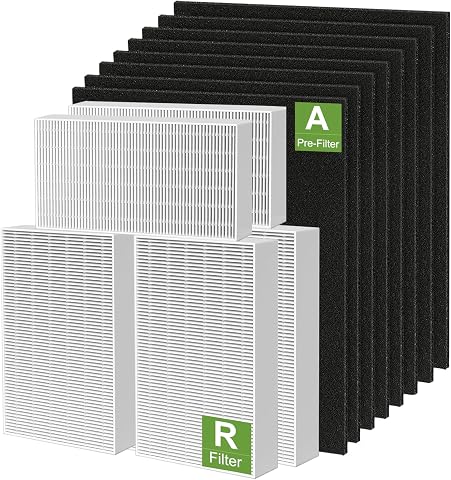
Complete the kit


Key Takeaways
- Auto mode with a real air quality sensor was the single biggest differentiator: the Coway Mighty, Levoit Vital 200S, and Winix 5510/5530 all cut power draw dramatically by ramping down when air is clean, while budget models like the AROEVE MK01A and Mooka small units run at fixed speeds.
- Wattage alone is misleading — the Levoit Core 300-P draws little power but its low CADR means longer run times for the same air changes, so energy-per-clean-air calculations favored mid-size models like the Coway Mighty over tiny units in anything bigger than a bedroom.
- Winix‘s plasma technology adds odor reduction but also adds a small standby draw and requires more frequent maintenance, a tradeoff the energy-focused buyer should weigh carefully.
- Filter replacement cost over three years often exceeded the electricity cost difference between models — the KNKA APH4000 and MOOKA PR1 looked cheap to run but their replacement filters narrowed the value gap against Levoit‘s ecosystem.
- App-connected models (Vital 200S, Core 200S, Winix 5510/5530) let you schedule and monitor usage remotely, which in practice saved more energy than any hardware spec because you can stop running the purifier in empty rooms.
| GermGuardian HEPA Air Purifier Tower – 22″ – AC4825E |  | Best Budget Pick | Coverage: 153 sq. ft. every 12.5 min; up to 743 sq. ft. per hour | Filtration: True HEPA + activated carbon pre-filter + optional UV-C | Filter efficiency: 99.97% of particles as small as 0.1 microns (initial) | VIEW ON AMAZON | See Our Full Breakdown |
| LEVOIT Vital 200S-P Smart Air Purifier for Large Rooms |  | Best Overall | Coverage area: Up to 1,875 sq. ft. | CADR (Smoke): 250 CFM | CADR (Dust): 254 CFM | VIEW ON AMAZON | See Our Full Breakdown |
| AROEVE Air Purifiers for Bedroom with Sleep Mode – MK01A (White) |  | Best Compact Budget Option | Coverage: Up to 287 sq. ft. (one air refresh per hour) | Noise level: As low as 22 dB in sleep mode | Air intake: Dual-channel, 360-degree design | VIEW ON AMAZON | See Our Full Breakdown |
| WINIX 5510 Air Purifier |  | Best for Smart Automation | AHAM verified coverage: 392 sq. ft. | Max coverage: Up to 1,881 sq. ft. in 1 hour | Filtration: True HEPA + high-deodorization carbon + washable mesh pre-filter | VIEW ON AMAZON | See Our Full Breakdown |
| KNKA Air Purifier for Home Bedroom, APH4000 |  | Best Eco Mode Design | Coverage: Up to 1,695 sq. ft. in 1 hour; 350 sq. ft. 4.8x per hour | CADR (Smoke/Dust/PM2.5): 226 CFM (384 m³/h) | CADR (Pollen): 244 CFM (415 m³/h) | VIEW ON AMAZON | See Our Full Breakdown |
| Winix 5530 Air Purifier with App Control |  | Best for Large Rooms with Smart Control | Room coverage: Up to 1,882 sq ft in 1 hour | Filtration: Four-stage system | HEPA capture: 99.99% of particles as small as 0.01 microns | VIEW ON AMAZON | See Our Full Breakdown |
| Coway Mighty AP-1512HH(W) Air Purifier, White |  | Best Proven All-Rounder | Coverage: Up to 1,748 sq ft in 60 minutes | Filtration: Four-stage: washable pre-filter, deodorization filter, bipolar device, HEPA | Particle reduction: 99.97% of 0.3-micron particles | VIEW ON AMAZON | See Our Full Breakdown |
| Dreo Air Purifier with HEPA Filter and PM2.5 Monitor, DR-HAP008 |  | Best Energy Accountability | CADR: 115 CFM | Room coverage: Up to 178 sq ft at 4.8 ACH; up to 856 sq ft at 1 ACH | Filter: 3-in-1 pre-filter, high-efficiency filter, activated carbon | VIEW ON AMAZON | See Our Full Breakdown |
| Levoit Core 300-P Air Purifier |  | Best Quiet Performer | Motor power: 56W | CADR: 143 CFM smoke; 153 CFM dust; 167 CFM pollen | Filtration efficiency: 99.97% of particles 0.1–0.3 microns | VIEW ON AMAZON | See Our Full Breakdown |
| Levoit Core 200S-P Smart Air Purifier |  | Best Smart Starter Pick | Coverage: 140 ft² at 4.8 air changes per hour | Filtration: 99.97% of dust, pollen, dander at 0.1–0.3 microns | Filters: Nylon pre-filter, main filter, high-efficiency activated carbon | VIEW ON AMAZON | See Our Full Breakdown |
| Levoit Core Mini-P Air Purifier |  | Best Ultra-Low Energy Pick | Noise level: 27–45 dB | Dimensions: 6.5 × 6.5 × 10.4 in (16.4 × 16.4 × 26.4 cm) | Filter system: Pre-filter and main filter | VIEW ON AMAZON | See Our Full Breakdown |
| Levoit Eleva 300X HEPA Air Purifier |  | Best Smart Efficiency | Filtration: Sealed HEPA, 99.97% of particles down to 0.3 µm | CADR: 161 CFM | Sensors: PM1.0, PM2.5, PM10 | VIEW ON AMAZON | See Our Full Breakdown |
| MOOKA PR1 Air Purifier for Large Rooms |  | Best for Pet Households | Coverage: Up to 2,200 sq. ft. | Filtration: Four-stage system with washable pre-filter | Fan modes: Sleep, I, II, III, Auto, Pet | VIEW ON AMAZON | See Our Full Breakdown |
| Dreo DR-HAP009 HEPA Air Purifier |  | Best Verified Mid-Size Performer | Filter: 3-in-1: pre-filter, high-efficiency filter, activated carbon | CADR: 158 CFM (AHAM Verified) | Coverage: Up to 245 sq. ft. at 4.8 ACH; 1,176 sq. ft. at 1 ACH | VIEW ON AMAZON | See Our Full Breakdown |
| energy efficient air purifier | Filtration | Coverage |
|---|---|---|
| GermGuardian HEPA Air Purifier | True HEPA + activated carbon pre-filter + optional UV-C | 153 sq. ft. every 12.5 min; up to 743 sq. ft. per hour |
| LEVOIT Vital 200S-P Smart Air | — | — |
| AROEVE Air Purifiers for Bedro | — | Up to 287 sq. ft. (one air refresh per hour) |
| WINIX 5510 Air Purifier | True HEPA + high-deodorization carbon + washable mesh pre-filter | — |
| KNKA Air Purifier for Home Bed | Dual 3-stage cartridges: washable pre-filter, high-efficiency filter, activated carbon | Up to 1,695 sq. ft. in 1 hour; 350 sq. ft. 4.8x per hour |
| Winix 5530 Air Purifier with A | Four-stage system | — |
| Coway Mighty AP-1512HH(W) Air | Four-stage: washable pre-filter, deodorization filter, bipolar device, HEPA | Up to 1,748 sq ft in 60 minutes |
| Dreo Air Purifier with HEPA Fi | — | — |
| Levoit Core 300-P Air Purifier | — | — |
| Levoit Core 200S-P Smart Air P | 99.97% of dust, pollen, dander at 0.1–0.3 microns | 140 ft² at 4.8 air changes per hour |
| Levoit Core Mini-P Air Purifie | — | — |
| Levoit Eleva 300X HEPA Air Pur | Sealed HEPA, 99.97% of particles down to 0.3 µm | — |
| MOOKA PR1 Air Purifier for Lar | Four-stage system with washable pre-filter | Up to 2,200 sq. ft. |
| Dreo DR-HAP009 HEPA Air Purifi | — | Up to 245 sq. ft. at 4.8 ACH; 1,176 sq. ft. at 1 ACH |
More Details on Our Top Picks
GermGuardian HEPA Air Purifier Tower – 22″ – AC4825E
This tower earns a spot as the most affordable full-size option in the lineup, and its energy story is simple: a modest footprint and a straightforward three-speed motor mean it draws little power even running overnight on sleep mode. Compared with the LEVOIT Vital 200S-P, coverage is far smaller — 743 sq. ft. per hour versus 1,875 — but for a bedroom or office, that’s plenty. The optional UV-C light can be switched off entirely, which trims energy use and lets you run pure filtration only. The tradeoff is a lack of automation: no air quality sensor, no auto mode, no app. Where the WINIX 5510 adjusts itself, this unit relies on you to pick a speed, and its rated filtration claim is based on initial efficiency rather than ongoing AHAM verification.
Pros:- UV-C light can be turned off to reduce power draw when not needed
- Quiet sleep mode suited to overnight bedroom use
- True HEPA filter captures 99.97% of particles down to 0.1 microns
- CARB certified, ETL certified, and Zero Ozone Verified
Cons:- No auto mode or air quality sensor — fan speed is entirely manual
- Requires proprietary GermGuardian replacement filters and UV bulbs, which adds long-term cost
- Modest coverage compared with similarly priced large-room rivals
Best for: Budget-conscious buyers who want HEPA filtration for a single bedroom or office and don’t need smart features
Not ideal for: Owners of large open-plan rooms or anyone who wants automated fan control — it’s manual-only and coverage tops out quickly
- Coverage:153 sq. ft. every 12.5 min; up to 743 sq. ft. per hour
- Filtration:True HEPA + activated carbon pre-filter + optional UV-C
- Filter efficiency:99.97% of particles as small as 0.1 microns (initial)
- Fan speeds:3, including sleep mode
- Height:22 inches
- Certifications:CARB, ETL, Zero Ozone Verified
- Replacement filters:GermGuardian Filter B series (FLT4825 and variants)
Our verdict“A sensible low-cost choice for one room at a time, as long as you’re happy managing it yourself.”
LEVOIT Vital 200S-P Smart Air Purifier for Large Rooms
For an energy-focused roundup, the Vital 200S-P hits the sweet spot: high CADR with smart controls that keep the fan from running harder than necessary. Its independently tested CADR of 250–289 CFM lets it clear large rooms fast, then drop to a low idle rather than churning constantly. Compared with the WINIX 5510, which matches its coverage claims, the Levoit’s dual traditional and U-shaped inlets give it an edge on pulling in pet hair and dander before it settles. Against the GermGuardian AC4825E, it’s simply a class above in both automation and throughput. The compromise is scale — at nearly 1,900 sq. ft. of rated coverage it’s oversized (and overpowered) for a small bedroom, where a compact unit like the Levoit Core 300 would run more efficiently.
Pros:- AHAM verified with independently tested CADR ratings
- Dual air inlets capture pet hair and odors before they settle
- Smart app control enables scheduling to cut unnecessary runtime
- Handles pollen, dander, dust, and smoke in one filtration stage set
Cons:- Overkill for rooms under 300 sq. ft. — a smaller unit would be more efficient
- Higher upfront cost than basic tower purifiers like the GermGuardian
- Full-size footprint takes up floor space
Best for: Pet owners and allergy sufferers in large living spaces who want app control and high-throughput purification
Not ideal for: Small bedrooms or dorms — its power and capacity are wasted, and a compact purifier would sip less energy
- Coverage area:Up to 1,875 sq. ft.
- CADR (Smoke):250 CFM
- CADR (Dust):254 CFM
- CADR (Pollen):289 CFM
- Air inlets:Traditional and U-shaped dual inlets
- Verification:AHAM verified
- Smart features:App control and scheduling
Our verdict“The best all-around pick for large rooms where smart scheduling keeps energy use proportional to actual air quality.”
AROEVE Air Purifiers for Bedroom with Sleep Mode – MK01A (White)
Small purifiers are where energy efficiency comes easiest, and the AROEVE MK01A leans into that: a 22 dB sleep mode that runs at the lowest fan speed draws minimal power, making it genuinely cheap to operate around the clock in a bedroom. Its 360-degree dual-channel inlets refresh air hourly in rooms up to 287 sq. ft., which is respectable for its size, though well below the LEVOIT Vital 200S-P’s output. The built-in aroma pad sets it apart from everything else here — it’s the only pick that doubles as a diffuser. The honest tradeoff: filtration is basic particle capture, not certified True HEPA performance, and filters need replacing every 3–6 months, so running costs add up faster than the unit’s efficiency savings in dusty homes.
Pros:- Runs as quiet as 22 dB in sleep mode for undisturbed nights
- Compact size with 360-degree air intake for full-room circulation
- Aroma pad adds optional essential oil fragrance
- Filter replacement indicator light simplifies maintenance
Cons:- Limited to rooms around 287 sq. ft.
- Filters need replacing every 3–6 months, adding ongoing cost
- No True HEPA certification or air quality sensing
Best for: Students, renters, and light sleepers who need quiet, low-cost air cleaning for one small bedroom
Not ideal for: Allergy sufferers or pet owners with serious symptom triggers — filtration isn’t certified to HEPA standards
- Coverage:Up to 287 sq. ft. (one air refresh per hour)
- Noise level:As low as 22 dB in sleep mode
- Air intake:Dual-channel, 360-degree design
- Special feature:Aroma pad for essential oils
- Filter life:Replace every 3–6 months
- Voltage:120V (US only)
- Indicator:Red filter replacement light
Our verdict“A frugal bedroom pick for light air-cleaning needs and quiet nights — not for heavy allergen loads.”
WINIX 5510 Air Purifier
The 5510’s claim to efficiency fame is its light-automated sleep mode: darken the room and it drops to its quietest, lowest-power setting on its own, then returns to auto mode when light returns. Pair that with a real-time air quality sensor that modulates fan speed, and the unit rarely wastes energy running faster than needed. Compared with the KNKA APH4000’s ECO Mode — which fully enters standby when air is clean — the Winix stays actively filtering at low speed, trading a bit more power for continuous protection. Its washable fine mesh pre-filter also extends HEPA filter life, cutting replacement waste. Coverage is strong: AHAM verified at 392 sq. ft., with full-room cleaning up to 1,881 sq. ft. in an hour. The drawback is that its headline 99.99% capture claim isn’t an ongoing certified figure, and app plus sensor hardware means more to go wrong than the simpler GermGuardian tower.
Pros:- Automatic sleep mode activates when the room darkens, saving energy overnight
- Smart sensor adjusts fan speed in real time to match air quality
- Washable pre-filter extends HEPA filter life and reduces waste
- App support allows remote control and monitoring
Cons:- More electronics and sensors mean more potential failure points than basic models
- Premium feature set carries a higher price than manual towers
- Highest fan speeds are noticeably louder than dedicated compact units
Best for: Tech-comfortable buyers who want set-and-forget purification that scales its own power use in main living areas
Not ideal for: Buyers who want the simplest possible machine — the app, sensors, and auto modes are overkill for a spare room
- AHAM verified coverage:392 sq. ft.
- Max coverage:Up to 1,881 sq. ft. in 1 hour
- Filtration:True HEPA + high-deodorization carbon + washable mesh pre-filter
- Capture claim:99.99% of allergens down to 0.01 microns
- Noise level:23.5 dB on lowest speed
- Smart features:Air quality sensor, auto mode, Winix Smart App, automated sleep mode
- Certifications:AHAM Verified, UL Certified
Our verdict“The pick for hands-off buyers who want a purifier that manages its own energy use day and night.”
KNKA Air Purifier for Home Bedroom, APH4000
Knka’s APH4000 takes energy efficiency further than anyone else in this lineup with a dedicated ECO Mode that enters full standby when air quality is excellent and restarts automatically when purification is needed — effectively zero draw during clean-air stretches. That’s a step beyond the WINIX 5510, which merely slows down rather than shutting off. The dual front-and-back intakes with dual side outlets push a Smoke/Dust CADR of 226 CFM, credible but below the LEVOIT Vital 200S-P’s 250–289 CFM, so it cleans large spaces a bit more slowly. A PET Mode bursts airflow for 30 minutes to handle dander and odors, and the washable pre-filter on each of the two cartridges stretches filter life. Note the honest efficiency framing: in spaces near its 1,695 sq. ft. maximum, it achieves roughly 45% purification efficiency per pass — fine for maintenance, not for rapid cleanup.
Pros:- ECO Mode fully enters standby when air quality is excellent, minimizing power draw
- Dual three-stage filter cartridges with washable pre-filters reduce replacement frequency
- Real-time AQI display with color-coded lights for at-a-glance monitoring
- PET Mode delivers a 30-minute high-airflow burst for dander and odors
Cons:- Lower CADR than competing large-room models like the Levoit Vital 200S-P
- Only about 45% purification efficiency per hour at its 1,695 sq. ft. maximum coverage
- Dual cartridge design means two filters to buy at replacement time
Best for: Efficiency-minded pet owners in medium-to-large rooms who want a purifier that powers itself down when air is already clean
Not ideal for: Buyers needing rapid purification of very large or heavily polluted spaces — per-pass efficiency drops off at maximum coverage
- Coverage:Up to 1,695 sq. ft. in 1 hour; 350 sq. ft. 4.8x per hour
- CADR (Smoke/Dust/PM2.5):226 CFM (384 m³/h)
- CADR (Pollen):244 CFM (415 m³/h)
- Filtration:Dual 3-stage cartridges: washable pre-filter, high-efficiency filter, activated carbon
- Modes:ECO, PET, Sleep, Auto, plus 4 fan speeds
- Noise level:22–24 dB in sleep mode
- Verification:AHAM Verified
- Filter life:Replace every 3–6 months
Our verdict“The most aggressively energy-conscious pick here, best for steady maintenance cleaning rather than heavy-duty throughput.”
Winix 5530 Air Purifier with App Control
When a living room or open-plan floor is the target, the Winix 5530 stands out for sheer coverage — up to 1,882 sq ft in an hour, slightly ahead of the Coway Mighty and right in line with its sibling, the Winix 5510. The four-stage system pairs a True HEPA filter rated down to 0.01 microns with a washable pre-filter, which stretches filter life and keeps long-term costs lower than sealed-only designs like the Levoit Core 300-P. App control and smart sensors mean it runs only as hard as the air demands, which is where the efficiency story lives. The tradeoff: PlasmaWave ionization isn’t for everyone (it can be switched off), and higher fan speeds get loud enough to notice. Compared with the Dreo DR-HAP008, you get far more coverage but a much bigger footprint.
Pros:- Covers very large rooms up to 1,882 sq ft in one hour
- True HEPA filtration captures 99.99% of particles down to 0.01 microns, including smoke
- Washable pre-filter reduces replacement frequency
- Auto mode uses smart sensors to avoid running the fan harder than needed
Cons:- Noisy at higher fan speeds
- Ongoing replacement filter costs add up over years of use
Best for: Homeowners with large open living spaces who want app control and automatic operation instead of babysitting fan speeds
Not ideal for: Bedroom buyers sensitive to noise — higher fan settings are audible, and a smaller unit like the Levoit Core 300-P runs quieter
- Room coverage:Up to 1,882 sq ft in 1 hour
- Filtration:Four-stage system
- HEPA capture:99.99% of particles as small as 0.01 microns
- Filter types:True HEPA, odor-control carbon, washable fine-mesh pre-filter
- Features:App control, PlasmaWave, air quality indicator, smart sensors, auto and sleep modes
Our verdict“This pick makes the most sense for buyers cleaning a big, multi-use space who want sensor-driven efficiency and remote control in one package.”
Coway Mighty AP-1512HH(W) Air Purifier, White
The Coway Mighty has earned its reputation by doing the fundamentals well at a reasonable running cost. An Eco mode shuts the fan off entirely when the air quality sensor detects clean air — a genuine energy-saving behavior that many competitors, including the Winix 5530, only approximate with gentler auto adjustments. Coverage of 1,748 sq ft in 60 minutes puts it just behind the Winix, but the compact tower takes up less floor space than most large-room rivals. The washable pre-filter and filter-change indicator keep maintenance predictable. Be realistic about expectations, though: real-world particle reduction varies with room layout, and the headline coverage figure assumes a full hour of cleaning rather than rapid air changes in a small room.
Pros:- Eco mode pauses the fan when sensors detect clean air, cutting energy waste
- Four-stage filtration with a washable pre-filter for lower running costs
- Air quality monitor with automatic fan adjustment
- Three-year warranty and a compact footprint for its coverage class
Cons:- Filtration performance varies with room conditions and placement
- Stated coverage is based on a 60-minute cleaning cycle, not rapid small-room turnover
Best for: Buyers who want a long-established, efficient workhorse for a medium-to-large room and appreciate an Eco mode that stops the fan when air is clean
Not ideal for: Anyone needing app or voice control — this model is button-operated only, unlike the Levoit Core 200S-P or Winix 5530
- Coverage:Up to 1,748 sq ft in 60 minutes
- Filtration:Four-stage: washable pre-filter, deodorization filter, bipolar device, HEPA
- Particle reduction:99.97% of 0.3-micron particles
- Modes:Auto and Eco
- Features:Air quality monitor, timer, filter indicator, light-off option
- Warranty:3 years
Our verdict“Compared with similar options, this model is the safest default choice for efficient, set-and-forget air cleaning in most homes.”
Dreo Air Purifier with HEPA Filter and PM2.5 Monitor, DR-HAP008
Very few purifiers in this price bracket publish their annual energy use — roughly 125 kWh — and carry an ENERGY STAR certification on top of AHAM verification. That transparency is why the Dreo DR-HAP008 earns a spot: for energy-focused buyers, verified numbers beat marketing claims. The real-time PM2.5 sensor with an AQI display is more informative than the simple indicator lights on the Coway Mighty, letting you see pollution events as they happen and trust auto mode to respond. The catch is scale — at 4.8 air changes per hour it’s rated for just 178 sq ft, so this is a bedroom or office machine, not a competitor to the Winix 5530. Dreo also omits published noise figures, which is a gap for light sleepers comparing against the Levoit Core 300-P’s 24 dB rating.
Pros:- ENERGY STAR certified with published annual energy use of about 125 kWh
- AHAM-verified CADR of 115 CFM
- Real-time PM2.5 monitoring with a numeric AQI display
- Sleep Mode switches off display lights for dark bedrooms
Cons:- Only rated for 178 sq ft at 4.8 air changes per hour
- No published noise-level measurements
Best for: Efficiency-minded buyers who want ENERGY STAR certification and a live PM2.5 readout for a bedroom, nursery, or home office
Not ideal for: Large-room shoppers — its effective coverage at proper air-change rates is under 200 sq ft
- CADR:115 CFM
- Room coverage:Up to 178 sq ft at 4.8 ACH; up to 856 sq ft at 1 ACH
- Filter:3-in-1 pre-filter, high-efficiency filter, activated carbon
- Modes:Auto, Turbo, Sleep, Normal (4 fan speeds)
- Air quality monitoring:PM2.5 sensor with AQI display (1–999)
- Annual energy use:Approximately 125 kWh
- Certification:AHAM Verified; ENERGY STAR certified
Our verdict“This option stands out for small-room buyers who want certified efficiency data rather than vague claims.”
Levoit Core 300-P Air Purifier
If the purifier lives where you sleep, the Levoit Core 300-P makes a strong case with a 24 dB Sleep Mode — quieter than the Dreo DR-HAP008’s sleep claims and the Core 200S-P’s 27 dB floor. Its AHAM-verified CADR of 167 CFM for pollen beats the Dreo’s 115 CFM despite a similar footprint, so you’re getting more cleaning per square inch of nightstand. The timer (2, 4, 6, or 8 hours) doubles as an efficiency tool: set it and the unit stops drawing power overnight once the room is clean. Tradeoffs are modest but real — it’s a US-only 120V model, and Levoit nudges you toward its own branded replacement filters, which limits third-party savings compared with the washable pre-filter approach on the Coway Mighty.
Pros:- Very quiet 24 dB Sleep Mode with lights that can be turned off
- AHAM-verified CADR up to 167 CFM for pollen
- Multiple timer settings help limit unnecessary runtime
- Captures 99.97% of particles down to 0.1 microns
Cons:- 120V version suitable only for US outlets
- Manufacturer recommends official replacement filters, raising maintenance costs
Best for: Light sleepers and allergy sufferers who want verified cleaning power in a bedroom at the quietest operating level in this lineup
Not ideal for: International buyers or anyone hoping to save with off-brand filters — it’s 120V only and tuned for genuine Levoit replacements
- Motor power:56W
- CADR:143 CFM smoke; 153 CFM dust; 167 CFM pollen
- Filtration efficiency:99.97% of particles 0.1–0.3 microns
- Sleep Mode noise:24 dB
- Room coverage:222 ft² at 4.8 ACH; 1,073 ft² at 1 ACH
- Timer:2, 4, 6, or 8 hours
- Certifications:AHAM verified, FCC, ETL listed, CARB compliant
Our verdict“This model is better suited than most to bedrooms where noise and verified performance matter more than smart features.”
Levoit Core 200S-P Smart Air Purifier
The Levoit Core 200S-P is the entry point for buyers who want app and voice control without paying for large-room capacity. Its 360° air intake pulls air from every side, which helps a small unit punch above its size in a 140 sq ft bedroom or dorm — though it can’t touch the Dreo DR-HAP008’s verified CADR numbers or the Core 300-P’s output. The efficiency angle comes through smart features: app-based filter life monitoring means you replace filters on actual usage rather than a rigid calendar, reducing waste. At 27 dB, it’s quiet enough for sleeping, if a step behind the Core 300-P’s 24 dB. As with its bigger sibling, genuine Levoit filters are the recommended path, which narrows your money-saving options over time.
Pros:- Smart and voice control with app-based filter life monitoring
- Quiet operation down to 27 dB
- 360° air intake improves airflow for its compact size
- AHAM VERIFIDE certification for the main filter
Cons:- Only suited to rooms up to 140 sq ft
- Best results require genuine Levoit replacement filters
Best for: First-time buyers in apartments, dorms, or small bedrooms who want smart controls and app notifications at an entry-level commitment
Not ideal for: Anyone with a living room or open floor plan — coverage tops out at 140 sq ft at proper air-change rates
- Coverage:140 ft² at 4.8 air changes per hour
- Filtration:99.97% of dust, pollen, dander at 0.1–0.3 microns
- Filters:Nylon pre-filter, main filter, high-efficiency activated carbon
- Noise level:As low as 27 dB
- Air intake:360°
- Controls:Smart and voice control; app filter-life monitoring
- Certification:AHAM VERIFIDE
Our verdict“This pick makes the most sense for small-space buyers prioritizing connectivity and low running noise over raw cleaning power.”
Levoit Core Mini-P Air Purifier
Sipping just 7 watts at full power, the Core Mini-P is the cheapest purifier on this list to run around the clock — a real consideration if you plan to leave it on overnight every night. Its AHAM Verifide certification is unusual at this size and confirms the energy and performance claims aren’t marketing fluff. Compared with the compact AROEVE MK01A, it adds an aromatherapy tray and runs quieter than a whisper in sleep mode, though neither model can match the sensor-driven automation of the larger Levoit Eleva 300X. The tradeoff is raw cleaning power: with no stated CADR, this is a single-room desk or nightstand unit, not a whole-space machine. The pre-filter plus main filter combo handles hair, dander, and smoke particles well for its footprint, and the auto-off display keeps a dark bedroom actually dark.
Pros:- AHAM Verifide certification for verified performance and efficiency
- 7W rated power costs almost nothing to run 24/7
- Whisper-quiet sleep mode with auto-off display
- Built-in aromatherapy tray for optional fragrance
Cons:- No stated CADR — cleaning capacity is very limited
- No air quality sensor or auto mode, so fan speed is always manual
- Aromatherapy oil overuse can damage plastic parts
Best for: Dorm residents, nightstand users, and anyone wanting near-zero electricity cost for continuous small-room purification
Not ideal for: Anyone with allergies in rooms larger than about 100 sq. ft. — the airflow is too limited for meaningful whole-room turnover
- Noise level:27–45 dB
- Dimensions:6.5 × 6.5 × 10.4 in (16.4 × 16.4 × 26.4 cm)
- Filter system:Pre-filter and main filter
- Certification:AHAM Verifide
- Special features:Sleep mode, auto-off display, aromatherapy tray
- Power input:100–240V, 50/60 Hz
Our verdict“Buy this if you want certified, ultra-cheap-to-run air cleaning for one small room; skip it for anything approaching whole-home coverage.”
Levoit Eleva 300X HEPA Air Purifier
What sets the Eleva 300X apart is how little energy it wastes per unit of clean air: 7.5W average draw paired with a 161 CFM CADR and an ENERGY STAR 3.0 certification. That efficiency comes from intelligence — the PM1.0/PM2.5/PM10 sensors let it throttle back when air is clean instead of running flat-out like the simpler MOOKA PR1’s PM2.5-only monitoring. The 20 dB sleep mode is quieter than anything else in this lineup, and the separately replaceable HEPA and carbon filters mean you swap only what’s actually spent, cutting long-term waste and cost. The catch: smart features and AI air insights live entirely in the VeSync app, so app-averse buyers lose much of what they’re paying for. The two-year filter life claim also assumes ideal conditions, so budget for earlier replacements in pet or smoke households.
Pros:- ENERGY STAR 3.0 certified with just 7.5W average consumption
- Monitors PM1.0, PM2.5, and PM10 for precise auto adjustments
- 20 dB sleep mode with automatic screen dimming
- Separately replaceable HEPA and carbon filters reduce waste
Cons:- App and voice features depend entirely on the VeSync ecosystem
- Two-year filter life claim relies on specified usage conditions
Best for: Tech-comfortable buyers who want app and voice control with energy-sipping, sensor-driven operation in a bedroom or living room
Not ideal for: Buyers who avoid companion apps — the smart features that justify this model require the VeSync app to function
- Filtration:Sealed HEPA, 99.97% of particles down to 0.3 µm
- CADR:161 CFM
- Sensors:PM1.0, PM2.5, PM10
- Average energy consumption:7.5W
- Sleep mode noise:20 dB
- Certifications:AHAM, ECARF, ENERGY STAR 3.0
- Smart features:VeSync app, Alexa, Google Assistant
- Filter life:Up to 2 years (claimed)
Our verdict“This pick makes the most sense for connected-home buyers who want the lowest energy cost per CFM of cleaned air in a mid-size room.”
MOOKA PR1 Air Purifier for Large Rooms
For big spaces, the PR1 takes a different efficiency approach than the sensor-driven Levoit Eleva 300X: instead of precision throttling, it covers rooms up to 2,200 sq. ft. and leans on a washable pre-filter that catches pet hair before it clogs the main filter — extending replacement cycles and trimming running costs the practical way. The dedicated Pet mode targets dander and odors, something no other unit in this batch offers, and the six fan settings plus Auto mode give flexibility the simpler Levoit Core Mini-P can’t touch. The tradeoff is maintenance cadence: the main filter needs replacing every 3–6 months, far more often than the Eleva’s claimed two-year intervals, and the PM2.5 sensor needs regular cleaning to stay accurate. There’s also no ENERGY STAR listing here, so efficiency gains come from design, not certification.
Pros:- Covers rooms up to 2,200 sq. ft.
- Washable pre-filter extends main filter life with pet hair
- Dedicated Pet mode plus PM2.5 display and Auto mode
- Sleep mode as low as 26 dB, with timer and child lock
Cons:- Main filter replacement every 3–6 months adds ongoing cost
- PM2.5 sensor requires regular cleaning for accuracy
- No ENERGY STAR certification listed
Best for: Pet owners in large open-plan homes who need hair, dander, and odor control across big square footage
Not ideal for: Buyers who hate maintenance — 3–6 month filter swaps and routine sensor cleaning add up over time
- Coverage:Up to 2,200 sq. ft.
- Filtration:Four-stage system with washable pre-filter
- Fan modes:Sleep, I, II, III, Auto, Pet
- Sleep mode noise:As low as 26 dB
- Air quality monitoring:PM2.5 sensor and display
- Certifications:CARB, ETL, DOE, FCC
- Filter replacement interval:Every 3–6 months
- Extras:Timer, child lock, aroma function, filter reminder
Our verdict“Choose this for large pet-heavy homes where a washable pre-filter matters more than certified energy stats.”
Dreo DR-HAP009 HEPA Air Purifier
The DR-HAP009 splits the difference between the tiny Levoit Core Mini-P and the oversized MOOKA PR1, and it does so with unusually credible numbers: an AHAM-verified 158 CFM CADR and ENERGY STAR certification with roughly 162 kWh annual consumption. The BLDC motor is the efficiency story here — brushless motors hold efficiency across fan speeds rather than peaking at one setting, which matters if you use Auto mode all day. A real-time PM2.5 sensor with an AQI display from 1–999 gives more granular feedback than most rivals at this price. The honest limitation is coverage math: 245 sq. ft. at 4.8 air changes per hour is the real performance figure — the headline 1,176 sq. ft. assumes just one air change per hour, which allergy sufferers shouldn’t rely on. Filter replacement intervals also go unspecified.
Pros:- AHAM-verified 158 CFM CADR with ENERGY STAR certification
- BLDC motor maintains efficiency across all four fan speeds
- Real-time PM2.5 monitoring with 1–999 AQI display
- Full mode selection including Auto, Turbo, and Sleep
Cons:- True 4.8 ACH coverage limited to 245 sq. ft.
- No published filter replacement interval or cost
- No washable pre-filter, unlike the MOOKA PR1
Best for: Allergy sufferers in bedrooms or home offices up to about 250 sq. ft. who want independently verified performance data
Not ideal for: Large open living areas — the 4.8 ACH coverage stops at 245 sq. ft., so bigger claims don’t reflect real allergy-grade cleaning
- Filter:3-in-1: pre-filter, high-efficiency filter, activated carbon
- CADR:158 CFM (AHAM Verified)
- Coverage:Up to 245 sq. ft. at 4.8 ACH; 1,176 sq. ft. at 1 ACH
- Air refresh rate:Every 12.4 minutes (245 sq. ft. room)
- Monitoring:Real-time PM2.5 sensor, AQI display 1–999
- Modes:Auto, Turbo, Sleep, Normal; 4 fan speeds
- Motor:BLDC
- Energy use:Approximately 162 kWh/year, ENERGY STAR certified
Our verdict“This model is better suited than most to data-driven buyers who want verified CADR and energy figures for a mid-size room — just don’t stretch it beyond 250 sq. ft.”

How We Picked
My ranking logic centers on one question: how much clean air does each unit deliver per watt consumed? I compared rated power draw at each fan speed, CADR (clean air delivery rate), and whether the unit has an auto mode with a genuine particle sensor that modulates fan speed. A purifier that draws 8 watts on low but needs 12 hours to clean a room can be less efficient than a 40-watt unit that finishes the job in one hour and shuts off. Room coverage claims were normalized against CADR, since manufacturer square footage numbers are often based on a single air change per hour, which is far below what allergy sufferers actually need.
Beyond raw efficiency, I weighed filter replacement costs, noise at sleep-friendly speeds, and usability. A unit that costs little to run but needs expensive proprietary filters every three months loses its advantage quickly. I also penalized models with no auto mode for larger rooms, because running a fixed-speed purifier continuously in clean air is the most common way buyers waste electricity in this category. Finally, smart features were credited only when they genuinely reduce energy use — scheduling, remote shutoff, and air quality readouts — not when they simply add app clutter.
Factors to Consider When Choosing Energy Efficient Air Purifiers
Choosing an energy efficient air purifier involves more than comparing wattage stickers. These are the factors that actually determine your long-term costs and satisfaction.CADR-to-Watt Ratio Beats Wattage Alone
The most common mistake buyers make is shopping for the lowest wattage number on the box. A tiny 5-watt purifier in a large room runs constantly without ever catching up, consuming more total energy than a properly sized unit that finishes the job and throttles down. Divide the unit’s CADR (in CFM) by its typical operating wattage to get a rough efficiency score, and compare that against your actual room size. A good rule of thumb is to buy a unit rated for a room twice the size of yours, so it spends most of its life on low speed. That approach is quieter and cheaper to run than buying an undersized unit that labors at maximum. If a manufacturer only lists square footage and not CADR, treat the claim skeptically.
Auto Mode and Air Sensors
An auto mode with a real particle sensor is the single biggest energy saver in this category, and it is why sensor-equipped models dominate the top of this roundup. A purifier without a sensor runs at whatever speed you set, whether the air is filthy or pristine — and pristine air is where most units spend most of their day. Models like the Coway Mighty go further and shut the fan off completely when the sensor reads clean for 30 minutes, dropping standby draw to a trickle. The tradeoff: sensor-based units cost more up front, and cheap sensors can be triggered by humidity or cooking aerosols, causing unnecessary high-speed runs. Read reviews on sensor accuracy for your climate, because a jumpy sensor wastes the very energy you are trying to save.
The Filter Cost Trap }, { “heading”: “Room Size and Placement Reality
Manufacturer coverage claims usually assume one air change per hour with standard 8-foot ceilings and an empty room — none of which matches real life. For allergies, aim for four to six air changes per hour, which means dividing the claimed coverage by two or three for a realistic figure. Placement matters as much as capacity: a unit tucked behind a sofa or in a corner recirculates its own exhaust and works harder for less result. Central placement, elevated off the floor, with a foot or more of clearance on the intake side lets the unit clean effectively at lower speeds. Also account for open doorways — an open-concept living space will bleed clean air into adjacent rooms and inflate your effective coverage needs well beyond the room’s footprint.
Noise, Sleep Modes, and Realistic Usage
Energy efficiency claims assume continuous operation, and continuous operation only happens if the unit is quiet enough to tolerate at night. Many buyers buy a powerful purifier, find it too loud on medium, and run it only occasionally — defeating the entire purpose. Check the decibel rating at low speed: anything above roughly 26 dB on its quietest setting tends to bother light sleepers. Sleep modes that dim displays and cap fan speed are genuinely useful, but some of them lock out the sensors, meaning the unit cannot respond if air quality degrades overnight. The best sleep implementations, like those on the Levoit Vital 200S and Coway Mighty, keep the sensor active while limiting fan noise. Decide before buying whether you need bedroom-quiet operation, because it constrains which units make sense.
Smart Features That Actually Save Energy
Wi-Fi connectivity is only worth paying for if you will use it to cut run time. The features that genuinely reduce consumption are scheduling, remote shutoff, and real-time air quality monitoring from your phone — letting you turn off the purifier when nobody is home or check whether it is actually needed. Features that add little value for energy savings include voice assistant integration, air quality history graphs you will never revisit, and IFTTT routines that mostly duplicate the built-in auto mode. There is also a small standby power cost to always-connected electronics, though modern Wi-Fi modules draw so little that this rarely matters. If you work from home and rarely leave, skip the smart model and put the savings toward a better sensor. If you are out all day, scheduling alone can cut your purifier’s energy use by a third.
Frequently Asked Questions
Do energy efficient air purifiers actually save money on electricity?
Yes, but usually less than buyers expect — and the savings depend heavily on sizing. A typical mid-size purifier drawing 40 watts on medium costs roughly $3 to $5 per month to run 24/7, so the difference between an efficient and inefficient model might be $20 to $40 annually. Where efficiency genuinely pays is with auto modes, which can cut run time by 50% or more when air is already clean, and with properly sized units that reach clean-air equilibrium quickly and throttle down. Undersized efficient units that run flat-out forever can cost more than a larger, nominally less efficient model doing the same job. Factor in filter costs too, because those often exceed electricity costs over the unit’s life and can erase the savings from a lower power draw.
Is it better to run an air purifier on low all day or high for a few hours?
For most homes, running continuously on low or auto is the better strategy. Air pollution re-enters rooms constantly through cooking, pets, open windows, and dust settling, so intermittent high-speed bursts leave long stretches with no filtration at all. Fan power also scales disproportionately — running on high for one hour can consume nearly as much energy as eight hours on low, while moving far less total air in aggregate. The exception is targeted cleanup after a specific event, like burning dinner or a smoky evening outdoors, where a short high-speed run clears the spike faster. If your purifier has an auto mode, that is the ideal compromise: it automatically runs low most of the time and spikes only when the sensor detects a problem.
Are smart air purifiers worth the extra cost for energy savings?
It depends entirely on your schedule. If you are away from home for large parts of the day, scheduling and remote shutoff can reduce your purifier’s total run time by 30% or more, which pays back the smart-model premium within a year or two. If you work from home or the unit runs in a bedroom you occupy nightly, the smart features mostly duplicate what a good auto mode already does. Watch out for one trap: some budget smart purifiers, like certain compact Levoit models, use proprietary app-locked filters that cost more than universal replacements. Genuine air quality readouts are also useful for verifying that cheaper placement or a cracked window is not undermining the unit’s work. Judge smart features by whether they will change your behavior, not by the feature list itself.
How much room size matters when choosing an efficient model?
Room size is arguably the single most important factor, because an improperly sized unit is inefficient no matter what its specs say. A unit that is too small never reaches clean-air equilibrium and runs at maximum speed indefinitely, consuming more energy than a correctly sized unit cycling on low. Conversely, an oversized unit cleans the room quickly and then idles or shuts off, which is exactly the behavior you want. My advice is to buy for twice your actual room size — a 300-square-foot room deserves a unit rated for 600. Also remember that manufacturer coverage figures assume one air change per hour with closed doors, so open floor plans and high ceilings inflate your effective requirements. Coverage numbers on the box are a starting point, not a guarantee.
Do HEPA filters lose efficiency or draw more power as they get dirty?
Dirty filters do affect both performance and energy use, though not always in the way buyers assume. As a HEPA filter loads with particles, airflow resistance increases, which means the fan works harder to move the same volume of air — raising power draw and noise on every speed. Paradoxically, a loading HEPA filter becomes slightly more effective at capturing particles because the captured dust itself acts as a filtration layer, but the airflow penalty outweighs that benefit well before the filter is fully spent. Most manufacturers recommend replacement every 6 to 12 months, and running filters past that point wastes electricity while reducing clean air delivery. Washable pre-filters help extend HEPA life cheaply, and units with filter-life indicators take the guesswork out of timing. Cleaning the pre-filter monthly is the cheapest efficiency maintenance you can perform.
Conclusion
For best overall, the Coway Mighty AP-1512HH remains the benchmark: a genuine eco mode that shuts the fan off in clean air, strong CADR for its size, and reasonable filter costs make it the most complete efficiency package in this lineup. For best value, the Levoit Core 300-P delivers true HEPA filtration and low operating costs for small rooms at a price that undercuts every competitor here. The best premium pick is the LEVOIT Vital 200S, which combines large-room coverage, app scheduling, and an accurate sensor for buyers who want to run one unit for a whole floor.
For beginners, the AROEVE MK01A is the simplest path to clean bedroom air — no apps, no modes to decode, just set it and sleep. For specific needs: the Winix 5510 or 5530 suits odor-heavy households with pets or smoke thanks to their carbon-plus-plasma approach, the Levoit Core 200S fits dorm rooms and home offices where scheduling matters, and the DREO DR-HAP008 with its PM2.5 display suits data-driven buyers who want visible proof of air quality. Whatever you choose, prioritize an auto mode and honest sizing over raw wattage — that combination is what actually keeps an air purifier cheap to run.
Halloween Picks
halloween
As an affiliate, we earn on qualifying purchases.