
When it comes to safeguarding your home during power outages, choosing the right backup generator is essential. The best options balance power capacity, convenience, and cost, but tradeoffs are inevitable—larger models offer more reliable whole-house coverage, yet come with higher prices and installation complexity. Portable models provide flexibility but may lack the capacity for full-home backup, while standby generators offer seamless operation but involve professional installation. Continue reading for a detailed comparison to help you find the ideal backup power solution for your home.
Complete the kit

Key Takeaways
- Standby generators generally provide more reliable, automatic backup power than portable models, but at a higher cost and installation effort.
- Dual-fuel options offer flexibility and convenience, especially in emergencies where fuel availability might vary.
- Portable generators are ideal for partial backup needs, RV use, or supplemental power, but often lack automatic transfer features.
- Advanced features like cellular connectivity and WiFi enable remote monitoring, enhancing reliability for critical loads.
- Choosing the right size is crucial; oversizing can be unnecessary expense, while undersizing risks insufficient power during outages.




More Details on Our Top Picks
DuroMax XP13000EH 13,000-Watt Dual Fuel Portable Generator – Gas & Propane, Electric Start, Whole Home Backup Power, Transfer Switch Ready, RV & Emergency Ready
The DuroMax XP13000EH stands out for its impressive 13,000 watts of power, making it one of the most capable portable options for whole-home backup. Compared with the Westinghouse 6500 Watt Dual Fuel, it offers significantly higher capacity, suitable for larger homes or more demanding appliances. Its dual fuel flexibility means you can run on gasoline or propane, providing versatility during outages. The heavy-duty all-metal construction enhances durability, and features like a transfer switch-ready outlet simplify installation. However, this model is relatively heavy and bulkier than smaller portable units, which could challenge portability for some users. The all-metal build and high wattage do come at a higher price point and increased fuel consumption if used continuously. This generator is best suited for homeowners who need reliable, high-capacity power during extended outages or storms, and are okay with the size and cost.
Pros:- High power output suitable for whole-home backup
- Dual fuel capability offers flexibility in fuel choice
- Heavy-duty all-metal construction enhances durability
- Transfer switch-ready outlet simplifies installation
Cons:- Heavy and less portable due to size and weight
- Higher fuel consumption at full load
Best for: Homeowners requiring whole-house backup with the ability to run multiple appliances simultaneously, especially during severe weather or extended outages.
Not ideal for: Those seeking a lightweight or budget-friendly portable generator for occasional use or outdoor activities, as this unit is large and costly.
- Power Output:13,000 watts
- Fuel Type:Gasoline and Propane
- Start Type:Electric
- Construction:All-metal frame
- Transfer Switch Outlet:50 amp
- Built for:Whole-home backup and RV use
Our verdict“This generator is ideal for homeowners who prioritize power capacity and durability over portability and cost.”
Jackery HomePower 3600 Plus Portable Power Station, 3600W AC Output, 3584Wh LFP Solar Generator, Expandable up to 21kWh, Essential Home Backup for Home Use, Emergencies, RV (Solar Panel Optional)
The Jackery HomePower 3600 Plus excels in offering clean, quiet, and highly portable backup power, making it perfect for users who want to avoid noise and emissions. Unlike the WEN 4750-Watt Generator, it produces no fumes, operates silently, and can be expanded to meet larger needs with additional units, up to 21kWh. Its high-temp resistant battery cells and 6,000 cycle lifespan ensure long-term safety and reliability, even in extreme cold or heat. The plug-and-play design makes it accessible for most users without professional installation. Its main tradeoff is limited surge capacity compared to gas-powered generators, which can restrict running larger appliances simultaneously. Additionally, while portable, it’s not designed for very high wattage demands or prolonged use without multiple units. This makes the Jackery ideal for small households, RVers, or those seeking a silent backup option for essentials.
Pros:- Quiet operation with no fumes
- Highly portable with luggage-style design
- Expandable capacity for larger needs
- Long lifespan with high-temperature resistant cells
Cons:- Limited surge capacity for high-demand appliances
- Higher initial cost for expansion and multiple units
Best for: Small households or RV owners who need quiet, portable, and expandable backup power without complex installation.
Not ideal for: Homes with large power demands or users needing the ability to run heavy-duty appliances continuously, as it is limited in surge capacity and expansion cost.
- AC Output:3600W
- Capacity:3584Wh
- Expansion:Up to 21kWh
- Charging:Multiple options including solar
- Weight:Lightweight and portable
- Lifespan:6,000 cycles
Our verdict“This generator is best suited for users prioritizing quiet, clean, and portable power for small loads or RV use.”
Generac 10kW Home Standby Generator with 16 Circuit Transfer Switch, Cellular Connectivity, and Whole House Power Backup
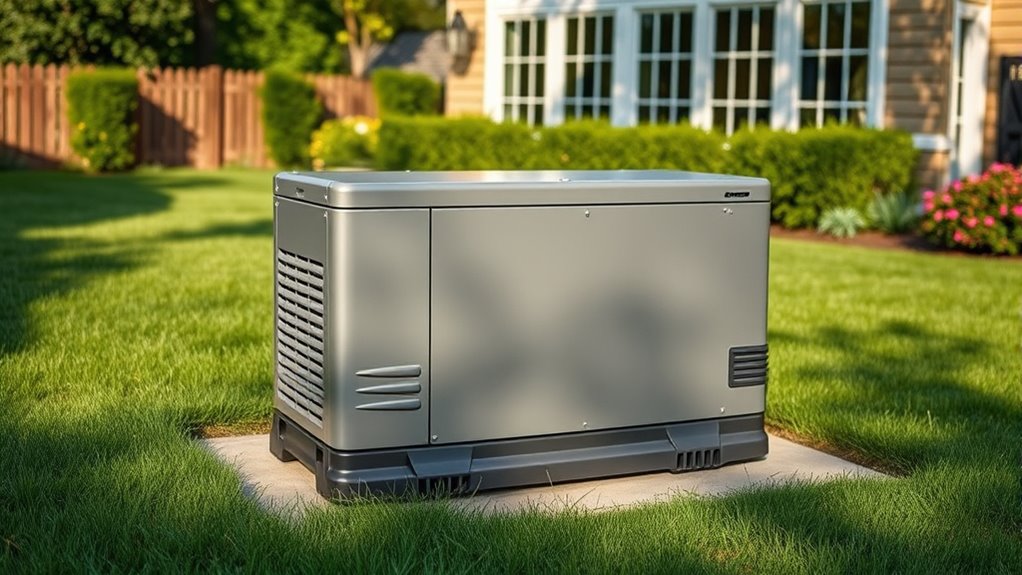
The Generac 10kW Standby Generator offers seamless, automatic whole-house backup, making it a reliable choice for those who prefer not to manually start a generator. Its integration of cellular connectivity for remote monitoring adds convenience, especially compared to manual or less-connected models like the Westinghouse 6500 Watt. While the upfront cost is higher, the convenience of automatic operation during outages and the 16-circuit transfer switch provide comprehensive coverage for most homes. The need for a subscription for remote features and dependence on cellular network can be drawbacks, especially in rural areas. For homeowners seeking a true, automatic backup solution with long-term reliability, this model makes a compelling case despite its price and remote monitoring costs.
Pros:- Automatic operation during outages
- Remote monitoring via cellular connectivity
- Reliable power delivery for entire home
- Long warranty of 5 years
Cons:- Requires subscription for remote features
- Higher initial investment
Best for: Homeowners seeking automatic, remote-controlled backup power for their entire house, especially in areas prone to outages or severe weather.
Not ideal for: Budget-conscious buyers or those living in areas with poor cellular coverage who prefer manual operation or are willing to handle start-up themselves.
- Power Output:10kW
- Transfer Switch:16 circuits
- Connectivity:Cellular
- Warranty:5 years
- Fuel Type:Natural Gas or Propane
- Control:Remote via cellular
Our verdict“This generator suits homeowners who want automatic, reliable whole-house backup with remote control, accepting higher costs and dependence on cellular networks.”
WEN 4,750-Watt Dual Fuel Portable Generator with Electric Start and Wheel Kit
The WEN 4750-Watt generator offers a practical balance of power and portability, making it suitable for emergency backup or outdoor work. Its dual fuel capability allows switching between gasoline and propane, increasing flexibility during outages or camping trips. The electric start simplifies operation compared to pull-start models and the included wheel kit improves mobility. However, its runtime of up to 11 hours at half load limits long-term outage use, and it’s somewhat bulky for smaller storage spaces. Compared with larger models like the DuroMax XP13000EH, it’s less capable of handling whole-home loads but provides enough power for essential appliances and tools. This is a solid choice for users who need a portable, affordable backup generator for moderate loads.
Pros:- Dual fuel flexibility for convenience
- Electric start for easy operation
- Portable with wheels and handle
- Multiple outlets for various devices
Cons:- Limited runtime at half load
- Relatively heavy and bulky
Best for: Homeowners or outdoor enthusiasts needing reliable backup power for essential devices or job sites, especially where portability matters.
Not ideal for: Users requiring high power capacity or extended runtime for large appliances, as this generator is limited in both aspects.
- Power:4750 surge / 3800 running watts (gas)
- Fuel Type:Gasoline and Propane
- Engine:224cc 4-stroke OHV
- Tank Capacity:4 gallons
- Run Time:Up to 11 hours at half load
- Outlets:Multiple including GFCI and twist lock
Our verdict“This generator is well-suited for users needing portable, flexible backup power for essential loads and outdoor use, with the understanding of some runtime limitations.”
Westinghouse 6500 Watt Dual Fuel Portable Generator with Transfer Switch and CO Sensor
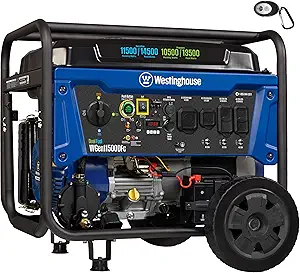
The Westinghouse 6500 Watt generator offers a strong balance between power, safety, and affordability. Its dual fuel capability, providing up to 5300 running watts on gasoline and 4800 on propane, makes it versatile for different fuel sources. The 4.7-gallon tank delivers a runtime of up to 14.5 hours, suitable for extended outages. The inclusion of a CO sensor and automatic low oil shutdown enhances safety during operation, which surpasses some competitors that lack such features. While it’s somewhat heavy and requires manual setup, it is less expensive than premium models like the Generac 10kW. Its main limitation is the absence of remote monitoring or automatic start, making it less ideal for remote monitoring needs but excellent for those on a budget seeking reliable backup power.
Pros:- Dual fuel flexibility for convenience
- Long runtime of up to 14.5 hours
- Includes safety features like CO sensor
- Affordable price point
Cons:- Manual start, no automatic operation
- Relatively heavy and less portable
Best for: Budget-conscious homeowners needing reliable, dual fuel backup with safety features for occasional outages.
Not ideal for: Users wanting automatic start or remote control, as this model requires manual operation during outages.
- Power:5300 Watts (gas), 4800 Watts (propane)
- Fuel Tank Capacity:4.7 gallons
- Run Time:Up to 14.5 hours
- Outlets:Multiple including RV and household
- Additional Safety:CO sensor
- Weight:Heavy, less portable
Our verdict“This generator offers reliable, dual fuel power with safety features at an accessible price, best for those who can manually operate during outages.”
DuroStar DS13000MX 13,000-Watt 500cc Dual Fuel Portable Generator – Gas and Propane, Remote Electric Start, Whole Home Power Backup, Transfer Switch Ready, RV & Emergency Ready
The DuroStar DS13000MX stands out for its impressive 13,000-watt output, making it a strong choice for whole-home backup, especially compared to smaller models like the Jackery Explorer 1000. Its dual fuel capability allows flexibility during outages, letting you switch between gasoline for maximum power or propane for longer run times and cleaner emissions. The built-in CO alert enhances safety, a crucial feature often missing in portable generators. The electric start simplifies operation, and the transfer switch-ready 50A outlet makes it straightforward to connect to your home’s system. However, its all-metal, heavy-duty construction adds weight, which may hinder portability, and the initial setup can be complex for newcomers. Compared to smaller, inverter-style options, this generator offers raw power suited for larger homes, but it sacrifices portability and ease of use.
Pros:- High 13,000-watt power output for whole-home backup
- Dual fuel capability offers fuel flexibility and longer run times
- Built-in CO alert enhances safety during operation
- Transfer switch-ready with a 50A outlet for seamless home connection
Cons:- Heavy and bulky, making transportation difficult
- Complex setup may intimidate first-time users
- Higher price point compared to smaller or inverter generators
Best for: Homeowners needing reliable, large-scale backup power with fuel flexibility and safety features.
Not ideal for: Small households or casual campers who need portable, lightweight power solutions without the need for whole-house capacity.
- Power Output:13,000 Watts
- Fuel Type:Gasoline or Propane
- Start Type:Electric with remote start
- Transfer Switch Ready:Yes, 50A outlet
- Construction:All-metal, heavy-duty steel
- CO Safety Feature:Yes
Our verdict“This generator is ideal for homeowners seeking robust, whole-house backup with fuel choices, despite its size and complexity.”
Westinghouse 13500 Peak Watt Tri-Fuel Portable Generator with Remote Electric Start
The Westinghouse 13500 Peak Watt Tri-Fuel Generator excels for those who need versatile fuel options—gasoline, propane, or natural gas—making it more adaptable than the DuroStar for varied fuel supplies. Its remote electric start offers convenience, especially during emergencies or large outdoor events. With a substantial 9.5-gallon tank and up to 19 hours of runtime, it supports extended use in remote locations. Still, its bulk and weight can pose challenges for transport, and the multiple fuel setups may require additional initial effort, especially for beginners. While it offers more flexibility than single-fuel models like the Jackery, it lacks inverter technology, so sensitive electronics may not run as smoothly. This makes it a solid choice for users who prioritize fuel options and runtime over portability or noise levels.
Pros:- Tri-fuel operation for maximum fuel flexibility
- Remote electric start for easy operation
- Long runtime of up to 19 hours
- Large 9.5-gallon tank supports extended use
Cons:- Heavy and less portable, difficult to move without wheels
- No inverter technology, risking sensitive electronic damage
- Setup complexity for new users
Best for: Families or contractors needing a flexible, high-capacity generator for extended outdoor or backup power use.
Not ideal for: Lightweight travelers or those seeking a compact, quiet generator for small appliances or sensitive electronics.
- Peak Watts:13,500
- Fuel Types:Gasoline, Propane, Natural Gas
- Runtime:Up to 19 hours
- Engine:500cc 4-Stroke OHV
- Start System:Remote Electric
- Outlets:GFCI 120V, Transfer switch, RV
Our verdict“This generator suits users who value fuel versatility and long runtime over portability and noise, making it ideal for extended outdoor use.”
Jackery Explorer 1000 v2 Portable Power Station, 1070Wh LiFePO4 Battery, 1500W AC/100W USB-C Output, 1 Hr Fast Charge, Solar Generator for Camping, Emergency, RV, Off-Grid Living
The Jackery Explorer 1000 v2 is a standout for its portability and advanced battery technology, providing 1,070Wh of power in a lightweight package ideal for camping, RVing, or emergency use. Its pure sine wave inverter ensures safe operation for sensitive electronics, a key difference from larger, less refined generators like the Westinghouse tri-fuel model. The fast one-hour charging capability and long battery lifespan (over 10 years) add convenience for frequent use. However, with a maximum continuous output of 1,500W, it won’t handle large appliances or whole-house loads, limiting its role mainly to small devices and essential electronics. Its solar compatibility is optional, making it a smart choice for off-grid living, but not for heavy-duty backup power.
Pros:- Lightweight and portable at just 23.8 lbs
- Fast one-hour recharge with advanced battery tech
- Pure sine wave output safe for sensitive electronics
- Long-lasting LiFePO4 battery with 10+ year lifespan
Cons:- Limited continuous output of 1,500W, unsuitable for major appliances
- Does not include solar panel (sold separately)
- Not designed for heavy-duty home backup
Best for: Campers, RV owners, or emergency prepper households seeking lightweight, reliable portable power for small appliances and electronics.
Not ideal for: Homes requiring whole-house backup or users with high power demands that exceed 1,500W continuous output.
- Capacity:1070Wh
- AC Output:1500W
- Recharge Time:1 hour
- Battery Type:LiFePO4
- Weight:23.8 lbs
- Solar Compatibility:Optional
Our verdict“This power station is perfect for portability-minded users needing reliable, clean power for small devices and emergency situations, not large-scale home backup.”
Westinghouse 12500 Watt Dual Fuel Portable Generator with Remote Electric Start
The Westinghouse WGen9500DF offers a powerful 12,500-watt peak output, making it a solid choice for large home backup, especially when compared with smaller models like the Jackery. Its dual fuel design allows switching between gasoline and propane, providing flexibility during prolonged outages. The remote electric start enhances convenience in emergency scenarios, and the 6.6-gallon tank supports around 12 hours of runtime. Its multiple outlets, including transfer switch-ready options, make it suitable for whole-house use. However, its weight and size could be a hurdle for portability, and the absence of inverter technology means sensitive electronics might not run optimally. This generator strikes a balance between high power and convenience but isn’t as compact or quiet as inverter-style models.
Pros:- High 12,500-watt peak power for whole-house backup
- Dual fuel capability for fuel choice and longer runtime
- Remote electric start for quick operation
- Multiple outlets including transfer switch and RV-ready
Cons:- Heavy and less portable without wheels
- Lacks inverter technology, risking sensitive electronics
- Setup complexity may challenge novices
Best for: Large households or outdoor event organizers needing dependable, high-capacity backup power with fuel flexibility.
Not ideal for: Users seeking lightweight, portable generators for camping or small-scale applications.
- Peak Watts:12500
- Running Watts:9500
- Fuel Types:Gasoline, Propane
- Runtime:Up to 12 hours
- Tank Capacity:6.6 gallons
- Start System:Remote Electric
Our verdict“Ideal for those who need substantial backup power with fuel options and remote start, accepting its size and weight tradeoffs.”
Generac Guardian 10kW Home Standby Generator with 100 Amp Transfer Switch – Automatic Whole House Backup Power for Storms, Emergencies, and Outages, WiFi Enabled, Runs on Natural Gas or Liquid Propane
The Generac Guardian 10kW offers the convenience of automatic operation and WiFi monitoring, making it especially appealing for homeowners who want set-and-forget reliability. Its 10,000-watt capacity is sufficient for most essential home circuits, and the integrated 100 Amp transfer switch simplifies installation and operation. Compared to portable models like the Westinghouse, this unit is designed for permanent installation and offers seamless integration with your home’s electrical system. The generator’s durable aluminum enclosure and quiet operation are additional benefits. However, its higher upfront cost and requirement for professional installation mean it isn’t suitable for casual users or those seeking portable backup. It’s best suited for those prioritizing convenience, automation, and long-term reliability over initial affordability.
Pros:- Automatic operation with seamless transfer switch
- WiFi enabled for remote monitoring and alerts
- Stable power output suitable for essential circuits
- Durable, weather-resistant aluminum enclosure
Cons:- Higher initial cost and installation complexity
- Not portable, requiring professional setup
- Limited to backup only, not suitable for outdoor or mobile use
Best for: Homeowners seeking a fully automatic, maintenance-free backup system with remote monitoring capabilities.
Not ideal for: Renters or those who prefer portable solutions that can be moved easily between locations.
- Power Output:10kW
- Transfer Switch:100 Amp
- Fuel Source:Natural Gas or Liquid Propane
- Monitoring:WiFi Enabled
- Enclosure:Aluminum
- Operation:Automatic
Our verdict“This generator is best for homeowners wanting automatic, reliable backup power with minimal manual intervention, despite higher costs and installation needs.”
Westinghouse 14500 Peak Watt Dual Fuel Home Backup Portable Generator, Remote Electric Start, Transfer Switch Ready, Gas and Propane Powered
This model stands out for its impressive dual-fuel capability, running on both gasoline and propane, which provides versatility during outages or remote work. Compared to the Westinghouse 14500 Peak Watt Tri-Fuel Generator, this unit lacks natural gas compatibility, but it compensates with a higher peak wattage and longer runtime—up to 19 hours on a single tank. Its low THD makes it safe for sensitive electronics like computers and TVs, a crucial feature for modern households. The heavy-duty 550cc engine and durable copper windings contribute to cleaner power and longer lifespan. However, the larger size and weight (230 pounds) make it less portable, and the absence of natural gas limits fuel options for some users. This generator makes the most sense for homeowners seeking reliable backup power with extended runtime and dual-fuel flexibility, especially those with a larger energy demand.
Pros:- High peak wattage of 14,500 watts for large power loads
- Dual-fuel capability with gasoline and propane for flexibility
- Up to 19 hours runtime on a full tank for extended outages
Cons:- Heavy at 230 pounds, making it difficult to move or transport
- Lacks natural gas compatibility, limiting fuel choices for some users
Best for: Owners of larger homes who need dependable backup power with fuel flexibility and long runtime.
Not ideal for: Small households or users seeking lightweight, portable generators for occasional use, due to its weight and size.
- Peak Wattage:14,500 watts
- Running Wattage:11,500 watts
- Fuel Type:Gasoline and Propane
- Runtime:Up to 19 hours
- Engine Displacement:550cc
- Weight:230 pounds
Our verdict“This generator suits homeowners with large power needs who prioritize fuel flexibility and long run time, but it’s less ideal for portability or smaller spaces.”
Westinghouse 14500 Peak Watt Tri-Fuel Home Backup Portable Generator, Remote Electric Start, Transfer Switch Ready, Gas, Propane, and Natural Gas Powered
This model extends the dual-fuel concept by adding natural gas compatibility, making it ideal for users who prefer a more permanent fuel connection. It produces the same peak wattage (14,500 watts) and runtime (up to 19 hours on gasoline), but the inclusion of natural gas offers a cleaner, more convenient fuel source for long-term backup. Its low THD ensures safe operation for sensitive electronics, matching the performance of the Westinghouse 14500 Peak Watt Dual Fuel. The 550cc engine and copper windings contribute to durability and cleaner power output. The three-year warranty and nationwide support provide peace of mind for larger investments. On the downside, this unit is also heavy and less portable, suited more for stationary backup than for frequent transport. It’s best for homeowners who want a versatile, whole-house power solution with multiple fuel options, especially natural gas.
Pros:- Tri-fuel capability: gasoline, propane, and natural gas
- High peak wattage of 14,500 watts for large appliances
- Up to 19 hours runtime on gasoline for extended outages
Cons:- Large and heavy, less suited for portability
- Natural gas hookup requires fixed installation, reducing mobility
Best for: Homeowners seeking a versatile, whole-house backup generator with natural gas capability and long runtime.
Not ideal for: Users needing a portable, lightweight solution for on-the-go use or smaller properties, due to its size and weight.
- Peak Wattage:14,500 watts
- Running Wattage:11,500 watts
- Fuel Types:Gasoline, Propane, Natural Gas
- Runtime:Up to 19 hours
- Engine Displacement:550cc
- Warranty:3 years
Our verdict“This generator offers maximum fuel flexibility and extended runtime for large homes, but its weight and fixed setup limit portability.”
Oxseryn Power Equipment 4400 Watts Inverter Generator Gas Powered, Portable Open Frame Generator, Low Noise with ECO Mode, RV Ready, Emergency Home Backup
This inverter generator emphasizes portability and quiet operation, making it ideal for RV camping and small home backup scenarios. With 4,400 peak watts and 3,400 running watts, it’s suitable for powering essential appliances or smaller electronics, comparable to the WEN 4,750-Watt Dual Fuel Generator, but with significantly lower noise levels—under 72 dBA at 23 feet. Its lightweight design (56 pounds) and compact size enhance mobility, perfect for users who need to move the unit frequently or store it easily. The ECO mode improves fuel efficiency, and the 2-gallon tank provides around 14 hours of runtime at 25% load, suitable for short-term outages or mobile use. However, its wattage limits it to smaller loads, making it unsuitable for larger homes or high-demand appliances. This makes it a prime choice for RV owners or those with minimal backup needs who prioritize quietness and portability.
Pros:- Compact and lightweight at 56 pounds
- Quiet operation under 72 dBA from 23 feet
- ECO mode for fuel efficiency and extended runtime
Cons:- Limited wattage of 4,400 peak watts, unsuitable for large appliances
- Smaller fuel tank (2 gallons), limiting continuous runtime for heavy loads
Best for: RV owners and small households needing a lightweight, quiet backup or mobile power supply.
Not ideal for: Homes with high energy demands or users requiring full-house backup, due to its lower wattage capacity.
- Peak Wattage:4,400 watts
- Running Wattage:3,400 watts
- Fuel Tank Capacity:2 gallons
- Runtime:Up to 14 hours at 25% load
- Noise Level:Under 72 dBA
- Weight:56 pounds
Our verdict“This inverter generator is well-suited for RV and small home backup needs where quiet operation and portability are priorities, but it’s not for large power loads.”

How We Picked
Our evaluation focused on performance, usability, build quality, and value. We prioritized models capable of powering essential home circuits, with a clear emphasis on reliability during prolonged outages. Ease of use, such as electric start and remote monitoring, influenced rankings. We also considered fuel versatility, noise levels, and safety features like CO sensors. Cost-effectiveness and installation complexity were weighed to identify options suitable for various budgets and DIY capabilities. This approach ensures the list includes models that balance power, convenience, and affordability for different homeowner needs.
Factors to Consider When Choosing Home Backup Generators
Choosing the right home backup generator involves more than just comparing wattages. It’s important to assess your household’s power needs, installation requirements, and long-term costs. A well-informed decision considers fuel type, automatic operation features, and maintenance needs. Avoiding common mistakes, like underestimating power needs or overlooking local code requirements, can save you time and money. This guide outlines key factors to help you select the best generator tailored to your specific circumstances.
Power Capacity and Load Management
Understanding your home’s power requirements is critical. Calculate the total wattage of essential appliances and systems you want to run during an outage. Oversizing ensures reliability but can lead to unnecessary expense, while undersizing risks inadequate backup. Consider whether you prefer a generator capable of powering your entire home or just critical circuits. Many models now include transfer switches that automatically start the generator when outages occur, providing seamless power without manual intervention.
Fuel Type and Run Time
The choice of fuel—gasoline, propane, natural gas, or dual-fuel—affects convenience and running costs. Gasoline generators are common but require fuel storage and frequent refueling, making them better suited for short-term outages. Propane and natural gas options typically offer longer run times and cleaner operation. Dual-fuel models provide added flexibility, allowing you to switch fuel sources based on availability, which can be a significant advantage during extended outages.
Automatic Operation and Connectivity
For maximum convenience, choose a generator with automatic start features and transfer switches that switch power seamlessly. Technologies like cellular connectivity or WiFi enable remote monitoring, alerting you to maintenance needs or outages instantly. These features are especially valuable if you cannot be home during an outage or want peace of mind knowing your system is functioning correctly without manual checks.
Installation and Maintenance
Standby generators require professional installation, including electrical and possibly fuel line connections, which adds upfront costs. Portable models, however, are more DIY-friendly but require manual setup and fuel management. Maintenance is also a key consideration—regular servicing extends lifespan and ensures reliability. Look for models with accessible service points and clear maintenance instructions to keep your system operating smoothly over years of use.
Noise and Safety Features
Noise levels can vary significantly, affecting comfort and neighbor relations, especially for standby units installed near living spaces. Safety features like carbon monoxide sensors, automatic shutoff, and weather-resistant enclosures enhance reliability and protect your household. Evaluate these factors based on your environment and safety priorities, particularly if you live in a noise-sensitive area or plan to install the generator close to your home.
Frequently Asked Questions
How do I determine the right size generator for my home?
To choose an appropriate size, list all essential appliances and systems you want to run during an outage, noting their wattage. Add these figures together to estimate your total load. It’s wise to include some margin for future needs or startup surges, especially for large appliances like refrigerators or HVAC systems. Consulting a professional can help ensure accurate sizing, but a detailed load calculation provides a solid starting point to avoid over- or under-sizing your backup power system.
Can I install a standby generator myself?
Installing a standby generator typically requires professional expertise because it involves electrical wiring, fuel connections, and adherence to local codes. While some homeowners with advanced skills might handle basic setup, most situations demand licensed electricians and possibly certified technicians for proper, safe installation. Incorrect installation can lead to safety hazards, code violations, and voided warranties, so it’s generally best to hire qualified professionals to handle this task.
What maintenance do backup generators require?
Regular maintenance is essential for reliable operation. This includes checking and changing oil, inspecting air filters, testing batteries, and ensuring fuel systems are clean and free of contaminants. Standby models often have scheduled maintenance routines recommended by manufacturers, and some may include remote diagnostics. Keeping detailed records of maintenance activities helps prolong the lifespan and ensures your generator is ready when needed, reducing unexpected breakdowns during critical moments.
Are portable generators safe to run inside the house?
Running portable generators indoors or in enclosed spaces is extremely dangerous due to carbon monoxide poisoning risk. Always operate portable units outdoors, away from windows, vents, and doors. Proper placement, such as in well-ventilated areas, and the use of transfer switches or extension cords for indoor circuits can help keep your household safe. Never attempt to power your home directly from a portable generator without the correct safety equipment and procedures.
Is it worth investing in a dual-fuel generator?
Dual-fuel generators provide significant flexibility, allowing you to switch between gasoline and propane depending on fuel availability and cost. This can be especially valuable during extended outages when fuel supplies might be limited or expensive. They also tend to be more versatile and can often handle larger loads more efficiently. However, dual-fuel models are typically more expensive upfront and may require additional maintenance, so weigh these factors against your backup power needs and budget.
Conclusion
For most homeowners seeking a reliable, all-around backup power system, the Generac 10kW Home Standby Generator offers seamless automatic operation and robust power capacity. Those prioritizing value may find the Westinghouse 12500 Watt Dual Fuel Portable Generator balances affordability with solid performance. If ease of installation and premium features are your focus, the Generac Guardian 10kW stands out as the best premium choice. Beginners or those with limited space might prefer the portable options like the Oxseryn Power Equipment 4400 Watts Inverter Generator, which is simple to operate and quieter. Ultimately, your decision should match your household’s power needs, budget, and safety considerations, ensuring peace of mind during outages.