Among premium baby carriers for newborns, I’d start with the Ergobaby Omni Dream for its newborn-to-toddler range and multiple carry options. The BabyBjörn Harmony stands out for parents who want a more structured carrier with a refined finish, while the BabyBjörn Mini favors a simpler, close fit for the early months. The main tradeoff is between newborn-specific simplicity, longer-term adjustability, and the fit and support you need for your body and baby. Features alone cannot settle that choice: fit, newborn positioning, and adjustment between caregivers matter just as much. Read on for how I ranked all 13 options and which type of carrier best matches different needs.

Get cleaning gear delivered free with Prime
- Fast, free delivery on millions of items
- Prime Video, Amazon Music and more included
- Member-only deals all year
Complete the kit


Key Takeaways
- The Ergobaby Omni Dream is my best overall pick because its stated newborn-to-toddler range and multiple carry positions make it adaptable as a baby grows.
- The two BabyBjörn Mini versions prioritize early use; their compact, newborn-focused design may suit parents who want a simpler carrier, but gives less room to grow than the Omni models.
- Ergobaby’s Omni models trade simplicity for adjustability. Dream, Classic, and Deluxe share a broad use case, so fabric preference, feature set, and fit should guide the choice among them.
- The Harmony and Mabē Monarch bring a more premium material and finish focus, while the WildBird Aerial’s stated XS-XL range may appeal to caregivers prioritizing a broad wearer fit.
- Value-oriented and newborn-specific options have distinct limits. The Infantino Flip Luxe and 4-in-1 emphasize multiple positions, while the Momcozy WeeSnug’s stated 7–25 lb range is narrower than toddler-range carriers.
| BabyBjörn Baby Carrier Mini, Dark Gray, 3D Jersey |  | Best for Newborn Cuddling | Material: 3D jersey | Color: Dark gray | Suitable child weight: Up to 24 lb (11 kg) | VIEW ON AMAZON | See Our Full Breakdown |
| Ergobaby Omni Dream Cotton Baby Carrier, Newborn to Toddler |  | Best for Long-Term Versatility | Material: 100% cotton | Age range: Newborn to 48 months | Baby weight range: 7–45 lb | VIEW ON AMAZON | See Our Full Breakdown |
| Ergobaby Omni Classic Baby Carrier for Newborns to Toddlers |  | Best for Adjustable Fit | Age range: 0–48 months | Carry positions: Inward-facing, outward-facing, back carry, and hip carry | Strap options: Cross-back or H-back | VIEW ON AMAZON | See Our Full Breakdown |
| BabyBjörn Baby Carrier Harmony, Woven Mélange, Light Beige |  | Best for Breathable Support | Color: Light beige | Material: Woven mélange with breathable 3D mesh | Weight range: 7–40 lb | VIEW ON AMAZON | See Our Full Breakdown |
| GROWNSY Baby Carrier with Head Support, Beige Houndstooth |  | Best for Simple Carry Options | Weight capacity: 7–44 lb | Age range: 0–36 months | Carry positions: Inward-facing and front-facing | VIEW ON AMAZON | See Our Full Breakdown |
| GROWNSY Ergonomic Baby Carrier, Black | 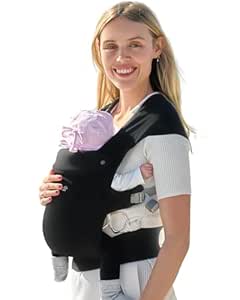 | Best for Quick Buckle Convenience | Brand: GROWNSY | Product type: Structured baby carrier | Color: Black | VIEW ON AMAZON | See Our Full Breakdown |
| WildBird Aerial Buckle Baby Carrier, Standard (XS-XL), Acadian |  | Best for Breathable Linen and Back Carries | Material: Linen | Carry positions: Front facing inward or back | Weight capacity: 7–45 lb | VIEW ON AMAZON | See Our Full Breakdown |
| 4-in-1 Ergonomic Baby Carrier, Newborn to Toddler |  | Best for Adjustable Fit | Carrier type: 4-in-1 | Suitable weight: 7–35 lb | Back design: X-shaped | VIEW ON AMAZON | See Our Full Breakdown |
| BabyBjörn Baby Carrier Mini, Beige Woven |  | Best for the Newborn Stage | Material: Soft woven blend | Color: Beige | Recommended use: First six months, or until baby reaches around 15 lb | VIEW ON AMAZON | See Our Full Breakdown |
| Infantino Flip Luxe 4-in-1 Ergonomic Baby Carrier, Onyx |  | Best for Multiple Carrying Positions | Carrying positions: 4 | Weight range: 7–35 lb | Color: Onyx | VIEW ON AMAZON | See Our Full Breakdown |
| Momcozy WeeSnug Newborn Baby Carrier, 7–25 lbs |  | Best for Newborn-Focused Simplicity | Brand: Momcozy | Model: WeeSnug | Product type: Newborn baby carrier | VIEW ON AMAZON | See Our Full Breakdown |
| Mabē Monarch Ergonomic Baby Carrier, Cotton and Linen, Ebony |  | Best for Multiple Carry Positions | Material: 90% cotton, 10% linen | Carry positions: Front facing in, front facing out, and back carry | Weight range: 9–46 lbs | VIEW ON AMAZON | See Our Full Breakdown |
| Ergobaby Omni Deluxe Baby Carrier, Newborn to Toddler |  | Best Premium All-Stage Pick | Age range: 0–48 months | Weight range: 7–45 lbs | Carry positions: Inward-facing, outward-facing, back carry, and hip carry | VIEW ON AMAZON | See Our Full Breakdown |
| premium baby carriers for newborn | Material |
|---|---|
| BabyBjörn Baby Carrier Mini | 3D jersey |
| Ergobaby Omni Dream Cotton Bab | 100% cotton |
| Ergobaby Omni Classic Baby Car | — |
| BabyBjörn Baby Carrier Harmony | Woven mélange with breathable 3D mesh |
| GROWNSY Baby Carrier with Head | — |
| GROWNSY Ergonomic Baby Carrier | — |
| WildBird Aerial Buckle Baby Ca | Linen |
| 4-in-1 Ergonomic Baby Carrier | — |
| BabyBjörn Baby Carrier Mini | Soft woven blend |
| Infantino Flip Luxe 4-in-1 Erg | — |
| Momcozy WeeSnug Newborn Baby C | 100% cotton |
| Mabē Monarch Ergonomic Baby Ca | 90% cotton, 10% linen |
| Ergobaby Omni Deluxe Baby Carr | — |
More Details on Our Top Picks
BabyBjörn Baby Carrier Mini, Dark Gray, 3D Jersey
The BabyBjörn Baby Carrier Mini is the most focused newborn pick here: its soft, compact 3D jersey design is made for keeping a young baby close, without the longer-term positioning range of the Ergobaby Omni Dream Cotton. Hip support is a stated feature, and the model is acknowledged as hip-healthy by the International Hip Dysplasia Institute. Its limits matter, though: it is listed for babies up to 24 lb and 29.5 in, while the Omni Dream Cotton reaches toddler age and offers four carry positions. That makes the Mini a more specialized choice for the early months, rather than a carrier meant to cover every stage. It can be machine washed warm, but the product data cautions against over-washing, so frequent cleanup may take more care.
Pros:- Soft, compact 3D jersey design
- Designed to keep young babies close
- Provides hip support and is acknowledged as hip-healthy
- Machine washable in warm water
Cons:- Weight limit of 24 lb gives it less growth room than the Ergobaby Omni Dream Cotton
- Over-washing should be avoided, which may complicate frequent cleanup
Best for: Caregivers who want a soft, compact carrier focused on closeness with a young baby.
Not ideal for: Families seeking one carrier for newborn through toddler years or who expect to rely on frequent machine washing.
- Material:3D jersey
- Color:Dark gray
- Suitable child weight:Up to 24 lb (11 kg)
- Suitable child height:Up to 29.5 in (75 cm)
- Recommended age:Up to 1 year
- Care:Machine wash warm (40°C); avoid over-washing
- Hip support:Acknowledged as hip-healthy by the International Hip Dysplasia Institute
Our verdict“Choose the BabyBjörn Mini for a close, compact newborn-focused carrier, and pick the Omni Dream Cotton if you need more carry positions and a longer usable range.”
Ergobaby Omni Dream Cotton Baby Carrier, Newborn to Toddler
The Ergobaby Omni Dream Cotton has the broadest stated use range among these five: it fits from newborn to 48 months, supports babies from 7 to 45 lb, and offers four carry positions. Compared with the BabyBjörn Mini, it is built to stay useful as a baby grows and as caregivers change how they carry; the tradeoff is a more feature-rich setup than a compact newborn-focused option. Padded shoulder straps and lumbar support may suit caregivers planning longer carries, while the side pockets, detachable pouch, and tuck-away hood add practical storage and coverage. The supplied product data does not list a drawback, so I would still weigh its multiple adjustments and accessories against the Mini’s simpler, close-to-baby brief when deciding what matters most.
Pros:- Four carry positions: front-inward, front-outward, hip, and back
- Stated age range runs from newborn to 48 months
- Padded shoulder straps and lumbar support
- Side pockets, detachable pouch, and tuck-away hood
Cons:- Its many positions and adjustment features may be more than needed for caregivers focused only on newborn carrying
- The supplied product details do not state care instructions
Best for: Caregivers who want one cotton carrier spanning newborn use through toddlerhood, with several carry options and built-in storage.
Not ideal for: Buyers who want a compact, newborn-first carrier with a simpler set of features, such as the BabyBjörn Mini.
- Material:100% cotton
- Age range:Newborn to 48 months
- Baby weight range:7–45 lb
- Carry positions:Front-inward, front-outward, hip, and back
- Caregiver waist range:25.5–55.25 in
- Support:Padded shoulder straps and lumbar support
- Storage:Side pockets and detachable storage pouch
- Hood:Tuck-away hood
Our verdict“Pick the Omni Dream Cotton if you want a versatile carrier intended to grow from newborn days into toddlerhood, while the BabyBjörn Mini better suits a compact, early-stage focus.”
Ergobaby Omni Classic Baby Carrier for Newborns to Toddlers
The Ergobaby Omni Classic stands apart for caregivers who want more control over how the carrier fits both baby and wearer. Its cross-back or H-back strap options, adjustable back panel, and three-way head and neck support give it a more configurable setup than the BabyBjörn Mini. Four carry positions and a newborn-to-toddler age range also make it a longer-use alternative to that Mini. Those adjustments can help accommodate growth and different carrying preferences, but the product data specifically notes that switching caregivers may require precise readjustment. The model is designated hip-healthy by the International Hip Dysplasia Institute and states that it exceeds global safety requirements after an 80-point inspection. Optional accessories are sold separately, a consideration for buyers comparing it with the Omni Dream Cotton’s listed included storage features.
Pros:- Four positions: inward-facing, outward-facing, back, and hip
- Cross-back or H-back strap configurations
- Three-way adjustable head and neck support
- Designated hip-healthy and stated to exceed global safety requirements
Cons:- Precise adjustment may be needed when switching caregivers
- Optional accessories are sold separately
Best for: Caregivers who want multiple strap configurations and adjustable support as their baby grows.
Not ideal for: Households where several caregivers need quick handoffs, or buyers who want optional accessories included.
- Age range:0–48 months
- Carry positions:Inward-facing, outward-facing, back carry, and hip carry
- Strap options:Cross-back or H-back
- Head and neck support:Three-way adjustable
- Hip health:Designated hip-healthy by the International Hip Dysplasia Institute
- Safety:Exceeds global safety requirements; 80-point inspection
- Fit features:Adjustable back panel and lumbar support
Our verdict“Choose the Omni Classic if adjustable straps and head support are priorities; the Omni Dream Cotton may suit buyers who value its specified pockets and detachable pouch.”
BabyBjörn Baby Carrier Harmony, Woven Mélange, Light Beige
The BabyBjörn Baby Carrier Harmony is the comfort-and-airflow pick in this group, pairing breathable 3D mesh with padded shoulder straps, back support, and a pressure-relieving waist belt. That makes it a different proposition from the soft, compact BabyBjörn Mini, which is aimed more narrowly at close newborn carrying and has a lower stated weight ceiling. Harmony covers newborn through toddler use from 7 to 40 lb and lists newborn, facing-in, facing-out, and back-carrying positions. It is acknowledged as hip-healthy by the International Hip Dysplasia Institute. The tradeoff is a less complete picture of upkeep: the supplied description does not specify a cleaning method. Buyers who need explicit care guidance may prefer a product with instructions provided, such as the Mini’s warm machine-wash guidance.
Pros:- Breathable 3D mesh is suited to warm conditions
- Supports newborn, facing-in, facing-out, and back-carrying positions
- Padded shoulder straps, back support, and pressure-relieving waist belt
- Acknowledged as hip-healthy by the International Hip Dysplasia Institute
Cons:- The supplied product data does not specify a cleaning method
- Its 40 lb upper limit is lower than the Ergobaby Omni Dream Cotton’s 45 lb limit
Best for: Caregivers who expect warm-weather or longer carries and want mesh airflow with padded support.
Not ideal for: Buyers who need cleaning instructions stated up front or who want the simpler, compact newborn focus of the BabyBjörn Mini.
- Color:Light beige
- Material:Woven mélange with breathable 3D mesh
- Weight range:7–40 lb
- Age range:Newborn to toddler
- Carrying positions:Newborn, facing-in, facing-out, and back carry
- Caregiver support:Padded shoulder straps and back support
- Waist belt:Pressure-relieving
- Hip health:Acknowledged as hip-healthy by the International Hip Dysplasia Institute
Our verdict“Choose Harmony for breathable mesh and padded support across several carry stages, while the Mini offers a more compact newborn-focused alternative with stated wash guidance.”
GROWNSY Baby Carrier with Head Support, Beige Houndstooth
The GROWNSY Baby Carrier offers a straightforward choice for families who want inward-facing and front-facing options, with foldable head and neck support and an adjustable buckle design. Its stated 7–44 lb range extends beyond the BabyBjörn Mini’s 24 lb ceiling, though the GROWNSY lists only two positions while the Ergobaby Omni Dream Cotton offers four. Front-facing use is recommended only after six months, so newborn buyers should plan around inward-facing carry at first. The fabric is described as soft and breathable, but no specific material or care instructions are supplied; that leaves less to go on than the Mini’s stated 3D jersey and wash guidance. This pick makes most sense for buyers who value a simple set of carry options and head support over a more fully specified fabric and care profile.
Pros:- Supports inward-facing and front-facing carry
- Foldable head and neck support
- Adjustable straps and buckle design
- Soft, breathable fabric is specified
Cons:- Front-facing use is recommended only after six months
- Fabric composition and care instructions are not specified
- Offers two listed carry positions, fewer than the Ergobaby Omni Dream Cotton
Best for: Caregivers seeking a carrier with inward-facing newborn use, foldable head support, and a front-facing option for later months.
Not ideal for: Buyers who want four carry positions, specified fabric composition, or stated cleaning instructions.
- Weight capacity:7–44 lb
- Age range:0–36 months
- Carry positions:Inward-facing and front-facing
- Front-facing guidance:Recommended only after 6 months
- Head and neck support:Foldable
- Fit features:Adjustable straps and buckle design
- Fabric:Soft and breathable; composition not specified
- Color and pattern:Beige houndstooth
Our verdict“Choose GROWNSY if two carry options and foldable head support meet your needs; choose the Omni Dream Cotton for four positions or the Mini for specified newborn-focused fabric and care details.”
GROWNSY Ergonomic Baby Carrier, Black
The GROWNSY Ergonomic Baby Carrier suits caregivers who want a structured carrier with the closeness of a wrap-style design and the speed of buckle fastening. Its foldable head and neck pad and M-position design are relevant to newborn use, while breathable fabric may help during longer carries. Compared with the BabyBjörn Baby Carrier Mini, which is purpose-built for the first six months, GROWNSY is described for newborns through toddlerhood, so it may serve for more stages. The tradeoff is that the supplied details give no weight limits or care instructions, leaving buyers without useful fit and maintenance guidance. Cushioned waist support is a plus, but shoppers who need clearly stated limits should favor a model such as the Infantino Flip Luxe 4-in-1, which specifies a 7–35 lb range.
Pros:- Quick-buckle fastening simplifies putting the carrier on
- Foldable head and neck support is suited to the newborn-focused design
- Breathable fabric may feel more comfortable during extended wear
- Cushioned waist support adds comfort for the wearer
Cons:- No weight limits are provided, making fit by baby size harder to judge
- Care instructions are not provided
- The available details do not specify distinct carrying positions
Best for: Caregivers seeking quick buckle fastening, newborn head support, and a carrier described for use through toddlerhood
Not ideal for: Buyers who need a stated weight range or clear washing instructions before choosing a newborn carrier
- Brand:GROWNSY
- Product type:Structured baby carrier
- Color:Black
- Recommended use:Newborns through toddlers
- Support features:Foldable head and neck pad; cushioned waist support
- Fabric:Soft and breathable
- Fastening:Buckle
- Positioning:Ergonomic M-position design
Our verdict“Choose GROWNSY if quick buckles and foldable newborn support matter most, provided the missing weight and care details are acceptable.”
WildBird Aerial Buckle Baby Carrier, Standard (XS-XL), Acadian
The WildBird Aerial is the lineup’s clearest fit for caregivers prioritizing linen breathability and the option to carry on the back as their baby grows. Padded cross straps and lumbar support make its design more oriented toward distributing the wearer’s load than the simpler, early-month focus of the BabyBjörn Baby Carrier Mini. Its stated 7–45 lb capacity also gives it a broader upper range than the Infantino Flip Luxe 4-in-1, which tops out at 35 lb. The newborn caveat matters: the description recommends it from 2–24 months, so I would not choose it as a dedicated newborn carrier. Fit also depends on size; the standard waist range is 24–41 inches, with a larger option listed separately.
Pros:- Linen construction is described as breathable
- Offers front inward and back carry positions
- Padded cross straps and lumbar support address wearer comfort
- Stated 7–45 lb range extends beyond the Infantino Flip Luxe 4-in-1’s listed 35 lb limit
Cons:- Description does not recommend it for newborns
- Standard size fits a 24–41 in waist range, which may exclude some caregivers
- Back carry and broader capacity are less relevant to families seeking a carrier just for the newborn stage
Best for: Caregivers who want linen, front inward and back carries, and a stated capacity up to 45 lb for older babies
Not ideal for: Newborn caregivers or anyone whose waist falls outside the selected size range
- Material:Linen
- Carry positions:Front facing inward or back
- Weight capacity:7–45 lb
- Standard waist range:24–41 in
- Large waist range:35–53.5 in
- Recommended age:2–24 months
- Features:Padded cross straps, lumbar support, removable chest clip
Our verdict“Pick the WildBird Aerial for breathable linen and back carrying after the newborn stage, rather than as your first carrier for a newborn.”
4-in-1 Ergonomic Baby Carrier, Newborn to Toddler
This 4-in-1 Ergonomic Baby Carrier stands out for buyers who want adjustability across different caregiver body shapes and a stated 7–35 lb range. Its X-shaped back and padded shoulder straps and leg openings are intended to spread pressure and soften contact during longer wear. That gives it a different emphasis from the BabyBjörn Baby Carrier Mini, which centers on snug newborn use and the first six months, while the Mini also supplies clearer cleaning and hip-support details. The main drawback here is a lack of specifics: “4-in-1” is not accompanied by named carrying positions, and the material and care instructions are absent. Compared with the Infantino Flip Luxe 4-in-1, it offers a similar stated weight range but less concrete information about what its four configurations include.
Pros:- Adjustable fit is intended to accommodate different body shapes
- X-shaped back design is intended to distribute weight
- Padded shoulder straps and leg openings add cushioning
- Natural M-position design supports the listed ergonomic positioning
Cons:- Specific carrying positions are not listed despite the 4-in-1 description
- Materials are not provided
- Care instructions are not provided
Best for: Caregivers who want an adjustable fit, padded contact points, and a stated 7–35 lb range
Not ideal for: Buyers who need named carry positions, fabric details, or washing instructions before purchase
- Carrier type:4-in-1
- Suitable weight:7–35 lb
- Back design:X-shaped
- Fit:Adjustable
- Shoulder straps:Padded
- Leg openings:Padded
- Positioning:Natural M position
Our verdict“Choose this carrier if fit adjustability and padding lead your priorities, but prefer the BabyBjörn Mini for a more clearly specified newborn-focused option.”
BabyBjörn Baby Carrier Mini, Beige Woven
The BabyBjörn Baby Carrier Mini has the most focused newborn brief in this group: a soft, snug design for close contact during the first six months. Its hip support is acknowledged by the International Hip Dysplasia Institute, and machine washing makes routine cleanup easier than with options whose care details are not supplied, such as the GROWNSY Ergonomic Baby Carrier. The limit is longevity for the wearer. Although safety-tested up to 24 lb, the product is described as most comfortable for the wearer up to about 15 lb and offers less back support for longer use. That makes it less versatile than the Infantino Flip Luxe 4-in-1, which lists four positions and a 7–35 lb range. I’d choose the Mini for an early-stage priority, not one-carrier use through toddlerhood.
Pros:- Designed specifically for newborns and close contact
- Provides hip support acknowledged as hip-healthy by the International Hip Dysplasia Institute
- Machine washable at 40°C
- Soft woven blend suits its snug, early-stage design
Cons:- Most comfortable for the wearer only up to around 15 lb
- Recommended for a limited period compared with carriers described for toddlerhood
- Offers less back support for longer use
Best for: Caregivers who want a simple, washable carrier centered on close newborn contact and the first six months
Not ideal for: Families seeking stronger back support or a single carrier for extended use into toddlerhood
- Material:Soft woven blend
- Color:Beige
- Recommended use:First six months, or until baby reaches around 15 lb
- Safety tested up to:24 lb and 29.5 in
- Cleaning:Machine wash warm (40°C)
- Hip support:Acknowledged as hip-healthy by the International Hip Dysplasia Institute
Our verdict“Pick the BabyBjörn Mini for a simple, washable newborn carrier, and look to the Infantino Flip Luxe if you need more positions and a longer stated weight range.”
Infantino Flip Luxe 4-in-1 Ergonomic Baby Carrier, Onyx
The Infantino Flip Luxe 4-in-1 is the clearest choice here for caregivers who want four carrying positions and one carrier described for newborns through toddlers. Its 7–35 lb range is more explicit than the GROWNSY Ergonomic Baby Carrier’s open-ended newborn-to-toddler recommendation, and the adjustable straps plus lumbar support belt give caregivers practical fit and support details. The soft, easy-to-clean herringbone fabric also answers a daily-use question left open by the 4-in-1 Ergonomic Baby Carrier, whose care information is not listed. Its tradeoff is that the supplied information does not name the four positions or provide a color beyond Onyx; buyers should check that the configurations suit their intended use. It is a more adaptable option than the newborn-focused BabyBjörn Mini, though less specifically tailored to the earliest months.
Pros:- Four carrying positions accommodate different stages
- Stated 7–35 lb range gives a clear use window
- Lumbar support belt and adjustable shoulder straps address wearer fit and support
- Soft, easy-to-clean herringbone fabric suits regular use
Cons:- The supplied details do not name the four carrying positions
- Does not offer the BabyBjörn Mini’s specific emphasis on snug newborn contact
- No additional care method or fabric composition details are provided
Best for: Caregivers who want multiple carrying positions, adjustable straps, and a clearly stated 7–35 lb range
Not ideal for: Buyers who want named details for each carry configuration before choosing, or a carrier focused solely on newborn snugness
- Carrying positions:4
- Weight range:7–35 lb
- Color:Onyx
- Fabric:Herringbone
- Shoulder straps:Adjustable
- Support:Lumbar support belt
- Recommended use:Newborns through toddlers
Our verdict“Choose the Infantino Flip Luxe if you want a specified weight range and four configurations for use beyond the newborn stage.”
Momcozy WeeSnug Newborn Baby Carrier, 7–25 lbs
Momcozy WeeSnug is the most newborn-focused choice here: its 7–25 lb range and adjustable waistband are aimed at getting a smaller baby positioned close, with an M-shaped seat and three-point support. The visual adjustment scale gives caregivers a reference when setting the fit, while the streamlined design may appeal to families who want fewer steps than the more feature-rich Ergobaby Omni Deluxe. Soft, breathable cotton and padded, cross-back straps round out the comfort-focused design. Its narrower weight range is also its main limitation: unlike the Omni Deluxe, it is not presented as a carrier that grows through toddlerhood. A safe, supportive fit depends on careful adjustment, so this is a better match for caregivers willing to check the setup than for anyone expecting a universal fit straight out of the box.
Pros:- 100% cotton fabric is described as soft and breathable
- Adjustable waistband includes a visual adjustment scale
- Designed to support an ergonomic M position with three-point support
- Cross-back straps and padded waist support spread contact across the wearer
Cons:- 7–25 lb range offers less room to grow than the Ergobaby Omni Deluxe
- Careful adjustment is needed to achieve a safe fit
Best for: Caregivers seeking a cotton carrier focused on newborn positioning and a streamlined setup for babies weighing 7–25 lbs.
Not ideal for: Families who want one carrier to cover toddlerhood, or caregivers who prefer a fit that needs little adjustment.
- Brand:Momcozy
- Model:WeeSnug
- Product type:Newborn baby carrier
- Baby weight range:7–25 lbs
- Material:100% cotton
- Fit feature:Adjustable waistband with visual adjustment scale
- Support features:Thickened shoulder straps, cross-back design, padded waist support, and three-point support
Our verdict“Choose the WeeSnug if newborn-focused positioning and a simpler design matter more than carrying well into toddlerhood.”
Mabē Monarch Ergonomic Baby Carrier, Cotton and Linen, Ebony
The Mabē Monarch suits families who value changing carry positions over an early newborn start. Its 9–46 lb range and three options—front inward, front outward, and back carry—give it a broader stated carrying span than the Momcozy WeeSnug, which is limited to 7–25 lbs. The cotton and linen blend is intended to feel breathable, and the deep seat is designed to support an M-shaped hip position. There is a clear age caveat: front inward carry is recommended from three months, while outward and back carry are listed from six months, so the weight range alone does not make this a newborn-ready pick. Machine washing on a gentle cycle is available, but spot cleaning is recommended for longevity. That care guidance may be less appealing to families expecting frequent full washes.
Pros:- Three carry positions provide options as a baby grows
- 90% cotton and 10% linen blend is designed for breathability
- Deep seat is designed to support an M-shaped hip position
- Machine washable on a gentle cycle in a garment bag
Cons:- Front inward carry is recommended from 3+ months, so it is not the earliest-starting option here
- Outward-facing and back carry are recommended only from 6+ months
- Spot cleaning is recommended for longevity
Best for: Caregivers looking for a breathable structured carrier with front and back options as their baby grows beyond the early months.
Not ideal for: Families shopping specifically for a carrier usable from birth, or those who want unrestricted machine washing.
- Material:90% cotton, 10% linen
- Carry positions:Front facing in, front facing out, and back carry
- Weight range:9–46 lbs
- Front-facing-in age guidance:3+ months
- Outward-facing and back-carry age guidance:6+ months
- Seat design:Ergonomic deep seat designed to support an M-shaped hip position
- Care:Machine wash cold on gentle cycle in a garment bag; spot cleaning recommended
- Color:Ebony
Our verdict“Pick the Monarch if you want multiple carry positions for later stages and can accept its age guidance and care limits.”
Ergobaby Omni Deluxe Baby Carrier, Newborn to Toddler
For families who want one carrier to cover many stages, the Ergobaby Omni Deluxe has the widest stated range in this group: 7–45 lbs and birth to 48 months, with no infant insert required. Its four positions—inward, outward, back, and hip—also give it more flexibility than the three-position Mabē Monarch, whose listed inward-facing start is three months. A one-size fit from petite to 4XL broadens its appeal, while four built-in pockets and a removable pouch give caregivers places for small essentials. The tradeoff is setup complexity: multiple adjustment points can take time to fit correctly. Families who want a quick, minimal carrier may prefer the more streamlined Momcozy WeeSnug, though they would give up the Omni Deluxe’s broader carry range and longer stated use span.
Pros:- Supports 7–45 lb use from birth to 48 months without an infant insert
- Four carry positions include hip carry
- One-size fit is listed from petite to 4XL
- Four built-in pockets, a removable pouch, and a privacy hood add practical features
Cons:- Multiple adjustment points may take time to fit
- The stated upper weight limit is 45 lbs
Best for: Caregivers seeking a single adjustable carrier for newborn through toddler stages, with several carry positions and built-in storage.
Not ideal for: Caregivers who prioritize a minimal setup or want to avoid spending time adjusting multiple fit points.
- Age range:0–48 months
- Weight range:7–45 lbs
- Carry positions:Inward-facing, outward-facing, back carry, and hip carry
- Fit:One size, petite to 4XL
- Infant insert:Not required
- Storage:Four built-in pockets and removable pouch
- Additional feature:Privacy hood for sun protection and nursing
- Care:Machine washable
Our verdict“Choose the Omni Deluxe if you want a feature-rich carrier designed to cover newborn through toddler stages and are comfortable tuning its fit.”

How We Picked
I ranked these carriers around the needs that matter most from the newborn stage: a suitable stated age or weight range, head and body support, adjustability for a small baby, and clarity of fit between wearer and child. I also weighed how easily a caregiver can put the carrier on and adjust it, whether its materials and construction suit frequent use, and how much room it offers as a baby grows. A long feature list only helped when it translated into a useful choice for newborn carrying.
The ranking favors options with a clear newborn-to-toddler use case and multiple adjustments, which is why the Ergobaby Omni Dream leads. More specialized picks rank lower for overall versatility but may be a better match for parents who want a compact early-month carrier, a particular fabric feel, or a narrower use range. Product names and supplied descriptions do not establish fit for every baby or caregiver, so I treat wearer comfort and correct positioning as individual checks rather than guaranteed outcomes.
Factors to Consider When Choosing Premium Baby Carriers For Newborns
I’d choose a newborn carrier by starting with the baby’s size and the caregiver’s fit, then decide how much adjustability is worth managing. A premium finish matters most after the carrier meets those practical needs.
Match the carrier’s newborn range to your baby
Check the manufacturer’s minimum weight and any stated newborn fit guidance against your baby’s current size, rather than assuming that “newborn to toddler” means an identical fit from day one. A carrier can list a broad range and still need careful adjustment to support a smaller baby correctly. Avoid buying based only on the upper limit; early fit is the immediate question. If your baby is below the stated minimum or does not sit securely in the carrier’s intended position, choose another carrying arrangement until they meet the guidance. This matters especially when comparing a narrow-range option such as the WeeSnug with carriers marketed through toddlerhood. Follow the manufacturer’s instructions for positioning and seek qualified guidance if you are unsure.
Prioritize fit on both caregiver and baby
Carrier comfort depends on how its waistband, straps, and panel sit on the adult as well as how the baby is supported. A broad wearer-size claim does not guarantee that the strap geometry will feel right on every body. When possible, check adjustment range with the actual caregivers who will use it, especially if you plan to share one carrier. A common mistake is choosing a model for its appearance or fabric before checking whether you can tighten and loosen it comfortably. If one caregiver has to redo several settings each time, a theoretically versatile carrier may be awkward in everyday use. Think through where the carrier’s weight will rest and whether the adjustments are reachable without help.
Decide how much adjustment you want to manage
Multiple carry positions and growth adjustments offer flexibility, but they can add steps when you put the carrier on. The practical question is whether you expect to use those options or prefer a more focused newborn setup. A simple carrier may be easier to learn, while a model designed to last into toddlerhood can reduce the need to change carriers as your child grows. Do not count positions as useful unless they suit your baby’s stage and you can follow the maker’s directions for each one. If several caregivers will share the carrier, easy-to-understand adjustments can matter more than the longest feature list. Try to practice the setup before relying on it for a busy outing.
Choose fabric for climate and care habits
Cotton, jersey, woven fabric, and linen blends can feel different against skin and may have different care instructions. A softer or more structured material is a preference, not proof that a carrier will run cool or suit every season. Check the washing guidance before buying if you expect frequent spills or want a carrier that is easy to maintain. Heavier layers can also affect comfort, so consider how the carrier will fit over the clothing you and your baby usually wear. Parents drawn to a premium finish should ask whether that material choice adds a daily benefit they value. The best fabric is the one whose feel and upkeep fit your routine.
Pay more for the features you will use
Premium can mean a more polished material, a broader adjustment range, or extra convenience features; those benefits do not carry equal weight for every family. A carrier used for short newborn periods may not need the same growth range as one intended for frequent use over several stages. Conversely, a higher-end model can make sense if its adjustments better suit multiple caregivers or its construction matches your expected use. Compare what the product actually includes rather than treating “premium” as a measure of support or fit. A lower-cost multi-position option may cover your needs if you are comfortable with its materials and setup. Spend according to the use case, not the label.
Check support and safe positioning before outings
Newborn carrying calls for particular care with head and body positioning, so read the carrier’s instructions before the first use. The baby should be positioned according to the maker’s guidance, with their face visible and airways unobstructed. Do not assume that a head-support feature replaces correct setup or active checks while carrying. Practice putting the carrier on and securing it while you are not rushed. If you cannot get the fit right, ask a qualified babywearing educator or healthcare professional for help. A well-made carrier still depends on correct use.
Frequently Asked Questions
Should I choose a newborn-focused carrier or one that lasts into toddlerhood?
Choose based on whether early simplicity or longer use matters more in your household. The BabyBjörn Mini models have a more focused early-month role, while the Ergobaby Omni options are described for newborns through toddlerhood. A broad range can reduce the need to change carriers, but only if the carrier fits your baby at each stage and its adjustments are manageable. If you expect occasional, short newborn use, a simpler design may be enough. Check the stated minimum requirements and instructions before deciding.
Can one carrier work for two caregivers with different builds?
Often it can, but the model’s adjustment range and strap placement determine how easy sharing feels. The WildBird Aerial lists an XS-XL wearer range, while other carriers may appeal through their adjustment systems; neither detail guarantees a comfortable fit for every adult. Have both caregivers try the carrier if possible, including tightening it after switching users. If the straps or waistband are hard to reach or reset, the carrier may be frustrating to share even if it technically fits. Choose the one both caregivers can adjust securely.
Is a head-support feature enough to make a carrier suitable for a newborn?
No single feature establishes a safe newborn fit. Check the carrier’s minimum weight, newborn instructions, and how its panel adjusts to your baby’s size. Head support must be used as directed and does not replace keeping the baby’s face visible and airway clear. If the baby seems too small for the intended position, wait or get hands-on guidance from a qualified professional. The product description alone cannot confirm that a specific baby fits correctly.
How do I choose between the Ergobaby Omni Dream, Classic, and Deluxe?
Start with the features and materials listed for the exact version you are considering, since all three are positioned for newborn-to-toddler use. The Dream is my overall recommendation for its combination of broad use and multiple carry options, while the Classic and Deluxe are alternatives for shoppers whose preferred details differ. Compare adjustment steps, fabric and care guidance, and which included features you expect to use. Do not infer a meaningful fit difference from the model name alone. If possible, try the versions with the baby and caregiver who will use them most.
When does a premium carrier make sense if I only plan to carry a newborn?
It can make sense when the premium model’s fit, materials, or ease of adjustment better suits your needs during that limited period. A compact option such as the BabyBjörn Mini may fit a parent seeking a focused newborn carrier, while a longer-range model may offer little extra value if you will stop carrying before the baby grows into its later settings. Consider how often you expect to use it, how easy it is to maintain, and whether more than one caregiver will share it. A premium finish by itself does not guarantee better newborn positioning. Fit and correct use should decide the purchase.
Conclusion
For the best overall balance, I recommend the Ergobaby Omni Dream, with its stated newborn-to-toddler range and multiple carry options. For best value among the multi-position choices, compare the Infantino Flip Luxe and 4-in-1 Ergonomic Carrier against your fit and care needs before choosing. The BabyBjörn Harmony is my best premium-style pick for shoppers drawn to its structured design and woven finish, while the BabyBjörn Mini is the clearest beginner choice for parents who want a focused early-month option. Choose the WildBird Aerial if its listed wearer range is a priority, or the Momcozy WeeSnug if its more limited stated weight range matches your intended use. In every case, verify the newborn fit and follow the carrier’s instructions before carrying.
Evergreen bestsellers Picks
bestsellers
As an affiliate, we earn on qualifying purchases.