A robot vacuum cleaner with a water tank can add routine hard-floor mopping to vacuuming, but the models here vary widely in how much work they leave you. My best overall pick is the Roborock Qrevo S Pro, with the MOVA P10 Pro Ultra standing out for buyers seeking more hands-off dock features and the eufy Omni C20 for strong stated suction in a compact combo. The key tradeoff is between a basic onboard tank that needs frequent attention and a more automated system that takes up more space and can add maintenance. I also weigh how each option suits carpets, mixed flooring, and buyers who prefer simple controls over extensive automation. Read on for the full breakdown and help matching a model to your home.

Get cleaning gear delivered free with Prime
- Fast, free delivery on millions of items
- Prime Video, Amazon Music and more included
- Member-only deals all year
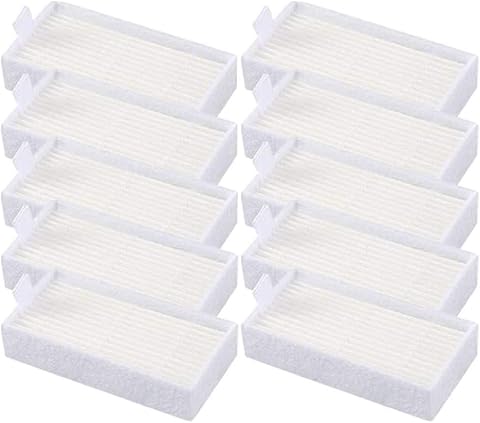
Complete the kit


Key Takeaways
Dock automation separates the more hands-off choices. The Roborock Qrevo S Pro and MOVA P10 Pro Ultra are better suited to buyers who want more cleaning tasks managed at the dock, while simpler combos ask for more direct upkeep.
Water-tank capacity is only part of the mopping decision. How the robot manages water and mop maintenance affects how much attention a routine clean requires.
The eufy Omni C20 leads on its stated 7,000 Pa suction figure, but suction alone does not tell you how a robot will handle edges, rugs, or mop care.
The Roborock Q7 L5 and SereneLife PUCRVACX200BK suit buyers prioritizing a simpler combo, but they do not offer the same level of dock automation as the more feature-rich picks.
The iRobot Roomba Plus 415X offers a distinct alternative within this group; compare its vacuum-and-mop approach with the Roborock and eufy options against your preferred maintenance routine and floor mix.
| Roborock Qrevo S Pro Robot Vacuum and Mop |  | Best Overall | Suction power: 18,500 Pa | Mop type: Dual liftable spinning mops | Mop lift: 10 mm | VIEW ON AMAZON | See Our Full Breakdown |
| MOVA P10 Pro Ultra Robot Vacuum and Mop |  | Best for Large Homes | Suction: 13,000 Pa | Clean-water tank: 4.5 L | Used-water tank: 4 L | VIEW ON AMAZON | See Our Full Breakdown |
| eufy Omni C20 Robot Vacuum and Mop Combo, 7,000 Pa |  | Best for Low-Clearance Furniture | Suction power: Up to 7,000 Pa | Height: 3.35 inches (85 mm) | Runtime: Up to 132 minutes | VIEW ON AMAZON | See Our Full Breakdown |
| iRobot Roomba Plus 415X Robot Vacuum and Mop Combo |  | Best for Pet Hair | Suction power: 20,000 Pa | Dock: AutoWash dock with debris emptying, water refilling, and mop-pad washing and heat-drying | Debris emptying: Up to 90 days | VIEW ON AMAZON | See Our Full Breakdown |
| Roborock Q7 L5 Robot Vacuum and Mop Combo |  | Best Value for a Simple Water-Tank Setup | Suction power: 8,000 Pa | Water tank capacity: 270 ml | Navigation: LiDAR | VIEW ON AMAZON | See Our Full Breakdown |
| SereneLife PUCRVACX200BK Robot Vacuum and Mop Combo |  | Best for Straightforward, App-Controlled Mopping | Model: PUCRVACX200BK | Water tank capacity: 520 ml | Suction power: 2,000 Pa | VIEW ON AMAZON | See Our Full Breakdown |
| robot vacuum cleaner with water tank | Suction power | Battery life | Navigation | Mop lift |
|---|---|---|---|---|
| Roborock Qrevo S Pro Robot Vac | 18,500 Pa | 180 minutes | LiDAR with obstacle avoidance | 10 mm |
| MOVA P10 Pro Ultra Robot Vacuu | — | 198 minutes | — | 10.5 mm (0.4 in) |
| eufy Omni C20 Robot Vacuum and | Up to 7,000 Pa | — | iPath laser navigation; stores up to 3 floor maps | — |
| iRobot Roomba Plus 415X Robot | 20,000 Pa | — | LiDAR mapping and obstacle recognition | 10 mm |
| Roborock Q7 L5 Robot Vacuum an | 8,000 Pa | 150 minutes | LiDAR | — |
| SereneLife PUCRVACX200BK Robot | 2,000 Pa | 90 minutes listed | — | — |
More Details on Our Top Picks
Roborock Qrevo S Pro Robot Vacuum and Mop
The Roborock Qrevo S Pro is the strongest all-round choice here for buyers who want the dock to handle most of the water-and-mop routine. Its station empties dust, washes and dries the spinning mop pads, and refills the robot, reducing hands-on upkeep compared with the Roborock Q7 L5, which has a 270 ml water tank but no listed automatic mop-care dock. With 18,500 Pa suction, carpet settings, and liftable mops, it is also better equipped to switch between hard floors and rugs than the lower-suction eufy Omni C20. Obstacle avoidance and LiDAR mapping add useful control around furniture. The tradeoffs are its 2.4 GHz-only Wi-Fi and a noise specification that varies between 55 and 60 dB; buyers who need a simpler, smaller setup may find the dock excessive.
Pros:- Dock empties dust, washes and dries the mops, and refills water
- 18,500 Pa suction and carpet-specific settings support mixed-floor cleaning
- Liftable spinning mops help keep rugs dry
- Obstacle avoidance, LiDAR, and an anti-tangle brush system support more controlled cleaning
Cons:- Wi-Fi support is limited to 2.4 GHz
- Noise level is described as both 55 dB and 60 dB
- Multifunction dock requires more space than a basic charging base
Best for: Households with mixed hard floors and carpets that want automatic dust emptying, mop washing, drying, and water refilling.
Not ideal for: Buyers whose home network relies on 5 GHz Wi-Fi or who want a compact robot without a multifunction dock.
- Suction power:18,500 Pa
- Mop type:Dual liftable spinning mops
- Mop lift:10 mm
- Dock functions:Dust emptying, mop washing and drying, water refilling
- Battery life:180 minutes
- Navigation:LiDAR with obstacle avoidance
- Dust bag capacity:2.7 L
- Wi-Fi:2.4 GHz only
Our verdict“Choose the Qrevo S Pro if you want strong mixed-floor cleaning with dock-based water and mop maintenance handled for you.”
MOVA P10 Pro Ultra Robot Vacuum and Mop
For larger homes where refilling a small reservoir would interrupt mopping, the MOVA P10 Pro Ultra stands out with a 4.5 L clean-water tank and a 4 L used-water tank. Its listed 198-minute runtime is longer than the Roborock Qrevo S Pro‘s 180 minutes, while its dock also empties dust and washes and dries the dual spinning mops. Dirt detection can prompt repeat cleaning, and the mop lifts 10.5 mm over carpets. The compromise is that its 13,000 Pa suction is below the Qrevo S Pro’s 18,500 Pa and the Roomba Plus 415X‘s listed 20,000 Pa, so buyers prioritizing maximum suction may prefer those alternatives. This MOVA is also specified for 110–120 V systems in the U.S. and Canada, and app services may vary by region.
Pros:- 4.5 L clean-water and 4 L used-water tanks reduce frequent dock refills and emptying
- Dock automatically empties dust and washes and dries the mops
- 198-minute battery life is the longest listed among these five models
- Dirt detection, carpet mop lift, and multi-floor mapping support varied cleaning needs
Cons:- 13,000 Pa suction is lower than the Qrevo S Pro and Roomba Plus 415X
- Designed for 110–120 V power systems in the U.S. and Canada
- App-based features and services may vary by region
Best for: Owners of larger, mostly hard-floor homes who want generous dock water capacity, extended runtime, and automated mop care.
Not ideal for: Buyers outside the specified 110–120 V regions or those who prioritize the highest listed suction over water capacity.
- Suction:13,000 Pa
- Clean-water tank:4.5 L
- Used-water tank:4 L
- Dust bag:3.2 L
- Battery capacity:5,200 mAh
- Battery life:198 minutes
- Mop lift:10.5 mm (0.4 in)
- Mop washing temperature:149°F
Our verdict“Pick the P10 Pro Ultra if large water capacity and long runs matter more to you than leading suction strength.”
eufy Omni C20 Robot Vacuum and Mop Combo, 7,000 Pa
The eufy Omni C20 is the clearest choice when a robot needs to slip beneath furniture: its body is just 3.35 inches tall, a practical advantage over models where clearance is not specified. It vacuums and mops at once, and its station empties dust and washes and dries the pads, offering more automatic mop care than the Roborock Q7 L5 and its 270 ml onboard tank. Carpet detection lifts the mop, while laser navigation stores up to three floor maps. The tradeoff is 7,000 Pa suction, well below the Q7 L5’s 8,000 Pa and the Qrevo S Pro’s 18,500 Pa, making this a less compelling pick for heavy debris or carpet-first homes. It also works only on 2.4 GHz Wi-Fi, and high-pile carpets need No-Go Zones.
Pros:- 3.35-inch height helps it reach beneath some low-clearance furniture
- Station empties dust and washes and dries mop pads
- Vacuums and mops simultaneously, with mop lifting on carpet
- Stores up to three floor maps and supports app and voice control
Cons:- 7,000 Pa suction is lower than the Roborock Q7 L5 and Qrevo S Pro
- Supports 2.4 GHz Wi-Fi only
- Carpets with pile over 20 mm require No-Go Zones, and boundary strips are not supported
Best for: Apartment dwellers and furniture-heavy homes with low-clearance sofas or cabinets, mostly hard floors, and a need for automated mop-pad care.
Not ideal for: Homes with substantial high-pile carpeting, 5 GHz-only Wi-Fi, or frequent heavy debris that calls for stronger suction.
- Suction power:Up to 7,000 Pa
- Height:3.35 inches (85 mm)
- Runtime:Up to 132 minutes
- Navigation:iPath laser navigation; stores up to 3 floor maps
- Dust bag capacity:3.1 L
- Dock functions:Dust emptying, mop-pad washing and drying
- Wi-Fi:2.4 GHz only
- Voltage:120 V
Our verdict“Choose the Omni C20 if low furniture clearance and automated mop care matter more than high suction or carpet flexibility.”
iRobot Roomba Plus 415X Robot Vacuum and Mop Combo
The Roomba Plus 415X makes the most sense for pet owners who want a water-refilling dock paired with a brush system designed to resist hair tangles. Its listed 20,000 Pa suction is higher than the other models in this group, including the Roborock Qrevo S Pro, and its AutoWash dock empties debris for up to 90 days, washes and heat-dries mop pads, and refills water. LiDAR mapping, obstacle recognition, and 10 mm mop lift help it manage rooms with rugs and everyday obstacles. Its flexibility also comes from four cleaning modes, including vacuum-only and mop-only. The missing battery-life and water-tank-capacity figures make it harder to judge coverage and refill frequency against the MOVA P10 Pro Ultra, which publishes both tank sizes and runtime. The dock also takes space and calls for ongoing maintenance.
Pros:- 20,000 Pa listed suction and rubber brushes designed for pet hair
- AutoWash dock empties debris for up to 90 days
- Dock washes and heat-dries mop pads and refills water
- Four cleaning modes and 10 mm mop lift support different floor routines
Cons:- Battery life and water-tank capacity are not specified
- AutoWash dock needs more space and maintenance than a basic robot base
- The available product data does not specify runtime for comparing large-home coverage
Best for: Pet households that want strong listed suction, tangle-resistant brushes, and a dock that automates debris and mop care.
Not ideal for: Buyers who need published battery and water-tank capacity figures to plan large-area cleaning or have limited room for a multifunction dock.
- Suction power:20,000 Pa
- Dock:AutoWash dock with debris emptying, water refilling, and mop-pad washing and heat-drying
- Debris emptying:Up to 90 days
- Mop-pad drying temperature:113°F
- Mop lift:10 mm
- Navigation:LiDAR mapping and obstacle recognition
- Cleaning modes:Vacuum-only, mop-only, vacuum and mop, vacuum then mop
Our verdict“Choose the Roomba Plus 415X if pet hair and automated dock care are your priorities and the dock’s size suits your home.”
Roborock Q7 L5 Robot Vacuum and Mop Combo
The Roborock Q7 L5 suits buyers who want an onboard water tank and mapped vacuuming without adding a mop-washing station to the floor plan. Its 270 ml tank supports basic mopping, while LiDAR mapping, multi-floor support, no-go zones, and 8,000 Pa suction add useful control for everyday cleaning. That simpler setup is the key difference from the Roborock Qrevo S Pro, whose dock handles water refilling plus mop washing and drying. The Q7 L5 asks for more manual upkeep, but its 150-minute battery life and anti-tangle brushes make it a straightforward option for homes with a mix of floors. Compared with the eufy Omni C20, it offers higher listed suction but lacks the eufy’s automatic mop-pad washing and drying station. Its tank and dustbin share an integrated combo part, which can make handling less convenient.
Pros:- 270 ml onboard water tank provides mopping without a multifunction dock
- 8,000 Pa suction with carpet auto-boost supports everyday mixed-floor cleaning
- LiDAR navigation supports multi-floor maps and no-go zones
- 150-minute battery life and anti-tangle brushes add practical day-to-day flexibility
Cons:- Mop maintenance and water refilling are not automated by a listed dock
- Water tank and dustbin are part of an integrated combo component
- Wi-Fi support is limited to 2.4 GHz
Best for: Buyers who want LiDAR mapping, scheduled vacuum-and-mop cleaning, and a built-in water tank without a large self-cleaning dock.
Not ideal for: People seeking automatic mop washing, drying, or water refilling, or households that prefer separate water and dust components.
- Suction power:8,000 Pa
- Water tank capacity:270 ml
- Navigation:LiDAR
- Battery life:150 minutes
- Battery type:Lithium-ion
- Noise level:60 dB
- Filter:Washable
- Wi-Fi:2.4 GHz
Our verdict“Choose the Q7 L5 if you want a mapped robot with an onboard water tank and are comfortable maintaining the mop yourself.”
SereneLife PUCRVACX200BK Robot Vacuum and Mop Combo
I’d choose the SereneLife PUCRVACX200BK for a home that needs basic vacuuming and light mopping without a more elaborate dock. Its 520 ml water tank supports simultaneous vacuuming and mopping, while app control, scheduling, and a remote give household members more than one way to start a clean. Four modes, including spot and edge cleaning, add flexibility for targeted messes. Compared with the Roborock Q7 L5, this model’s listed 2,000 Pa suction and low-pile-carpet guidance point to a more modest fit for carpeted homes. Its 90-minute battery listing also deserves attention: the description separately mentions self-charging after 100 minutes, so runtime expectations are unclear. I’d shortlist it for hard floors, but skip it if you need strong carpet performance or unambiguous runtime details.
Pros:- 520 ml water tank allows simultaneous vacuuming and mopping
- App, remote, and onboard button controls offer several ways to operate it
- Four modes include spot and edge cleaning for targeted jobs
- Anti-fall sensors and automatic return to the charging station support more hands-off use
Cons:- Designed for low-pile carpet, limiting its usefulness in carpet-heavy homes
- Listed battery life is 90 minutes, while the description mentions self-charging after 100 minutes
- Listed suction power of 2,000 Pa is modest compared with higher-suction alternatives such as the eufy Omni C20
Best for: Households with mostly hardwood, tile, or linoleum that want scheduled, simultaneous vacuuming and mopping with app or remote controls.
Not ideal for: Homes with thick carpet or buyers who need clearly specified runtime; the product is intended for low-pile carpet and lists conflicting timing details.
- Model:PUCRVACX200BK
- Water tank capacity:520 ml
- Suction power:2,000 Pa
- Battery life:90 minutes listed
- Cleaning modes:Zigzag, Auto, Spot, Edge
- Controls:App, remote control, buttons
- Filter:HEPA
- Recommended surfaces:Carpet, wood, tile; carpet use is specified for low pile
- Warranty:1 year
Our verdict“Choose the SereneLife for scheduled, basic mopping on hard floors, but look elsewhere for thick-carpet cleaning or clearer runtime specifications.”

How We Picked
I ranked these six robot vacuum and mop combos around the practical meaning of a water tank: whether it supports useful mopping, how often a buyer may need to intervene, and how well the complete setup fits everyday floors. I weighed the cleaning system, dock functions, ease of operation, expected upkeep, versatility across hard floors and rugs, and the balance between automation and simplicity. Stated suction figures informed the comparison where available, but I did not treat them as a substitute for a full cleaning assessment.
The Roborock Qrevo S Pro ranks first as the strongest all-round match for buyers seeking a capable vacuum-and-mop system with more dock support. The MOVA P10 Pro Ultra follows for those who value automation, while the eufy Omni C20 earns a distinct place for its stated suction and combo format. The Roomba Plus 415X, Roborock Q7 L5, and SereneLife PUCRVACX200BK round out the list for shoppers comparing alternative approaches and simpler needs; their positions reflect the tradeoffs between feature depth, upkeep, and versatility rather than a claim that every home needs the most automated model.
| robot vacuum cleaner with water tank | Navigation |
|---|---|
| Roborock Qrevo S Pro Robot Vac | LiDAR with obstacle avoidance |
| MOVA P10 Pro Ultra Robot Vacuu | — |
| eufy Omni C20 Robot Vacuum and | iPath laser navigation; stores up to 3 floor maps |
| iRobot Roomba Plus 415X Robot | LiDAR mapping and obstacle recognition |
| Roborock Q7 L5 Robot Vacuum an | LiDAR |
| SereneLife PUCRVACX200BK Robot | — |
Factors to Consider When Choosing Robot Vacuum Cleaner With Water Tank
A water tank does not automatically make a robot a good mop. I would compare the whole cleaning routine—where water is stored, how the mop is maintained, and what happens around rugs—before choosing based on a tank label or suction figure alone.
Match the Water System to Your Cleaning Routine
Start by asking how often you want to refill and empty the system, not just how much water the tank holds. An onboard tank can keep the robot compact, but it usually means more direct handling between runs. A dock that manages parts of the water and mop routine can reduce chores, though it adds floor space and more components to clean. Check which tasks the dock actually handles; a docking station does not always automate every step. A common mistake is buying for capacity while overlooking how accessible the tank is to remove and rinse. If you mop small areas occasionally, simplicity may matter more than a larger water setup.
Set Expectations for Mopping
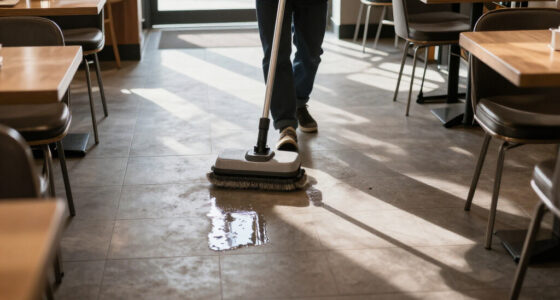
Most robot mop systems are intended for routine surface maintenance, not scrubbing dried spills or replacing a manual deep clean. Consider how the mop contacts the floor and whether the robot can adapt its behavior near rugs. If your home has frequent sticky messes, a water tank alone will not solve the problem; you may still need to spot-clean. Avoid assuming that a combo unit washes every floor equally well, since hard floors and carpet require different handling. Look for clear controls for water flow and no-mop areas if your home has delicate surfaces or mixed flooring. Choose a mop setup that fits the messes you actually have rather than the most ambitious feature list.
Plan for Carpets, Rugs, and Thresholds
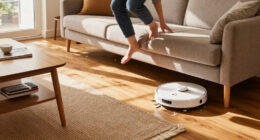
Map out where the robot will travel before deciding on a vacuum-and-mop combo. Rugs can complicate wet cleaning, and thresholds or uneven transitions may interrupt a route even when a product has strong suction. Check whether the navigation and app controls let you set boundaries that suit your rooms. A home with mostly hard floors may benefit more from regular mopping, while a carpet-heavy home should prioritize vacuuming and reliable rug handling. Do not assume a single cleaning mode will work equally well across every surface. If rooms have distinct floor types, flexible scheduling and clear zone controls can matter more than tank size.
Compare Automation Against Space and Upkeep
More automated docks can reduce hands-on steps, but they take up more room and may have their own maintenance needs. Measure the spot where the dock will sit, including the space needed to open, remove, or refill components. Think about noise, access to an outlet, and whether the station can be placed near a suitable water source if its design calls for one. Simpler robots may be easier to accommodate, but the tradeoff is more frequent manual attention. A common buying error is paying for dock functions that will not be used or, conversely, underestimating the effort of a basic setup. Choose automation according to the chores you most want to avoid.
Look Beyond the Suction Number
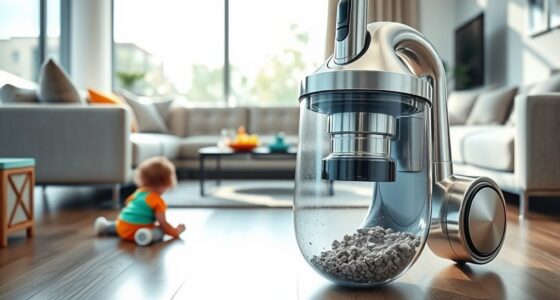
A stated suction figure can help distinguish product specifications, but it cannot predict the full cleaning result by itself. Brush design, navigation, pickup behavior on your floor types, and how the robot handles edges also affect daily usefulness. For a combo model, consider whether the vacuum routine and mopping routine can be scheduled in a way that fits your household. Pet hair, fine dust, and larger debris can place different demands on brushes and bins. Check how accessible those parts are for clearing tangles and dirt. Treat suction as one comparison point, not the deciding measure.
Factor in Ongoing Care and Replacement Parts
Water tanks and mop components need regular care to prevent residue and odors, regardless of how automated the robot is. Check how easily you can access the tank, wash or replace mop pads, and clean the dock’s collection areas. Also look for the availability of compatible consumables and filters before committing to a model. A system that is easy to maintain is more likely to fit a busy routine than one with complicated cleaning steps. Consider where you will store spare pads and how often the manufacturer recommends replacing parts. The true convenience of a robot is shaped by its upkeep as much as by its cleaning schedule.
Frequently Asked Questions
Is a robot vacuum with a water tank suitable for a home with both rugs and hard floors?
It can be, provided the robot offers a way to manage rugs during a mopping run. Check for rug detection, mop lifting, or app-based no-mop zones rather than assuming the robot will keep every carpet dry. If those controls are limited, schedule vacuum-only runs or separate rooms by floor type. A mostly hard-floor home is generally a more straightforward match for a combo unit. For thick or numerous rugs, prioritize rug handling over tank capacity.
Do I still need to refill and clean a robot vacuum’s water system?
Yes, although the amount of hands-on work varies by design. A basic onboard tank typically requires more direct filling and cleaning, while a feature-rich dock may manage some parts of the routine. Even with an automated station, mop pads, water areas, and dock components need periodic care. Check the product instructions to see exactly which chores are automated and which remain yours. The best fit depends on whether you prefer a simpler setup or fewer repeated manual steps.
Should I choose the Roborock Qrevo S Pro or the MOVA P10 Pro Ultra?
Both are positioned among the more automation-oriented options in this roundup, so compare their dock routines and the maintenance each still requires. I place the Qrevo S Pro first as the strongest all-round choice, while the MOVA P10 Pro Ultra makes sense for buyers placing particular weight on hands-off dock features. Your available space matters too, since more involved dock setups can occupy more room than simpler combos. Review the exact included functions for each version before choosing. If you do not need dock automation, a simpler model may better suit your routine.
Is the eufy Omni C20’s 7,000 Pa suction figure enough reason to choose it?
It is a useful stated specification, but it should not decide the purchase by itself. Consider how the robot handles your floors, rugs, edges, and regular debris, as well as how its water and mop system fits your cleaning routine. The C20 stands out for its stated suction among these picks, while other models may appeal more for their dock automation or simpler setup. Compare app controls and upkeep alongside the number. If your main need is mopping, suction should be only one part of the decision.
When does a simpler model like the Roborock Q7 L5 or SereneLife PUCRVACX200BK make more sense?
A simpler combo can suit buyers who want basic vacuum-and-mop functionality without prioritizing a more elaborate dock. It may also be easier to fit into a small home or a routine where manual refilling and pad care are acceptable. The tradeoff is that you may take on more maintenance than with the higher-automation choices. Compare what each model includes and whether its controls cover your rooms and floor types. Choose based on the chores you are comfortable doing yourself, not just the initial feature list.
Conclusion
For a balanced combination of vacuuming, mopping, and dock support, I recommend the Roborock Qrevo S Pro as best overall. The MOVA P10 Pro Ultra is my best premium-style choice for buyers who value more hands-off dock features, while the eufy Omni C20 is the standout for shoppers drawn to its stated 7,000 Pa suction. For beginners, I would start by comparing the Roborock Q7 L5 and SereneLife PUCRVACX200BK if a simpler combo and direct upkeep sound manageable; check each model’s controls and included functions before deciding. The iRobot Roomba Plus 415X is worth comparing for buyers who prefer its particular vacuum-and-mop approach. Match the dock and maintenance routine to your home: the best water-tank robot is the one whose daily care and floor handling suit you.