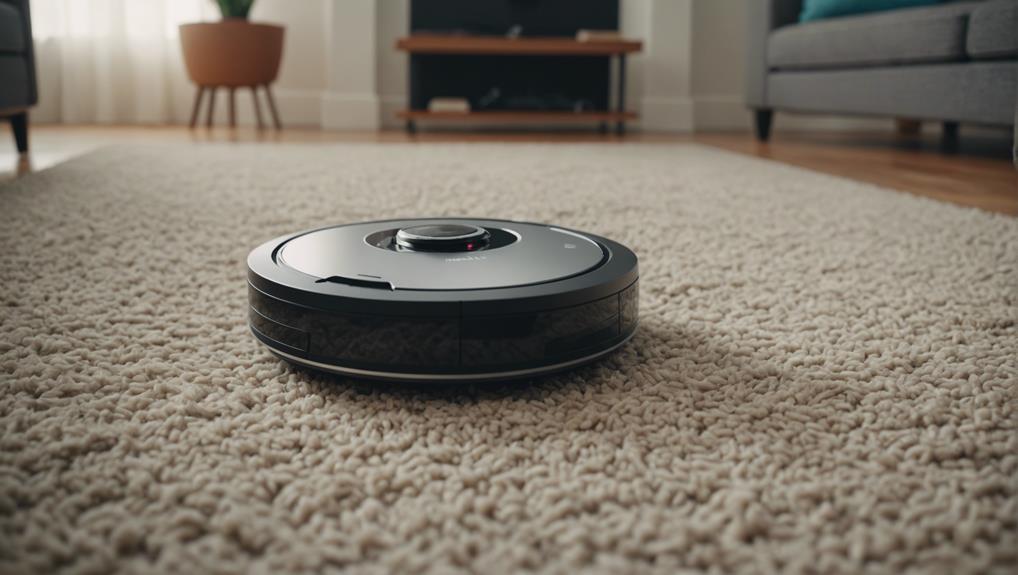
For dog hair, I’d start with the Roborock Q7 M5+ as my best overall pick: its self-emptying dock and vacuum-and-mop setup suit routine cleaning in a pet home. The iRobot Roomba Max 715 Pet is the pet-focused alternative, while the Shark AI Ultra models stand out for their self-emptying bases. The main tradeoffs are how much maintenance you’ll handle, whether you need mopping, and how much navigation and dock convenience matter in your home. A robot can help keep loose fur under control, but brushes and filters still need care, especially during heavy shedding. Read on for the full comparison and picks by buyer type.

Get cleaning gear delivered free with Prime
- Fast, free delivery on millions of items
- Prime Video, Amazon Music and more included
- Member-only deals all year
Complete the kit


Key Takeaways
- The Roborock Q7 M5+ leads this lineup for buyers who want routine vacuuming, mopping, and a self-emptying dock in one setup.
- The iRobot Roomba Max 715 Pet is the clearest pet-oriented choice, while the Roborock and Tikom options pair vacuuming with mopping.
- Self-emptying docks appear across several picks, including both Shark AI Ultra models, but they reduce bin trips rather than eliminating brush and filter upkeep.
- The Roborock Q7 L5 lists 8,000 Pa suction; suction figures alone do not establish how well a robot handles fur tangled in brushes or stuck in carpet.
- The lineup spans different levels of convenience: dock-equipped models prioritize less frequent emptying, while the Tikom G8000 Max and ROPVACNIC S1 offer simpler combo formats.
| Roborock Q7 M5+ Robot Vacuum and Mop with Self-Emptying Dock |  | Best Overall for Hair and Hard Floors | Suction power: 10,000 Pa | Dust bag capacity: 2.7 L | Self-emptying interval: Up to 7–9 weeks | VIEW ON AMAZON | See Our Full Breakdown |
| iRobot Roomba Max 715 Pet Robot Vacuum |  | Best Premium Pet-Hair Pick | Suction power: 30,000 Pa | Brushes: Dual anti-tangle rubber brushes and anti-tangle edge-sweeping brush | Self-emptying: Up to 90 days | VIEW ON AMAZON | See Our Full Breakdown |
| Shark AI Ultra Robot Vacuum with 60-Day Self-Emptying Base, Black, AV2511AE |  | Best Bagless Base | Model: AV2511AE | Color: Black | Runtime: Up to 90 minutes | VIEW ON AMAZON | See Our Full Breakdown |
| Shark AV2501S AI Ultra Robot Vacuum with Matrix Clean and Self-Empty Base |  | Best for Longer Cleaning Sessions | Model: AV2501S | Navigation: Matrix Clean with 360° LiDAR home mapping | Base capacity: Up to 30 days of dirt and debris | VIEW ON AMAZON | See Our Full Breakdown |
| D13S MAX Robot Vacuum and Mop with Self-Emptying Station |  | Best for Long-Run Vacuum-and-Mop Coverage | Model: D13S MAX | Functions: Vacuuming, sweeping, and mopping | Suction power: 11,500 Pa | VIEW ON AMAZON | See Our Full Breakdown |
| Tikom G8000 Max Robot Vacuum and Mop Combo |  | Best for Low-Profile Cleaning | Suction power: 5,000 Pa | Maximum runtime: Up to 150 minutes | Dustbin capacity: 450 ml | VIEW ON AMAZON | See Our Full Breakdown |
| Roborock Q7 L5 Robot Vacuum and Mop Combo, 8,000 Pa Suction |  | Best for Mapped Multi-Floor Homes | Suction power: 8,000 Pa | Battery life: 150 minutes | Navigation: LiDAR | VIEW ON AMAZON | See Our Full Breakdown |
| Tikom L8000 Plus Robot Vacuum and Mop with Self-Emptying Base |  | Best for Less Frequent Bin Emptying | Maximum suction: 6,000 Pa | Dustbag capacity: 3 L | Navigation: 360° LiDAR | VIEW ON AMAZON | See Our Full Breakdown |
| ROPVACNIC S1 Robot Vacuum and Mop Combo, 5200 Pa |  | Best for Reducing Hair Tangles | Suction power: 5,200 Pa | Functions: Vacuuming and mopping | Water adjustment: Four-stage | VIEW ON AMAZON | See Our Full Breakdown |
| Roborock Robot Vacuum and Mop with LiDAR Navigation and Self-Empty Dock |  | Best Premium Suction and Self-Emptying | Suction power: 10,000 Pa | Dust bag capacity: 2.7 L | Hands-free cleaning: Up to 7–9 weeks | VIEW ON AMAZON | See Our Full Breakdown |
| robotic vacuums for dog hair | Navigation | Suction power |
|---|---|---|
| Roborock Q7 M5+ Robot Vacuum a | PreciSense LiDAR | 10,000 Pa |
| iRobot Roomba Max 715 Pet Robo | ClearView Pro LiDAR with 3D mapping | 30,000 Pa |
| Shark AI Ultra Robot Vacuum wi | 360° LiDAR mapping | — |
| Shark AV2501S AI Ultra Robot V | Matrix Clean with 360° LiDAR home mapping | — |
| D13S MAX Robot Vacuum and Mop | LiDAR | 11,500 Pa |
| Tikom G8000 Max Robot Vacuum a | — | 5,000 Pa |
| Roborock Q7 L5 Robot Vacuum an | LiDAR | 8,000 Pa |
| Tikom L8000 Plus Robot Vacuum | 360° LiDAR | — |
| ROPVACNIC S1 Robot Vacuum and | — | 5,200 Pa |
| Roborock Robot Vacuum and Mop | PreciSense LiDAR | 10,000 Pa |
More Details on Our Top Picks
Roborock Q7 M5+ Robot Vacuum and Mop with Self-Emptying Dock
The Roborock Q7 M5+ balances dog-hair pickup with useful floor care: its 10,000 Pa suction and JawScrapers brush are designed to limit hair wrap, while LiDAR mapping helps it follow organized room routes. The dock’s 2.7 L sealed bag can reduce how often owners need to handle collected fur. Compared with the Shark AI Ultra AV2511AE, this Roborock adds adjustable mopping, making it a more flexible pick for homes where muddy paw marks accompany shedding. Its three water-flow settings let owners tailor damp cleaning, though a robot mop is not a substitute for scrubbing dried messes. The main catch is connectivity: the app works on 2.4 GHz Wi-Fi only, which may complicate setup for some home networks.
Pros:- JawScrapers main brush and anti-tangle side brush are designed to reduce hair wrap
- LiDAR mapping supports organized room cleaning and no-go zones
- Vacuuming and adjustable-flow mopping combine in one device
- Sealed 2.7 L dock bag can go up to 7–9 weeks between emptying
Cons:- App Wi-Fi support is limited to 2.4 GHz
- Mopping is suited to routine surface care rather than stubborn dried messes
Best for: Dog owners with mostly hard floors who want scheduled vacuuming, occasional mopping, and less frequent dust handling
Not ideal for: Households whose Wi-Fi setup does not support 2.4 GHz or buyers who need deep cleaning of dried-on paw prints
- Suction power:10,000 Pa
- Dust bag capacity:2.7 L
- Self-emptying interval:Up to 7–9 weeks
- Navigation:PreciSense LiDAR
- Mopping:Three adjustable water-flow settings
- Brush design:JawScrapers main brush and anti-tangle side brush
- App Wi-Fi support:2.4 GHz only
Our verdict“Choose the Q7 M5+ if you want a mapped dog-hair vacuum that also handles light floor mopping and has a large sealed dock bag.”
iRobot Roomba Max 715 Pet Robot Vacuum
For homes where dog fur settles into rugs, the Roomba Max 715 Pet puts its emphasis on carpet pickup: it pairs 30,000 Pa suction with automatic Carpet Boost and dual anti-tangle rubber brushes. AI obstacle avoidance and 3D LiDAR mapping are intended to help it work around floor clutter as it cleans room by room. Its dock can hold debris for up to 90 days, a longer stated interval than the Roborock Q7 M5+, which instead adds mopping for hard-floor upkeep. That makes the Roomba the more focused choice for carpet-heavy pet homes, but less versatile if paw prints are part of the daily cleanup. The dust-bag dock still needs replacement bags, and app or compatible voice-assistant access is needed for some smart features.
Pros:- Automatic Carpet Boost raises suction on rugs and carpets
- Dual anti-tangle rubber brushes and an anti-tangle edge brush target pet hair
- PrecisionVision AI and 3D mapping support obstacle-aware room cleaning
- Auto-empty dock is rated for up to 90 days of operation
Cons:- No mopping function is listed
- Dock requires replacement dust bags
- Some smart features depend on the app or compatible voice assistant devices
Best for: Dog owners with carpeted rooms, frequent shedding, and floor clutter who want automatic carpet suction adjustment
Not ideal for: Homes seeking an included mopping function or buyers who prefer to avoid replacement dock bags and app-dependent features
- Suction power:30,000 Pa
- Brushes:Dual anti-tangle rubber brushes and anti-tangle edge-sweeping brush
- Self-emptying:Up to 90 days
- Navigation:ClearView Pro LiDAR with 3D mapping
- Obstacle avoidance:PrecisionVision AI
- Carpet cleaning:Carpet Boost and Advanced Dirt Detect
- Voice control:Alexa, Siri, and Google Assistant
Our verdict“Pick the Roomba Max 715 Pet for carpet-focused dog-hair cleanup with obstacle avoidance and a long stated dock interval.”
Shark AI Ultra Robot Vacuum with 60-Day Self-Emptying Base, Black, AV2511AE
The Shark AI Ultra AV2511AE suits dog owners who want a self-emptying setup without dock dust bags. Its bagless base is rated to hold up to 60 days of debris, and the self-cleaning brushroll is designed to limit hair wrap as it handles carpets and hard floors. LiDAR mapping and recharge-and-resume support mapped cleaning, though the stated runtime is up to 90 minutes per charge. By comparison, the Shark AV2501S offers up to 120 minutes and HEPA filtration, but its base is rated for 30 days. That gives the AV2511AE a longer stated debris interval, while the AV2501S may better suit longer sessions or homes that prioritize filtration. The AV2511AE’s runtime may be limiting in larger homes or when dog hair needs repeated passes.
Pros:- Bagless base is rated for up to 60 days of debris
- Self-cleaning brushroll helps limit hair wrap
- LiDAR mapping supports planned cleaning paths
- Recharge-and-resume and app or voice controls support scheduled upkeep
Cons:- Runtime is up to 90 minutes per charge
- Included accessories list only one side brush and one filter
- No HEPA filtration specification is provided
Best for: Dog owners who want a bagless self-emptying base and mapped cleaning across mixed floor types
Not ideal for: Owners of large homes who need longer continuous cleaning sessions or a listed HEPA filtration specification
- Model:AV2511AE
- Color:Black
- Runtime:Up to 90 minutes
- Self-emptying base capacity:Up to 60 days of dirt and debris
- Navigation:360° LiDAR mapping
- Controls:SharkClean app, Amazon Alexa, and Google Assistant
- Included accessories:1 side brush and 1 filter
Our verdict“Choose the AV2511AE if avoiding dock bags matters more than getting the longer listed runtime of the Shark AV2501S.”
Shark AV2501S AI Ultra Robot Vacuum with Matrix Clean and Self-Empty Base
When a dog sheds across several rooms, the Shark AV2501S pairs up to 120 minutes of runtime with Matrix Clean, which sends the robot through grid-style passes. That approach may suit owners who want repeated coverage over scattered fur, while HEPA filtration captures 99.97% of dust and allergens down to 0.3 microns. Its self-empty base is rated for up to 30 days, shorter than the 60-day bagless base on the Shark AI Ultra AV2511AE; the AV2501S trades that longer interval for a longer listed runtime and HEPA filtration. Recharge and Resume helps extend cleaning across a session, but the base will need more frequent attention. Voice control is limited to Alexa or Google Assistant, so it may not suit homes built around other systems.
Pros:- Up to 120 minutes of runtime supports longer cleaning sessions
- Matrix Clean makes multiple grid-style passes
- HEPA filtration captures 99.97% of dust and allergens down to 0.3 microns
- Recharge and Resume supports cleaning that exceeds one charge
Cons:- Self-empty base is rated for up to 30 days, less than the AV2511AE’s 60 days
- Voice control is limited to Amazon Alexa and Google Assistant
- No mop function is listed
Best for: Owners of multi-room homes with shedding dogs who want longer mapped sessions and specified HEPA filtration
Not ideal for: Buyers who prioritize a longer debris interval, bagless emptying, or voice control beyond Alexa and Google Assistant
- Model:AV2501S
- Navigation:Matrix Clean with 360° LiDAR home mapping
- Base capacity:Up to 30 days of dirt and debris
- Filtration:HEPA; captures 99.97% of dust and allergens down to 0.3 microns
- Runtime:Up to 120 minutes
- Voice control:Amazon Alexa and Google Assistant
- Included:Robot vacuum, HEPA self-empty base, and 2 side brushes
- Color:Dark grey
Our verdict“The AV2501S is a fit for dog owners who value longer mapped sessions and HEPA filtration over a longer-lasting or bagless base.”
D13S MAX Robot Vacuum and Mop with Self-Emptying Station
The D13S MAX stands out for dog owners who want one robot to vacuum and mop across a longer cleaning session. Its 11,500 Pa suction, LiDAR mapping, and runtime of up to 160 minutes give it a different emphasis from the Roborock Q7 M5+: the D13S MAX lists more suction and longer runtime, while the Roborock specifies adjustable water flow and a 2.7 L sealed bag rated for 7–9 weeks. The D13S MAX’s station is listed with a 90-day dust-bag capacity, and mapping supports room routines and no-go zones. Its onboard 240 ml dustbin and 230 ml water tank are relatively small, so the station’s stated capacity does not mean the robot can carry large amounts of debris or water at once. Choose it for coverage, with tank upkeep in mind.
Pros:- Vacuuming, sweeping, and mopping are combined
- 11,500 Pa suction and carpet auto-boost support fur pickup
- LiDAR mapping supports multi-floor maps and no-go zones
- Up to 160 minutes of runtime and a station rated for 90 days
Cons:- 240 ml dustbin and 230 ml water tank are relatively small
- Mop water-flow adjustment is not specified
- Actual bag interval depends on debris volume and cleaning frequency
Best for: Dog owners with larger hard-floor areas who want vacuuming, sweeping, and mopping during longer mapped sessions
Not ideal for: Buyers who want large onboard dust or water capacity, or need specified adjustable mop-flow settings
- Model:D13S MAX
- Functions:Vacuuming, sweeping, and mopping
- Suction power:11,500 Pa
- Navigation:LiDAR
- Dustbin capacity:240 ml
- Water tank capacity:230 ml
- Runtime:Up to 160 minutes
- Dust bag capacity:90 days
- Included accessories:5 dust bags, 1 rolling brush, 2 side brushes, 2 mop pads, 2 filters, and mop holder
Our verdict“Choose the D13S MAX for longer mapped vacuum-and-mop runs, provided you are comfortable with its small onboard bin and water tank.”
Tikom G8000 Max Robot Vacuum and Mop Combo
At 2.99 inches tall, the Tikom G8000 Max is suited to dog owners whose hair gathers beneath low furniture where taller robots may not reach. Its 5,000 Pa suction and simultaneous vacuuming and mopping make it a practical hard-floor cleaner, while the 150-minute runtime gives it room to cover larger areas in quiet mode. Compared with the Roborock Q7 L5, it offers more control options, including a remote and onboard buttons, but less suction and no listed LiDAR mapping or multi-floor maps. Its carpet claims are limited to short- and medium-pile styles, and the maximum runtime is tied to quiet mode, so it is less suited to deep-pile rugs or heavy carpet coverage. I’d choose it for under-furniture access and straightforward cleaning, rather than advanced navigation.
Pros:- Low 2.99-inch profile can reach under more furniture
- Vacuums and mops in one pass
- Up to 150 minutes of runtime in quiet mode, with automatic recharging
- App, remote, voice, and button controls
Cons:- Carpet suitability is limited to short- and medium-pile carpets
- The 150-minute maximum applies to quiet mode
- No LiDAR mapping or saved multi-floor maps are listed
Best for: Dog owners with mostly hard floors, low furniture, and short- or medium-pile rugs who want vacuuming and mopping in one pass.
Not ideal for: Homes with thick carpets or buyers who want LiDAR mapping and room-by-room multi-floor plans.
- Suction power:5,000 Pa
- Maximum runtime:Up to 150 minutes
- Dustbin capacity:450 ml
- Water tank capacity:300 ml
- Height:2.99 inches
- Filter:HEPA
- Cleaning modes:Spot, edge, zig-zag, and manual
- Noise level:45 dB
Our verdict“Choose the G8000 Max if your dog’s hair collects under low furniture and your home is mostly hard flooring.”
Roborock Q7 L5 Robot Vacuum and Mop Combo, 8,000 Pa Suction
The Q7 L5 pairs 8,000 Pa suction with LiDAR mapping, making it a stronger fit than the Tikom G8000 Max for households that need planned routes across several floors. Its saved maps and suggested no-go zones help keep cleaning organized around furniture and pet areas, while an anti-tangle brush design addresses a common nuisance for dog owners. Automatic carpet boost can add suction where fur settles into rugs. The tradeoff is that connected features require 2.4 GHz Wi-Fi, and its combined water-tank and dustbin part may make wet and dry maintenance less flexible. At 60 dB, it is also louder on paper than the G8000 Max’s listed 45 dB. I’d favor this Roborock for navigation and carpet pickup, not if quieter operation or flexible tank separation is the priority.
Pros:- 8,000 Pa suction with automatic carpet boost
- LiDAR mapping supports multiple floors
- Anti-tangle brush design is aimed at reducing hair buildup
- App and voice controls support scheduling and no-go zones
Cons:- Connected features require 2.4 GHz Wi-Fi
- Water tank and dustbin are an integrated combo part
- Listed noise level is 60 dB
Best for: Dog-owning households with multiple floors, a mix of rugs and hard flooring, and a compatible 2.4 GHz Wi-Fi network.
Not ideal for: Buyers with only 5 GHz Wi-Fi or those who want separate water and dust containers for simpler upkeep.
- Suction power:8,000 Pa
- Battery life:150 minutes
- Navigation:LiDAR
- Water tank capacity:270 ml
- Filter:Washable
- Wi-Fi:2.4 GHz only
- Noise level:60 dB
- Compatible devices:Amazon Echo, Google Home, and smartphones
Our verdict“Pick the Q7 L5 if mapped coverage across floors and stronger rug pickup matter more than quieter operation or separate tank components.”
Tikom L8000 Plus Robot Vacuum and Mop with Self-Emptying Base
Dog hair can fill a robot’s bin quickly, so the L8000 Plus earns its place with a self-emptying base and 3 L dustbag. That reduces how often you need to handle collected fur, while 360° LiDAR mapping, up to five saved floor maps, and recharge-and-resume support regular cleaning across a larger home. Its 6,000 Pa suction is below the Roborock dock model’s 10,000 Pa, but the Tikom adds broad multi-floor map storage and supports both 2.4 and 5 GHz Wi-Fi. The main mop caveat matters in pet homes with rugs: you must remove the mop holder or set a no-go zone to keep carpets dry. Its 150-minute maximum is specified for gentle suction mode, too. I’d put it ahead of basic bin robots for mapped upkeep, but behind stronger suction picks for demanding carpet pickup.
Pros:- Self-emptying base uses a 3 L dustbag
- Stores up to five LiDAR floor maps
- Supports both 2.4 GHz and 5 GHz Wi-Fi
- Automatically recharges and resumes cleaning
Cons:- Mop holder must be removed or carpets excluded during mopping
- Maximum 150-minute runtime is specified for gentle suction mode
- Suction is lower than the Roborock self-empty model listed in this roundup
Best for: Dog owners in multi-floor homes who want mapped schedules and fewer manual dustbin trips.
Not ideal for: Homes with lots of carpet where switching between mopping and vacuuming would be a frequent hassle.
- Maximum suction:6,000 Pa
- Dustbag capacity:3 L
- Navigation:360° LiDAR
- Saved floor maps:Up to 5
- Maximum runtime:150 minutes
- Connectivity:2.4 GHz and 5 GHz Wi-Fi
- Suction levels:3
- Recharge and resume:Yes
Our verdict“Choose the L8000 Plus if less frequent fur-bin handling and multi-floor mapping matter more than high suction or hands-off carpet-safe mopping.”
ROPVACNIC S1 Robot Vacuum and Mop Combo, 5200 Pa
The ROPVACNIC S1 focuses on a particular dog-hair annoyance: its brush-free design and dual rotating side brushes are intended to reduce tangles. It combines that approach with 5,200 Pa suction and four-stage water adjustment, giving owners of hard floors a way to tune mopping without relying on a single fixed flow. Compared with the Roborock Q7 L5, it offers fewer mapping details and less suction, but its hair-focused brush design may appeal to people tired of removing fur from a roller. The limits are meaningful: listed carpet support stops at low-pile, and the supplied product data gives no battery runtime or water-tank capacity. I’d shortlist it for hard-floor homes that value simpler brush upkeep, while buyers planning scheduled whole-home coverage should favor models with stated runtimes and LiDAR maps.
Pros:- Brush-free design is intended to reduce pet-hair tangles
- Vacuuming and mopping functions in one robot
- Four-stage adjustable water flow
- App and voice controls support scheduled cleaning
Cons:- Carpet suitability is limited to low-pile
- Battery life is not specified in the supplied product data
- Water-tank capacity is not specified in the supplied product data
Best for: Dog owners with mostly wood and other hard floors who want a tangle-reducing brush design and adjustable mopping.
Not ideal for: Homes with medium- or high-pile carpets, or buyers who need a stated runtime and tank capacity before choosing.
- Suction power:5,200 Pa
- Functions:Vacuuming and mopping
- Water adjustment:Four-stage
- Suction levels:3
- Pet-hair design:Brush-free design with dual rotating side brushes
- Floor compatibility:Wood, hard floors, and low-pile carpets
- Voice assistants:Alexa and Google Assistant
- Recharge:Automatic
Our verdict“The S1 suits hard-floor homes where reducing brush tangles matters more than carpet versatility or detailed runtime planning.”
Roborock Robot Vacuum and Mop with LiDAR Navigation and Self-Empty Dock
Among these picks, this Roborock offers the strongest stated suction at 10,000 Pa, paired with LiDAR mapping and a self-empty dock designed to hold fur for up to 7–9 weeks. That combination suits dog owners who want frequent scheduled vacuuming with fewer bin chores, especially across carpets and hard floors. Its dual anti-tangle brushes target hair buildup, while adjustable water flow and VibraRise 2.0 add a mopping option. Compared with the Tikom L8000 Plus, it provides substantially higher stated suction and a 2.7 L bag, but stores connected control on 2.4 GHz Wi-Fi only and lists a louder 65 dB noise level. Mopping also calls for managing water flow by floor type. I’d choose it for demanding fur pickup and reduced emptying, not for quiet cleaning or buyers who want zero mop adjustments.
Pros:- 10,000 Pa suction for carpet and edge cleaning
- Self-empty dock holds a 2.7 L dust bag
- LiDAR mapping supports planned room coverage and no-go zones
- Dual anti-tangle brushes and adjustable mopping settings
Cons:- Connected features require 2.4 GHz Wi-Fi
- Listed noise level is 65 dB
- Water flow needs adjustment for different floor types
Best for: Dog owners with carpets and hard floors who want strong stated suction, anti-tangle brushes, and less frequent bin emptying.
Not ideal for: Households that need 5 GHz-only Wi-Fi, prioritize quieter operation, or want mopping without adjusting water flow for different floors.
- Suction power:10,000 Pa
- Dust bag capacity:2.7 L
- Hands-free cleaning:Up to 7–9 weeks
- Navigation:PreciSense LiDAR
- Brush design:Dual anti-tangle
- Mopping:Three adjustable water-flow settings; VibraRise 2.0
- Battery life:150 minutes
- Connectivity:2.4 GHz Wi-Fi
Our verdict“Pick this Roborock if powerful fur pickup and a long interval between bin changes outweigh Wi-Fi and noise constraints.”

How We Picked
I compared these ten models around the jobs that matter in a home with a shedding dog: collecting loose fur, navigating repeat cleaning, handling routine maintenance, and fitting into a realistic cleaning routine. I also weighed whether a model includes a self-emptying dock, whether it adds mopping, and how clearly its listed features support a useful role for pet owners. A dock can cut down on manual bin emptying, but it does not remove hair from rollers or filters, so I treated it as a convenience rather than a substitute for upkeep.
The ranking favors options that combine practical pet-hair cleanup with less day-to-day intervention, which puts the Roborock Q7 M5+ first. The Roomba Max 715 Pet earns a distinct place for buyers who want a pet-focused model, and the Shark AI Ultra picks offer a self-emptying path without the same emphasis on mopping. Combo models follow for buyers who value hard-floor mopping or a simpler setup; their lower placement reflects the need to match their features and maintenance demands to the home rather than assuming every combo is equally suited to dog hair.
Factors to Consider When Choosing Robotic Vacuums For Dog Hair
Choosing a robot for dog hair is partly about the vacuum and partly about the habits it can support. I’d match the machine to your floors, shedding pattern, and tolerance for regular cleanup before focusing on a single headline specification.
Match the cleaning schedule to shedding
A robot vacuum is most useful when it collects fur before loose clumps spread through the house. If your dog sheds heavily, a schedule with frequent short runs may help more than waiting for one long session. Check whether you can set routines around rooms and times your dog is elsewhere, especially if noise or movement bothers them. A robot still needs its roller and filter checked, and more frequent runs can mean more frequent brush cleaning. Avoid choosing a model on the assumption that automation means no maintenance. Think about how often you’re willing to clear tangled hair before you buy.
Look beyond the suction number
Suction figures can help compare listed specs, but they do not tell the whole story for pet hair. Fur may sit on hard floors, collect in carpet pile, or wrap around a brush, and those are different jobs. Brush design, airflow, cleaning paths, and how easily you can remove tangled hair all affect the routine. Treat a high number as one data point, not proof that a robot will perform well on every surface. If your home has thick rugs, check the model’s carpet suitability and brush maintenance details. For mostly hard floors, navigation and repeat coverage may matter more than chasing the largest advertised figure.
Choose a dock for the chore you want to reduce
A self-emptying base mainly reduces how often you handle the robot’s dustbin. That can be helpful when fur fills a small onboard bin quickly, but the dock itself needs space and its own bag or bin care. It also does not clean the robot’s brush, filter, wheels, or sensors. Before paying more for a dock, consider where it will sit and whether you can access it without moving furniture. Homes with multiple pets may benefit more from fewer emptying trips than homes with light shedding. A dock is a convenience feature, so weigh it against the upkeep and space it adds.
Decide whether mopping fits your floors
Vacuum-and-mop combinations can be useful when dog footprints or everyday dust accompany loose fur on hard floors. They are less compelling if most of your home is carpet or if you expect a robot mop to handle dried messes. A mop pad adds another item to wash, and water tanks require filling and cleaning. Keep in mind that mopping does not replace picking up fur first; wetting loose hair can make floor cleanup less straightforward. If you have a mix of carpet and hard flooring, check how the robot handles carpet during a mop run. Choose the combo only if you will use and maintain both functions.
Plan around obstacles and pet routines
Dog toys, water bowls, beds, and feeding areas can interrupt a robot’s route or get caught in its path. Consider whether you can clear those spots before a run or set boundaries through the robot’s controls. A more repeatable route can help it cover rooms consistently, but no navigation system removes the need to prepare a cluttered floor. Also think about thresholds and where pet hair gathers, such as under low furniture. If the robot cannot fit into a common shedding area, you may still need a handheld vacuum there. Your layout and daily routine should shape the choice as much as the feature list.
Budget for ongoing care, not just the robot
Dog hair puts steady demand on brushes and filters, so check how replacement parts are supplied and how easy they are to install. A low-effort dock may still need consumables, and mop combos add washable or replaceable pads to the routine. Consider whether you can get the parts you’ll need over time before settling on a model. It also helps to set a realistic expectation: a robot can reduce loose fur between deeper cleans, but it may not replace a full-size vacuum for stairs, upholstery, or embedded hair. The best fit is often the model you can maintain consistently. Factor those recurring chores into your decision alongside the robot’s features.
Frequently Asked Questions
Can a robot vacuum keep up with a dog that sheds every day?
It can help collect loose fur on a regular schedule, which may reduce how much accumulates between deeper cleans. Results depend on your flooring, how much your dog sheds, and whether the robot can reach the areas where fur gathers. You’ll still need to remove wrapped hair from the brush and clear the filter as needed. A self-emptying dock can reduce bin emptying but does not take over those jobs. For heavy shedding, plan on frequent runs and periodic manual vacuuming of upholstery, stairs, and tight corners.
Is a self-emptying base worth it for pet hair?
It is most useful when fur fills the onboard bin quickly or you want fewer interruptions between scheduled runs. In this lineup, several options have self-emptying bases, including the Roborock Q7 M5+ and the Shark AI Ultra models. The dock still takes up floor space and needs its own maintenance. It also does not remove tangled fur from the robot’s roller or clean its filter. If you don’t mind emptying a smaller bin regularly, a dock may matter less than brush access and floor coverage.
Should I pick a robot with a mop if I have a dog?
A mop can add value if your home has hard floors that collect footprints or everyday dust along with loose fur. It is less useful if carpet covers most of your rooms or you will not keep up with washing the pad and maintaining the water tank. Vacuuming should pick up the fur before the mop passes over the floor. Check how the robot behaves around rugs during a mop run, since mixed flooring needs more planning. In this roundup, combo models suit buyers who will use both functions, while a vacuum-focused pick may make more sense otherwise.
Does the highest listed suction mean the best robot for dog hair?
No single suction figure can predict how well a robot will handle every kind of pet hair. The Roborock Q7 L5 lists 8,000 Pa, but brush design, carpet type, navigation, and ease of clearing tangles also affect day-to-day results. Fur on hard flooring behaves differently from hair pressed into a rug. Use the number as one comparison point and check what the product information says about brushes and surfaces. If your home is mostly carpet, prioritize carpet suitability and simple brush maintenance over a specification alone.
Will a robot vacuum replace my regular vacuum for a dog-friendly home?
It can reduce loose fur on accessible floors between deeper cleans, but it is unlikely to cover every job. Stairs, sofa cushions, corners, and embedded hair may still need a handheld or full-size vacuum. The robot’s coverage also depends on keeping toys and other obstacles out of its path. Think of scheduled runs as routine floor maintenance rather than a complete replacement. If most of your dog’s hair gathers on furniture or thick rugs, make sure you have another way to clean those areas.
Conclusion
For my best overall, I’d choose the Roborock Q7 M5+ for its combination of vacuuming, mopping, and a self-emptying dock. The best pet-focused pick is the iRobot Roomba Max 715 Pet; buyers prioritizing a self-emptying base can compare the Shark AI Ultra models. For a feature-led suction spec, the Roborock Q7 L5 lists 8,000 Pa, while buyers who want a simpler vacuum-and-mop combo can look at the Tikom G8000 Max or ROPVACNIC S1. The right choice depends on where your dog sheds, how much carpet you have, and which maintenance chores you want to reduce. Whichever you pick, plan to clean brushes and filters as part of keeping up with pet hair.