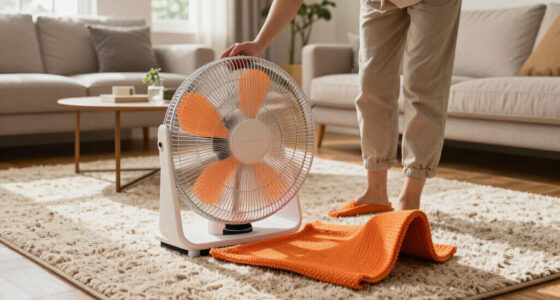
This checklist is for people who want to think through basic cleaning safety gear before tackling household chores. It covers hand, eye, breathing, and clothing protection, with a few product picks and some advice-only categories.

Get cleaning gear delivered free with Prime
- Fast, free delivery on millions of items
- Prime Video, Amazon Music and more included
- Member-only deals all year
The sections follow the gear types in the list: gloves, goggles, respirators, filters, shoe covers, and aprons. Each section focuses on fit and intended use, so you can compare a pick with the tasks you actually plan to do.
Use the checklist by checking the product label and instructions against your cleaning task, then confirming fit and compatibility before use. Product names alone don’t establish chemical suitability, protective performance, or compatibility with other gear.
Nitrile Cleaning Gloves
Gloves are a practical first consideration when a cleaning task calls for hand protection. The listed pick is Nitrile Gloves Heavy Duty 7 Mil Disposable Rubber Black Gloves Large. Its name identifies the material, stated thickness, disposable format, and size; it does not specify which cleaning products it is suitable for.
A common mistake is choosing gloves by material or thickness alone. Check the product labeling for the substances and tasks it is intended to handle, and follow its instructions for wear and disposal. Confirm that the listed size fits your hands: gloves that are too tight can be uncomfortable, while a loose fit can make tasks harder to manage. Also check whether the package’s quantity and disposable format suit your routine.
For cleaning involving chemicals, consult the chemical product’s instructions as well as the glove maker’s guidance. Match the glove to the task rather than assuming “heavy duty” means suitable for every cleaner. If the label does not answer your compatibility question, choose guidance from the manufacturer before use.
What to look for:
- Check the label for intended substances and tasks.
- Confirm the Large size fits your hands securely.
- Review wear, removal, and disposal instructions.
- Check package quantity against your cleaning routine.
- Follow both glove and cleaning-product guidance.
Nitrile Gloves Heavy Duty 7 Mil Disposable Rubber Black Gloves Large

These heavy-duty black nitrile gloves are designed for demanding work environments, offering puncture and tear resistance, oil and chemical protection, and a textured grip for oily conditions. Made powder-free and latex-free, they are suitable for automotive, maintenance, cleaning, and food prep tasks, providing reliable hand protection in high-use settings.
Pros:
- Heavy-duty 7 mil thickness offers excellent protection for tough jobs
- Textured fingertips improve grip on oily and wet surfaces
- Powder-free and latex-free for cleaner work environments
- Bulk quantity ideal for professional and high-use settings
Cons:
- Large size may not fit all users comfortably
- Black color may show oils and stains more visibly
- Not suitable for tasks requiring very fine dexterity
Best for: Shoppers looking for a listed disposable nitrile glove in Large.
Not ideal for: Tasks requiring a glove compatibility that the product label does not confirm.
Bottom line: Check the label and fit before relying on these gloves for a cleaning task.
Safety Goggles
Eye protection deserves a place on the checklist when a task may involve splashes or impact. The pick is 3M Chemical Splash/Impact Resistant Safety Goggle, 1 Pack; its name describes splash and impact resistance, but the product label and instructions are the place to confirm its intended applications and limitations.
A frequent buying mistake is treating all goggles as interchangeable or assuming a product name covers every hazard. Read the manufacturer’s guidance to determine whether these goggles suit your specific cleaning task. Check how they sit around your eyes and whether the fit stays secure while you move. If you wear prescription eyewear or other protective equipment, check the stated compatibility rather than guessing from appearance.
Before use, review the instructions for adjustment, cleaning, and storage. A comfortable, secure fit helps you keep the goggles in place during the task. Pair them with the other protection called for by the cleaning product’s instructions, and replace or stop using them according to the manufacturer’s guidance if they become damaged or no longer fit properly.
What to look for:
- Read the manufacturer’s stated applications and limitations.
- Check for a secure fit around your eyes.
- Confirm compatibility with prescription eyewear if needed.
- Review adjustment, cleaning, and storage instructions.
- Follow the cleaning product’s eye-protection guidance.
3M Chemical Splash/Impact Resistant Safety Goggle, 1 Pack
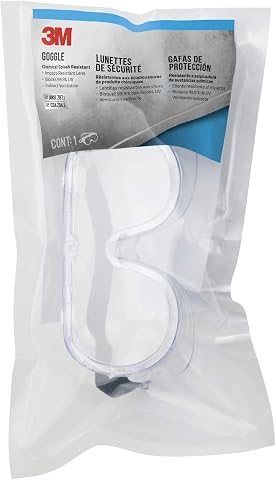
These safety goggles from 3M provide impact and splash protection with a polycarbonate lens and comfortable elastic headband. Designed to fit over most prescription eyewear, they feature vents to reduce fogging and meet ANSI Z87.1-2003 standards, making them suitable for various workplace tasks.
Pros:
- Provides impact and splash protection with durable polycarbonate lenses
- Comfortable elastic headband ensures a secure fit
- Vents help reduce fogging for clear vision during use
- Fits over most prescription glasses
Cons:
- No adjustable temple; may not fit all head sizes comfortably
- Limited color options available
Best for: Shoppers seeking a listed 3M safety goggle for review against task needs.
Not ideal for: Tasks whose eye-protection requirements the product instructions do not address.
Bottom line: Confirm the intended use and fit in the manufacturer’s instructions before wearing.
Reusable Respirators
No product is specified for this slot, so treat it as selection advice rather than a recommendation. First identify the task and consult the cleaning-product label or other relevant instructions to determine whether respiratory protection is called for and what type is appropriate.
A common mistake is choosing a reusable respirator by appearance or assuming any face covering is suitable. Check the manufacturer’s instructions for the respirator’s intended use, fit requirements, care, and limits. Make sure the model can be worn as directed and that its parts and filters are compatible. If the instructions do not establish suitability for your task, seek manufacturer guidance before use.
Plan for proper fit and upkeep, not just the initial selection. Follow the model’s instructions for inspection, cleaning, storage, and replacement of parts. Use the respirator only for tasks covered by its labeling and guidance, and make sure any required filters are the specified type. This checklist does not identify a particular model or establish protection for any specific hazard.
What to look for:
- Identify the task and consult relevant product instructions.
- Check intended use and limitations in the respirator labeling.
- Follow the model’s fit and wear instructions.
- Confirm filter and part compatibility with the manufacturer.
- Review inspection, cleaning, storage, and replacement guidance.
Replacement Respirator Filters
The listed pick is Respirator Mask for Spray Painting, Woodworking, Welding, Dust, and Sa. The supplied name is truncated and does not clearly identify a replacement filter or its model compatibility, so verify the complete product listing and manufacturer information before treating it as a filter choice.
A key mistake is buying a filter based on broad task words alone. Check the exact respirator make and model, the filter designation, and the manufacturer’s compatibility guidance. Confirm that the filter is intended for the task and material involved; do not infer that from the incomplete name. Also review installation and replacement instructions so you know how the part is meant to fit and when it should be changed.
If the listing or labeling leaves any of those details unclear, pause and consult the respirator manufacturer. Compatibility comes first: a filter should be used only as specified for the respirator and task. This product name by itself does not establish the type of filter, its performance, or whether it fits a particular reusable respirator.
What to look for:
- Find the complete product name and listing details.
- Match the filter designation to the respirator model.
- Confirm task suitability in manufacturer guidance.
- Review installation and replacement instructions.
- Do not infer filter type or performance from the truncated name.
Respirator Mask for Spray Painting, Woodworking, Welding, Dust, and Safety with

This reusable half-face respirator mask is designed for spray painting, woodworking, welding, and general safety. It features a silicone seal for comfort, includes 10 replacement filters, and comes with clear safety goggles to protect your eyes during various projects.
Pros:
- Reusable design with replaceable filters reduces waste and cost
- Includes safety goggles for eye protection
- Comfortable silicone seal and adjustable headband
Cons:
- One size may not fit all face shapes comfortably
- Limited to specific project types; may not be suitable for all industrial uses
Best for: Readers willing to confirm the full listing and compatibility details.
Not ideal for: Anyone needing a clearly identified replacement filter without further checking.
Bottom line: Confirm the exact filter type and respirator compatibility before purchase or use.
Non-Slip Shoe Covers
The listed pick is Non-Slip Lap Trays with Handles, 15.5 x 11.5 in, Set of 2, Black and W. Its supplied name describes lap trays, not shoe covers, so it does not establish that the item is footwear protection. Check the complete listing before considering it for this checklist slot.
A common buying mistake is relying on a category label or a partial product name without checking what the item actually is. For shoe covers, look for explicit product identification and instructions describing their intended use. Confirm that the size fits over the footwear you plan to wear and that any stated sole or surface guidance matches the areas where you intend to use them. The supplied product name gives no shoe-cover sizing or footwear compatibility information.
Use the manufacturer’s directions and do not assume that “non-slip” in an unrelated product name describes traction for shoe covers. Verify the item category and its full specifications before selecting it. If the full listing continues to identify lap trays, it does not answer the shoe-cover needs in this section.
What to look for:
- Confirm the complete listing identifies shoe covers.
- Check stated sizing against the footwear you wear.
- Review intended surfaces and use instructions.
- Look for explicit details about the sole and fit.
- Do not infer shoe-cover properties from the supplied tray name.
Non-Slip Lap Trays with Handles, 15.5 x 11.5 in, Set of 2, Black and White

This set includes two lightweight rectangular trays with rubber grip dots to help keep plates, cups, and glasses in place. Each tray measures 15.5 x 11.5 inches and has built-in handles for carrying; hand wash and stack flat or hang for storage.
Pros:
- Rubber grip dots help keep dishes and drinks in place.
- Built-in handles make trays easier to carry.
- Thin design stacks flat or hangs for storage.
Cons:
- Hand wash only.
- Maximum weight recommendation is 1.57 kg.
Best for: Readers checking whether the supplied listing matches this category.
Not ideal for: Anyone seeking confirmed non-slip shoe covers from this product name.
Bottom line: Verify the full listing; the supplied name identifies lap trays, not shoe covers.
Chemical Resistant Aprons
No product is specified for this slot, so use it as buying guidance. Start with the cleaning product’s label and instructions to determine whether an apron is recommended and what material or coverage the task requires. This checklist does not identify an apron or establish chemical resistance for any garment.
A common mistake is assuming that any apron, or one described generally as protective, is suitable for every cleaner. Check the apron manufacturer’s stated materials, intended uses, limits, fit, and care instructions. Compare that information with the cleaning-product guidance. Consider whether the garment provides the coverage the task calls for and whether it can be worn comfortably without interfering with other protective gear.
Before use, follow the garment’s instructions for putting it on, cleaning it, and deciding when to replace it. Confirm chemical suitability with the manufacturer’s guidance rather than relying on a generic description. If the task’s needs are not clearly covered, seek product-specific advice before proceeding.
What to look for:
- Consult the cleaning product’s instructions for apron guidance.
- Check stated material and chemical suitability with the manufacturer.
- Review coverage, fit, and intended-use limitations.
- Confirm compatibility with other protective gear.
- Follow care, cleaning, and replacement instructions.
You can build this checklist one item at a time by confirming the product, its instructions, and how it fits your routine. A little label checking makes it easier to choose gear with confidence and use it as directed.