Shopping for premium graphics cards for gaming rigs in 2026 means choosing between raw flagship power, value-focused midrange cards, and older flagships at clearance pricing. My top pick is the ASUS TUF Gaming GeForce RTX 5090 OC Edition, which pairs 32GB of GDDR7 with the cooling headroom to sustain it — the closest thing to a no-compromise 4K gaming card. If your budget sits lower, the ASUS Prime Radeon RX 9070 XT OC Edition delivers outstanding rasterization performance per dollar, while the NVIDIA GeForce RTX 5080 Founders Edition is the best-balanced card for high-refresh 1440p and entry-level 4K. The main tradeoffs you will face are price-to-performance versus features like ray tracing and DLSS, power supply demands, and whether a two-generation-old flagship still beats a current midrange card. Keep reading for the full breakdown of all 13 cards and who each one is actually for.

Get cleaning gear delivered free with Prime
- Fast, free delivery on millions of items
- Prime Video, Amazon Music and more included
- Member-only deals all year
Complete the kit


Key Takeaways
- NVIDIA‘s RTX 50-series dominated the top of this ranking thanks to GDDR7 memory and DLSS 4 multi-frame generation, but AMD’s RX 9070 XT cards closed the rasterization gap enough to become the value picks.
- The RTX 5090 and RTX 4090 sit in a class of their own for 4K, but both demand 850W+ power supplies and massive case clearance — they are not drop-in upgrades for mid-tower builds.
- The budget options here (RX 560 XT and RX 580-based cards) exist for emergency replacements and ultra-budget builds only; pairing them with a modern premium rig wastes CPU and monitor investment.
- Among the four RTX 5080 variants compared, cooling design and acoustics — not raw performance — separated them, with the MSI SUPRIM Liquid SOC leading on thermals and the Founders Edition winning on compactness.
- Older flagships (RTX 3090, RTX 4080) still outperform current midrange cards in raw horsepower but miss the latest upscaling and frame-generation features, making them a bet on legacy strength versus future software support.
| GIGABYTE GeForce RTX 5080 Gaming OC 16G Graphics Card |  | Best Overall | GPU: NVIDIA GeForce RTX 5080 | Memory: 16 GB GDDR7 | Memory Interface: 256-bit | VIEW ON AMAZON | See Our Full Breakdown |
| QTHREE Radeon RX 560 XT 8GB GDDR5 Graphics Card |  | Best Budget Entry Point | GPU: AMD Radeon RX 560 XT | Memory: 8 GB GDDR5 | Memory Interface: 128-bit | VIEW ON AMAZON | See Our Full Breakdown |
| NVIDIA GeForce RTX 4080 16GB GDDR6X Graphics Card |  | Best Value in Premium Territory | GPU: NVIDIA GeForce RTX 4080 | Memory: 16 GB GDDR6X | CUDA Cores: 9,728 | VIEW ON AMAZON | See Our Full Breakdown |
| ASUS TUF Gaming GeForce RTX 5070 12GB GDDR7 OC Edition Graphics Card |  | Best for High-Refresh 1440p | GPU: NVIDIA GeForce RTX 5070 | Memory: 12 GB GDDR7 | Boost Clock: 2640 MHz (OC mode) | VIEW ON AMAZON | See Our Full Breakdown |
| ASUS Prime Radeon RX 9070 XT OC Edition 16GB Graphics Card |  | Best Premium AMD Pick | GPU: AMD Radeon RX 9070 XT | Memory: 16 GB GDDR6 | Boost Clock: Up to 3030 MHz (OC mode) | VIEW ON AMAZON | See Our Full Breakdown |
| ASUS ROG Strix GeForce RTX 4090 Gaming Graphics Card | 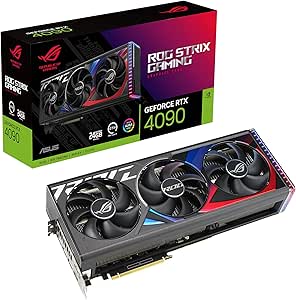 | Best for High-Resolution Gaming | GPU: NVIDIA GeForce RTX 4090 | Memory: 24GB GDDR6X | Interface: PCI Express 4.0 | VIEW ON AMAZON | See Our Full Breakdown |
| GIGABYTE Radeon RX 9070 XT Gaming OC 16G Graphics Card, 16GB GDDR6 |  | Best AMD Gaming Pick | GPU: AMD Radeon RX 9070 XT | Memory: 16GB GDDR6 | GPU clock speed: 3060 MHz | VIEW ON AMAZON | See Our Full Breakdown |
| ASUS TUF Gaming GeForce RTX 5090 32GB GDDR7 OC Edition Graphics Card |  | Best Premium Flagship | GPU: NVIDIA GeForce RTX 5090 | Architecture: NVIDIA Blackwell | Memory: 32GB GDDR7 | VIEW ON AMAZON | See Our Full Breakdown |
| Kelinx AISURIX RX 580 8GB GDDR5 Graphics Card |  | Best for Legacy Budget Builds | GPU architecture: Polaris 20 XTX | Memory: 8GB GDDR5 | Memory frequency: 1750 MHz | VIEW ON AMAZON | See Our Full Breakdown |
| NVIDIA GeForce RTX 3090 Founders Edition Graphics Card |  | Best for Memory-Heavy Workloads | GPU: NVIDIA GeForce RTX 3090 | Video memory: 24GB GDDR6X | Memory interface: 384-bit | VIEW ON AMAZON | See Our Full Breakdown |
| NVIDIA GeForce RTX 5080 Founders Edition |  | Best Overall | Architecture: NVIDIA Blackwell | AI features: Tensor Cores, FP4, DLSS 4 | Latency technology: NVIDIA Reflex 2 with Frame Warp | VIEW ON AMAZON | See Our Full Breakdown |
| ASUS TUF Gaming GeForce RTX 5080 16GB GDDR7 OC Edition Graphics Card |  | Best Air-Cooled Value | GPU: NVIDIA GeForce RTX 5080 (Blackwell) | Memory: 16GB GDDR7 | Boost clock: 2730 MHz (OC mode); 2700 MHz (default) | VIEW ON AMAZON | See Our Full Breakdown |
| MSI Gaming RTX 5080 16G SUPRIM Liquid SOC Graphics Card |  | Best Premium Cooling | Chipset: NVIDIA GeForce RTX 5080 (Blackwell) | Video memory: 16GB GDDR7, 256-bit interface | Boost clock: 2760 MHz | VIEW ON AMAZON | See Our Full Breakdown |
| premium graphics cards for gaming rig | GPU | Memory | Interface | Cooling |
|---|---|---|---|---|
| GIGABYTE GeForce RTX 5080 Gami | NVIDIA GeForce RTX 5080 | 16 GB GDDR7 | PCIe 5.0 x16 | WINDFORCE triple-fan |
| QTHREE Radeon RX 560 XT 8GB GD | AMD Radeon RX 560 XT | 8 GB GDDR5 | PCIe 3.0 x16 | — |
| NVIDIA GeForce RTX 4080 16GB G | NVIDIA GeForce RTX 4080 | 16 GB GDDR6X | PCIe 4.0 (PCIe 3.0 compatible) | Dual-fan |
| ASUS TUF Gaming GeForce RTX 50 | NVIDIA GeForce RTX 5070 | 12 GB GDDR7 | PCIe 5.0 x16 | 3 Axial-tech fans, phase-change GPU pad |
| ASUS Prime Radeon RX 9070 XT O | AMD Radeon RX 9070 XT | 16 GB GDDR6 | — | Axial-tech fans, phase-change GPU pad |
| ASUS ROG Strix GeForce RTX 409 | NVIDIA GeForce RTX 4090 | 24GB GDDR6X | PCI Express 4.0 | Three Axial-tech fans and vapor chamber |
| GIGABYTE Radeon RX 9070 XT Gam | AMD Radeon RX 9070 XT | 16GB GDDR6 | PCIe 5.0; PCIe x16 | WINDFORCE system with Hawk fans |
| ASUS TUF Gaming GeForce RTX 50 | NVIDIA GeForce RTX 5090 | 32GB GDDR7 | PCI Express x16; PCIe 5.0 | — |
| Kelinx AISURIX RX 580 8GB GDDR | — | 8GB GDDR5 | PCI Express 3.0 x16 | — |
| NVIDIA GeForce RTX 3090 Founde | NVIDIA GeForce RTX 3090 | — | — | — |
| NVIDIA GeForce RTX 5080 Founde | — | — | — | — |
| ASUS TUF Gaming GeForce RTX 50 | NVIDIA GeForce RTX 5080 (Blackwell) | 16GB GDDR7 | PCIe 5.0 x16 | Three Axial-tech fans; phase-change GPU thermal pad |
| MSI Gaming RTX 5080 16G SUPRIM | — | — | — | Liquid |
More Details on Our Top Picks
GIGABYTE GeForce RTX 5080 Gaming OC 16G Graphics Card
This is the card I’d point most serious builders toward first. The RTX 5080 silicon with 16GB of GDDR7 on a 256-bit bus hits the sweet spot between the RTX 5090’s excess and the RTX 5070’s 12GB ceiling, which matters at 4K where texture-heavy titles are already pushing past 12GB. Compared with the NVIDIA RTX 5080 Founders Edition, GIGABYTE’s WINDFORCE triple-fan cooler trades a bit of compactness for lower sustained clocks-throttling during long sessions, which is exactly what an overclocked card like this needs. The factory OC to 2.73 GHz and DLSS 4 on Blackwell make it the most future-proof pick here for ray tracing and AI upscaling. The tradeoff is physical: at 13.46 inches long, it demands a roomy case and a serious power supply.
Pros:- 16GB GDDR7 on a 256-bit interface handles 4K texture loads comfortably
- Factory overclock to 2.73 GHz with a cooler sized to sustain it
- DLSS 4 and Blackwell-era Tensor/RT cores keep it relevant for years
- PCIe 5.0 and 8K display support cover next-gen platform upgrades
Cons:- Very long card that excludes smaller cases
- High power consumption requires a capable PSU
Best for: Enthusiast builders running 4K or high-refresh 1440p who want top-tier performance without stepping up to RTX 5090 power and price
Not ideal for: Owners of compact or mid-tower cases — the 13.46-inch length and triple-fan footprint simply won’t fit many smaller builds
- GPU:NVIDIA GeForce RTX 5080
- Memory:16 GB GDDR7
- Memory Interface:256-bit
- GPU Clock:2.73 GHz
- Interface:PCIe 5.0 x16
- Cooling:WINDFORCE triple-fan
- Max Resolution:7680 x 4320
- Dimensions:13.46″ x 5.59″
Our verdict“The strongest all-around pick for a premium gaming rig — if your case and power supply can keep up with it.”
QTHREE Radeon RX 560 XT 8GB GDDR5 Graphics Card
This option stands out for one reason: it gets older or budget builds gaming without asking much of the rest of the system. Next to premium picks like the ASUS TUF RTX 5070, the RX 560 XT is playing a different game entirely — no ray tracing hardware, no DLSS-class upscaling, and a 128-bit bus on GDDR5. But where the RTX 5070 needs PCIe 5.0-era platform thinking and big-case clearance, this card slots into any PCIe 3.0 board, draws a modest 150W from a single 8-pin connector, and still drives three monitors at 4K@60Hz for desktop work. The 8GB of VRAM is generous for the price tier and keeps older or esports titles comfortable at 1080p. Buyers should just accept that demanding 2024-and-later releases will strain it hard.
Pros:- Runs on a single 8-pin connector at 150W — easy on modest power supplies
- 8GB VRAM is generous for the budget tier
- Triple outputs support up to three 4K@60Hz monitors
- Fits standard dual-slot designs in older PCIe 3.0 systems
Cons:- Old-generation architecture struggles with demanding modern titles
- GDDR5 on a 128-bit bus limits bandwidth for high resolutions
Best for: Budget builders or anyone reviving an older PCIe 3.0 system who mainly plays esports and older titles at 1080p
Not ideal for: Players who want to run modern AAA or ray-traced games at high settings — the aging architecture and 128-bit bus can’t keep up
- GPU:AMD Radeon RX 560 XT
- Memory:8 GB GDDR5
- Memory Interface:128-bit
- Stream Processors:1792
- Interface:PCIe 3.0 x16
- Max Resolution:4K @ 60Hz
- Power Draw:150W (1x 8-pin)
- Outputs:DVI, HDMI, DisplayPort
Our verdict“A sensible stopgap for budget 1080p builds — just don’t expect it to carry a premium rig.”
NVIDIA GeForce RTX 4080 16GB GDDR6X Graphics Card
Now that the RTX 50-series has arrived, the 4080 has become the smart-money play in this lineup. It carries 9,728 CUDA cores and 16GB of GDDR6X — the same memory capacity as the pricier GIGABYTE RTX 5080 — while costing less, and in real-world 4K gaming the two cards land closer than the generational gap suggests. The 2.51 GHz boost and full DirectX 12 Ultimate support mean ray tracing and DLSS 3-era features work beautifully. One underappreciated advantage over the 50-series cards here: PCIe 4.0 with backward compatibility to 3.0, so owners of slightly older motherboards aren’t leaving performance behind. The dual-fan, 11.97-inch design is also friendlier to mid-tower cases than the 13.46-inch GIGABYTE. The honest tradeoff: you miss out on DLSS 4’s multi-frame generation, which is the 5080’s clearest advantage.
Pros:- 16GB GDDR6X matches the RTX 5080’s capacity for high-res texture loads
- Dual-fan, sub-12-inch design fits cases the bigger 5080s won’t
- Backward compatible with PCIe 3.0 motherboards
- Full ray tracing and DirectX 12 Ultimate support
Cons:- No DLSS 4 multi-frame generation like newer Blackwell cards
- Previous-generation Ada architecture trails Blackwell in efficiency
Best for: 4K gamers on slightly older PCIe 3.0/4.0 platforms who want near-flagship performance at a saner price
Not ideal for: Buyers chasing the newest feature set — DLSS 4 and Blackwell’s efficiency gains belong to the 50-series cards
- GPU:NVIDIA GeForce RTX 4080
- Memory:16 GB GDDR6X
- CUDA Cores:9,728
- Boost Clock:2.51 GHz
- Interface:PCIe 4.0 (PCIe 3.0 compatible)
- Cooling:Dual-fan
- Max Resolution:3840 x 2160
- Dimensions:11.97″ x 4.84″
Our verdict“The rational premium pick — 90% of flagship performance for less money, especially if your platform predates PCIe 5.0.”
ASUS TUF Gaming GeForce RTX 5070 12GB GDDR7 OC Edition Graphics Card
This model makes the most sense for the 1440p high-refresh crowd, and its build quality is where it earns its place. The TUF treatment — military-grade components, protective PCB coating, and Auto-Extreme manufacturing — is the same durability formula ASUS applies to its RTX 5090 TUF card, just in a more attainable package. The phase-change GPU thermal pad and three Axial-tech fans keep the 2640 MHz boost clock stable through marathon sessions. Compared with the RTX 4080 in this lineup, the 5070 trades raw shader muscle for DLSS 4 support and the Blackwell feature set — a worthwhile swap at 1440p, less so at native 4K. The 12GB VRAM buffer is the main ceiling: it’s fine today at 1440p, but texture-heavy 4K titles are already testing it, which is why I’d steer 4K buyers to a 16GB card instead.
Pros:- Tank-like build with military-grade components and PCB coating
- Phase-change thermal pad and triple Axial-tech fans sustain the OC boost clock
- Full DLSS 4 support on Blackwell architecture
- Modern connectivity with DisplayPort 2.1a and HDMI 2.1b
Cons:- 12GB VRAM trails the 16GB cards in this roundup
- 3.125-slot thickness blocks adjacent expansion slots and small cases
Best for: 1440p high-refresh gamers who want modern DLSS 4 features and a tank-like card built to last several builds
Not ideal for: Native 4K players — the 12GB VRAM buffer will become the limiting factor in texture-heavy titles
- GPU:NVIDIA GeForce RTX 5070
- Memory:12 GB GDDR7
- Boost Clock:2640 MHz (OC mode)
- Interface:PCIe 5.0 x16
- Cooling:3 Axial-tech fans, phase-change GPU pad
- Form Factor:3.125-slot
- Video Outputs:3x DisplayPort 2.1a, 2x HDMI 2.1b
- Max Resolution:7680 x 4320
Our verdict“The durability-focused 1440p flagship — buy it for the build quality and DLSS 4, skip it if 4K is the goal.”
ASUS Prime Radeon RX 9070 XT OC Edition 16GB Graphics Card
This is the card for buyers who want 16GB of modern VRAM without going all-in on NVIDIA. The RX 9070 XT’s boost clock up to 3030 MHz and 16GB of memory put it in direct contention with the RTX 5070 elsewhere in this roundup — and in pure rasterization it generally comes out ahead, while NVIDIA keeps the edge in ray tracing and DLSS. What I appreciate here is the dual BIOS switch: flip to Quiet and the 0dB fan mode keeps light gaming sessions genuinely silent, flip to Performance and the card runs at its full potential. Compared with the GIGABYTE RX 9070 XT Gaming OC in the same roundup, ASUS’s Prime trim is the more space-efficient choice at 2.5 slots, though the tighter cooler means the Performance BIOS runs louder under sustained load. Case clearance still needs a quick check before buying.
Pros:- 16GB VRAM handles 4K texture loads without compromise
- Dual BIOS lets you choose between silent and maximum-performance operation
- 0dB fan mode keeps light workloads near-silent
- 2.5-slot design is more compact than competing triple-slot cards
Cons:- Trails NVIDIA rivals in ray tracing performance
- Performance BIOS gets audible under sustained load
Best for: Gamers who prioritize rasterization performance and 16GB VRAM over NVIDIA’s ray tracing and DLSS ecosystem
Not ideal for: Ray-tracing enthusiasts and anyone relying on DLSS-specific features — NVIDIA’s alternatives in this lineup serve them better
- GPU:AMD Radeon RX 9070 XT
- Memory:16 GB GDDR6
- Boost Clock:Up to 3030 MHz (OC mode)
- Game Clock:Up to 2480 MHz (OC mode)
- Form Factor:2.5-slot
- Cooling:Axial-tech fans, phase-change GPU pad
- Fan Bearings:Dual-ball
- BIOS:Dual BIOS (Quiet / Performance)
Our verdict“The strongest AMD argument in this lineup — raw 16GB performance for 4K, as long as ray tracing isn’t your priority.”
ASUS ROG Strix GeForce RTX 4090 Gaming Graphics Card
For a premium gaming rig aimed at high resolutions and demanding visual settings, I’d put the ROG Strix RTX 4090 ahead of the RTX 3090 Founders Edition. Its 24GB of GDDR6X memory gives demanding games and creative workloads room to breathe, while the vapor chamber and three enlarged fans are designed to move more air through this substantial card. The supplied details cite up to twice the previous generation’s performance and power efficiency, though they don’t provide a direct comparison with the other cards here. The tradeoff is physical and practical: at 3.5 slots and over 14 inches long, it needs a roomy case and a power supply suited to a flagship GPU. I’d choose it for an uncompromising build, but the 2.5-slot RTX 5090 TUF is a slimmer fit with newer memory and DLSS 4.
Pros:- 24GB of GDDR6X memory suits high-resolution gaming and memory-heavy creative work.
- Vapor chamber and enlarged Axial-tech fans are designed for high airflow.
- DisplayPort 1.4a and HDMI 2.1a support current high-resolution displays.
- Three-year warranty and diecast construction are specified.
Cons:- 3.5-slot, 14.07-inch dimensions rule out many smaller cases.
- Flagship performance comes with substantial power requirements.
- Uses PCIe 4.0 rather than the PCIe 5.0 interface listed for the RTX 5090 TUF.
Best for: Builders targeting high-resolution gaming who have a spacious case and a power supply ready for a flagship card.
Not ideal for: Compact-case builders or anyone prioritizing a thinner card and newer-generation features such as DLSS 4.
- GPU:NVIDIA GeForce RTX 4090
- Memory:24GB GDDR6X
- Interface:PCI Express 4.0
- Memory clock speed:2520 MHz
- Video outputs:DisplayPort 1.4a, HDMI 2.1a
- Cooling:Three Axial-tech fans and vapor chamber
- Form factor:3.5-slot
- Dimensions:14.07 × 5.9 inches
- Warranty:3 years
Our verdict“Choose the ROG Strix RTX 4090 for a spacious, high-end rig built around 24GB of memory and demanding gaming workloads.”
GIGABYTE Radeon RX 9070 XT Gaming OC 16G Graphics Card, 16GB GDDR6
The RX 9070 XT Gaming OC is the AMD alternative in this group for a builder who wants a current gaming card with 16GB of GDDR6 and an oversized display ceiling. Its WINDFORCE cooling with Hawk fans and RGB lighting give it a more embellished board-partner setup than the product data specifies for the RTX 3090 Founders Edition, while the listed 11.34-inch length is easier to plan around than the 14.07-inch RTX 4090 Strix. That doesn’t make it compact, and the description offers no benchmark data to establish its performance against the RTX cards. I’d shortlist it when choosing AMD and a PCIe 5.0 platform matters; buyers who prioritize memory capacity can look to the 24GB RTX 3090 or RTX 4090 instead. The listed display outputs are incomplete, so verify port needs before building around it.
Pros:- 16GB of GDDR6 memory for games that use larger assets.
- PCIe 5.0 interface for a current-generation platform.
- WINDFORCE cooling system with Hawk fans.
- 11.34-inch length is shorter than the RTX 4090 Strix listed here.
Cons:- Product data lists DisplayPort but does not give a complete output configuration.
- No power draw or benchmark details are supplied to help estimate system needs or compare performance.
- At 11.34 inches, it still needs a case with adequate GPU clearance.
Best for: AMD-focused gaming PC builders who want 16GB of memory, PCIe 5.0, and custom cooling with RGB lighting.
Not ideal for: Buyers who need confirmed output-port details or want the 24GB memory specified on the RTX 4090 and RTX 3090.
- GPU:AMD Radeon RX 9070 XT
- Memory:16GB GDDR6
- GPU clock speed:3060 MHz
- Memory clock speed:2600 GHz (as listed)
- Interface:PCIe 5.0; PCIe x16
- Cooling:WINDFORCE system with Hawk fans
- Maximum display resolution:7680 × 4320
- Dimensions:11.34 × 5.2 inches
Our verdict“Pick this GIGABYTE when you want an AMD-based gaming rig with 16GB of memory and custom cooling, after confirming the outputs you need.”
ASUS TUF Gaming GeForce RTX 5090 32GB GDDR7 OC Edition Graphics Card
If the goal is to build around the newest high-end features listed in this group, I’d rank the ASUS TUF RTX 5090 as the premium flagship. Its 32GB of GDDR7, Blackwell architecture, and DLSS 4 support set it apart from the RTX 4090 Strix and its 24GB of GDDR6X. Quiet and Performance BIOS modes let builders choose a less aggressive profile for lighter gaming or a performance-oriented setting, while three Axial-tech fans and 0dB technology target cooling with quieter operation under light loads. The 2.5-slot design is slimmer than the RTX 4090 Strix’s 3.5-slot cooler, though the 13.7-inch length still calls for careful case-clearance checks. I’d favor it for a new premium build that can use its latest features; its size and PCIe x16 desktop requirement make it a poor fit for a small or incompatible system.
Pros:- 32GB of GDDR7 memory, more than the 24GB listed for the RTX 4090 Strix.
- DLSS 4 support and Blackwell architecture.
- Quiet and Performance BIOS modes offer different fan and performance profiles.
- 2.5-slot design is thinner than the RTX 4090 Strix’s 3.5-slot format.
Cons:- 13.7-inch length may exceed clearance in smaller cases.
- Requires a compatible desktop PCIe x16 slot.
- The product data gives no power draw figure for planning a power supply.
Best for: Builders planning a new premium desktop around high memory capacity, DLSS 4, and selectable cooling profiles.
Not ideal for: Small-form-factor builders or anyone whose case cannot accommodate a 13.7-inch card and PCIe x16 slot.
- GPU:NVIDIA GeForce RTX 5090
- Architecture:NVIDIA Blackwell
- Memory:32GB GDDR7
- Boost clock:Up to 2580 MHz OC mode; 2550 MHz default
- AI performance:772 AI TOPS
- Interface:PCI Express x16; PCIe 5.0
- Video outputs:3 × DisplayPort 2.1a, 2 × HDMI 2.1b
- Cooling and BIOS:Three Axial-tech fans; Quiet and Performance modes
- Dimensions:13.7 × 5.7 inches
Our verdict“Choose the TUF RTX 5090 for a spacious new gaming rig that can make use of its 32GB memory and DLSS 4 support.”
Kelinx AISURIX RX 580 8GB GDDR5 Graphics Card
The Kelinx AISURIX RX 580 serves a different buyer from the premium RTX cards here: someone upgrading an older desktop for modest gaming and everyday display use. Its dual-slot format is much easier to fit than the 2.5-slot RTX 5090 TUF or 3.5-slot RTX 4090 Strix, and its semi-automatic fans stop at low load for quieter desktop use. The 8GB of GDDR5 and stated 4K display support describe capacity and output, not a promise of modern 4K gaming performance. This older Polaris card also uses PCIe 3.0, unlike the newer PCIe 5.0 models in the roundup. I’d consider it only for a compatible legacy system or a less demanding gaming target. It requires an 8-pin power connector, and the supplied output descriptions conflict, so check the exact card configuration before purchase.
Pros:- Dual-slot form factor is slimmer than the premium RTX 4090 and RTX 5090 cards here.
- Semi-automatic fans stop under low load.
- 8GB of GDDR5 memory.
- Includes two DisplayPort outputs and one HDMI output in the specification data.
Cons:- Older Polaris architecture and PCIe 3.0 interface are a poor match for a new premium gaming build.
- Requires an 8-pin power connector.
- Provided port descriptions conflict, so the actual configuration needs checking.
Best for: Owners of older desktop PCs seeking a dual-slot card for modest gaming and display use, with an available 8-pin power lead.
Not ideal for: Builders planning a premium modern rig or anyone expecting demanding 4K gaming or confirmed output-port details.
- GPU architecture:Polaris 20 XTX
- Memory:8GB GDDR5
- Memory frequency:1750 MHz
- Stream processors:2048
- Interface:PCI Express 3.0 x16
- Video outputs:2 × DisplayPort, 1 × HDMI (listing descriptions conflict)
- Maximum display resolution:4K
- Power draw:185 W maximum
- Form factor and power connector:Dual-slot; 1 × 8-pin
Our verdict“Consider the RX 580 only as a modest upgrade for a compatible older PC, not as the centerpiece of a premium gaming rig.”
NVIDIA GeForce RTX 3090 Founders Edition Graphics Card
The RTX 3090 Founders Edition earns a place for buyers who value a large memory pool as much as gaming performance. Its 24GB of GDDR6X and 384-bit memory interface give it more capacity than the 16GB GIGABYTE RX 9070 XT, which may appeal to people pairing gaming with content creation. The listed outputs—three DisplayPort 1.4a ports and HDMI 2.1—also make multi-display setups straightforward. It sits below the RTX 4090 Strix in this roundup’s product generation, and the supplied data provides no benchmark figures for a direct performance comparison. For a premium gaming rig, that makes it a more specific pick than the RTX 5090 TUF, which offers 32GB of newer GDDR7 and DLSS 4. The 3090’s high power draw and large physical footprint also call for a suitable case and power supply.
Pros:- 24GB of GDDR6X memory suits memory-heavy games and creative applications.
- 384-bit memory interface.
- Three DisplayPort 1.4a outputs and one HDMI 2.1 output support multi-display use.
- Three-year warranty from NVIDIA India is specified.
Cons:- High power consumption requires suitable system planning.
- Large physical size may not fit smaller cases.
- RTX 5090 TUF offers 32GB GDDR7 and DLSS 4 support.
Best for: Gaming and creative-workstation builders who want 24GB of memory and several display outputs in an NVIDIA card.
Not ideal for: Buyers seeking the newest NVIDIA architecture, DLSS 4, or a compact, lower-power GPU.
- GPU:NVIDIA GeForce RTX 3090
- Video memory:24GB GDDR6X
- Memory interface:384-bit
- Video outputs:3 × DisplayPort 1.4a, 1 × HDMI 2.1
- Warranty:3 years (NVIDIA India)
Our verdict“Choose the RTX 3090 Founders Edition if 24GB of memory and multi-display connectivity matter more than newer RTX features.”
NVIDIA GeForce RTX 5080 Founders Edition
The RTX 5080 Founders Edition is the pick I would point most buyers toward first. NVIDIA’s Blackwell architecture, DLSS 4 with Tensor Cores and FP4 support, and Reflex 2 with Frame Warp add up to a card that handles 4K gaming and creative workloads without the compromises of older silicon like the RTX 4080 or 3090 elsewhere in this lineup. Compared with partner cards such as the ASUS TUF RTX 5080, the Founders Edition offers the cleanest reference implementation and typically the most compact physical design, which matters if your case has tight clearance. The tradeoff is that a reference board leaves some overclocking headroom and factory-tuned cooling on the table, so enthusiasts chasing maximum boost clocks may prefer a partner model.
Pros:- Cutting-edge NVIDIA Blackwell architecture
- DLSS 4 with Tensor Cores and FP4 AI acceleration
- Reflex 2 with Frame Warp for lower input latency
- Full ray tracing with neural rendering
- Reference design typically more compact than partner cards
Cons:- No factory overclock — partner cards extract more performance out of the box
- Reference cooler is quieter-running but less thermally aggressive than triple-fan or liquid solutions
- Availability of Founders Edition units is often limited compared with partner stock
Best for: Builders who want the definitive RTX 5080 experience with reference design quality, DLSS 4, and strong 4K performance
Not ideal for: Overclockers and small-form-factor builders who want factory OC tuning or need to verify clearance — partner cards with custom coolers may serve them better
- Architecture:NVIDIA Blackwell
- AI features:Tensor Cores, FP4, DLSS 4
- Latency technology:NVIDIA Reflex 2 with Frame Warp
- Graphics technology:Full ray tracing with neural rendering
- Product type:Video card (Founders Edition reference design)
Our verdict“The Founders Edition is the card for buyers who want flagship-class RTX 5080 performance and the latest AI features without paying extra for partner-card frills.”
ASUS TUF Gaming GeForce RTX 5080 16GB GDDR7 OC Edition Graphics Card
This ASUS TUF card takes the same RTX 5080 silicon as the Founders Edition and pushes it further with a factory OC boost clock of 2730 MHz, plus a serious cooling stack: three Axial-tech fans, a phase-change GPU thermal pad, and a protective PCB coating. Compared with the liquid-cooled MSI SUPRIM Liquid SOC, it trades a small clock deficit for simpler installation — no radiator mounting, no pump, no extra planning. The drawbacks are physical: a 3.6-slot thickness and 13.7-inch length mean mid-tower builders need to measure carefully, and the 16-pin 12V-2×6 connector demands an 850W minimum PSU. If your case and power supply can accommodate it, this is the most practical way to own a tuned RTX 5080.
Pros:- Factory overclock to 2730 MHz on 16GB of GDDR7 memory
- Three Axial-tech fans with phase-change GPU thermal pad for sustained boost clocks
- Protective PCB coating and military-grade components for longevity
- Includes a GPU bracket to prevent sag in tall cases
Cons:- Requires 3.6-slot clearance and a 16-pin 12V-2×6 power connector
- 13.7-inch length excludes many compact cases
- Heavier and bulkier than the Founders Edition reference card
Best for: Enthusiast gamers with a full-size case and 850W+ PSU who want a factory-overclocked, air-cooled RTX 5080 with durable build quality
Not ideal for: Small-form-factor or compact mid-tower builders — the 3.6-slot design and 13.7-inch length simply won’t fit many smaller cases
- GPU:NVIDIA GeForce RTX 5080 (Blackwell)
- Memory:16GB GDDR7
- Boost clock:2730 MHz (OC mode); 2700 MHz (default)
- Cooling:Three Axial-tech fans; phase-change GPU thermal pad
- Power supply:850W minimum, 16-pin 12V-2×6 connector
- Video outputs:3x DisplayPort 2.1a, 2x HDMI 2.1b
- Dimensions:13.7 x 5.7 inches, 3.6 slots, 4.3 lbs
- Interface:PCIe 5.0 x16
Our verdict“A rugged, factory-tuned RTX 5080 that makes the most sense for full-tower builders who want extra clocks without the complexity of liquid cooling.”
MSI Gaming RTX 5080 16G SUPRIM Liquid SOC Graphics Card
The SUPRIM Liquid SOC sits at the top of this RTX 5080 trio on pure engineering. Its 2760 MHz boost clock edges past both the ASUS TUF OC Edition (2730 MHz) and the stock Founders Edition, and its liquid cooling loop keeps temperatures and acoustics in check during long 4K sessions — something air-cooled designs can only approximate. With 16GB of GDDR7 on a 256-bit interface and DisplayPort 2.1a supporting 8K, the feature set is fully modern. The catch is everything around the card: you’ll need radiator space in your case, a pump-integrated installation plan, and a willingness to pay a premium over air-cooled alternatives. This pick makes the most sense for buyers who treat their rig as a long-term showcase rather than a simple upgrade.
Pros:- Highest boost clock in this lineup at 2760 MHz
- Liquid cooling delivers superior thermals and lower noise than air-cooled models
- 16GB GDDR7 on a 256-bit interface for high-bandwidth 4K and 8K gaming
- Modern DisplayPort 2.1a and HDMI 2.1b connectivity supporting 7680 x 4320
Cons:- Premium liquid-cooled design carries a higher cost than air-cooled RTX 5080 cards
- Radiator requires additional case space and careful installation planning
- Only one HDMI port versus two on the ASUS TUF model
- Added complexity of a pump-based system over the card’s lifetime
Best for: Performance-focused builders with radiator-friendly cases who want the highest factory clocks and coolest, quietest RTX 5080 operation
Not ideal for: Budget-conscious upgraders and compact-case owners — liquid cooling adds cost, space requirements, and installation complexity for modest real-world gains
- Chipset:NVIDIA GeForce RTX 5080 (Blackwell)
- Video memory:16GB GDDR7, 256-bit interface
- Boost clock:2760 MHz
- Cooling:Liquid
- Display outputs:3x DisplayPort 2.1a, 1x HDMI 2.1b
- Max resolution:7680 x 4320 (8K)
Our verdict“The SUPRIM Liquid SOC is for enthusiasts who want maximum clocks and whisper-quiet cooling from their RTX 5080 and are willing to plan their build around a radiator.”

How We Picked
I evaluated each card through the lens of a buyer building or upgrading a premium gaming rig, which meant judging raw performance, feature support, thermal design, acoustics, power requirements, and physical fit. Performance was weighted heaviest: real-world rasterization throughput, ray tracing capability, VRAM capacity for modern texture loads, and access to upscaling technologies like DLSS 4 and FSR all shaped where a card landed. Because these cards live inside expensive builds, I also weighed cooler quality and sustained clocks — a card that throttles or sounds like a hair dryer under load loses points regardless of its benchmark scores.
The ranking order follows a simple logic: cards that deliver flagship-class 4K performance with modern features sit at the top, balanced high-refresh cards fill the middle, value-oriented Radeon options rank where price-to-performance justifies them, and older or budget cards are placed honestly for the narrow niches they still serve. Where two cards share the same GPU (the four RTX 5080 variants, for example), I differentiated them by cooler design, noise, size, and warranty support rather than marginal clock differences.
Factors to Consider When Choosing Premium Graphics Cards For Gaming Rigs
Before settling on one of the 13 cards above, it helps to understand the bigger forces shaping a premium GPU purchase in 2026. The wrong choice here can bottleneck an entire build, so these are the factors I would weigh before clicking buy.
Match the Card to Your Resolution and Refresh Rate
The most common mistake I see is overbuying or underbuying relative to the monitor. A 1440p/165Hz display does not need an RTX 5090 — an RTX 5080 or RX 9070 XT will saturate it and save you hundreds. Conversely, pairing a 4K/240Hz panel with a midrange card means you paid for refresh you will never see without aggressive upscaling. Frame generation features like DLSS 4 can paper over some gaps, but they add latency and work best when the base frame rate is already solid. Decide on your target resolution and refresh first, then buy the cheapest card that comfortably exceeds that target.
Power Supply and Case Compatibility
Flagship-class cards are physically and electrically demanding, and this is where premium builds most often go wrong. An RTX 5090 or RTX 4090 realistically wants an 850W to 1000W PSU with a modern 12V-2×6 connector, while triple-slot coolers can exceed 340mm in length and block adjacent expansion slots. Check your case’s GPU clearance and PSU wattage before anything else — not after the card arrives. Card variants matter here too: liquid-cooled options like the MSI SUPRIM Liquid trade case length for radiator space, which suits some builds and conflicts with others. A cheaper card that actually fits beats a flagship that has to be returned.
VRAM Is a Longevity Investment
Memory capacity has quietly become the biggest predictor of how long a card stays relevant. Modern games with high-resolution texture packs already push past 12GB at 4K, and titles releasing in the next few years will treat 16GB as the baseline for premium settings. That is part of why the 32GB RTX 5090 ranks so highly despite its price, and why 8GB budget cards rank at the bottom despite their affordability. If you upgrade every two years, VRAM matters less; if you want a card to last a full console generation, treat 16GB as your floor for a premium rig.
NVIDIA vs. AMD: Features, Not Just Frames
Raw rasterization per dollar still favors AMD — the RX 9070 XT cards in this lineup prove that. But NVIDIA’s software stack (DLSS 4, superior ray tracing, Reflex, and broader creator-application support) pulls real value back in NVIDIA’s favor if you use those features. The mistake is treating this as a tribal decision instead of a use-case decision. Competitive esports players who disable upscaling lose little by choosing AMD; players who want path tracing at 4K or also edit video on the same machine get more from the green team. Audit which features your games actually support before paying a premium for them.
Last-Gen Flagships vs. Current Midrange
This roundup includes older flagships (RTX 3090, RTX 4080) precisely because this dilemma is real in 2026. A used or discounted previous-generation flagship often beats a new midrange card in raw horsepower and VRAM, but it misses the newest frame-generation tech, carries shorter remaining warranty windows, and — in the case of used cards — carries risk from mining-era wear. My rule: buy last-gen flagships only new-old-stock with warranty, or used from sellers with return policies. If a deal feels too good, assume the card has lived a hard life.
Cooler Quality Determines Real-World Performance
Two cards with the same GPU can perform and sound dramatically different once installed. Premium triple-fan coolers like those on the ASUS TUF and GIGABYTE Gaming OC lines hold boost clocks longer and run quieter than reference or budget designs, which matters in a rig that sits on your desk. Blower-style and compact coolers exhaust heat into the case, raising CPU and NVMe temperatures too. Check independent thermal testing for the specific card variant, not just the GPU model — this is exactly why this roundup ranks cooler variants separately rather than lumping all RTX 5080s together.
Frequently Asked Questions
Is the RTX 5090 worth it over the RTX 5080 for 4K gaming?
Only if you play at 4K with high refresh rates, max ray tracing, or use GPU-heavy workloads like local AI inference alongside gaming. The RTX 5090’s 32GB of GDDR7 and wider memory bus give it a large raw-performance lead, but at 1440p the gap closes dramatically and the 5080 becomes the smarter buy. You also need to factor in a 1000W-class PSU and generous case clearance, which adds hidden cost to the upgrade. If you are on a 4K/144Hz or higher monitor and want the card to last five-plus years, the 5090 justifies itself; otherwise the 5080 delivers most of the experience for considerably less.
Should I buy an RX 9070 XT or an RTX 5070 for a premium build?
The RX 9070 XT is generally the stronger gaming choice thanks to 16GB of VRAM versus the 5070’s 12GB and higher raw rasterization throughput, which matters as texture demands grow. The RTX 5070 counters with DLSS 4 multi-frame generation, better ray tracing performance, and lower power draw, making it attractive if your games lean heavily on NVIDIA’s software stack or your PSU is modest. For a truly premium rig, I lean RX 9070 XT because VRAM headroom ages better than upscaling features. Choose the 5070 specifically if you prioritize efficiency, CUDA for creative work, or play mostly NVIDIA-optimized titles.
Are cheap cards like the RX 580 or RX 560 XT ever worth buying for a gaming rig?
They serve exactly two purposes in 2026: replacing a dead card in an older system cheaply, or building an ultra-budget starter rig for esports titles at 1080p. In a premium rig, they are a mismatch — they will bottleneck a modern CPU, cannot handle ray tracing or modern upscalers, and lack driver optimization for new releases. If your total budget forces you into this tier, I would instead recommend saving longer or buying a used previous-generation midrange card. Treat these as stopgap solutions, not investments.
Do different RTX 5080 variants actually perform differently?
The GPU itself is identical, so out-of-the-box frame differences between the GIGABYTE Gaming OC, Founders Edition, ASUS TUF OC, and MSI SUPRIM Liquid are minor — usually a few percent at most. What actually differs is thermal and acoustic behavior: the liquid-cooled SUPRIM runs coolest and quietest but adds radiator complexity, the TUF offers rugged triple-fan cooling at a reasonable size, and the Founders Edition is the most compact for small-form-factor builds. Pick based on your case, noise tolerance, and warranty preferences rather than factory clocks. Overclockers get the most from the beefier coolers; everyone else should buy on size and price.
Is buying an older flagship like the RTX 3090 or RTX 4080 still a smart move?
It can be, with conditions. The RTX 3090 still offers 24GB of VRAM and strong 4K rasterization, while the RTX 4080 remains competitive with current midrange-flagship cards. The tradeoff is software: older cards get later or limited access to the newest frame-generation features, and their remaining useful driver-optimization window is shorter. Buy these only new with warranty or from trusted used sources, and price-check them against the RX 9070 XT, which matches much of their performance with a full modern feature set. If the discount is deep enough, an older flagship is legitimate value; if it is only slightly cheaper, buy current-generation instead.
Conclusion
Mapping this lineup to buyer types makes the decision simple. For the best overall premium card, the ASUS TUF Gaming GeForce RTX 5090 OC Edition is unmatched for no-compromise 4K gaming and long-term VRAM headroom. The best value pick is the ASUS Prime Radeon RX 9070 XT OC Edition (or the GIGABYTE equivalent, depending on your cooler preference), which delivers near-flagship rasterization for midrange money. For best premium balance, the NVIDIA GeForce RTX 5080 Founders Edition fits compact builds, while the MSI SUPRIM Liquid SOC is the choice for overclockers who want maximum thermal headroom. Beginners and budget-conscious builders should look at the RTX 5070 for its efficiency and easy integration, with the RX 580-based cards reserved only for emergency replacements. Whatever you choose, verify your PSU and case clearance first — the right card for your rig is the one that fits, powers on, and matches your monitor, not just the one with the biggest number on the box.
Fall Picks

Philips Hue Essential Starter Kit with Bridge and 4 E26 Smart Bulbs
As an affiliate, we earn on qualifying purchases.