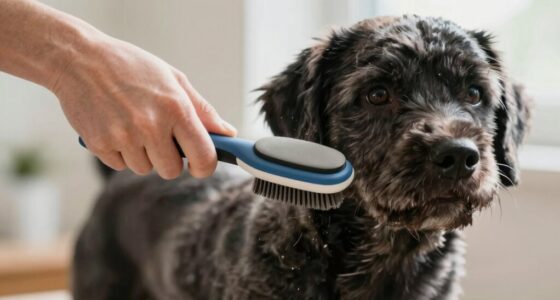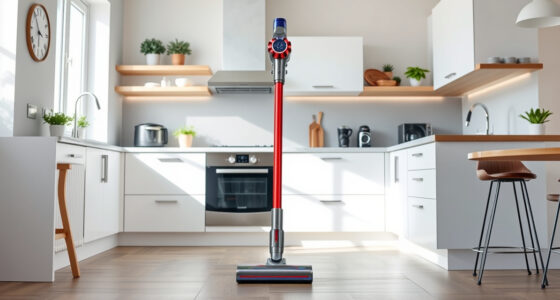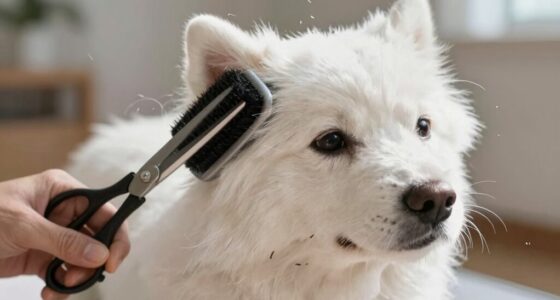
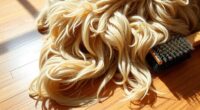
To control pet hair effectively, vacuum your home at least twice a week in high-traffic areas and daily in pet-frequent zones. For homes with multiple or long-haired pets, increase vacuuming frequency to prevent hair from embedding in carpets and furniture. Regular maintenance of your vacuum and targeted cleaning techniques improve efficiency. Keep up with this routine, and you’ll discover more tips to keep your home cleaner and allergen-free.
Key Takeaways
- Vacuum at least twice weekly in high-traffic areas to prevent pet hair buildup.
- Vacuum daily in zones with frequent pet activity or multiple long-haired pets.
- Regularly clean and maintain vacuum filters and brushes for optimal pet hair removal.
- Use specialized attachments and settings suited for upholstery, corners, and carpets.
- Consistent vacuuming reduces allergens and keeps your home cleaner and healthier.

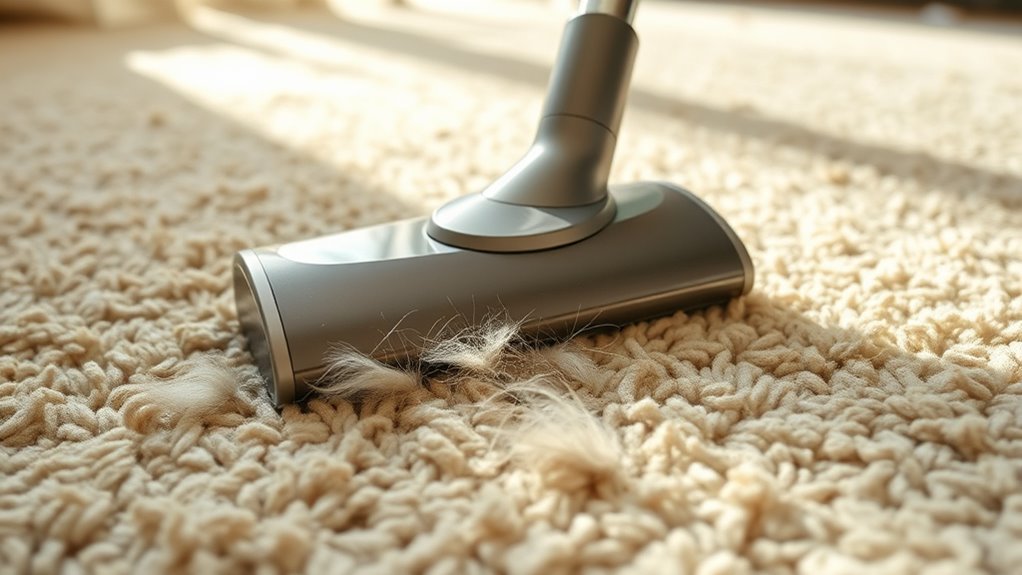
If you have pets, vacuuming regularly is vital to keep your home clean and allergen-free. Pet hair tends to accumulate quickly, especially on carpets, furniture, and even in hard-to-reach corners. To manage this effectively, you need to pay attention to vacuum maintenance. Regularly cleaning and checking your vacuum’s filters, brushes, and filters ensures it operates at peak efficiency. A well-maintained vacuum not only picks up pet hair more effectively but also prolongs its lifespan. Make sure to replace filters as recommended by the manufacturer and clear out any hair or debris from brushes and suction pathways. This prevents clogs that reduce suction power and compromise pet hair removal techniques, making your cleaning sessions more effective. Additionally, using a vacuum with proper maintenance features can help sustain optimal performance over time.
In terms of pet hair removal techniques, consistency is key. You should vacuum at least twice a week in high-traffic areas, especially if you have multiple pets or long-haired breeds. This frequency helps prevent pet hair from embedding deeply into carpets and upholstery, which can be more difficult to remove later. For areas where your pets spend most of their time, consider daily vacuuming. Use attachments like upholstery and crevice tools to target furniture, stairs, and tight corners where pet hair tends to hide. This approach ensures thorough cleaning and minimizes hair buildup, reducing allergens and keeping your home healthier.
Pay special attention to vacuum settings, adjusting suction power and brush height based on the surface you’re cleaning. For carpets, higher suction and a brush roll are essential to dislodge embedded hair, whereas hard floors may require a gentler setting. Investing in a vacuum designed for pet hair can markedly improve your results. These models often come with specialized pet hair removal techniques, such as tangle-free brush rolls or strong suction capabilities, making hair removal easier and more efficient. Using these tools consistently enhances your ability to keep pet hair at bay and maintains a cleaner environment.

Afloia Dog Brush Vacuum Attachment – Pet Grooming Tool for Dogs & Cats (Vacuum Not Included), Compatible with 1-1.5" Round Port Vacuums (Dyson,Bissell,Eureka,Dirt Devil), with Extension Hose (White)
- Pet Grooming Kit Compatibility: Works with various vacuum brands
- Hair Removal Efficiency: Reduces pet hair around the house
- Ergonomic & Safe Design: Inclined head for close skin contact
As an affiliate, we earn on qualifying purchases.
As an affiliate, we earn on qualifying purchases.
Frequently Asked Questions
Does Vacuuming Pet Hair Help Reduce Allergies?
Vacuuming pet hair regularly definitely helps reduce allergies by removing dander that triggers symptoms. It’s even better when combined with air purifier benefits, which filter airborne allergens. This duo improves air quality and manages allergy symptoms more effectively. By vacuuming frequently and using an air purifier, you create a cleaner environment, minimizing pet hair and dander buildup, and easing allergy discomfort for you and your family.
What Vacuum Type Is Best for Pet Hair?
You’ll want a vacuum with a strong suction and a high-quality filter to keep pet hair at bay. Cordless vacuums are fantastic, offering easy maneuverability and quick access to tricky spots. Look for models with excellent vacuum filter maintenance, so hair and allergens don’t escape back into the air. This combo makes cleaning more effective and less of a chore, helping you maintain a fresh, fur-free space effortlessly.
Can Over-Vacuuming Damage My Carpets?
Over-vacuuming can potentially cause carpet damage, especially if you use a high-powered vacuum frequently on delicate fibers. To avoid this, stick to a regular vacuum frequency suited for your pet hair situation—usually 2-3 times a week—and use a gentle setting if available. This way, you effectively control pet hair without risking harm to your carpets. Remember, moderation is key to maintaining your carpet’s lifespan.
How Do I Remove Pet Hair From Upholstery?
To remove pet hair from upholstery, start with furniture cleaning by using a vacuum with a upholstery attachment. For stubborn hair, employ hair removal tools like rubber gloves or lint rollers to easily lift pet hair. Regularly vacuum your furniture, especially in pet-heavy households, to keep it hair-free. This routine maintains cleanliness and reduces allergens, making your space more comfortable for both you and your pets.
Are There Specific Vacuums for Long-Haired Pets?
Yes, there are vacuums designed for long-haired pets, so you don’t have to wrestle with lint rollers daily. These vacuums often come with specialized pet hair tools and features like powerful suction and tangle-free brushes. Remember, for ideal performance, vacuum maintenance is key—clean filters and brushes regularly. With the right equipment, you’ll finally win the battle against those endless, silky hair tumbleweeds rolling through your home.
Conclusion
To keep your space spotless and pet hair-free, stick to a schedule that suits your pet’s shedding and your lifestyle. Regular vacuuming, whether daily or weekly, prevents build-up and keeps your home fresh. Remember, consistency is key—clean often, and you’ll combat clutter and hair chaos with confidence. By balancing brisk, proper cleaning with patience, you’ll preserve your space’s splendor and enjoy a pet-friendly, pristine sanctuary every single day.