To organize replacement parts for cleaning devices, use labeled, clear containers with compartments to easily identify and access different components. Assign specific spots for each part, and sort items by type and size. Regularly check and tidy your storage to prevent loss and clutter. Keep an inventory list to track what needs restocking. Staying consistent with these practices simplifies maintenance and saves time — discover more tips to improve your system by continuing onward.
Key Takeaways
- Use clear, labeled, compartmentalized containers to sort parts by device type and size.
- Implement color-coded labels for quick identification and category differentiation.
- Maintain a digital or physical inventory to track parts and prevent shortages.
- Assign designated storage spots immediately after acquiring or cleaning parts.
- Regularly tidy and review storage areas to ensure organization and accessibility.
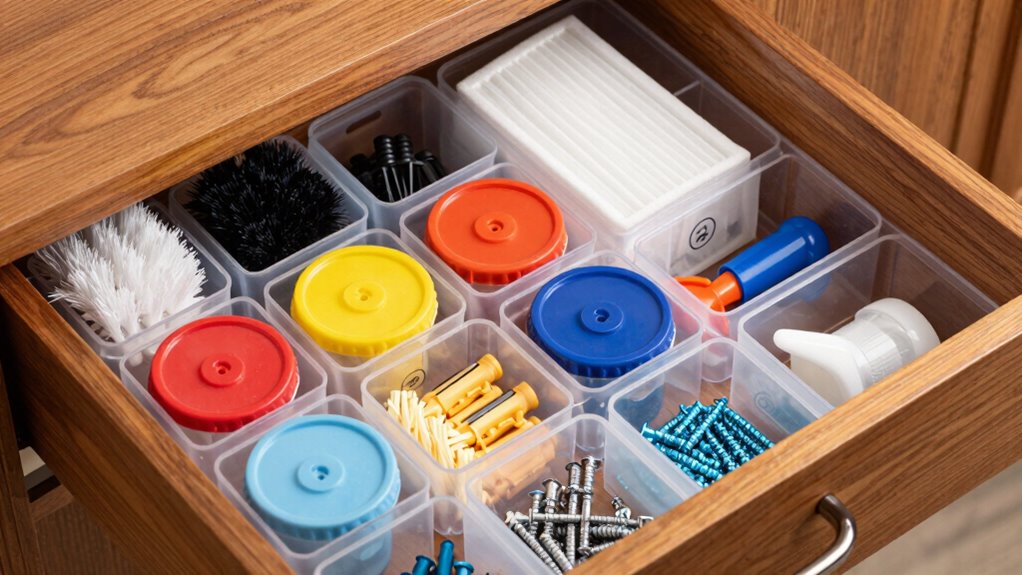
Keeping your replacement parts organized can save you time and frustration when repairs are needed. When it comes to cleaning devices, having a system in place for storing spare parts guarantees you won’t waste precious minutes searching through clutter or digging through drawers. Proper tool storage is essential; it keeps everything accessible and prevents small pieces from getting lost. Invest in a sturdy storage bin or a dedicated toolbox with compartments designed for different components. Clear containers are especially helpful because they let you see what’s inside at a glance, saving you from opening multiple boxes.
Organize spare parts with clear containers and designated storage to save time and prevent lost components during repairs.
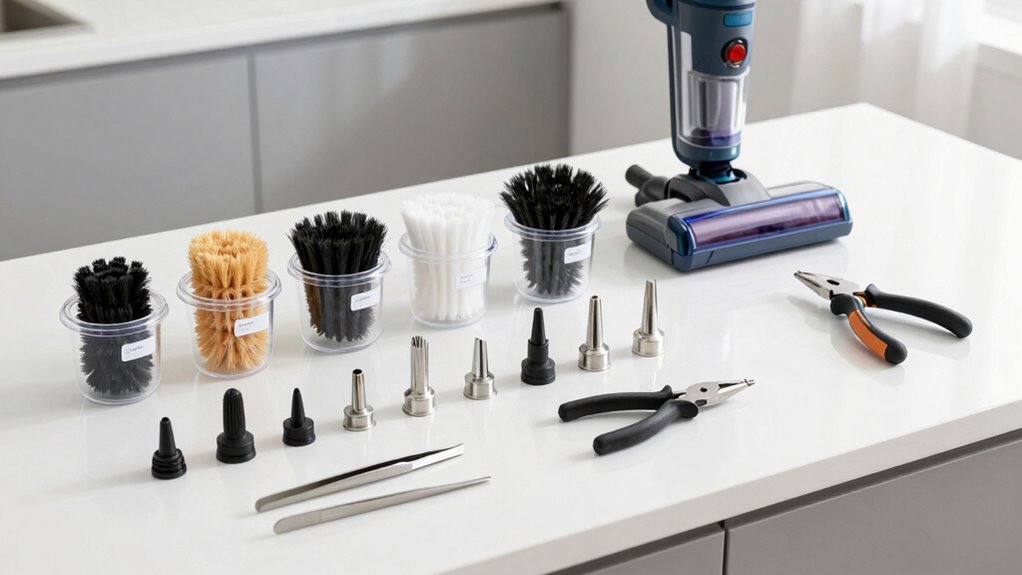
Labeling techniques play an important role in maintaining an efficient organization system. Use a permanent marker or a label maker to clearly identify each compartment or container with the part’s name and the device it belongs to. For example, label a section “Vacuum Brush Attachments” or “Steam Mop Filter.” When you consistently label your parts, you reduce the chance of misplacing something or grabbing the wrong component during repairs. Consider color-coding labels for different devices or categories, such as using blue for vacuum parts and green for steam mop accessories. This visual cue speeds up your search process and makes it easier to keep track of what’s stored where.
You should also develop a routine for organizing new parts as you acquire them. Every time you replace or purchase a new component, immediately assign it a designated spot. If you’ve used a part, return it to its correct location after cleaning or maintenance. This habit prevents clutter from building up and keeps your system seamless. Additionally, keep an inventory list either on paper or digitally, noting what parts you have and their quantities. Proper inventory management reduces the risk of missing parts and helps prevent last-minute scrambling during repairs. Regularly updating this list can also help identify common replacement parts that frequently need restocking, streamlining your maintenance process. Incorporating digital tools or apps for inventory tracking can further improve your organization and accessibility.
Maintaining an organized system also supports sustainable living practices by encouraging mindful consumption and reuse of components. This way, you’ll know exactly when to restock or replace items, avoiding last-minute rushes during repairs. When storing small parts like screws, filters, or brushes, use small containers or compartmentalized organizers. Sort these by type or size, and label each section accordingly. Avoid tossing tiny pieces into a general box, as they’re easy to overlook or get lost. Regularly check and tidy your storage areas to ensure everything remains in order. Incorporating biodiversity-focused storage solutions, such as eco-friendly containers, can also promote sustainable living practices. When your parts are properly organized, your repair process becomes more straightforward, and you minimize the risk of losing essential components. Ultimately, combining effective tool storage with clear labeling techniques creates a reliable system you can trust, making maintenance faster, less stressful, and more efficient every time.

Hlotmeky Plastic Organizer Box with Dividers Bead Organizer 15 Large Grids Tackle box Organizer Clear Snackle Box Container
- Size: 10.8 x 6.3 x 2.2 inches
- Grid Count: 15 compartments
- Dividers: 14 removable dividers
As an affiliate, we earn on qualifying purchases.
As an affiliate, we earn on qualifying purchases.
Frequently Asked Questions
How Often Should I Replace Cleaning Device Parts?
You should replace cleaning device parts based on your cleaning schedules and maintenance tips. Typically, filters, brushes, and scrubbers need replacing every 3 to 6 months, while seals and hoses might last longer. Regularly inspect your equipment for wear and tear. Following your device’s maintenance tips guarantees peak performance and longevity. Keep track of replacement dates to stay on top of maintenance, preventing breakdowns and ensuring effective cleaning.
Can I Store Replacement Parts in the Original Packaging?
Yes, you can store replacement parts in their original packaging, but it’s best to use storage containers for better organization. Place each part in a clear container and use a labeling system to identify them easily. This keeps parts clean, visible, and accessible, saving you time when replacements are needed. Regularly check and update your storage to guarantee everything stays organized and ready for use.
What’s the Best Way to Label Small Replacement Components?
Think of labeling small replacement components as giving each a name tag at a busy party. Use clear labeling techniques like waterproof labels or a label maker, and stick them on small storage containers such as divided tackle boxes or stackable drawers. This way, you can quickly identify parts, avoid mix-ups, and keep everything orderly. Proper labels turn chaos into clarity, saving you time and frustration during your cleaning routine.
How Do I Prevent Mold or Dust Buildup on Stored Parts?
To prevent mold and dust buildup on stored parts, you should store them in airtight containers or sealed plastic bags to block moisture and dust. Keep the storage area dry and well-ventilated, and consider using silica gel packs to absorb excess moisture. Regularly check and clean your storage space, and make sure parts are completely dry before storing. These steps help maintain your parts’ cleanliness and prevent mold growth and dust accumulation.
Are There Eco-Friendly Options for Replacement Parts Storage?
They say “waste not, want not,” so you can opt for eco-friendly storage options. Use biodegradable containers or recycled material storage to keep your replacement parts organized while reducing your environmental footprint. These options are durable and safe, helping you prevent mold or dust buildup naturally. By choosing sustainable materials, you make a positive impact on the planet, all while keeping your parts tidy and accessible.
Conclusion
Organizing your replacement parts keeps your cleaning devices ready and your space tidy. When everything is in its place, you save time hunting for that missing filter or brush. Clutter breeds chaos, but order brings clarity. With a simple system, you’ll find what you need in seconds, not minutes. Clean spaces, clear minds—your organized parts make it easy to keep your home spotless. Embrace the order; enjoy the ease.