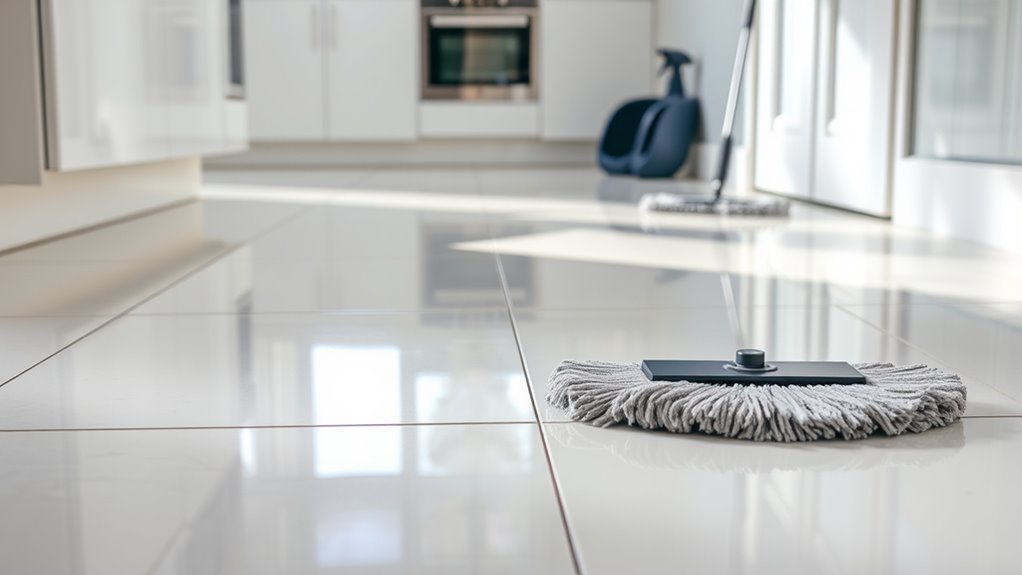

For high-traffic kitchens and bathrooms, you should sweep and mop your tile floors twice a week to prevent dirt, grime, and bacteria buildup. In less-used areas, once-a-week cleaning is usually enough to keep things fresh and maintain their appearance. Regular cleaning also helps protect grout and prolong the life of your tiles. To discover more tips for effective maintenance and long-lasting cleanliness, keep exploring these proven strategies.
Get ready for Prime Big Deal Days — try Prime free
Exclusive member deals on October 6–7, plus fast free delivery. Cancel anytime.
As an affiliate, we earn on qualifying purchases.
Key Takeaways
- Sweep or vacuum tile floors at least twice a week in high-traffic kitchens and bathrooms.
- Mop with a mild cleaner once a week in less-used areas to maintain cleanliness.
- Clean grout lines regularly (bi-weekly) to prevent mold, stains, and buildup.
- Reseal tiles annually to reduce dirt penetration and extend cleaning intervals.
- Adjust cleaning frequency based on spills, stains, and overall usage for optimal maintenance.
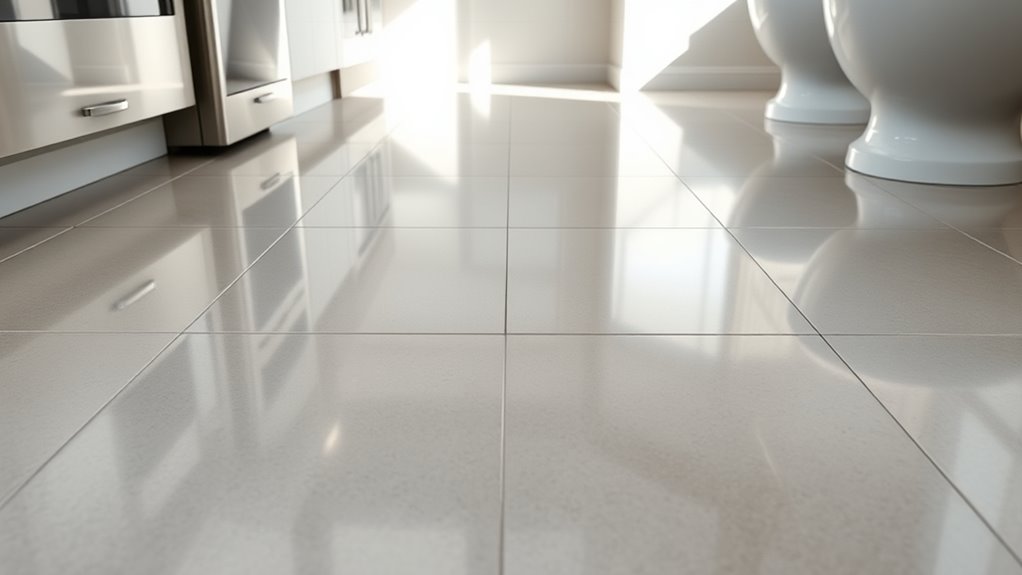
Keeping tile floors clean in kitchens and bathrooms is essential for maintaining a healthy and attractive space. Regular cleaning not only keeps your floors looking fresh but also helps prevent the buildup of dirt, grime, and bacteria. To do this effectively, you need to pay attention to grout maintenance and tile sealing. These are critical steps that influence how often you should clean your floors.
Grout often acts as the foundation for your tiles, but it’s also the part most prone to staining and mold growth if neglected. Over time, grout can trap dirt and moisture, leading to discoloration and even damage. To keep your floors looking their best, you should incorporate grout maintenance into your cleaning routine. This involves regular scrubbing with a grout brush and a mild cleaning solution to remove dirt and prevent mold or mildew from developing. For stubborn stains or deep-seated dirt, you might need to use a specialized grout cleaner or a mixture of baking soda and water. Maintaining your grout not only keeps your floors looking new but also minimizes the need for frequent deep cleanings.
Regular grout scrubbing with a mild cleaner prevents stains and mold buildup.
Tile sealing plays a pivotal role in reducing the frequency of intensive cleanings. If your tiles are properly sealed, liquids and dirt will have a harder time penetrating their surface. This means you can clean your floors more easily and less often, saving you time and effort. Generally, tile sealing should be checked annually; if the sealant begins to wear or shows signs of deterioration, it’s time to reseal. Sealing your tiles creates a protective barrier that prevents stains and makes routine cleaning more effective. When you combine regular sweeping and mopping with a good sealant, you’ll find that your floors stay cleaner longer and maintain their shine with less effort. Additionally, educational toys can help children learn about cleanliness and hygiene in a fun, engaging way, encouraging them to participate in household chores from an early age.
The frequency of cleaning also depends on foot traffic and use. For a busy kitchen or bathroom, you should sweep and mop at least twice a week to prevent dirt from settling into the grout and tile surface. In less-used areas, once a week might suffice. Remember, the key is consistency. Regularly maintaining grout and ensuring your tiles are sealed will extend the lifespan of your flooring and keep it looking pristine. By incorporating these practices into your cleaning routine, you’ll reduce the need for frequent, intensive scrubbing and preserve the beauty of your tile floors for years to come.
As an affiliate, we earn on qualifying purchases.
Frequently Asked Questions
Can I Use Vinegar on All Types of Tile?
Yes, you can use vinegar on many types of tile, but be cautious with natural cleaners. Vinegar works well on ceramic and porcelain tiles, but avoid using it on natural stone like marble or limestone, as it can damage the surface. Always seal tiles after cleaning, especially natural stone, to protect them. For safe cleaning, consider gentle natural cleaners and seal your tiles regularly to maintain their appearance and durability.
How Do I Remove Stubborn Grout Stains?
Stubborn grout stains can seem like an impossible mountain, but don’t worry—you can conquer them! Start with a powerful stain removal technique using a baking soda and hydrogen peroxide paste. For extra stubborn stains, apply a grout sealer afterward to prevent future issues. Scrub with a stiff brush, and let the mixture sit for 10-15 minutes. Repeat if needed, and soon your grout will look brand new!
Is Steam Cleaning Safe for Tile Floors?
Steam cleaning is generally safe for tile floors if you use the right method. It effectively sanitizes and removes dirt without harsh chemicals. Just make certain your steam cleaner has adjustable settings suitable for tile and grout, and avoid excessive moisture that can damage certain tiles. Steam cleaning safety is high when you follow manufacturer instructions. Incorporate it as part of your tile cleaning methods to maintain clean, fresh floors without risking damage.
How Often Should I Replace Grout Lines?
You should replace grout lines when they become severely cracked, stained, or damaged, which usually happens every 10 to 15 years. Regular grout sealing helps prevent stains and deterioration, extending grout life. For stained or discolored grout, consider grout color restoration to refresh your floors’ appearance. Keep an eye on grout health, and don’t wait too long to replace it, ensuring your tiles stay secure and looking great.
What Are Eco-Friendly Cleaning Options for Tiles?
Imagine your tiles sparkling with the gentle touch of eco-friendly cleaning. You can use natural disinfectants like vinegar, baking soda, and lemon to clean and brighten your floors without harsh chemicals. These options break down grime while keeping your home safe and environmentally friendly. Embrace eco-friendly cleaning by regularly wiping your tiles with these natural solutions, ensuring your space stays fresh, healthy, and kind to the planet.
Conclusion
Cleaning your tile floors regularly keeps them looking fresh, just like a sparkly mirror. For kitchens and bathrooms, aim to sweep weekly and mop every one to two weeks to prevent dirt buildup. If you notice stains or grime, don’t wait—spot clean immediately. Consistent care means your floors stay bright and inviting, like a clean slate waiting for your next step. Keep up with the routine, and your tiles will thank you with lasting beauty.
NFL season / tailgating Picks
team gear
As an affiliate, we earn on qualifying purchases.