
Smart home devices for renters have one job: deliver convenience without permanent installation, without drilling holes, and without angering a landlord. The Amazon Basics Smart Plug 4-Pack earns my best overall spot because it nails that balance — compact, hub-free, and cheap enough to outfit a whole apartment. For renters ready to invest in comfort, the Google Nest Learning Thermostat (4th Gen) is the standout premium pick despite its one tradeoff: swapping a thermostat is the closest thing to a permanent change on this list. If security is your priority, the 21-Piece WiFi Home Alarm System offers apartment-friendly protection with no contracts or wired sensors. The main tension in this category is between ecosystem lock-in and flexibility — Matter-compatible plugs like the Linkind keep your options open, while Alexa-only devices are simpler but stickier. Keep reading for the full breakdown of which device fits your lease, your budget, and your tech habits.

Get cleaning gear delivered free with Prime
- Fast, free delivery on millions of items
- Prime Video, Amazon Music and more included
- Member-only deals all year
Complete the kit


Key Takeaways
- Matter compatibility was the biggest differentiator among smart plugs — the amazon.com/dp/B0C36WXGP1?tag=bestvacuumexpert-20&ascsubtag=dc-595547″ target=”_blank” rel=”nofollow sponsored noopener”>Linkind Matter Smart Plug works across Apple Home, Alexa, Google Home, and SmartThings, while the Amazon and GHome plugs lock you into one or two ecosystems.
- The Nest Learning Thermostat is the only product here that touches your apartment’s wiring, so it’s the pick where checking your lease and landlord approval genuinely matters before buying.
- The Echo Hub Starter Kit is the fastest path to a working smart home from zero, but it makes sense mainly for renters committed to the Alexa ecosystem — buying components separately wins on flexibility.
- The 21-Piece WiFi Alarm System fills the gap renters face with traditional monitored security: no contracts, no installers, and sensors that mount with adhesive rather than screws.
- Across the lineup, no-hub-required 2.4 GHz Wi-Fi was the baseline standard — every plug here runs on it, so the deciding factors became app quality, ecosystem support, and physical size blocking adjacent outlets.
| Amazon Basics Smart Plug, 4-Pack |  | Best Value for Alexa Households | Compatibility: Alexa | Wi-Fi Frequency: 2.4 GHz | Number of Plugs: 4 | VIEW ON AMAZON | See Our Full Breakdown |
| Google Nest Learning Thermostat (4th Gen, 2024) with Nest Temperature Sensor |  | Best Premium Upgrade | Model: 4th Gen, 2024 | Color: Polished Gold | Compatibility: Most 24V systems, Alexa, Apple HomeKit, Google Home, Matter | VIEW ON AMAZON | See Our Full Breakdown |
| WiFi Wireless Home Alarm System, 21-Piece |  | Best DIY Security for Rentals | Piece Count: 21 | Wi-Fi Frequency: 2.4 GHz | Battery Backup: 48 hours | VIEW ON AMAZON | See Our Full Breakdown |
| Linkind Matter Smart Plug | 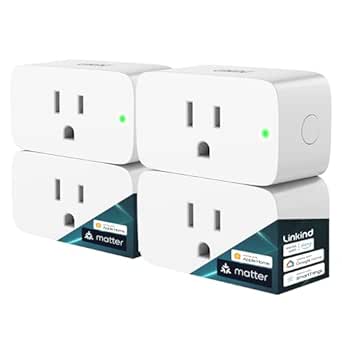 | Best for Multi-Ecosystem Homes | Compatibility: Apple HomeKit, Alexa, Google Home, SmartThings, AiDot | Power Capacity: 1800W / 15A | Wi-Fi Frequency: 2.4 GHz only | VIEW ON AMAZON | See Our Full Breakdown |
| GHome WiFi Smart Plug |  | Best Budget Starter Plug | Compatibility: Alexa, Google Assistant | Connectivity: WiFi 2.4GHz only | App Support: GHome, Smart Life, Tuya | VIEW ON AMAZON | See Our Full Breakdown |
| Linkind Matter Smart Plug (1 Pack) |  | Best for Apple Home Users | Compatibility: Apple HomeKit, Siri, Alexa, Google Home, SmartThings (Matter) | Voltage: 120 volts | Amperage: 15 A | VIEW ON AMAZON | See Our Full Breakdown |
| Govee Smart Plug, 4-Pack |  | Best Value for Multi-Room Coverage | Quantity: 4 plugs | Compatibility: Alexa, Google Assistant | Connection: Wi-Fi and Bluetooth | VIEW ON AMAZON | See Our Full Breakdown |
| Amazon Smart Plug |  | Best Plug-and-Play Simplicity | Compatibility: Alexa and the Alexa app only | Setup: No hub required, plug-in and connect | Design: Compact, preserves second outlet | VIEW ON AMAZON | See Our Full Breakdown |
| Smart Home Starter Kit with Echo Hub, Smart Plug, and Four Smart Bulbs |  | Best All-in-One Starter Kit | Included Items: Echo Hub, Amazon Smart Plug, four Amazon Basics Smart Bulbs | Compatibility: Alexa-compatible smart home devices | Setup: Guided setup process | VIEW ON AMAZON | See Our Full Breakdown |
| smart home devices for renter | Compatibility |
|---|---|
| Amazon Basics Smart Plug | Alexa |
| Google Nest Learning Thermosta | Most 24V systems, Alexa, Apple HomeKit, Google Home, Matter |
| WiFi Wireless Home Alarm Syste | Amazon Alexa, Smart Life, Tuya |
| Linkind Matter Smart Plug | Apple HomeKit, Alexa, Google Home, SmartThings, AiDot |
| GHome WiFi Smart Plug | Alexa, Google Assistant |
| Linkind Matter Smart Plug | Apple HomeKit, Siri, Alexa, Google Home, SmartThings (Matter) |
| Govee Smart Plug | Alexa, Google Assistant |
| Amazon Smart Plug | Alexa and the Alexa app only |
| Smart Home Starter Kit with Ec | Alexa-compatible smart home devices |
More Details on Our Top Picks
Amazon Basics Smart Plug, 4-Pack
Four plugs for the price of one is the entire pitch here, and for renters outfitting a whole apartment, that math matters. Compared with the Govee 4-pack, these plugs are more compact and won’t block the second outlet in a standard wall plate — a real win in older rentals with limited outlets. Setup is essentially zero-touch if you already own an Echo device, which makes this the easiest path from “dumb apartment” to “smart apartment” over a single weekend. The tradeoff is ecosystem lock-in: unlike the Linkind Matter Smart Plug, these work only with Alexa, so anyone who later switches to Google or Apple Home will be replacing them. There’s also no third-party smart home integration for routines built outside the Alexa app.
Pros:- Four plugs in one package covers an entire apartment’s basics
- Compact housing leaves the adjacent outlet free
- Zero-touch setup with Echo devices
- Scheduling and voice control with no hub or extra hardware
Cons:- Alexa-only compatibility with no path to Google Home or Apple Home
- No support for third-party smart home platforms or routines
Best for: Alexa-using renters who want to automate multiple lamps, fans, and appliances at once without a per-device budget
Not ideal for: Households mixed between Siri, Google Assistant, and Alexa — the single-platform restriction will bite eventually
- Compatibility:Alexa
- Wi-Fi Frequency:2.4 GHz
- Number of Plugs:4
- Hub Required:No
- Control:Voice, App
- Setup:Simple, zero touch with Echo
Our verdict“If you’re an Alexa household furnishing a first rental, this 4-pack delivers the most automation per dollar in the lineup.”
Google Nest Learning Thermostat (4th Gen, 2024) with Nest Temperature Sensor
This is the splurge pick, and the only device in this lineup that touches your lease’s HVAC wiring — so it earns its premium spot by being genuinely removable and transferable to your next place. The auto-scheduling learns your routine and the included Nest Temperature Sensor lets you prioritize a bedroom or nursery instead of wherever the thermostat happens to hang, which is a real advantage in drafty rental units with uneven heating. Unlike every plug in this roundup, it works across Alexa, Google Home, Apple HomeKit, and Matter, so your ecosystem choice stays open. The tradeoffs: you’ll need to verify your system is compatible before ordering, and the learning features take a week or two plus app configuration to settle in. It’s also far more expensive than any accessory here.
Pros:- Up to 31% savings on heating and cooling costs
- Works with Alexa, Google Home, Apple HomeKit, and Matter
- Room-specific temperature control via the included sensor
- Large, readable display that mounts over the old thermostat hole
Cons:- Requires an HVAC compatibility check that excludes some systems
- Auto-scheduling needs a learning period and app setup before it pays off
Best for: Renters in longer leases with compatible 24V HVAC systems who want to cut energy bills without rewiring anything
Not ideal for: Short-term renters or those with proprietary/line-voltage heating systems — the installation check may rule it out entirely
- Model:4th Gen, 2024
- Color:Polished Gold
- Compatibility:Most 24V systems, Alexa, Apple HomeKit, Google Home, Matter
- Display:60% larger than previous generation
- Included Sensor:Nest Temperature Sensor (2nd gen)
- Installation:DIY wall mount over existing wiring
Our verdict“The one premium buy worth making in a rental — provided your HVAC system checks out and you’ll stay long enough to recoup the cost.”
WiFi Wireless Home Alarm System, 21-Piece
Where every other product here automates comfort, this kit answers the question renters actually lose sleep over: what happens when someone opens a window at 2 a.m.. Twenty-one pieces of screw-in magnetic and PIR sensors cover doors, windows, and motion zones, with a 120dB siren and push alerts — all with no monthly fees, which is what separates it from subscription-locked alternatives. The 48-hour battery backup means a power cut doesn’t disable your security, a robustness feature none of the smart plugs can claim. Compared with the Amazon Basics 4-pack, this is protection rather than convenience, and it’s the only pick here for renters in ground-floor or shared-building units. The honest tradeoffs: it’s self-monitored only — if your Wi-Fi drops or you miss a notification, no one is dispatching help — and there’s no cellular backup if a burglar cuts the internet.
Pros:- 21 pieces cover multiple entry points with no monthly subscription
- 48-hour battery backup keeps the system live during outages
- Alexa voice control plus remote arm/disarm via Smart Life/Tuya
- Expandable with additional DIY sensors as needs grow
Cons:- Self-monitored alerts depend entirely on your network and app
- No cellular or SIM backup if Wi-Fi goes down or is cut
- Screw-in installation means patching a few holes at move-out
Best for: Ground-floor or shared-building renters who want whole-apartment intrusion alerts without contracts or monitoring fees
Not ideal for: Anyone wanting professional monitoring or who can’t rely on stable 2.4GHz Wi-Fi — self-monitoring is the only mode here
- Piece Count:21
- Wi-Fi Frequency:2.4 GHz
- Battery Backup:48 hours
- Siren Loudness:120 dB
- Sensors:Magnetic contact, PIR motion, RFID
- Compatibility:Amazon Alexa, Smart Life, Tuya
- Range:Up to 330 feet
Our verdict“The strongest choice in this roundup for renters whose priority is security rather than convenience, as long as you accept self-monitoring.”
Linkind Matter Smart Plug
This plug earns its slot as the future-proof pick: Matter support means it speaks to Apple Home, Alexa, Google Home, and SmartThings natively, which no other plug in this roundup can claim — the Amazon Basics 4-pack is Alexa-only, and the GHome plug stops at Alexa and Google. That matters for renters in shared apartments where one roommate has an iPhone and another has an Echo, or for anyone who might switch platforms at the next lease. The offline LAN communication is another differentiator: basic commands keep working even if your internet drops, something cloud-dependent plugs can’t do. Tradeoffs are real, though — you’ll need a Matter-certified hub for full cross-platform control, and the 15A ceiling rules out heavy-duty heaters and some AC units.
Pros:- Native Matter support across Apple Home, Alexa, Google Home, and SmartThings
- Offline LAN control keeps devices working without internet
- Fire-resistant housing with FCC certification
- Compact design that doesn’t block adjacent outlets
Cons:- Requires a Matter-certified hub for full multi-platform integration
- 15A / 1800W ceiling excludes some heaters and appliances
Best for: Mixed-platform households and renters who don’t want their accessories locked to one voice assistant
Not ideal for: Buyers without a Matter hub or those wanting to run high-wattage appliances — the 15A limit and hub requirement narrow its appeal
- Compatibility:Apple HomeKit, Alexa, Google Home, SmartThings, AiDot
- Power Capacity:1800W / 15A
- Wi-Fi Frequency:2.4 GHz only
- Offline Control:LAN communication supported
- Material:Fire-resistant
- Certification:FCC certified
Our verdict“The smart plug to buy if your household can’t agree on one voice assistant — just make sure you have a Matter hub first.”
GHome WiFi Smart Plug
Sometimes you just need one plug to test the smart-home idea, and this is the cheapest low-commitment entry point in the lineup. It covers the broader dual-assistant base of Alexa and Google Assistant — already more flexible than the Alexa-only Amazon Basics 4-pack — and its group control and device sharing make it surprisingly capable for the price, letting you bundle multiple plugs into a single “movie night” command or share access with a roommate. Compared with the Linkind Matter plug, you give up Apple Home and offline control, but you also skip the Matter hub requirement entirely — it works with whatever router you already have. The catch: setup runs through the GHome app before you can link a voice assistant, and like nearly everything here, it’s 2.4GHz only, so modern mesh networks may need adjusting.
Pros:- Works with both Alexa and Google Assistant out of the box
- Group control and sharing features at a single-plug price
- Quick, stable Wi-Fi pairing with no hub required
- ETL and FCC certified for peace of mind
Cons:- App account setup required before voice control works
- 2.4GHz-only support can conflict with dual-band mesh routers
Best for: Budget-conscious renters testing smart plugs for the first time on a single lamp or fan
Not ideal for: Apple Home users or anyone planning large-scale automation — the two-assistant ceiling and app-first setup will frustrate
- Compatibility:Alexa, Google Assistant
- Connectivity:WiFi 2.4GHz only
- App Support:GHome, Smart Life, Tuya
- Hub Required:No
- Features:Timer, scheduling, group control, sharing
- Certifications:ETL, FCC
Our verdict“The lowest-risk way to dip a toe into smart renting — buy one, and graduate to the 4-packs if it sticks.”
Linkind Matter Smart Plug (1 Pack)
Renters deep in the Apple ecosystem have frustratingly few smart plug options, and this Matter-certified plug from Linkind solves that problem directly. Unlike the Amazon Smart Plug, which locks you into Alexa, this single plug works across Apple Home, Siri, Alexa, Google Home, and SmartThings, so it survives a future switch of voice assistant without becoming e-waste. Its offline LAN control is the other standout: compared with cloud-dependent plugs like the Govee 4-pack, it keeps responding locally if your internet drops — a genuine reliability advantage in older apartment buildings with spotty service. The tradeoffs are real, though. You’ll need a Matter hub or controller (an Apple TV, HomePod, or similar) for full platform integration, and it only connects to 2.4GHz Wi-Fi, which trips up renters on modern mesh routers. It’s also sold as a single plug, so outfitting several lamps adds up.
Pros:- Works with Apple Home, Alexa, Google Home, and SmartThings via Matter
- Offline LAN control keeps automations running without internet
- Fire-resistant build with overload and short-circuit protection
- Compact housing doesn’t block the second outlet
Cons:- Requires a Matter-certified hub or controller for major platform use
- 2.4GHz-only Wi-Fi can be tricky on dual-band mesh networks
- Single-pack pricing makes multi-room setups expensive
Best for: iPhone and Apple Home users who want a future-proof plug that works across every major platform
Not ideal for: Renters without a Matter hub or controller, or anyone wanting to automate multiple outlets on a budget
- Compatibility:Apple HomeKit, Siri, Alexa, Google Home, SmartThings (Matter)
- Voltage:120 volts
- Amperage:15 A
- Max Power:1800W
- Wi-Fi:2.4GHz only
- Plug Type:Type B, 3-pole
- Certification:FCC
- Offline Control:Local LAN communication
Our verdict“Buy this if you live in the Apple ecosystem and want one plug that won’t be orphaned when you switch assistants; skip it if you don’t own a Matter hub.”
Govee Smart Plug, 4-Pack
When the goal is blanketing a rental in smart outlets without draining your deposit-adjacent budget, this four-pack from Govee is the smartest play. Where the Linkind Matter Smart Plug sells you one cross-platform outlet, Govee gives you four for automating lamps, fans, and a humidifier all at once — which is the way most renters actually start out. The group control feature is quietly the headline here: one tap or voice command can kill every living room light at bedtime, something single plugs simply can’t do. Bluetooth pairing also makes initial setup less painful than Wi-Fi-only alternatives. The compromises are ecosystem-related. Unlike the Matter-based Linkind, there’s no Apple Home support, no offline local control, and the plugs are limited to 120V outlets on 2.4GHz networks. Compared with the Amazon Smart Plug, you trade polish and Alexa depth for sheer quantity.
Pros:- Four plugs in one package for whole-apartment coverage
- Group control turns multiple devices on and off together
- Bluetooth pairing simplifies initial setup
- Scheduling supports energy-saving automation routines
Cons:- No Apple HomeKit or Matter support
- 2.4GHz Wi-Fi only, no 5GHz compatibility
- Limited to 120V outlets, not for heavy appliances
Best for: Budget-minded renters furnishing their first apartment who want several automated outlets at once
Not ideal for: Apple Home users or anyone wanting offline, cloud-independent control of their devices
- Quantity:4 plugs
- Compatibility:Alexa, Google Assistant
- Connection:Wi-Fi and Bluetooth
- Voltage:120V outlets only
- Features:Scheduling, group control, family sharing
- Certifications:ETL, FCC
Our verdict“Pick this if you’d rather cover four outlets than own one premium plug; skip it if cross-platform flexibility matters more than quantity.”
Amazon Smart Plug
This is the plug I’d hand to a renter who wants smart control working within five minutes of opening the box. Setup is genuinely frictionless — plug it in, open the Alexa app, and it’s done, with no hub and no account gymnastics. That ease is its defining advantage over the Linkind Matter Smart Plug, which requires a separate Matter controller before it does anything useful. The compact body preserves the second outlet, a small thing that matters enormously in rentals where wall outlets are scarce, and scheduling and routines integrate cleanly with other Alexa gear. The catch is lock-in: unlike Linkind or the Govee 4-pack (which at least covers Google Assistant), this works exclusively with Alexa. Google or Apple household members get nothing. Devices with physical toggle switches — like some fans — also stay dumb unless left powered on, a limitation shared by every plug here but worth repeating.
Pros:- Nearly effortless setup — no hub, no manual pairing
- Compact design leaves the second outlet free
- Deep Alexa routines and scheduling integration
- Automatic reconnection after power or network blips
Cons:- Locked to the Alexa ecosystem with no Google or Apple support
- Requires constant Wi-Fi; no offline local control
- Useless with devices that need a physical switch toggled
Best for: Alexa-ecosystem renters and smart home beginners who value zero-fuss setup over flexibility
Not ideal for: Google Home or Apple Home users, since the plug only responds to Alexa
- Compatibility:Alexa and the Alexa app only
- Setup:No hub required, plug-in and connect
- Design:Compact, preserves second outlet
- Features:Scheduling, routines, automatic reconnection
- Connectivity:Wi-Fi required
- Quantity:Single plug
Our verdict“If Alexa already runs your apartment and you want dumb lamps made smart tonight, this is the easiest path; everyone else should look at the Linkind or Govee picks.”
Smart Home Starter Kit with Echo Hub, Smart Plug, and Four Smart Bulbs
For a renter starting from zero, this kit answers a question single products can’t: what does a whole smart home actually look like? The Echo Hub acts as a wall-mounted command center, the smart plug handles fans and lamps, and the four bulbs cover the biggest visual win in any apartment — lighting. Compare that to buying the Amazon Smart Plug alone, or the Govee 4-pack plus separate bulbs: here you get a unified, guided setup that walks you through routines instead of leaving you to research ecosystems. The vacation-simulating bulb schedules are a legitimately useful renter feature, making an empty apartment look occupied. The obvious tradeoff is total Alexa commitment — like the Amazon Smart Plug, nothing here plays with Google or Apple Home — and renters hoping to expand beyond Alexa-compatible devices will hit a ceiling. The Echo Hub also needs a permanent-ish wall placement, which deposit-conscious renters should think through.
Pros:- Complete bundle: hub, smart plug, and four bulbs in one box
- Guided setup removes the guesswork from first-time automation
- Bulb schedules simulate occupancy while you’re away
- Echo Hub centralizes control of all compatible devices
Cons:- Fully locked into the Alexa ecosystem
- Expansion limited to Alexa-compatible devices
- Hub is designed for wall mounting, awkward for short-term leases
Best for: First-time smart home renters who want a complete lighting, plug, and control setup in one purchase
Not ideal for: Renters already committed to Google Home or Apple Home, or anyone unwilling to mount a hub on the wall
- Included Items:Echo Hub, Amazon Smart Plug, four Amazon Basics Smart Bulbs
- Compatibility:Alexa-compatible smart home devices
- Setup:Guided setup process
- Features:Routines via Alexa+, bulb scheduling, central hub control
- Ecosystem:Amazon Alexa
- Bulbs Included:4 smart bulbs
Our verdict“This is the fastest route from empty apartment to functioning smart home — buy it if you’re starting fresh with Alexa, skip it if your loyalties lie elsewhere.”
How We Picked
I judged every product through a single filter: does this respect the realities of renting? That meant favoring devices that install with adhesive or no hardware at all, work over standard Wi-Fi without a hub, and can be removed and reused in a future apartment. Ecosystem flexibility carried heavy weight — a Matter-compatible plug scores better than an equivalent Alexa-only one because renters change phones, roommates change preferences, and a device that follows you is worth more than one that doesn’t. I also factored in setup difficulty, since most renters won’t rewire anything or call an installer.
From there, ranking came down to practical differences: physical size (a bulky plug that blocks the second outlet is a real annoyance in apartments), app quality and scheduling features, and whether each product serves a distinct renter need — outlets, climate, security, or a from-scratch starter setup. Price-per-value mattered, but a cheap plug that only works with one assistant lost points against a similarly priced multi-ecosystem option. The lineup is ordered so each pick has a clear role, and the tradeoffs are stated plainly rather than papered over.
Factors to Consider When Choosing Smart Home Devices For Renters
Before adding any device to your cart, step back and think about how it fits your lease, your walls, and your ecosystem habits. These are the factors that separate a satisfying smart apartment from a drawer full of gadgets you stopped using.Your Ecosystem Choice Matters More Than Any Single Device
The most common mistake renters make is buying devices piecemeal across incompatible ecosystems — an Alexa-only plug here, a Siri-only bulb there, and suddenly you’re juggling three apps to turn on a lamp. Decide first whether Alexa, Google Home, or Apple Home is your home base, because that decision should drive every purchase after it. Matter-compatible devices cost roughly the same as single-ecosystem ones now, so they’re the safer bet if you’re unsure or if you share the apartment with someone on a different platform. The one exception: if you already own an Echo device, Alexa-native plugs often have smoother setup and more reliable scheduling than third-party alternatives. My rule of thumb is to pick the ecosystem you’ll still be using in three years, not the one with the flashiest single product today.
Installation Rules: What Your Lease Actually Allows
Most leases prohibit permanent modifications, which rules out hardwired switches, in-wall relays, and anything requiring new wiring — but the lines get blurry with thermostats. Swapping a thermostat faceplate is technically reversible in minutes, yet some property managers treat it as a violation, so get written permission first if you’re eyeing the Nest Learning Thermostat. Plugs, adhesive-mounted sensors, and countertop hubs are always safe territory. When in doubt, favor devices that mount with 3M-style adhesive strips over screw-in brackets, and photograph the original thermostat wiring before any swap so you can restore it at move-out. The smartest renter move is building a system that fully disassembles into a moving box in under an hour.
No Hub Means Fewer Headaches in Small Spaces
Hubs add cost, take up space, and create one more failure point — all things renters can usually avoid. Every device in this roundup runs over 2.4 GHz Wi-Fi without a hub, which is the right default for apartment living. The tradeoff: 2.4 GHz bands get congested in dense buildings with dozens of competing networks, so if your router is older or buried in a closet, expect occasional lag regardless of which plug you buy. The Echo Hub in the starter kit sits in a gray zone — it’s technically a control panel rather than a connectivity hub, but it only earns its footprint if you’re running several Alexa devices. Skip hubs until you have five or more devices and a genuine reason to centralize control.
Start Small, Then Expand Where It Pays Off
The pattern that emerges from every renter-friendly category is that smart plugs are the entry point — they’re inexpensive, instantly useful, and teach you whether you actually like automating your space. Resist the urge to buy a full ecosystem on day one; instead, live with a 4-pack of plugs for a month and notice which automations you actually use. Climate control is where bigger spending pays off fastest, since a learning thermostat can trim heating and cooling costs measurably — but only if you’ll stay in the unit long enough to recoup it. Security systems deserve the most restraint: a 21-piece kit is overkill for a studio but right for a three-bedroom with multiple entry points. Match the investment to the size of the space and the length of the lease.
Physical Size and Outlet Real Estate
A detail that never shows up in product photos: not all smart plugs are the same width, and in apartments with limited outlets, a chunky plug that blocks its neighbor is a daily irritation. Compact designs — which the Amazon Basics plugs prioritize — let you use both outlets of a duplex, which matters behind a TV console or nightstand where you’re already fighting for space. Two-plug outlet expanders can solve this, but they add cost and bulk of their own. Before buying any multi-pack, picture where each plug will actually live and check whether stacked plugs will fit. This is also why single oversized plugs rarely win against slimmer competitors even when their specs match.
Portability: Your Devices Should Outlive Your Lease
The average renter moves every two to three years, so every device you buy should be evaluated as a relocatable asset. Plugs and hubs trivially make the move; adhesive sensors usually survive relocation if you buy replacement strips; thermostats travel but require a compatibility check at the new place — baseboard heating, for example, often won’t work with the Nest. Avoid anything that requires pairing to your current router’s specific network without an easy re-pairing process, because setup friction is the number one reason devices get abandoned after a move. A good mental test: could you pack this device in five minutes and have it working at a new address tomorrow? If not, think hard before buying it as a renter.
Frequently Asked Questions
Can my landlord charge me for installing smart home devices as a renter?
It depends entirely on what the device touches. Plugs that sit in outlets, countertop hubs, and bulbs that screw into existing fixtures cause no damage and are nearly always fine. Adhesive-mounted sensors can leave residue, so save the strips and clean thoroughly at move-out to avoid cleaning fees. The thermostat is the one device in this category with real risk — even though swapping the Nest Learning Thermostat is reversible, some leases classify any change to building systems as a violation. The safe play is a short written approval before thermostat work, and keeping the original unit in a drawer so you can restore it when you leave.
Is Matter compatibility worth choosing over cheaper Alexa-only plugs?
For most renters, yes, and here’s the logic: plugs in this roundup cost roughly the same whether they support one ecosystem or four, so the single-ecosystem savings are minimal. Matter devices like the Linkind work with Apple Home, Alexa, Google Home, and SmartTrees, which means they survive a phone switch, a roommate change, or a future move in with someone on a different platform. The tradeoff is that Matter setup can occasionally be fussier than native Alexa pairing, and some advanced scheduling features work better in the manufacturer’s own app. If you’re certain you’ll stay Alexa-only forever — say you own several Echo devices — the Amazon plugs’ smoother integration justifies skipping Matter. If you have any doubt, flexibility wins.
Do smart plugs actually save money, or is that just marketing?
The savings are real but modest, and they come from phantom load — the standby power that electronics draw even when off. Devices like coffee makers, game consoles, and TV setups can draw several watts continuously, and cutting that with scheduled plug-off times shaves a small but genuine amount off your electric bill. The bigger financial case is indirect: plugs make it easy to enforce habits like never leaving a space heater or AC running when you’re out, which is where apartment energy costs actually spike. Don’t expect a plug to pay for itself overnight; think of it as a habit-enforcement tool with a slow payback. The thermostat, by contrast, is where measurable climate savings live.
Can a renter-friendly alarm system replace professional monitoring?
Partially, and knowing the gap matters. A wireless kit like the 21-piece system covers entry detection, motion, and loud local sirens without contracts or monthly fees — which is more security than most rentals have by default. What it lacks is a human response: if the siren goes off while you’re at work with your phone silenced, nobody is dispatching help. Some kits offer optional subscription monitoring you can toggle on and off, which suits renters who want coverage only during travel. For a ground-floor apartment in a busy building, door and window sensors alone deter the most common break-in pattern — quick, opportunistic entry. Just be honest about whether you’ll actually respond to notifications before relying on it as your only protection.
Is a starter kit like the Echo Hub bundle better than buying devices separately?
Starter kits make sense for one specific buyer: someone starting from zero who wants a working smart home the same afternoon with zero guesswork. The Echo Hub bundle gives you a control panel, a plug, and bulbs that are guaranteed to play nicely together, which removes the compatibility research entirely. The downside is lock-in — you’re committing to Alexa before you’ve learned your own preferences, and expanding later still means buying individual devices anyway. Buying separately costs a bit more upfront but lets you test a single plug or bulb from your preferred ecosystem first. If you already own any smart device, skip the kit; if you own none and don’t want to research, it’s a reasonable shortcut.
Conclusion
Matching the right pick to your situation is easier than it looks once you know your priorities. For best overall, the Amazon Basics Smart Plug 4-Pack delivers the most renter-friendly value in the lineup — compact, hub-free, and useful on day one. The best value crown shares that territory with the Govee 4-pack, which suits renters who want more outlets covered for less commitment, provided Alexa or Google is their ecosystem. For best premium, the Google Nest Learning Thermostat (4th Gen) is unmatched for comfort and energy savings — just secure landlord approval first. Best for beginners goes to the Smart Home Starter Kit with Echo Hub, the only option that builds a complete, working system out of one box with no research required. Best for flexibility is the Linkind Matter Smart Plug, the right call for multi-platform households or renters who hate ecosystem lock-in, while the 21-Piece WiFi Alarm System takes best for security-focused renters in larger units. Whatever you choose, every option here can come apart, pack up, and follow you to your next lease — which is exactly what a renter’s smart home should do.
Halloween Picks
halloween
As an affiliate, we earn on qualifying purchases.