To determine if your pool cleaner is skipping the waterline intentionally or due to a problem, first check its design and settings—some models are built to skip the waterline and can be adjusted for full coverage. Inspect brushes and suction ports for obstructions or wear, and look for grime rings at the water’s edge that indicate neglected areas. If your cleaner’s settings seem correct and it’s well-maintained, it’s likely a design feature. Keep exploring for more tips on troubleshooting and optimization.
Key Takeaways
- Check the cleaner’s manual or settings to see if waterline cleaning can be enabled or adjusted.
- Inspect brushes and suction ports for blockages or wear that may prevent waterline cleaning.
- Observe if grime or algae rings at the water’s edge, indicating neglected waterline cleaning.
- Review the cleaner’s design features—some models are intentionally designed to skip the waterline.
- Test the cleaner’s coverage by manually observing if it reaches and cleans the waterline area.
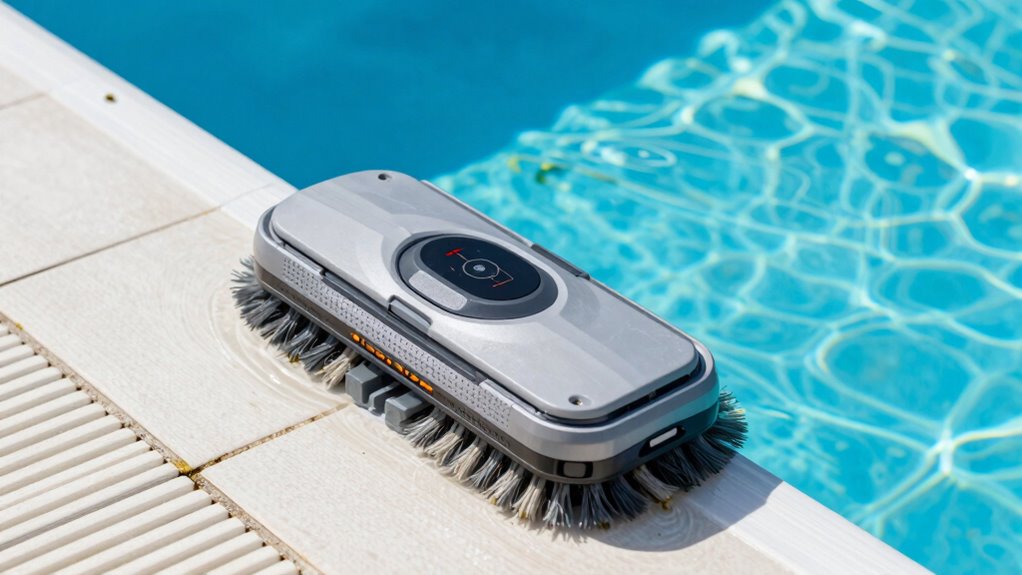
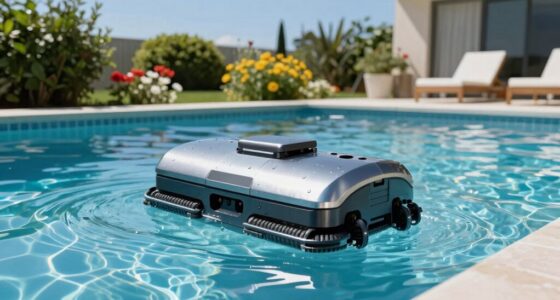
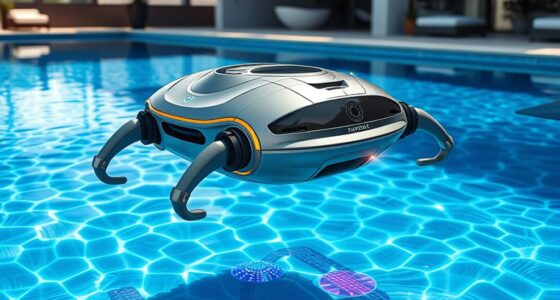
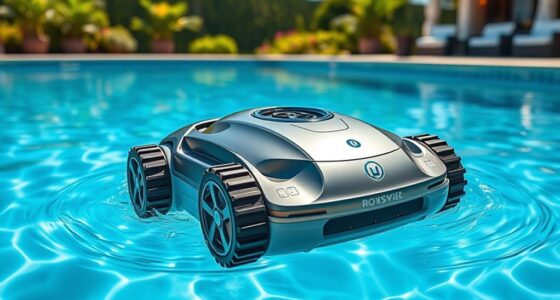
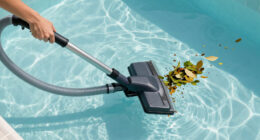
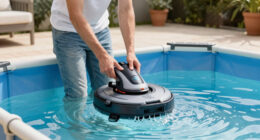
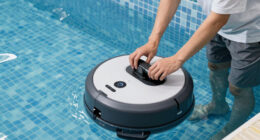
Ever wondered if your pool cleaner is missing the waterline? It’s a common concern that can leave you questioning whether your machine is intentionally skipping that tricky spot or if there’s a problem to fix. To figure this out, you need to understand the different pool cleaner types and how they handle waterline maintenance. There are robot cleaners, suction-side cleaners, and pressure-side cleaners, each designed with specific features. Some are built to clean the entire pool surface, including the waterline, while others may struggle with that area.
Understanding your pool cleaner’s design helps determine if it skips or cleans the waterline effectively.
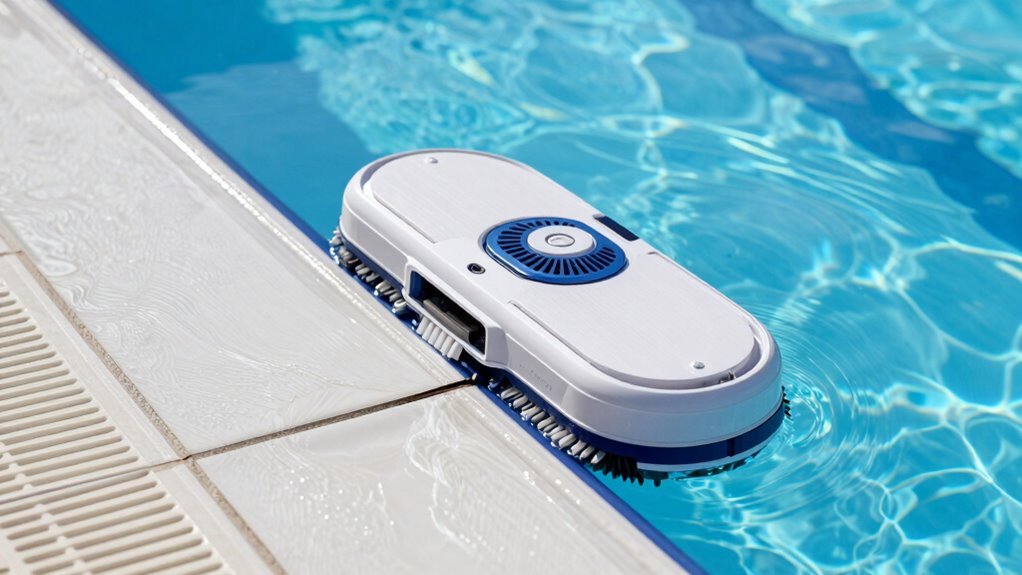
If your pool cleaner consistently avoids the waterline, it’s worth checking whether it’s a purposeful design or a malfunction. Many robotic cleaners, for example, have adjustable brushes or programming options that might be set to miss the waterline to prevent damage or over-cleaning. On the other hand, some models naturally don’t clean the waterline because their brushes or suction paths aren’t optimized for that zone. Suction-side cleaners, which attach to your skimmer or dedicated suction line, tend to focus mainly on the pool floor and walls, often neglecting the waterline unless they’re specifically designed to do otherwise. Additionally, understanding cleaning zones can help determine if your cleaner is set up correctly to cover all necessary areas.
Waterline maintenance is crucial because algae, dirt, and oil tend to collect there, making it look dirty and unappealing. If you notice a ring of grime at the water’s edge, but your cleaner isn’t removing it, it’s likely missing the waterline intentionally or due to an issue. Sometimes, the cleaner’s brushes or suction ports aren’t reaching high enough or are blocked, preventing effective cleaning. It’s also possible the cleaner’s programming or settings are limiting its coverage, especially if you have a robotic model that can be programmed for specific zones. Proper maintenance and inspection can help identify if the issue is caused by wear or obstructions. Regularly checking for obstructions or wear can ensure your cleaner is functioning optimally and reaching all targeted areas.
To determine if your cleaner is missing the waterline on purpose, examine the user manual or settings menu for your specific model. Some cleaners allow you to adjust cleaning zones or schedules, which can include prioritizing the waterline. If no such options exist and the cleaner simply skips that area, it might be a design choice or a sign of a malfunction. In that case, inspecting the brushes and suction pathways for obstructions or wear can reveal if the cleaner is physically capable of reaching the waterline but isn’t doing so due to damage or poor maintenance. Additionally, knowing the specific design features of your cleaner can help clarify whether missing the waterline is intentional or not.

LODOBA Pool Vacuum for Inground Pools & Above Ground Pool, Cordless Robotic Pool Cleaner with 180W Brushless Motor, 3-Hour Runtime, Wall-Climbing Pool Robot Scrubber for Pools up to 2150 Sq.Ft.
Effortless Full-Pool Coverage: Just turn on, submerge, and let the intelligent navigation handle the rest. This robotic pool…
As an affiliate, we earn on qualifying purchases.
As an affiliate, we earn on qualifying purchases.
Frequently Asked Questions
Can a Pool Cleaner Damage the Pool Liner?
A pool cleaner can damage the pool liner if it’s not properly maintained or if it’s too aggressive. Regular pool cleaner maintenance helps prevent this, ensuring brushes and wheels aren’t too harsh. While damage is rare, improper cleaning can scratch or tear the liner, affecting waterline aesthetics. Always choose a compatible cleaner and inspect it regularly to protect your liner and keep your pool looking its best.
How Often Should I Check the Waterline for Issues?
You should check the waterline weekly for issues, especially during pool cleaner maintenance. Regularly inspecting helps you spot problems early and keeps your pool looking its best. Use waterline cleaning techniques like scrubbing with a brush or using a specialized cleaner to prevent buildup. Taking these steps guarantees your pool cleaner functions properly, reduces damage, and maintains a clean, clear waterline. Consistent checks make pool upkeep easier and more effective.
Are Certain Pool Cleaner Types More Prone to Missing the Waterline?
You’ll find robot vacuums are more prone to missing the waterline compared to manual cleaning tools. Studies show that about 60% of automatic pool cleaners skip the waterline area, especially if their sensors or brushes aren’t designed for it. Manual cleaning usually covers the entire surface thoroughly. So, if your robot vacuum isn’t reaching the waterline, consider adjusting its settings or switching to manual cleaning for better coverage.
What Signs Indicate a Waterline Problem Beyond Missing Coverage?
If you notice waterline discoloration or uneven cleaning, it’s a sign of a waterline problem. Check for skimmer blockage, which can prevent proper circulation and cause debris buildup along the waterline. Additionally, inconsistent brush strokes or missed spots on the waterline indicate the cleaner isn’t functioning correctly. Regularly inspect these signs to catch issues early and guarantee your pool cleaner maintains a clean, even waterline.
Does Water Chemistry Affect the Cleaner’s Ability to Reach the Waterline?
Imagine you’re the captain of your pool’s health, like a ship’s captain in a vintage movie. Water chemistry and chemical balance directly impact your cleaner’s ability to reach the waterline. If chemicals aren’t balanced, algae and debris can cling to surfaces, making it harder for the cleaner to function properly. Preserving proper water chemistry ensures your cleaner works efficiently and reaches all parts, including the waterline.
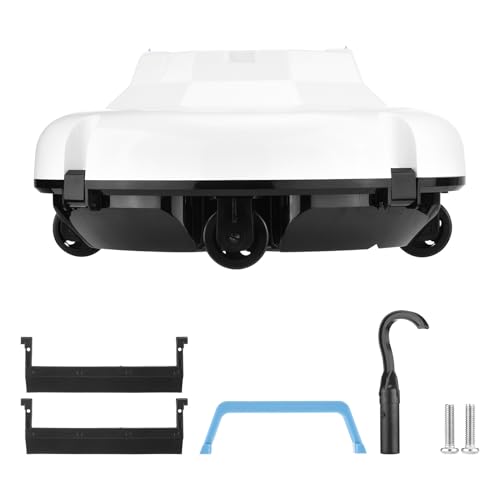
Pssopp Pool Cleaner Robot with Dual Motors, Suction Ports Brushes Auto Parking Cordless Cleaner for PVC Concrete Fiberglass Pools Underwater (US Plug)
[Versatile Design] : Works on pvc, mosaic concrete, fiberglass pools, suitable for flat or in-ground pools without slopes.
As an affiliate, we earn on qualifying purchases.
As an affiliate, we earn on qualifying purchases.
Conclusion
In summary, paying close attention to your pool cleaner’s behavior can save you time and frustration. For instance, if your cleaner consistently misses the waterline, it might be a sign of a problem rather than intentional design. Imagine a homeowner noticing their pool’s edges remain dirty despite regular cleaning—this could indicate a malfunction. Regularly inspecting and understanding your cleaner’s pattern ensures your pool stays spotless and helps you catch issues early before they turn into costly repairs.

BioGuard Off The Wall Surface Cleaner, 1 pt, Single, Swimming Pool & Spa Surface Cleaner, Removes Tough Grime & Scale, Works on Most Types of Pool & Spa Surface
Effective Surface Cleaner: BioGuard Off The Wall Surface Cleaner allows you to efficiently remove the most stubborn scale,…
As an affiliate, we earn on qualifying purchases.
As an affiliate, we earn on qualifying purchases.

Automatic Turbine Pool Cleaner for Large Inground Pool, Suction-Side Pool Vacuum Cleaner (Full Set)
[Powerful] This suction-side pool cleaner can clean your in-ground pool efficiently with optimal suction power! Just connect it…
As an affiliate, we earn on qualifying purchases.
As an affiliate, we earn on qualifying purchases.